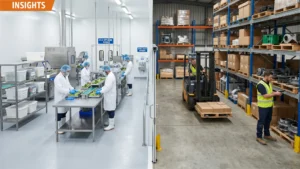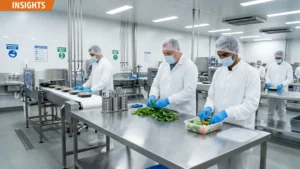
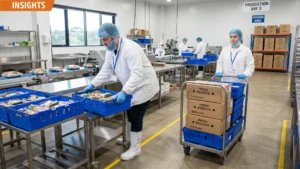
Read more about the article Manual Handling Risks in Food Production: What Fast-Paced Sites Often Miss
Manual handling risk in food production often builds through repetition, pace, awkward reach, and wet-area movement rather than one obvious heavy lift.

Manual Handling Risks in Food Production: What Fast-Paced Sites Often Miss

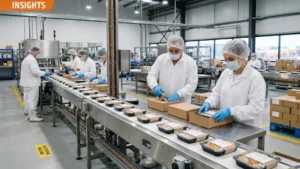
Manual handling risk in food production is not always obvious. In fast-paced Victorian sites, repeated lifting, reaching, carrying, turning, tray handling, and line-side movement can quietly become more dangerous when pace, fatigue, wet floors, and workstation design are not reviewed properly. Here is what employers often miss.
Read more about the article Managing Worker Fatigue During Long Packing and Production Shifts
Fatigue in food production affects more than comfort. It can also weaken concentration, manual handling, hygiene discipline, and line consistency.

Managing Worker Fatigue During Long Packing and Production Shifts

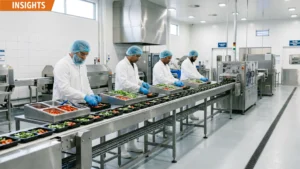
Fatigue in food production does not only affect worker comfort. It can also weaken concentration, movement quality, hygiene discipline, manual handling, and line consistency. In fast-paced Victorian packing and production environments, employers need to review fatigue earlier and more practically than many sites do. Here is what to look at.

Read more about the article Repetitive Work in Food Manufacturing: What Employers Should Review Before Injuries Build
Repetitive work can look routine long before it starts creating real fatigue, discomfort, and injury risk in food manufacturing.

Repetitive Work in Food Manufacturing: What Employers Should Review Before Injuries Build

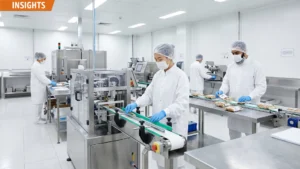
Repetitive work in food manufacturing often looks routine long before it starts causing real strain. In fast-paced Victorian production sites, repeated packing, reaching, lifting, trimming, handling, and line-based movement can quietly build fatigue, discomfort, and injury risk over time. Here is what employers should review before those problems become harder to control.

Read more about the article How to Run Safer Food Production Inductions for Non-English Speaking Workers
A safer induction is not about saying more. It is about making the most important hygiene and safety controls much harder to misunderstand.

How to Run Safer Food Production Inductions for Non-English Speaking Workers

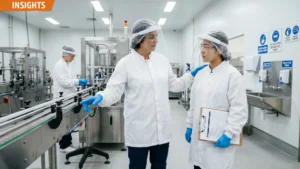
A worker can nod through an induction and still leave unclear on hygiene, PPE, movement rules, and day-one expectations. In fast-paced Victorian food production, that creates real safety and food-safety risk. Here is how employers can run safer inductions for non-English speaking workers without making the process vague, rushed, or ineffective.

Read more about the article Food Production Site Entry Rules: What New Workers Need to Understand Before Shift Start
In food production, site entry is one of the first and most important control points for hygiene, PPE, movement discipline, and worker readiness.

Food Production Site Entry Rules: What New Workers Need to Understand Before Shift Start

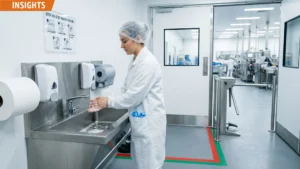
In food production, site entry is not just the walk to the workstation. It is one of the first and most important control points for hygiene, PPE, movement discipline, and worker readiness. For Victorian food manufacturers, weak site entry often creates day-one safety and food-safety risk long before production begins. Here is what new workers need to understand before shift start.

Read more about the article Bringing New Workers into Food Production: How to Reduce Hygiene and Safety Risk on Day One
Day-one risk in food production often starts with weak entry control, unclear hygiene expectations, and rushed onboarding.

Bringing New Workers into Food Production: How to Reduce Hygiene and Safety Risk on Day One

A new worker can arrive with general factory experience and still be underprepared for a food production site. In fast-paced Victorian food manufacturing, day-one risk often comes from weak entry control, unclear hygiene expectations, poor PPE understanding, and rushed onboarding. Here is how employers can reduce hygiene and safety risk from the first shift.

Read more about the article Wet Floors, Washdowns and Drain Areas: What Food Production Sites Should Review Early
Wet floors are often routine in food production, which is exactly why they need stronger review rather than casual acceptance.

Wet Floors, Washdowns and Drain Areas: What Food Production Sites Should Review Early

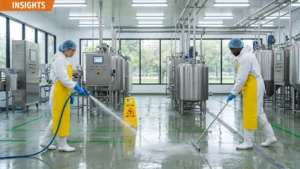
Wet floors are often treated as normal in food production, but that does not make them low risk. In fast-paced Victorian food sites, washdowns, drainage areas, moisture, and changing floor conditions can quickly increase slip risk, awkward movement, and hygiene-control pressure. Here is what employers should review early.

Read more about the article Why PPE in Food Production Protects Both Worker Safety and Food Safety
In food production, PPE helps protect both the worker and the hygiene-sensitive production environment.

Why PPE in Food Production Protects Both Worker Safety and Food Safety

In food production, PPE does more than protect the worker. It also helps protect product integrity, hygiene standards, and site discipline. For employers in Victoria, that means PPE should be treated as both a workplace safety control and a food safety control. Here is what fast-paced food production sites need to get right.

Read more about the article Why Food Production Safety Is Different from General Warehouse Safety
Food production safety goes beyond standard industrial safety because worker behaviour affects both people and product in more tightly controlled environments.

Why Food Production Safety Is Different from General Warehouse Safety

Food production sites do not just manage worker safety. They also manage hygiene, contamination control, protective clothing, washdown risk, and stricter behavioural discipline from the moment a worker enters the site. Here is why food production safety is different from general warehouse safety, and what employers in Victoria should review early.

Read more about the article Food Production Safety in Victoria: What Employers Need to Get Right in Fast-Paced Sites
Food production safety depends on more than standard workplace controls. It also depends on hygiene discipline, worker readiness, and stronger day-one site control.

Food Production Safety in Victoria: What Employers Need to Get Right in Fast-Paced Sites

Food production safety in Victoria involves more than standard workplace compliance. In fast-paced sites, employers need to manage hygiene, PPE, wet-floor risk, repetitive work, worker fatigue, and day-one onboarding with much tighter discipline. Here is a practical guide to what food manufacturers need to get right.