
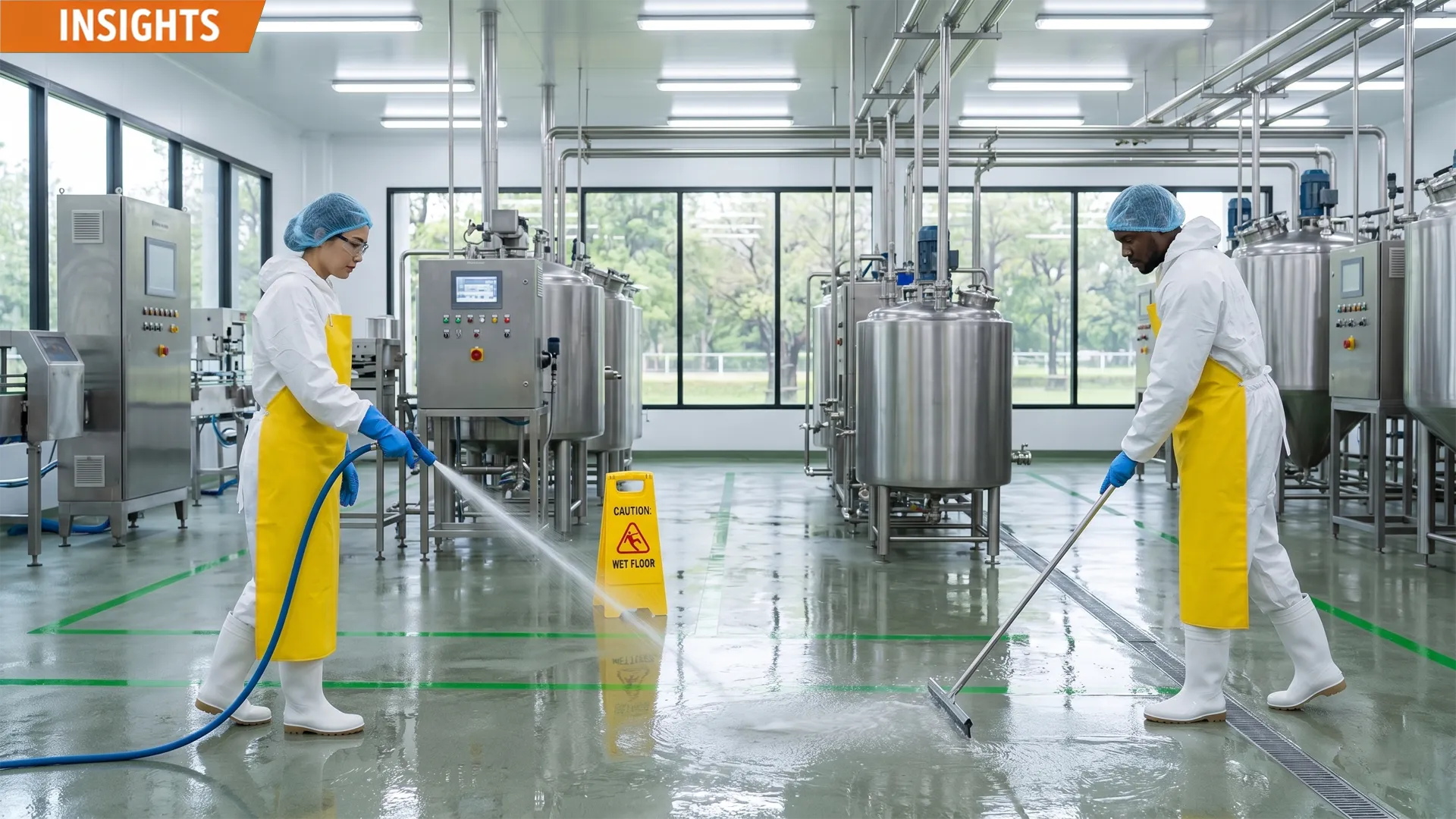
In food production, wet floors are often part of normal operations.
That is exactly why they deserve more attention.
Across many Victorian food manufacturing sites, employers deal with:
- washdowns
- cleaning cycles
- drainage areas
- moisture near lines
- slippery transitions between zones
- and floor conditions that change during the shift rather than staying the same all day
Because these conditions are common, they can become too familiar.
That is where risk starts building.
A wet area in food production is not just a cleaning issue.
It can affect:
- slip risk
- movement quality
- manual handling stability
- pace under pressure
- pedestrian confidence
- worker fatigue
- and the site’s ability to maintain both safety and hygiene discipline at the same time
This matters even more in fast-paced environments where workers are also trying to manage:
- line expectations
- repetitive tasks
- production timing
- and hygiene-sensitive behaviour
A site may know the wet areas exist.
But if those areas are not being reviewed honestly, workers can begin adapting through habit rather than controlled process.
That is when “normal” conditions start becoming normalised risk.
Good employers do not accept that just because wet floors are routine, they are under control.
They review them early and practically.
For the broader hub article, see our Food Production Safety in Victoria pillar guide on hygiene, PPE, wet-floor risk, repetitive work, fatigue, and safer worker onboarding in fast-paced sites.
Why Wet-Area Risk Is Different in Food Production
Most industrial sites may deal with occasional spills or isolated slippery surfaces.
Food production is different because wetness may be:
- ongoing
- expected
- cyclical
- or built into the way the site operates
That creates a different type of safety challenge.
The danger is not only that the floor becomes slippery.
It is that workers and supervisors may begin treating the condition as routine background rather than something that still needs active control.
That is what makes food production wet-area risk more serious.
It often sits inside:
- normal movement
- washdown timing
- sanitation activity
- line-side cleaning
- drainage design
- and production pressure that continues while conditions are changing
This means employers need to manage wet-floor risk not as a rare exception, but as an ongoing operating condition that still deserves:
- review
- discipline
- communication
- and layout thinking
That is a much stronger standard than simply putting up a warning sign and moving on.
Where Wet-Floor and Drain Risk Usually Builds
Wet-area risk in food production usually builds around:
- washdown zones
- drain channels
- floor transitions
- production-line edges
- entry and exit points to wetter areas
- cleaning stations
- intersections near hose use
- and areas where moisture builds gradually rather than all at once
It also becomes more serious when combined with:
- faster pace
- repeated foot traffic
- carrying tasks
- awkward manual handling
- poor visibility of surface changes
- or footwear that is technically compliant but not being used with enough care in the real conditions
This matters because a worker may not need to fully slip for the area to already be unsafe.
Sometimes the warning sign is earlier:
- awkward stepping
- cautious detouring
- reduced confidence while carrying loads
- repeated small skids
- or certain areas being quietly treated by workers as “bad spots” without formal review
Those are all signs the site should take seriously.
10 Practical Things Food Production Sites Should Review Early
1. Whether Wet Areas Are Being Treated as “Normal” Instead of Actively Managed
This is one of the most common problems.
When a wet condition is always there, workers may begin adjusting to it informally rather than through a clear site control.
That may sound like:
- “everyone knows that patch is slippery”
- “just be careful around the drains”
- or “it’s always a bit wet there”
Those attitudes are warning signs.
Good employers review whether the site is truly controlling the condition or simply relying on worker familiarity to work around it.
A condition being common does not make it low risk.
2. Whether Washdown Timing Is Creating Movement Risk
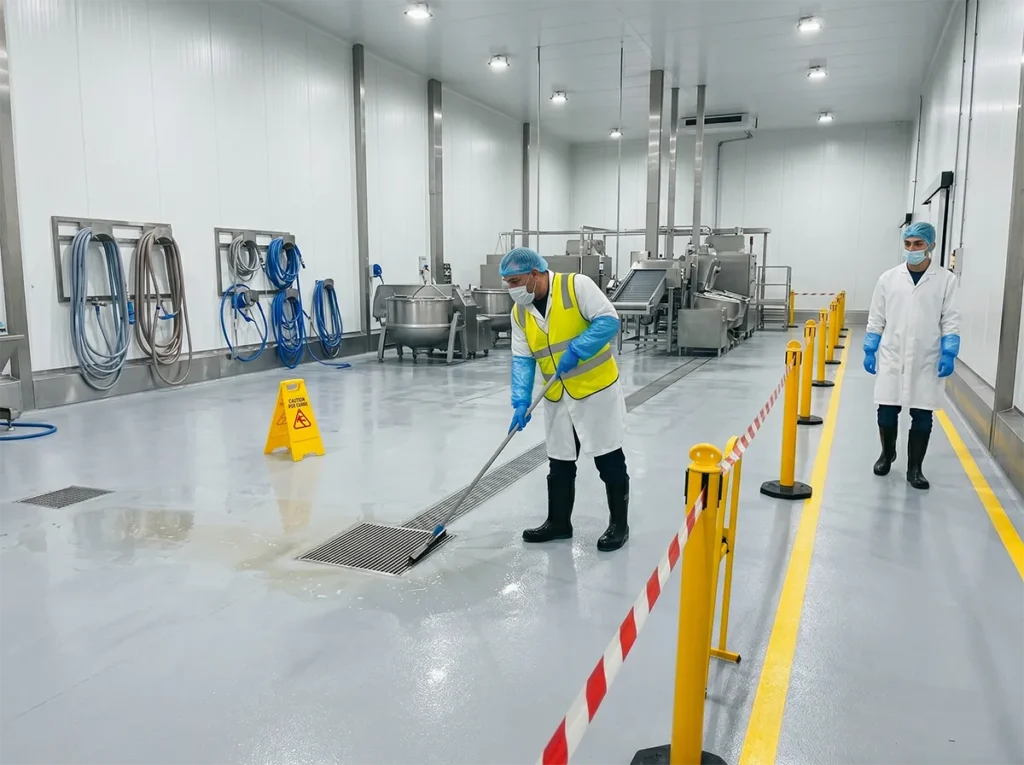
Washdowns are important in food production, but they can also change floor conditions quickly.
Employers should review:
- when washdowns happen
- whether movement continues through affected zones
- how clearly changes in floor condition are understood
- and whether washdown timing is interacting badly with production pressure or worker traffic
This matters because a washdown that is hygienically necessary can still create avoidable safety exposure if the movement implications have not been thought through properly.
Good control means reviewing both:
- hygiene need
- and movement consequence
at the same time.
3. Whether Drain Areas Are Creating Hidden Slip or Step Risk
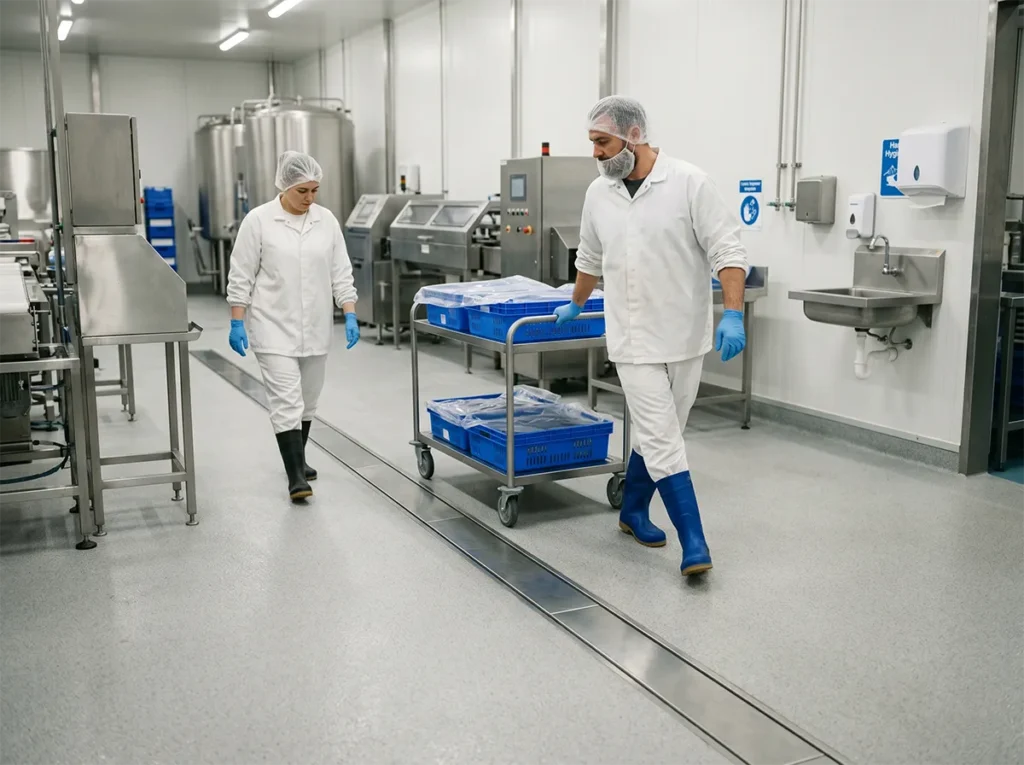
Drain areas are often risk points because they can involve:
- persistent moisture
- uneven confidence underfoot
- surface changes
- awkward walking angles
- or repeated worker traffic in narrower zones
These areas may not always look dramatic, which is part of the problem.
Workers can pass through them repeatedly until:
- confidence drops
- manual handling becomes awkward
- or one badly timed movement turns a routine passage into a real slip event
Good employers review drain areas not only for obvious hazards, but also for:
- repeated worker hesitation
- altered walking behaviour
- and whether the area is being navigated through habit instead of clear safety control
4. Whether Floor Transitions Are Clear Enough
In food production, one area of the site may be:
- drier
- cleaner
- rougher
- or easier to move through
while the next is:
- wetter
- smoother
- or more affected by washdown activity
That means floor transitions matter.
Employers should review whether workers can clearly recognise:
- where conditions change
- how those changes affect footing
- and whether movement behaviour needs to adjust between one area and the next
This matters because transitions often create risk when the worker is still moving with the confidence of the drier zone but has already entered the wetter one.
That is a real operating hazard, not a small detail.
5. Whether Footwear Expectations Match the Real Conditions
Correct footwear matters in food production, but employers should still ask whether footwear discipline is actually matching the site’s real wet-area conditions.
That includes reviewing:
- whether workers understand why footwear matters in wetter areas
- whether the pace of movement is still realistic for the surface
- whether workers are becoming too casual because they trust the footwear alone
- and whether specific areas are still harder to move through safely despite compliant footwear
This matters because footwear is a control, not a complete solution.
It needs to sit alongside:
- movement discipline
- floor review
- and site layout control
Our article on why PPE in food production protects both worker safety and food safety explains why protective clothing and footwear in food production should be treated as practical controls, not just standard dress requirements.
6. Whether Workers Are Carrying or Handling Items Through Slippery Zones
Wet-area risk increases when workers are also:
- carrying product
- moving tubs or trays
- handling tools
- transferring materials
- or performing repetitive tasks that reduce how much attention they can give to the floor itself
This matters because manual handling and slip risk often combine.
A worker may be able to walk safely through a wet area with empty hands, but the conditions may become much more dangerous when the same route is used while:
- lifting
- turning
- carrying
- or moving at line pace
Good employers review the actual task happening in the wet zone, not just the floor condition in isolation.
7. Whether New and Temporary Workers Understand the Wet-Area Behaviour Expected
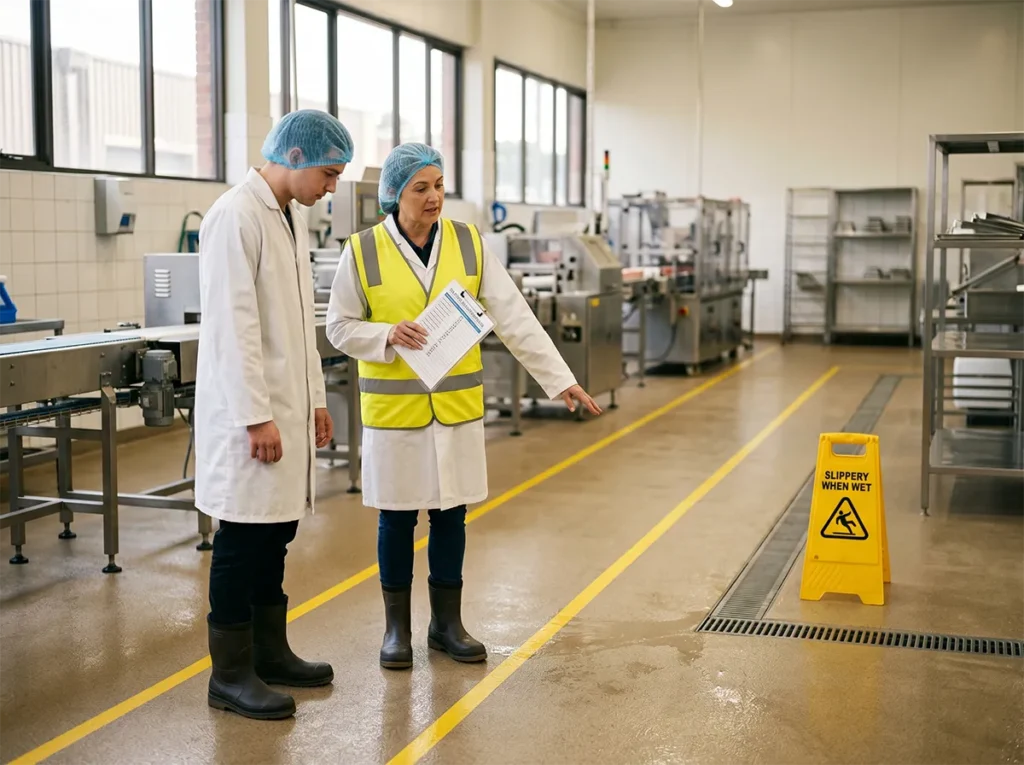
Workers who are new to food production may not yet understand:
- that wet floors are routine
- that routine does not mean low risk
- how movement changes in washdown zones
- and which parts of the site require extra caution
This is especially important for:
- casual workers
- temporary labour
- and workers transitioning from general warehouse or factory settings
Good employers do not assume these workers will “work it out”.
They show:
- where the risk points are
- what movement behaviour is expected
- and how the site wants workers to respond when floor conditions are changing
Our article on bringing new workers into food production: how to reduce hygiene and safety risk on day one explains why new and temporary workers need stronger practical guidance before entering active production areas.
8. Whether Multilingual Communication Is Strong Enough Around Wet-Area Risk
A warning about slippery conditions is only useful if workers actually understand:
- where the risk is
- when it changes
- how they should move
- and what the site expects from them in that area
In multilingual workforces, that cannot be assumed.
Employers should review whether communication around:
- washdown conditions
- wetter zones
- drains
- and movement expectations
is being made clear enough for all workers, not just those who are already familiar with the site.
This matters because misunderstanding in a wet area can lead to both:
- immediate injury risk
- and weaker confidence in the site’s broader safety system
Our article on how to run safer food production inductions for non-English speaking workers looks at how employers can make safety and hygiene expectations much clearer on multilingual food manufacturing sites.
9. Whether Pace Pressure Is Changing How Workers Move Through Wet Areas
A site may have decent wet-area controls when operations are calm.
The real test often comes when:
- line pace increases
- packing pressure builds
- production falls behind
- or workers begin rushing small transitions that usually receive more caution
This matters because pace can change:
- step behaviour
- carrying technique
- turning
- and willingness to slow down where conditions require it
Good employers review not just what the floor looks like, but how workers behave on it when the site is busy.
That is where the real risk often appears.
10. Whether Near Misses and Small Slides Are Being Taken Seriously
A worker catching themselves before a fall is still useful information.
So is:
- a repeated skid
- a hesitant manual handling route
- or a section of floor workers quietly avoid when possible
These are not background events to dismiss.
They often show where:
- floor conditions
- washdown timing
- drain design
- movement expectations
- or worker understanding
are weaker than they should be.
Good employers use these signals early rather than waiting for a more obvious incident to force the review.
That is how routine wet-area exposure is managed more intelligently.
What Better Wet-Area Control Usually Looks Like in Practice
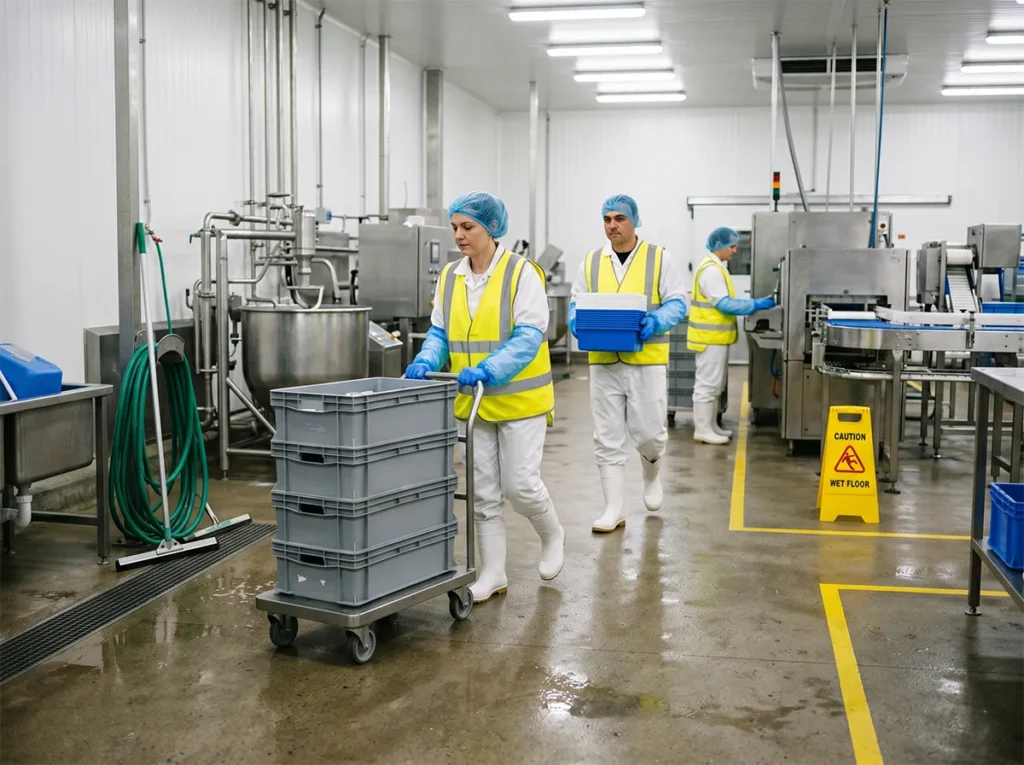
When wet-floor, washdown, and drain risk is being managed well, the site usually feels:
- readable
- controlled
- predictable
- and harder for workers to misunderstand
In practice, that often means:
- washdown timing is understood
- wetter zones are not being normalised casually
- floor transitions are clearer
- workers know how to move in those areas
- new starters are being shown the real risk points
- and supervisors treat small warning signs as meaningful early information
It should not feel like:
- everyone is expected to “just know” the bad spots
- the floor changes faster than workers can interpret
- or repetitive wet-area exposure is being treated as acceptable simply because it is common
Good control does not eliminate moisture from food production.
But it does stop moisture from becoming unmanaged routine risk.
A Simple Wet-Area Review Checklist for Food Production Employers
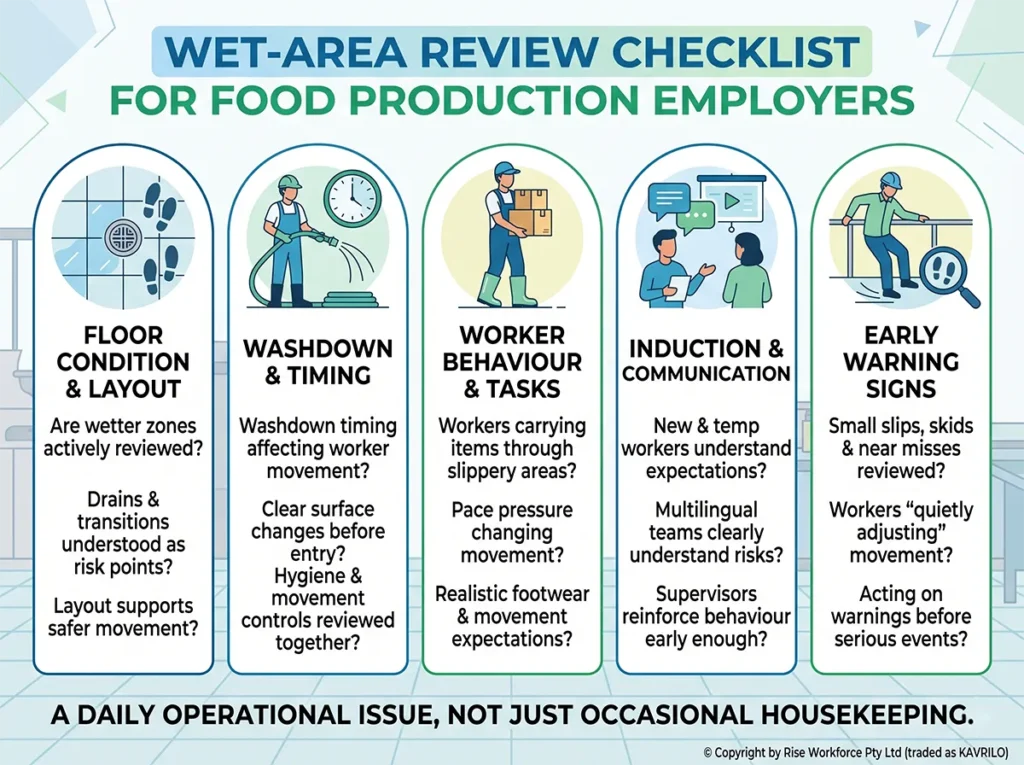
Here is a practical checklist employers can use when reviewing wet floors, washdowns, and drain areas.
Floor Condition and Layout
- Are wetter zones being actively reviewed, or just treated as normal?
- Are drain areas and transitions clearly understood as risk points?
- Does the floor layout support safer movement under changing conditions?
Washdown and Timing
- Does washdown timing affect worker movement or task flow?
- Are surface changes clear enough before workers enter affected areas?
- Are hygiene processes and movement controls being reviewed together?
Worker Behaviour and Tasks
- Are workers carrying or handling items through slippery areas?
- Is pace pressure changing how they move through wetter zones?
- Are footwear and movement expectations realistic for the actual conditions?
Induction and Communication
- Do new and temporary workers understand the wet-area behaviour expected?
- Are multilingual teams clearly understanding the risk?
- Are supervisors reinforcing the right movement behaviour early enough?
Early Warning Signs
- Are small slips, skids, and near misses being reviewed properly?
- Are workers quietly adjusting their movement in ways that suggest weak control?
- Is the site acting on these warnings before a more serious event occurs?
This kind of checklist helps employers review wet-area risk as a daily operational issue, not just an occasional housekeeping concern.
Final Word
Wet floors, washdowns, and drain areas matter in food production because routine exposure can still create serious risk when it is not being reviewed honestly.
For food manufacturers in Victoria, stronger outcomes usually come from:
- treating wet conditions as active risk, not background normality
- reviewing washdown timing and movement together
- understanding how drain areas and transitions affect worker confidence
- strengthening day-one guidance
- and acting on small warning signs before they become more serious events
That is what helps reduce:
- slip risk
- awkward movement under load
- repeated near misses
- weak wet-area discipline
- and production environments that look controlled but are carrying more routine risk than they should
Because in food production, a wet floor being common does not make it harmless.
It makes it something the site needs to manage better.
Need Practical Labour Hire Support for Warehousing and Manufacturing in Melbourne’s South-East?
KAVRILO is building its approach around safety-aware workforce support, stronger local responsiveness, and clearer operational discipline for warehouse and industrial environments, including food production settings where hygiene discipline and day-one worker readiness matter.
Whether your site needs better shift coverage, stronger day-one worker readiness, or more dependable labour coordination in hygiene-sensitive environments, KAVRILO is focused on practical workforce support that fits controlled production sites.
Need warehouse and factory labour hire support with stronger day-one readiness and more dependable workforce support for controlled production environments? Talk to KAVRILO about practical labour support across Melbourne’s South-East.
Article Disclaimer
This article is provided for general information only and does not constitute legal, workplace relations, safety, taxation, payroll or other professional advice. Please seek advice specific to your circumstances before acting on this information.
Please read our Website Disclaimer for more information.