
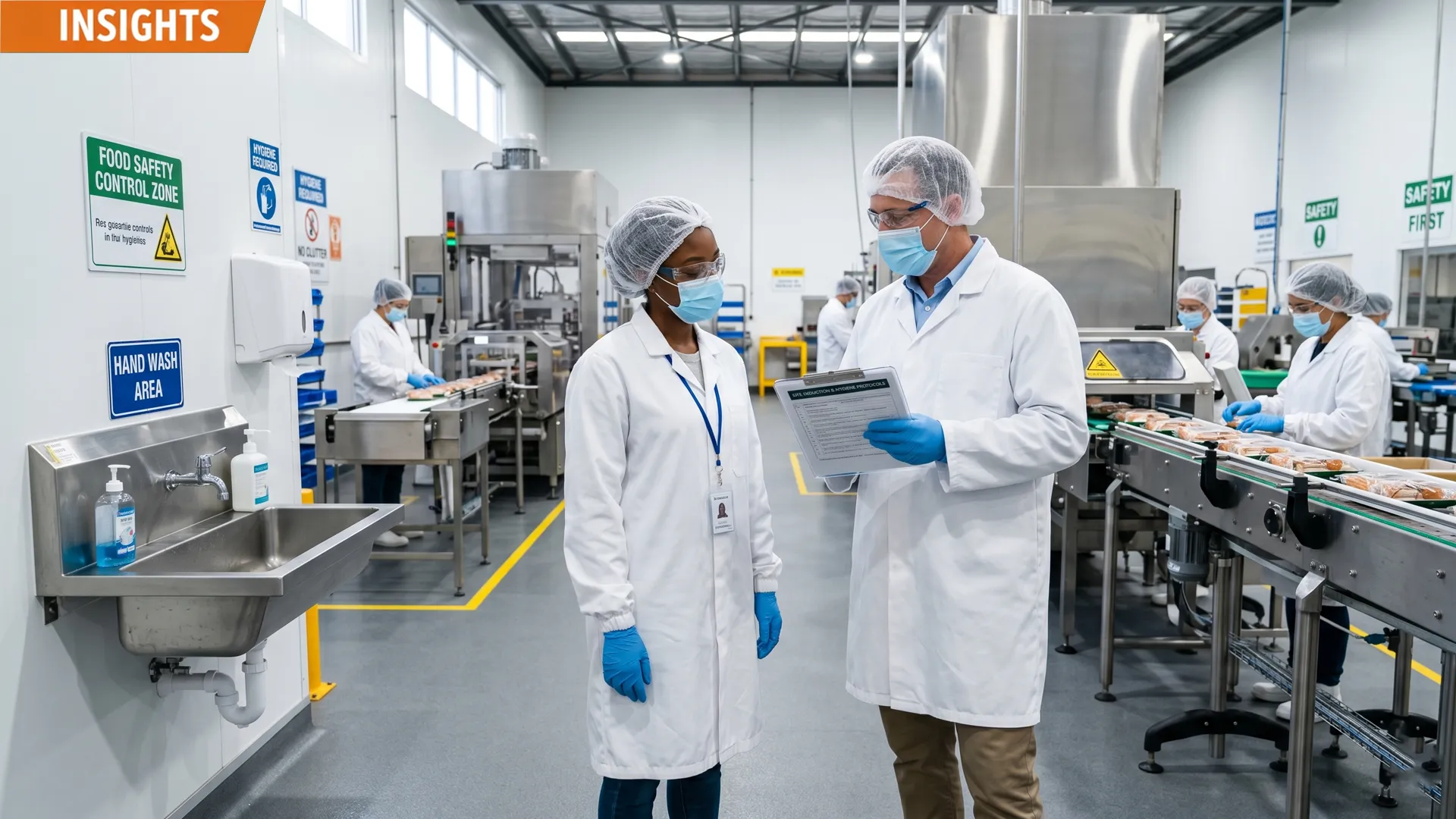
Temporary labour can be very useful in food manufacturing.
It helps sites respond to:
- peak demand
- leave coverage
- absenteeism
- seasonal pressure
- production surges
- and the reality that workforce needs do not always arrive with much notice
But flexibility creates a practical question:
How do you bring new people into a hygiene-sensitive site without weakening the controls the site depends on?
That question matters because temporary workers may arrive with:
- general factory experience
- warehouse experience
- process work experience
- packing experience
- and good work ethic
and still be unclear on:
- site-entry sequence
- PPE discipline
- hygiene rules
- movement boundaries
- product-sensitive behaviour
- changeover expectations
- and the reasons why some actions that feel minor elsewhere matter a great deal in food manufacturing
That is where cross-contamination risk can quietly build.
Not always through one dramatic mistake.
More often through:
- unclear entry
- weak hygiene understanding
- wrong movement between areas
- poor PPE use
- touching the wrong surfaces or products in the wrong way
- or workers trying to “work it out” inside a controlled environment that gives them too little room for guesswork
Across Victoria, food manufacturers need more than attendance from temporary labour.
They need temporary workers who can enter the site without undermining:
- hygiene discipline
- product protection
- worker safety
- process control
- and team confidence that the environment is still operating inside the standards it requires
That is why cross-contamination risk has to be managed before the worker becomes busy.
Good employers do not wait for active production to reveal what the worker did not understand.
They reduce that risk earlier.
For the broader hub article, see our Food Production Safety in Victoria pillar guide on hygiene, PPE, wet-floor risk, repetitive work, fatigue, and safer worker onboarding in fast-paced sites.
Why Temporary Workers Can Increase Cross-Contamination Risk If Readiness Is Weak
Temporary workers are not inherently risky.
The real issue is whether the site has prepared them clearly enough for the environment.
Food manufacturing often depends on workers understanding from the beginning:
- where they can and cannot go
- what PPE applies
- when hygiene steps matter
- what must stay separate
- how movement between areas is controlled
- and what behaviour protects the production environment, not just the worker
If that understanding is weak, temporary labour can create extra exposure through:
- inconsistent entry behaviour
- weaker clothing discipline
- wrong-area movement
- poor handling habits
- confusion during changeover or cleaning-sensitive periods
- and more reliance on workers copying others without understanding why the rule exists
This matters because temporary workers often enter the site with less familiarity, less context, and less confidence about what is normal in that specific environment.
That is why host employers should not assume:
- agency placement
- previous factory experience
- or visible confidence
means the worker is already safe for a food-manufacturing setting.
Cross-contamination risk usually increases when readiness is loose, not simply because the worker is temporary.
Where Cross-Contamination Risk Usually Starts on the First Shift
In many food sites, the risk starts early through things like:
- rushed entry
- PPE being worn but not understood
- movement across the wrong boundary
- workers touching surfaces or product-adjacent areas casually
- poor hand hygiene sequence
- confusion around where tools or materials belong
- or the worker following the pace of the floor before understanding the hygiene logic of the floor
These are common problems because temporary workers are often trying to do two things at once:
- look capable
- and catch up quickly
That combination can make them less likely to:
- ask questions
- admit uncertainty
- pause when unsure
- or recognise when a behaviour that feels harmless is actually site-sensitive
This is why employers need to think carefully about how temporary workers are introduced.
Cross-contamination risk is often created by:
- incomplete understanding
not - deliberate carelessness
That is a much more useful way to review the problem.
10 Practical Ways to Reduce Cross-Contamination Risk Early
1. Make Hygiene Entry Clear Before the Worker Enters Production
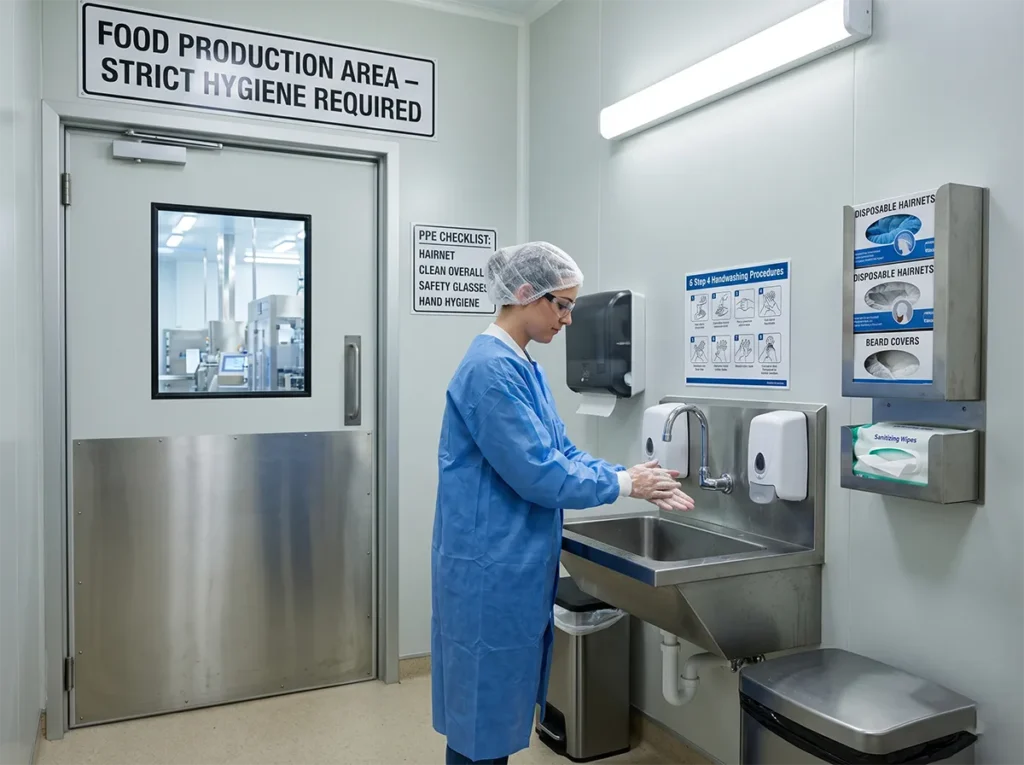
A temporary worker should not be figuring out hygiene entry while already moving toward the line.
The worker should understand before active work begins:
- where to report
- what the entry sequence is
- what PPE or hygiene steps apply
- what must happen before they enter
- and who is responsible for taking them through that process properly
This matters because the first few minutes often shape the whole shift.
If entry feels loose, the worker may assume the rest of the site is looser than it really is.
A stronger site makes entry feel structured from the start.
Our article on food production site entry rules: what new workers need to understand before shift start explains why stronger entry control is one of the first and most practical ways to protect hygiene-sensitive production areas.
2. Explain That PPE Is Part of Contamination Control, Not Just Personal Protection
A temporary worker may be used to PPE in a general warehouse or factory sense.
That does not mean they understand PPE in food manufacturing.
Employers should make clear:
- what must be worn
- how it should be worn
- when items need changing
- what must stay covered
- and why the PPE helps protect both the worker and the production environment
This matters because weak PPE understanding can quickly lead to:
- poor hygiene discipline
- careless adjustment of protective items
- movement between areas without enough control
- and behaviour that increases contamination-sensitive exposure
A stronger site explains the purpose, not just the rule.
Our article on why PPE in food production protects both worker safety and food safety looks more closely at why protective clothing matters to both worker protection and contamination control in fast-paced food sites.
3. Make Area Boundaries and Movement Rules Obvious
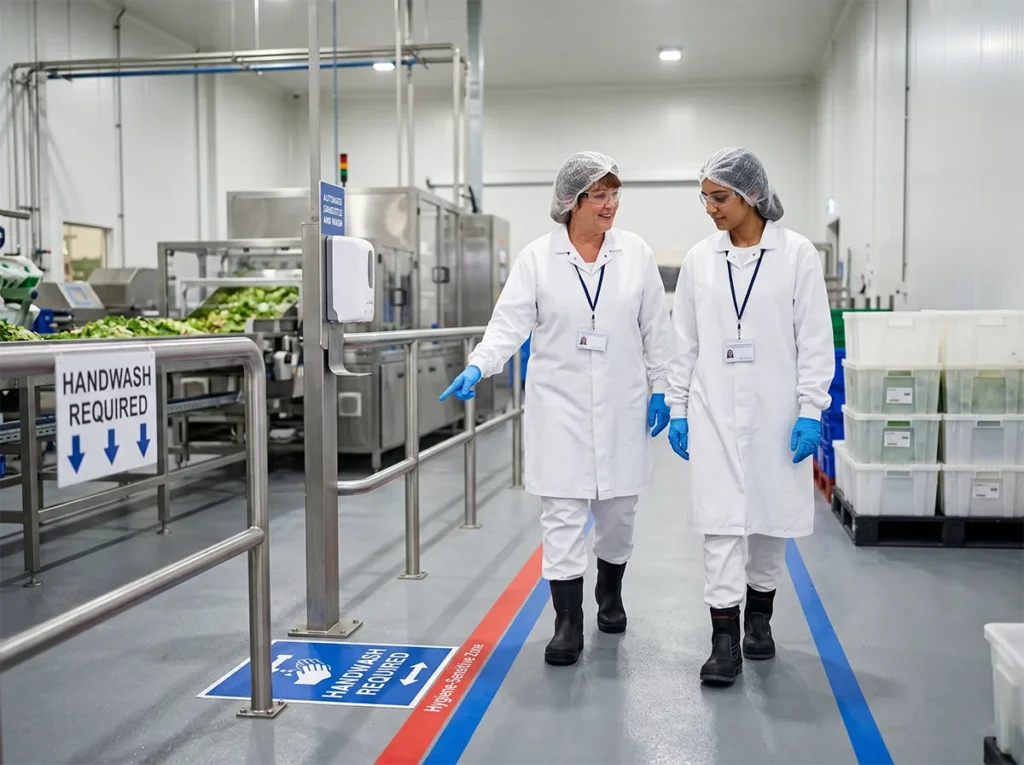
Cross-contamination risk often increases when workers do not clearly understand:
- where they can go
- where they should not go
- what route should be used
- and what movement between areas requires more care or permission
This matters because temporary workers may move with good intentions and still create risk if the site layout is not clear enough to read quickly.
A stronger site shows:
- boundaries
- routes
- area expectations
- and what “correct movement” looks like before the worker starts moving independently
That removes a lot of guesswork.
4. Show the Worker the Real Hygiene-Sensitive Risk Points, Not Just the Rules
A worker usually understands a site better when they can see:
- the area where the rule matters
- the kind of contact that should be avoided
- the movement behaviour expected
- and the places where the site becomes more sensitive to contamination-related mistakes
This matters because general instruction alone may not be enough.
A temporary worker may hear:
- be careful
- follow hygiene rules
- or stay in your area
without actually understanding how those instructions apply to the real site.
A stronger induction shows the real risk points clearly.
That makes safer behaviour easier to follow.
5. Do Not Assume Previous Factory Experience Transfers Cleanly
A temporary worker may have worked in:
- warehousing
- packaging
- process work
- manufacturing
- or general industrial sites
That can help.
But it does not automatically mean they understand:
- contamination-sensitive behaviour
- food-specific hygiene control
- area separation
- or how tightly the site expects entry, clothing, and movement discipline to be followed
This matters because some workers will interpret the environment through the habits they already know.
A stronger employer checks whether those habits need resetting before the worker begins active production.
Our article on why food production safety is different from general warehouse safety explains why workers entering food manufacturing often need tighter behavioural guidance than in many standard industrial settings.
6. Treat Multilingual Communication as a Core Hygiene Control
A worker can nod through an explanation and still be unclear on:
- the sequence
- the movement rules
- the clothing standard
- what contamination-sensitive behaviour actually means
- and what to do if they are unsure
That is especially important on multilingual sites.
Good employers do not rely only on:
- quick verbal explanation
- broad signs
- or the assumption that the worker will copy others well enough to stay safe
They make the key controls:
- simpler
- clearer
- more visible
- and easier to follow in practice
This matters because communication gaps in food manufacturing can quickly become hygiene-control gaps.
Our article on how to run safer food production inductions for non-English speaking workers looks at how food manufacturers can make hygiene and site rules much clearer for multilingual workers from the beginning.
7. Keep First-Shift Supervision Visible Enough to Catch Drift Early

Temporary workers often need more visible first-shift support, not because they are weak, but because they are new to the environment.
They should know:
- who owns their first shift
- who answers questions
- who corrects hygiene or movement issues
- and who they can approach when something feels unclear
This matters because many contamination-sensitive mistakes are preventable if someone catches:
- wrong movement
- poor PPE behaviour
- uncertainty around area rules
- or incorrect task handling
before the worker becomes more embedded in the shift.
Visible supervision is one of the strongest early controls.
Our article on bringing new workers into food production: how to reduce hygiene and safety risk on day one explains why visible early supervision is one of the most practical ways to reduce uncertainty before it turns into unsafe or unhygienic behaviour.
8. Check That Pace Pressure Is Not Overriding Hygiene Behaviour
A temporary worker who is trying hard to keep up may:
- move too quickly
- stop asking questions
- focus on pace over discipline
- or rush small behaviours that matter more in food production than they did on previous sites
This matters because contamination-sensitive mistakes often increase when workers are:
- under pace pressure
- unfamiliar with the site
- and trying not to look slow
A stronger employer reviews whether the worker can realistically cope with:
- the line speed
- the repetition
- and the behavioural discipline required at the same time
That is a more useful readiness test than simply asking whether they can work fast.
9. Make Temporary-Worker Readiness a Host-Site Responsibility, Not Only an Upstream Assumption
It is easy for employers to assume:
- the labour provider has already covered everything
- the worker has done food work before
- or the paperwork means the worker is ready
Those assumptions are risky.
The host site still needs to confirm:
- this worker understands this site
- this shift
- this environment
- and these hygiene expectations
That matters because contamination risk is created on the floor, not in theory.
A stronger host employer treats site-specific readiness as part of its own operational control, not just something delegated elsewhere.
10. Use Early Worker Behaviour as Feedback About the System
If temporary workers keep making similar hygiene or movement mistakes, that usually means something useful.
It may suggest:
- entry is unclear
- PPE explanation is too weak
- boundaries are not visible enough
- pace is too strong for new workers
- or first-shift supervision is not catching uncertainty early enough
This matters because repeated worker mistakes are often feedback about the system, not just the person.
Good employers use that feedback to strengthen:
- induction
- movement control
- signage
- supervision
- and practical day-one guidance
That is how cross-contamination risk is reduced more reliably over time.
What Better Cross-Contamination Control Usually Looks Like in Practice
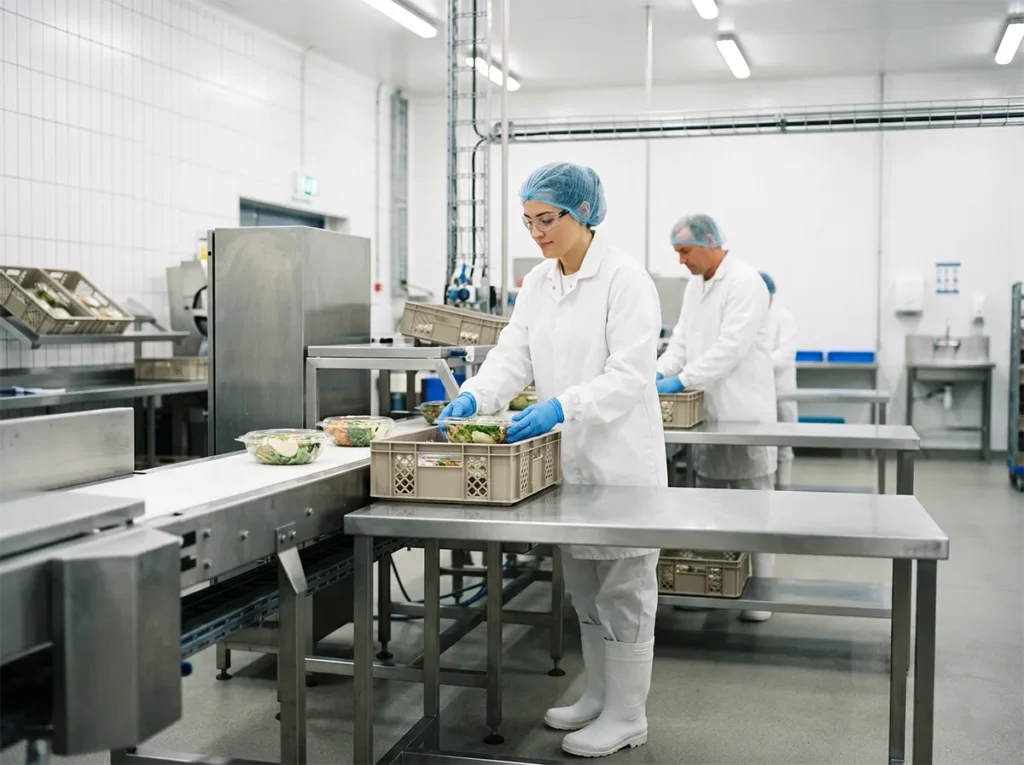
When temporary workers are being introduced well, the site usually feels:
- more structured
- more readable
- less reactive
- and easier to supervise
In practice, that often means:
- entry is controlled
- PPE is understood better
- area boundaries are clearer
- multilingual communication is not being ignored
- first-shift supervision stays visible
- and temporary workers are not being rushed into active production before readiness is clear
It should not feel like:
- the worker is copying others without understanding
- host employers are assuming too much because the shift is busy
- or hygiene control depends on the worker “just picking it up” while already under pressure
Good control usually makes temporary labour more usable, not less flexible.
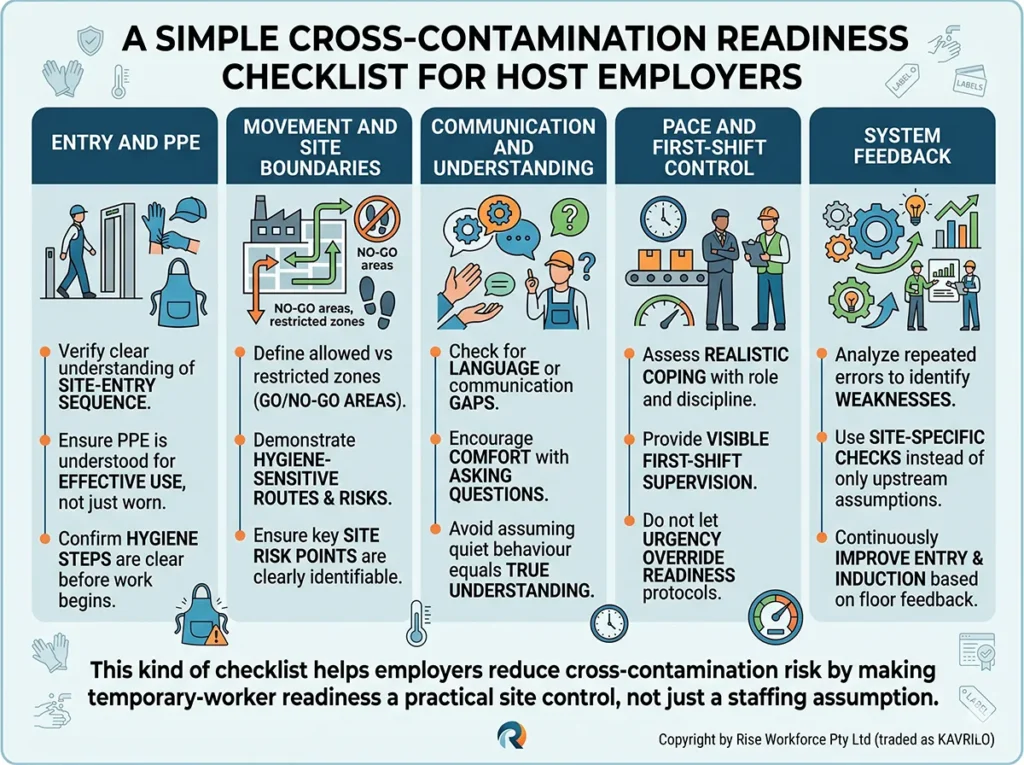
A Simple Cross-Contamination Readiness Checklist for Host Employers
Here is a practical checklist employers can use before putting temporary workers into food manufacturing.
Entry and PPE
- Does the worker understand the site-entry sequence clearly?
- Is PPE understood properly, not just worn visibly?
- Have hygiene steps been made clear before active work begins?
Movement and Site Boundaries
- Does the worker know where they can and cannot go?
- Have key hygiene-sensitive areas and routes been shown?
- Are the real site risk points clear enough to read?
Communication and Understanding
- Are language or communication gaps affecting readiness?
- Is the worker comfortable asking questions?
- Are we mistaking quiet behaviour for real understanding?
Pace and First-Shift Control
- Can the worker realistically cope with the pace and discipline of the role?
- Is first-shift supervision visible enough?
- Are we letting urgency override readiness?
System Feedback
- Are repeated worker mistakes showing us where the system is weak?
- Are we relying too much on upstream assumptions instead of site-specific checks?
- Are we improving entry and induction based on what actually happens on the floor?
This kind of checklist helps employers reduce cross-contamination risk by making temporary-worker readiness a practical site control, not just a staffing assumption.
Final Word
Reducing cross-contamination risk when bringing temporary workers into food manufacturing matters because food sites depend on more than attendance and effort alone.
For employers in Victoria’s food manufacturing sector, stronger outcomes usually come from:
- clearer hygiene entry
- better PPE explanation
- stronger movement control
- more practical multilingual communication
- visible first-shift supervision
- and host-site readiness checks that stay strong even when the shift is busy
That is what helps reduce:
- weak hygiene behaviour
- wrong-area movement
- contamination-sensitive mistakes
- unnecessary supervisor pressure
- and the hidden risk of assuming temporary workers understand more than the site has actually made clear
Because in food manufacturing, temporary labour can support production well.
But only when the site protects the environment before the worker becomes busy inside it.
Need Practical Labour Hire Support for Warehousing and Manufacturing in Melbourne’s South-East?
KAVRILO is building its approach around safety-aware workforce support, stronger local responsiveness, and clearer operational discipline for warehouse and industrial environments, including food production settings where hygiene discipline and day-one worker readiness matter.
Whether your site needs better shift coverage, stronger day-one worker readiness, or more dependable labour coordination in hygiene-sensitive environments, KAVRILO is focused on practical workforce support that fits controlled production sites.
Need warehouse and factory labour hire support with stronger day-one readiness and more dependable workforce support for controlled production environments? Talk to KAVRILO about practical labour support across Melbourne’s South-East.
Article Disclaimer
This article is provided for general information only and does not constitute legal, workplace relations, safety, taxation, payroll or other professional advice. Please seek advice specific to your circumstances before acting on this information.
Please read our Website Disclaimer for more information.