
Machine Operator Jobs in Melbourne: A Practical Guide for Job Seekers
Machine operator jobs can be a strong pathway for people who want practical work in Melbourne’s manufacturing, warehouse, food production, packaging and logistics sectors.
These roles may involve operating or assisting with equipment used for:
- packaging
- filling
- sealing
- labelling
- cutting
- processing
- production line work
- food manufacturing
- general factory operations
- materials handling
- quality checks
But machine operator work is not only about pressing buttons or keeping a line moving.
Good machine operators usually need to show:
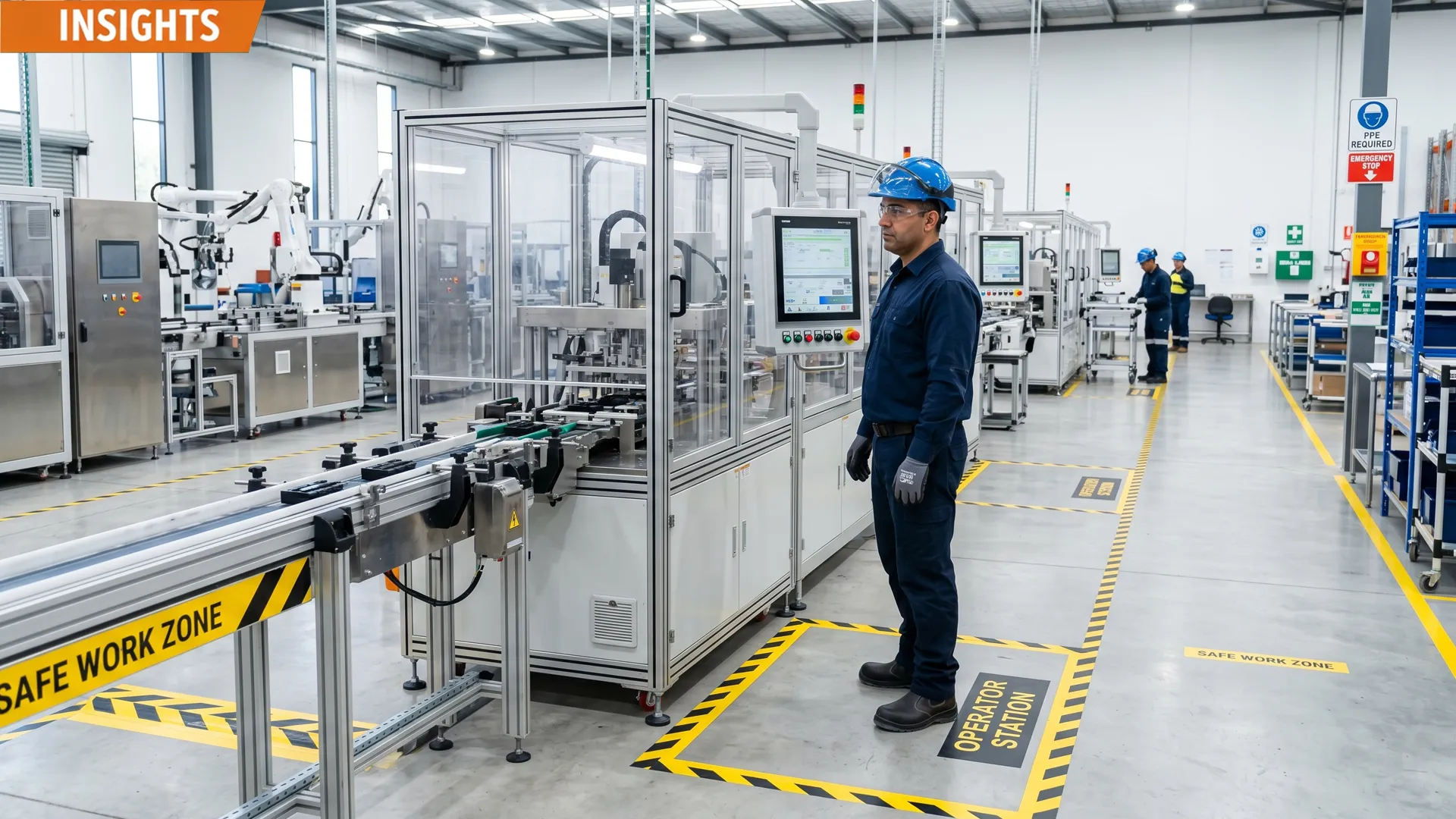
- safety awareness
- attention to detail
- reliability
- ability to follow instructions
- understanding of site procedures
- willingness to ask questions
- ability to report faults or hazards
- care around machinery, guards and moving parts
- respect for quality, hygiene and production standards
This matters because every workplace is different.
A machine you operated in one factory may not be the same as a machine at another site. Controls, hazards, guards, products, cleaning procedures, production speed and supervisor expectations may all change.
That is why job seekers should not describe themselves too broadly as “experienced machine operators” without explaining what they have actually done.
Employers want clear, honest information.
They want to know:
- what machines you have used
- what products or materials you worked with
- whether you operated independently or under supervision
- whether you performed setup or only normal operation
- whether you completed checks, cleaning, quality control or documentation
- whether you understand safety instructions and site-specific procedures
This guide explains what job seekers should know before applying for machine operator jobs in Melbourne.
If you are looking for practical warehouse, factory or production work, visit our job seeker support page to learn more about KAVRILO’s approach to connecting workers with suitable labour hire opportunities.
What Does a Machine Operator Actually Do?
A machine operator works with machinery or production equipment to help manufacture, pack, process, label, cut, fill or prepare products.
The exact duties depend on the workplace.
In some jobs, a machine operator may:
- start or stop equipment according to site instructions
- load materials into a machine
- monitor the machine while it is running
- check products for quality
- report faults or defects
- record production information
- follow cleaning or hygiene procedures
- remove finished products
- stack, pack or label items
- follow safety, PPE and site rules
In other jobs, the role may be more advanced and include:
- machine setup
- product changeovers
- adjustment of settings
- troubleshooting
- tool changes
- assisting maintenance teams
- training other workers
- checking production targets
- reviewing quality issues
These duties are not the same.
That is why it is important to be clear about what kind of machine operator experience you have.
If you have only assisted on a machine, do not claim that you operated it independently.
If you only packed products at the end of a production line, do not describe that as full machine operation unless it is accurate.
Honesty is better than overclaiming.
A good employer will appreciate a worker who explains their experience clearly and is willing to learn safely.
Internal link placement suggestion:
After this section, add:
Our article on [what employers look for in a machine operator] explains the practical qualities that can help job seekers stand out in factory and production environments.
Why Machine Operator Jobs Are Different from General Factory Work
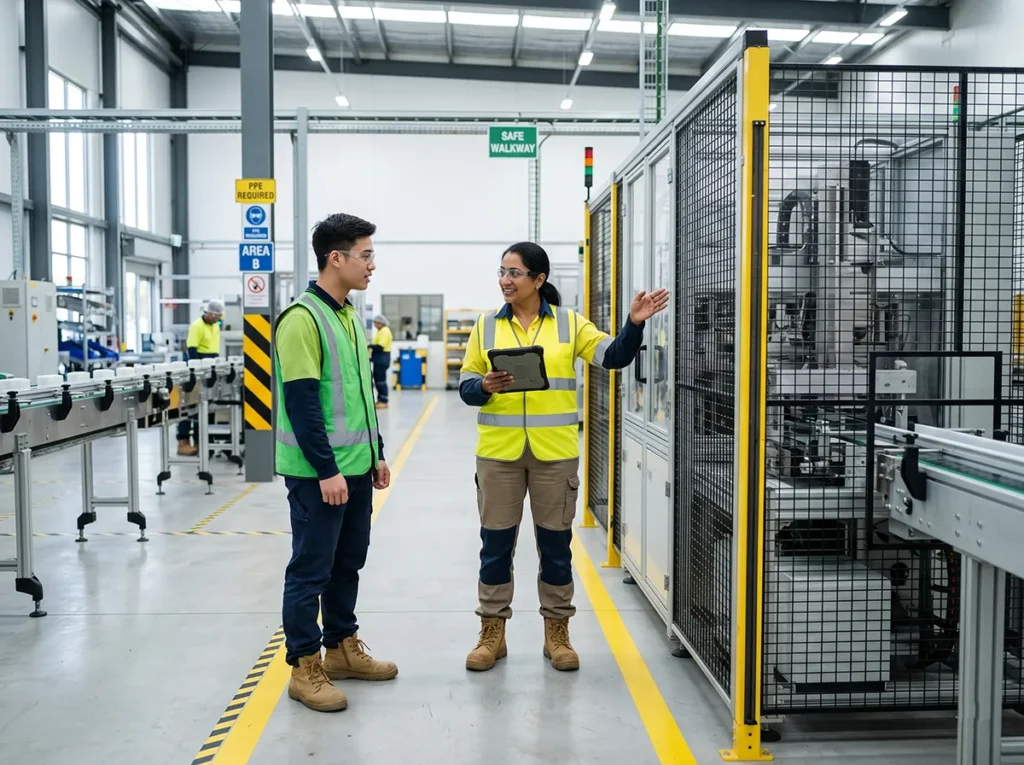
General factory work and machine operator work can overlap, but they are not always the same.
A general factory worker may perform tasks such as:
- packing
- sorting
- cleaning
- labelling
- stacking
- moving products
- assisting production lines
- basic quality checks
A machine operator may still do some of those tasks, but the role usually requires stronger awareness of:
- moving machine parts
- control panels
- emergency stops
- guarding
- operating instructions
- safe loading and unloading
- production speed
- defects and faults
- product quality
- site-specific procedures
This means machine operator jobs often carry more responsibility.
You may need to notice when something sounds wrong, looks wrong or behaves differently from normal.
You may also need to stop and ask for help if:
- the machine jams
- a guard is damaged
- a product is not feeding correctly
- you do not understand an instruction
- a supervisor asks you to do something unfamiliar
- the task looks unsafe
- the machine behaves differently from what you were trained to expect
A reliable machine operator is not someone who keeps going no matter what.
A reliable machine operator is someone who works carefully, follows instructions and reports problems early.
What Employers Usually Look For in Machine Operators
Employers normally look for a combination of practical experience, safety awareness and workplace behaviour.
They may look for:
- previous machine operating experience
- production or manufacturing background
- ability to follow written or verbal instructions
- good attendance and reliability
- attention to detail
- ability to work at a steady pace
- understanding of PPE requirements
- willingness to follow site procedures
- ability to report faults or hazards
- good communication with supervisors
- safe manual handling habits
- quality-checking awareness
For some roles, employers may also look for:
- forklift licence
- food production experience
- GMP or hygiene awareness
- computerised machine experience
- experience with changeovers
- experience reading production paperwork
- experience in fast-paced lines
- night-shift or afternoon-shift availability
The most important thing is suitability.
A worker may be excellent in one type of factory but not ready for another machine or production process without further training.
That does not mean the worker is bad.
It means the role must match the worker’s real experience, current ability and site-specific training.
How to Describe Your Machine Experience Correctly
Many job seekers lose opportunities because their experience is too vague.
For example, writing this on a resume is not enough:
- Machine operator
- Factory worker
- Production worker
- Worked on machines
These descriptions do not tell the employer what you actually did.
A better description explains:
- type of machine
- product or industry
- duties performed
- level of responsibility
- safety or quality tasks
- shift environment
For example:
- Operated packaging machinery in a food production environment
- Monitored filling and sealing equipment under supervisor instruction
- Assisted with product changeovers and line cleaning
- Checked labels, batch numbers and packaging quality
- Reported jams, defects and machine faults to the line supervisor
- Followed hygiene, PPE and food safety procedures
- Worked on fast-paced production lines during afternoon shift
This kind of wording is clearer and more trustworthy.
It shows the employer what you actually did, without overstating your competency.
Internal link placement suggestion:
After this section, add:
Our guide on [how to write a machine operator resume] explains how to describe machinery, duties, products and safety responsibilities more clearly when applying for factory and production roles.
What to Include in a Machine Operator Resume
A strong machine operator resume should be practical and specific.
Include:
- your contact details
- suburb or general location
- work rights
- availability
- transport details if relevant
- licences or tickets
- machine operating experience
- production or factory experience
- safety and PPE awareness
- quality-checking experience
- previous employers or industries
- references if available
For each job, try to describe:
- what machine or equipment you used
- what product or material was involved
- whether the role was food, packaging, manufacturing or warehouse-based
- what checks you performed
- what safety rules you followed
- whether you worked independently or with a team
- whether you worked day, afternoon or night shift
Avoid using claims you cannot explain in an interview.
For example, do not write:
- expert machine operator
- fully trained on all machines
- can operate any production machine
- no supervision needed
These statements may create risk and reduce trust.
Better wording is:
- experienced in packaging machine operation
- familiar with food production line procedures
- confident following site-specific operating instructions
- able to report faults and follow supervisor direction
- willing to complete site induction and supervised familiarisation
That sounds more realistic and safer.

How to Prepare for a Machine Operator Interview
A machine operator interview may be simple, but you still need to prepare.
You may be asked:
- What machines have you used before?
- What products did you work with?
- Did you operate the machine yourself or assist another operator?
- Did you perform setup or changeovers?
- What safety checks did you follow?
- What PPE did you wear?
- What would you do if the machine jammed?
- What would you do if a guard was damaged?
- What would you do if you did not understand an instruction?
- Are you comfortable with repetitive work?
- Can you work day, afternoon or night shift?
- Do you have reliable transport?
The best answers are honest and practical.
If you do not know a machine, say so.
A good answer might be:
“I have not used that exact machine before, but I have worked on packaging lines and followed machine instructions under supervision. I would need site-specific training before operating it independently.”
That answer is much safer than pretending you know everything.
Employers usually prefer a worker who speaks honestly and asks questions before making mistakes.
Internal link placement suggestion:
After this section, add:
Our article on [how to prepare for a machine operator interview or skills assessment] gives job seekers practical ways to explain their experience honestly and confidently.
Your First Shift as a Labour-Hire Machine Operator
The first shift is important.
It is your opportunity to show that you are reliable, careful and ready to follow the site’s way of working.
Before your first shift, confirm:
- start time
- site address
- supervisor name if available
- sign-in process
- required PPE
- parking or transport arrangements
- meal break expectations
- shift length
- who to contact if delayed
On arrival, be ready to:
- arrive early
- introduce yourself politely
- follow sign-in procedures
- complete site induction
- listen carefully
- ask questions if unsure
- confirm your supervisor
- understand your assigned work area
- follow PPE and safety requirements
Do not assume that every factory works the same way.
Even if you have strong experience, the site may have different:
- emergency procedures
- machine rules
- cleaning steps
- quality checks
- reporting processes
- production targets
- shift handover procedures
A good first shift is not about rushing.
It is about starting safely, understanding the site and building trust.
Internal link placement suggestion:
After this section, add:
Our article on [your first shift as a labour-hire machine operator] explains what to expect when starting at a new site and how to avoid common first-day mistakes.
Safety Habits That Make Machine Operators More Employable
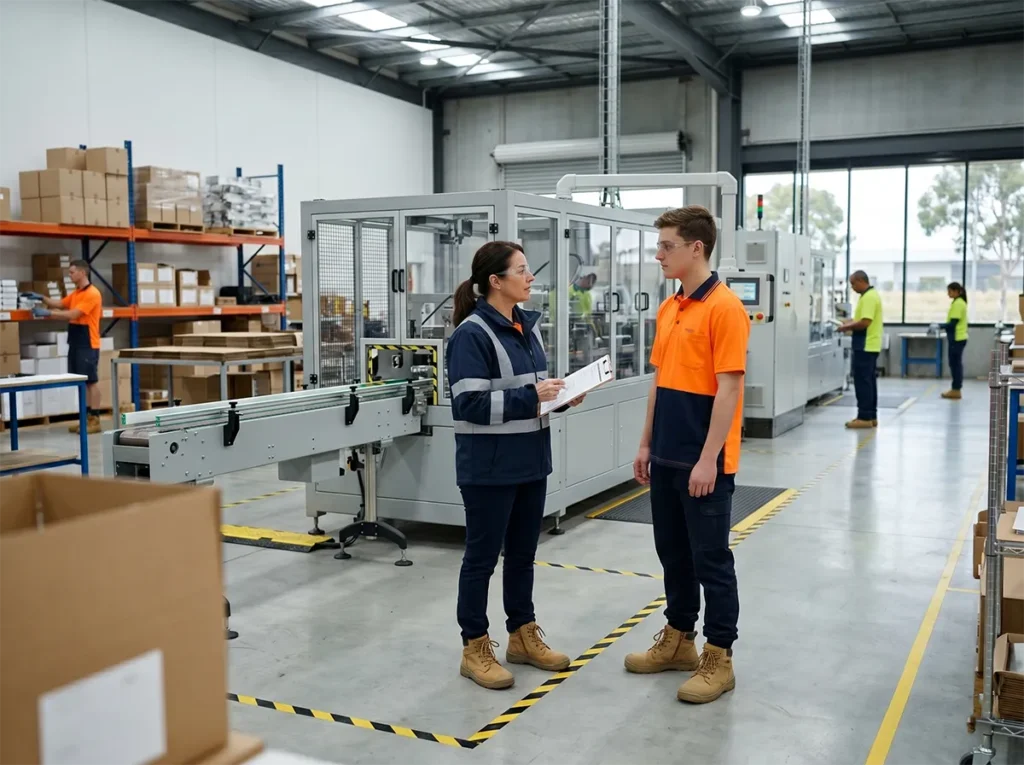
Good safety habits can make you more valuable to employers.
Strong machine operators usually:
- follow induction instructions
- wear required PPE correctly
- keep hands and clothing away from moving parts
- respect guards and safety devices
- report defects early
- do not clear faults unless trained and authorised
- do not bypass safety controls
- ask questions when unsure
- keep work areas tidy
- follow manual handling procedures
- communicate with supervisors
- stop and report unsafe conditions
Safety is not separate from productivity.
Unsafe operation can cause:
- injuries
- damaged products
- machine downtime
- quality problems
- production delays
- disciplinary issues
- loss of future work opportunities
Employers value workers who can keep production moving without creating unnecessary risk.
A worker who reports a problem early may prevent a bigger problem later.

What to Do If You Are Asked to Operate an Unfamiliar Machine
This is one of the most important points for job seekers.
If you are asked to operate a machine you do not know, do not guess.
You should:
- tell the supervisor you have not used that specific machine before
- ask for instruction
- ask what tasks you are authorised to perform
- ask about emergency stops and guarding
- ask what to do if the machine jams
- ask who to report faults to
- ask whether you should be supervised first
- contact your labour hire provider if the role is different from what you were told
Do not feel embarrassed about asking.
A safe worker is not someone who pretends.
A safe worker is someone who understands their limits and follows the correct process.
Never operate machinery if you genuinely do not understand how to do so safely.
Never remove or bypass guards.
Never clear jams, reach into moving areas or perform maintenance tasks unless you have been trained, authorised and instructed through the site’s safe procedure.
Internal link placement suggestion:
After this section, add:
Our article on [what to do if you are asked to operate unfamiliar machinery] explains why asking for instruction is a sign of professionalism, not weakness.
Common Mistakes Job Seekers Should Avoid
Machine operator applicants sometimes make mistakes that reduce their chance of getting work.
Avoid these:
- saying you can operate machines you have never used
- using vague resume wording
- forgetting to mention licences or tickets
- ignoring shift availability details
- failing to explain transport arrangements
- arriving late to interviews or first shifts
- not asking questions during induction
- treating PPE as optional
- using a phone near active work areas
- continuing work when something seems unsafe
- failing to report hazards or machine faults
- exaggerating experience because you want the job
A labour hire provider or employer may forgive a gap in experience.
They are less likely to trust a worker who gives misleading information.
Be clear, honest and professional.
Can You Become a Machine Operator Without Previous Experience?
Sometimes, yes.
But it depends on the role.
Some entry-level factory or production jobs may allow workers to begin as:
- production assistants
- packers
- line workers
- process workers
- general factory hands
- machine assistants
From there, a worker may gradually learn more about machine operation under supervision.
This pathway can be useful if you are reliable, careful and willing to learn.
However, some machine operator roles require previous experience, training, competency or specific authorisation before you can work independently.
Do not expect to operate unfamiliar or higher-risk machinery without proper instruction.
A good pathway is:
- Start with general production or packing work.
- Learn site rules and production flow.
- Show reliability and safety awareness.
- Ask to learn more when appropriate.
- Receive instruction or supervised training.
- Build real machine-specific experience.
- Update your resume honestly.
This approach is slower than exaggerating, but it is much safer and more sustainable.
Internal link placement suggestion:
After this section, add:
Our article on [can you become a machine operator without previous experience] explains realistic entry pathways from production work into machine operation.
Machine Operator Shift Work in Melbourne
Machine operator jobs may involve:
- day shift
- afternoon shift
- night shift
- rotating shifts
- weekend work
- overtime
- short-notice shifts
- seasonal or peak-period work
Before accepting a role, think carefully about:
- transport
- sleep routine
- family responsibilities
- fatigue
- meal preparation
- travel time
- ability to arrive on time
- whether the shift pattern is sustainable
Machine operation requires focus.
If you are too tired, rushed or distracted, safety and quality can suffer.
Being honest about your availability is important.
It is better to accept shifts you can reliably attend than to accept everything and then become unreliable.
A Simple Checklist for Job Seekers
Use this checklist before applying for machine operator jobs.
Experience and Resume
- Have I clearly listed the machines or production lines I worked with?
- Have I explained my duties honestly?
- Have I included licences, tickets or training?
- Have I described quality checks, PPE or safety procedures?
- Have I avoided exaggerating my experience?
Interview Preparation
- Can I explain what machines I have used?
- Can I explain what products or materials I worked with?
- Can I describe what I would do if a machine fault occurred?
- Can I explain my shift availability?
- Can I clearly say what I have not done before?
First Shift Readiness
- Do I know the address and start time?
- Do I know what PPE is required?
- Do I know who to report to?
- Am I prepared to ask questions?
- Am I ready to follow site-specific instructions?
Safety Awareness
- Will I report unsafe work?
- Will I refuse to guess on unfamiliar machinery?
- Will I avoid bypassing guards or safety devices?
- Will I follow induction instructions?
- Will I contact KAVRILO if the work is different from what was discussed?
This checklist can help you present yourself as reliable, honest and safety-aware.

What Better Machine Operator Candidates Usually Show
Strong machine operator candidates usually show more than experience.
They show:
- calm communication
- punctuality
- respect for instructions
- practical safety awareness
- attention to detail
- willingness to learn
- good workplace attitude
- clear understanding of their own experience
- ability to report issues early
- reliability across shifts
Employers often remember workers who make their job easier.
That does not mean being silent or saying yes to everything.
It means being dependable, careful and honest about what you can do safely.
A good machine operator does not create confusion.
They help the site run with more control.
Looking for Machine Operator Work in Melbourne?
KAVRILO is building its approach around practical labour hire support for warehouse, factory, logistics and production environments.
If you are looking for machine operator work, it helps to provide accurate information about:
- your machine operating experience
- the type of machinery you have used
- production or factory environments you have worked in
- your licences or tickets
- your shift availability
- your preferred locations
- your transport situation
- any food production, packaging or manufacturing experience
The more accurate your information is, the easier it is to understand what roles may be suitable.
Submitting your details does not guarantee work, shifts or placement. Work opportunities depend on role availability, client requirements, worker suitability, work rights, onboarding checks, safety requirements and applicable laws.
KAVRILO is preparing to operate in accordance with Victorian labour hire licensing requirements. Labour hire services will only be supplied where permitted under applicable law.
Final Word
Machine operator jobs in Melbourne can be a valuable opportunity for practical workers who want to build a stronger future in factory, production, packaging, food manufacturing or warehouse environments.
But long-term success depends on more than getting the job.
It depends on:
- explaining your experience honestly
- following site-specific instructions
- respecting machine safety
- reporting faults and hazards early
- accepting training where needed
- staying reliable across shifts
- understanding that every machine and site can be different
Good machine operators are not just fast.
They are careful, consistent and trustworthy.
That is what helps employers feel confident putting you into production environments where safety, quality and output all matter.
Looking for Machine Operator Jobs, Factory Work or Production Roles in Melbourne?
KAVRILO is focused on practical workforce support for warehouse, factory, logistics and production environments across Melbourne, with a strong emphasis on worker readiness, safety awareness and suitable role matching.
If you have machine operation, production, packing, food manufacturing or factory experience, you can register your interest and provide clear details about your background, availability and preferred work locations.
Article Disclaimer
This article is provided for general information only and does not constitute legal, workplace relations, safety, taxation, payroll or other professional advice. Please seek advice specific to your circumstances before acting on this information. Please read KAVRILO’s Website Disclaimer for more information.