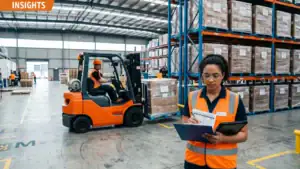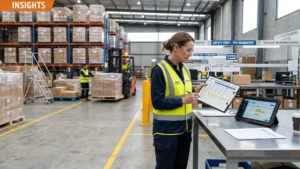


Machine operators play an important role in Melbourne’s manufacturing, food production, packaging, processing and warehouse-connected production environments.
When demand increases, employees are absent, a new shift begins or a production backlog develops, employers may need additional operators without immediately committing to permanent recruitment.
That is where machine operator labour hire can provide useful workforce flexibility.
But machine operator labour hire is not simply about finding someone who has worked near machinery before.
Machinery, controls, products, hazards and operating boundaries can differ considerably between workplaces. A worker who has operated one machine may not automatically be ready or competent to operate another—even when the equipment appears similar.
A successful placement therefore depends on the quality of the whole process:
- how clearly the employer defines the role
- how relevant experience is assessed
- how competency is confirmed
- how the host site manages induction and supervision
- how safety information is shared
- and how changes are communicated after the placement begins
Machine operator labour hire works best when workforce flexibility is supported by accurate information, practical safety controls and clear cooperation between the host employer, labour hire provider and worker.
That is where stronger machine operator placements begin.
If your site needs temporary production support, our warehouse and factory labour hire services focus on practical worker matching, clear site expectations and stronger day-one readiness.
Why Machine Operator Labour Hire Requires More Than Worker Availability
Machine operation is a broad area of work. The title may refer to workers operating packaging, filling, sealing, labelling, processing, cutting, printing, food-production or other manufacturing equipment.
Even machines that perform similar functions can differ in their:
- control systems
- guards and interlocks
- loading methods
- operating limits
- emergency controls
- changeover requirements
- cleaning procedures
- materials and products
- quality checks
- fault-reporting processes
This means employers should avoid treating all machine operators as interchangeable.
A person may be an experienced production worker and still need substantial instruction before operating a particular machine. Another worker may have directly relevant experience but still require site-specific familiarisation, supervision and verification before working independently.
The quality of the placement therefore depends on matching the worker to the actual equipment, duties, site and shift—not merely matching them to a broad job title.
Internal link placement suggestion:
After this section, add: Our article on [machine operator competency: why experience alone may not be enough] explains the difference between general experience, relevant experience, familiarisation and verified competency.
Where Machine Operator Placements Usually Start Breaking Down
Machine operator placements rarely fail because of one issue alone. More often, several smaller gaps combine.
Common problems include:
- a job brief that simply asks for an ‘experienced machine operator’
- machinery details not being provided
- setup, cleaning or fault-related duties being added after the worker starts
- general production experience being mistaken for machine-specific competency
- induction being rushed because production is already behind
- supervisors assuming the worker understands unfamiliar controls
- changes in equipment or duties not being communicated
- production pressure encouraging unsafe shortcuts
These gaps can create more than a staffing problem. They can affect worker safety, product quality, equipment condition, output consistency and the stability of the placement.
Better results usually begin before the worker arrives—with a much clearer understanding of the role and the site.
10 Things Employers Need to Get Right
1. Prepare an Accurate Machine Operator Job Brief
A clear job brief is one of the most important controls in the labour hire process.
The employer should explain:
- the machine or equipment category
- the product or material being processed
- the normal operating duties
- whether loading and unloading are involved
- whether setup or changeovers are required
- whether cleaning forms part of the role
- whether quality checks or production records are required
- the shift, location and expected assignment duration
- the essential experience, licences or qualifications, where applicable
Where possible, providing the manufacturer, model or a useful equipment description can help distinguish directly relevant experience from general machine-operation experience.
A strong brief also reduces the risk of selecting someone for a role that changes materially once they arrive.
Internal link placement suggestion:
After this section, add: Our guide on [how to write a clear machine operator job brief] explains what employers should provide before requesting temporary machine operators.
2. Define the Duties and Operating Boundaries
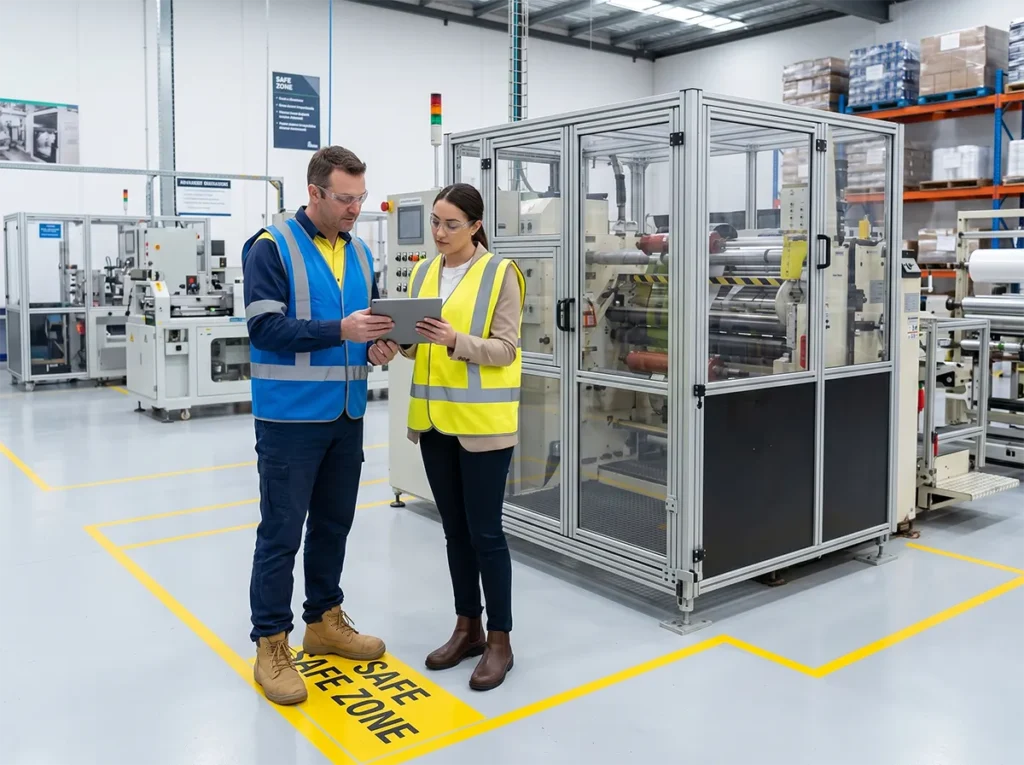
Employers should identify what the worker will—and will not—be expected to do.
Normal machine operation may be very different from:
- machine setup
- tool or product changeovers
- clearing material
- adjusting settings
- cleaning inside controlled areas
- fault investigation
- maintenance assistance
- quality testing
Some of these tasks may require additional knowledge, training, authorisation, isolation controls or supervision.
They should not be added casually because the worker appears confident or production is under pressure. Clear boundaries protect both the worker and the host employer from unsafe assumptions.
3. Distinguish Experience from Verified Competency
A candidate may state that they have operated machinery for several years. That is useful information, but years of experience alone do not show exactly what the person can safely perform on the proposed equipment.
Employers and labour hire providers should consider:
- what machinery the person operated
- what products or materials were involved
- which tasks they personally performed
- whether they completed setup or changeovers
- whether they worked independently
- how recently they performed the work
- what training or workplace instruction they received
- whether they were authorised to adjust, clean or clear faults
Depending on the role, further familiarisation, supervised observation, practical assessment or training may be appropriate.
Any assessment should be properly controlled and conducted by a suitable person. A candidate should not be exposed to an uncontrolled machinery risk simply to prove their ability.
Internal link placement suggestion:
After this section, add: Read [machine operator competency: why experience alone may not be enough] for a deeper employer-focused explanation of screening, familiarisation and verification.
4. Share the Real Site Conditions Before Placement
Worker suitability is influenced by more than the machine itself.
The labour hire provider should also understand:
- shift times and overtime expectations
- noise, temperature or hygiene conditions
- repetitive tasks and standing requirements
- manual handling
- forklift and pedestrian interaction
- hazardous substances, dust, fumes or liquids
- required PPE
- transport or site-access limitations
- the level of supervision available
Accurate site information allows potential concerns to be identified before the worker accepts the assignment.
Urgency should not be used as a reason to understate difficult conditions or omit important safety information.
5. Provide a Site-Specific Induction
An experienced operator still needs an appropriate induction at every new workplace.
A machine operator’s induction may need to cover:
- site access and emergency arrangements
- PPE
- traffic routes and restricted areas
- machine-specific hazards
- guards, interlocks and emergency controls
- approved pre-start checks
- normal startup and shutdown expectations
- operating boundaries
- product and quality requirements
- fault, defect and incident reporting
- cleaning or hygiene requirements
- the person responsible for supervision
Providing a document to sign does not necessarily establish understanding. Employers should allow questions, check comprehension and provide practical instruction where the equipment or task requires it.
Internal link placement suggestion:
After this section, add: Our article on [site induction for labour-hire machine operators] covers the information employers should make clear before unfamiliar work begins.
6. Supervise the First Shift Properly
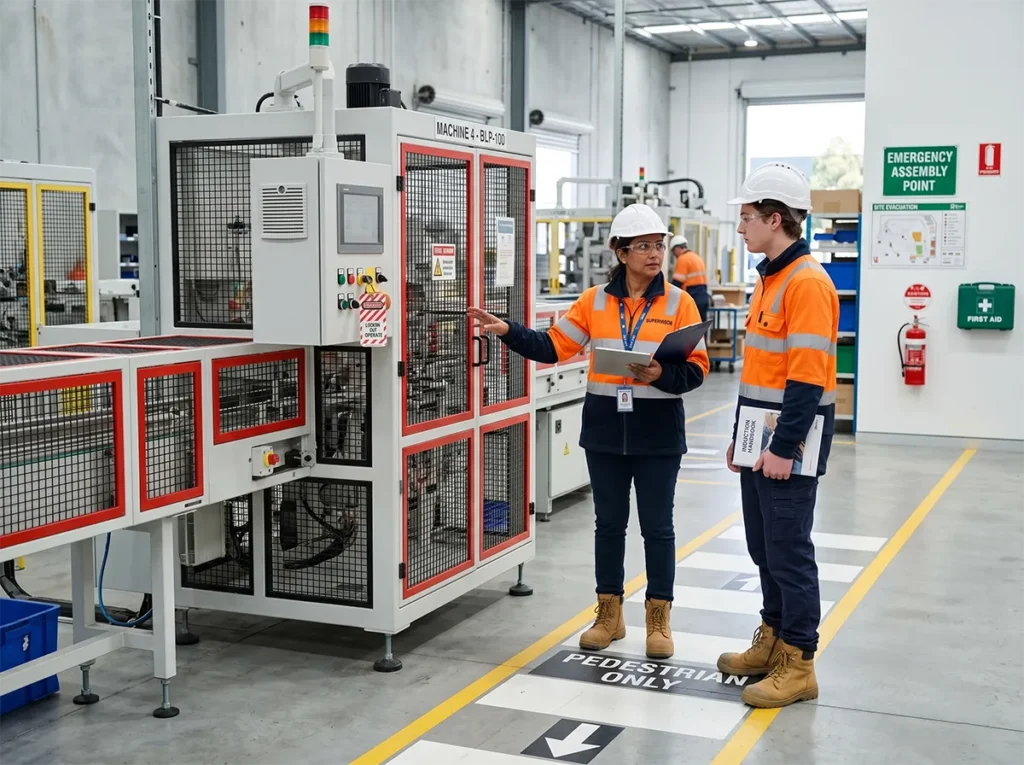
The first shift is one of the most important parts of a machine operator placement.
Even a capable operator may need time to understand:
- the workplace layout
- local terminology
- machine controls
- product flow
- quality standards
- production records
- communication methods
- fault-reporting procedures
A supervisor should be clearly identified and available. The worker should know which tasks they are authorised to perform and which tasks must be referred to another person.
Early observation can identify misunderstanding before it contributes to an incident, product loss, machine damage or production delay.
Internal link placement suggestion:
After this section, add: Our guide to [managing the first shift of a labour-hire machine operator] explains how briefing, observation and early feedback support a more stable placement.
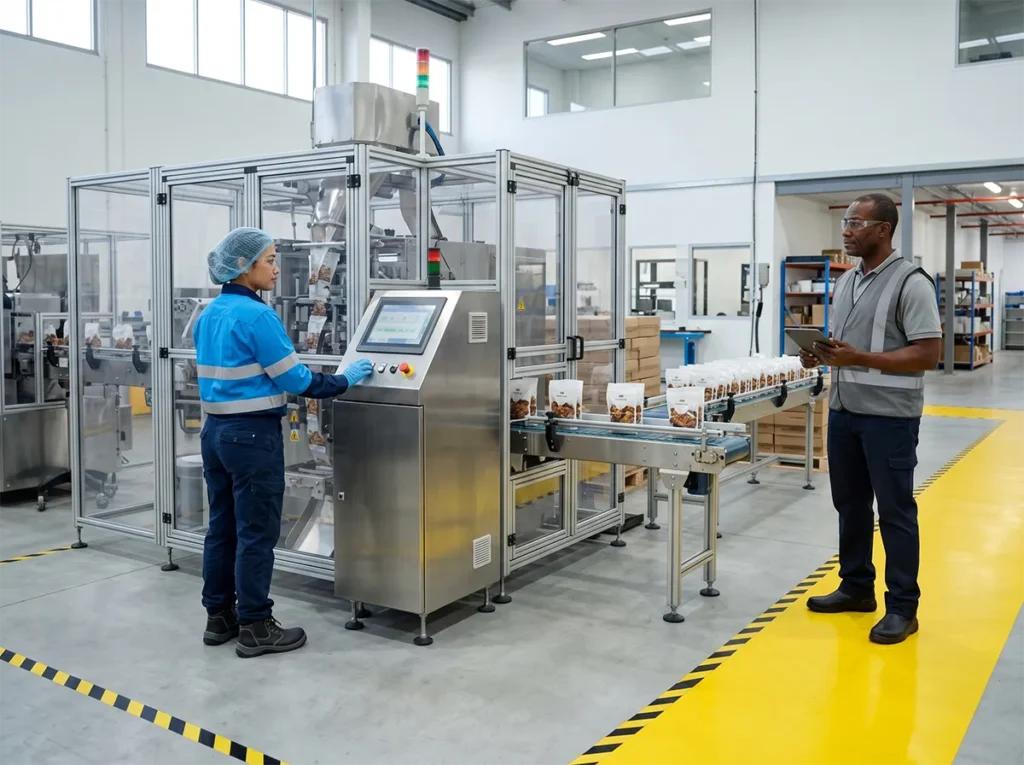
7. Keep Guards and Safety Devices Non-Negotiable
Guards, interlocks, emergency controls and other protective measures must be treated seriously.
Workers should not be instructed or permitted to:
- remove or bypass a guard without proper authority and controls
- defeat an interlock
- reach into a dangerous area
- continue operating visibly defective equipment
- improvise an unsafe method to maintain output
- clear a fault outside their training or authority
If a safety device appears damaged, ineffective or unsuitable, the issue should be reported and managed through the host’s procedures.
A willingness to bypass a safety control should never be treated as evidence of experience or productivity.
8. Review the Placement When Machinery or Duties Change
Production requirements can change quickly. A worker may be moved to another line, asked to operate different equipment or given additional duties.
Those changes should not automatically be treated as covered by the original placement.
Before changing the work, consider:
- whether the worker has relevant experience
- whether new hazards are introduced
- whether additional instruction is required
- whether competency should be reassessed
- whether PPE or physical demands change
- whether the labour hire provider should be notified
Material changes should be communicated so the placement can be reviewed before unfamiliar work begins.
Internal link placement suggestion:
After this section, add: Our article on [what to do when a machine operator’s duties or equipment change] explains why role changes require fresh communication and review.
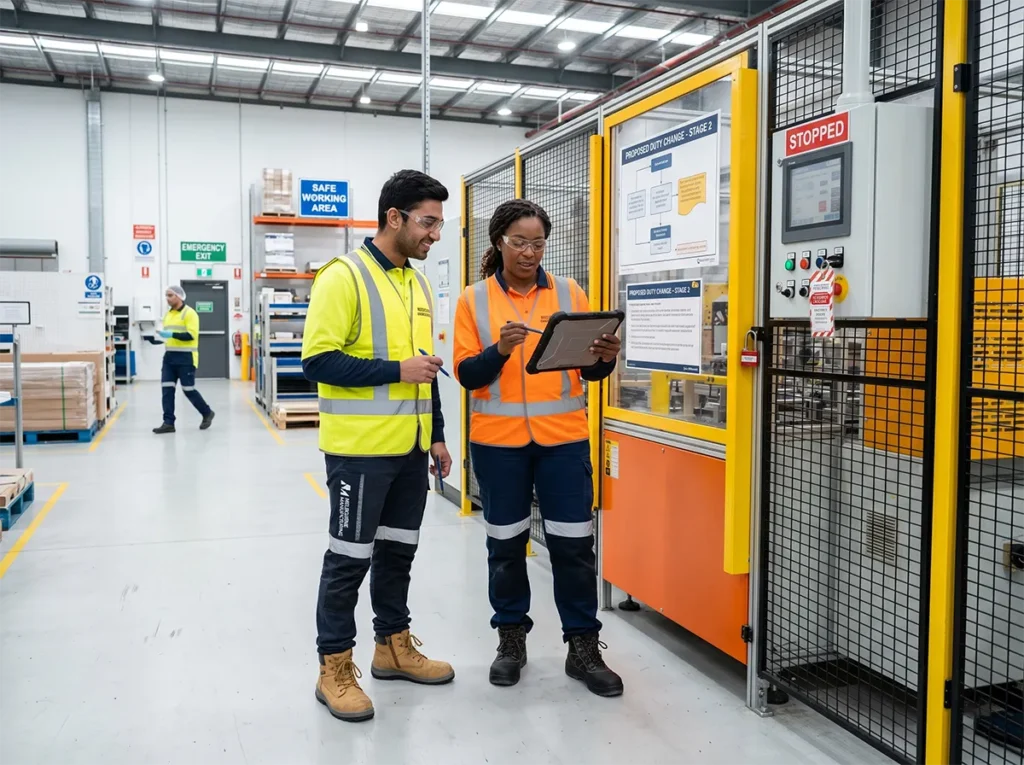
9. Maintain Communication Throughout the Placement
Communication should continue after the worker has started.
The host should contact the labour hire provider when there is:
- a significant change in duties
- an incident or near miss
- a safety concern
- uncertainty about competency
- a performance issue
- a change in shift or location
- an injury or fitness concern
Workers should also be encouraged to raise uncertainty early. Reporting an unfamiliar task or unsafe condition should not be treated as unwillingness to work.
Early communication often allows a concern to be addressed before it becomes a larger safety, production or placement problem.
10. Use a Properly Licensed Labour Hire Provider
In Victoria, host businesses must use licensed labour hire providers. Employers should check a provider’s status through the Victorian Labour Hire Authority’s public register before engaging labour hire services.
Licensing does not remove the need for the host to assess its own workplace, machinery and supervision arrangements. It is one part of a broader responsible labour hire process.
Employers should also ask how the provider approaches:
- worker screening
- machinery experience
- site and safety information
- role changes
- incident communication
- placement suitability
- payroll and employment administration
Internal link placement suggestion:
After this section, add links to KAVRILO’s [Labour Hire Compliance] and [Safety & Compliance] pages. Also link ‘Victorian Labour Hire Authority public register’ to the official host information page.
What Better Machine Operator Labour Hire Looks Like in Practice
When a machine operator placement is being managed well, the process usually feels controlled and difficult to misunderstand.
In practice, that often means:
- the job brief describes the real work
- experience is matched to the relevant equipment and process
- the host explains site conditions honestly
- induction is completed before unfamiliar work
- the first shift includes visible supervision
- guards and operating boundaries remain non-negotiable
- changes are discussed before they occur
- concerns are reported early
It should not feel like the worker is being expected to guess, learn by trial and error or accept unfamiliar tasks because production is busy.
Good machine operator labour hire is visible in how the placement is prepared and managed—not merely in whether a worker arrives for the shift.
A Simple Machine Operator Labour Hire Checklist for Employers
Use this checklist when preparing a machine operator staffing request.
Role and Machinery
- Is the machinery clearly identified?
- Are normal duties and operating boundaries documented?
- Are setup, changeover, cleaning and fault-related tasks explained separately?
Experience and Competency
- Is the required experience genuinely relevant to the machine and process?
- Will familiarisation or practical verification be required?
- Who is suitable to assess or supervise the worker?
Site and Safety Information
- Have hazards, PPE and site conditions been disclosed?
- Is the site-specific induction ready?
- Are guards, emergency controls and reporting procedures clear?
First Shift and Ongoing Supervision
- Is a supervisor identified?
- Will the worker’s initial understanding be checked?
- Can questions and concerns be raised promptly?
Changes and Communication
- Will the labour hire provider be notified if duties, machinery, shift or location changes?
- Are incident, near-miss and suitability reporting processes agreed?
- Will the placement be reviewed before unfamiliar work begins?
This checklist does not replace a site-specific risk assessment, machinery procedure or professional advice. It helps employers identify the information and communication needed for a more suitable placement.

Final Word
Machine operator labour hire can help Melbourne employers respond to changing production needs, but flexibility should not reduce role clarity, competency or safety standards.
Better placements usually begin with:
- a more accurate job brief
- clearer operating boundaries
- relevant experience checks
- site-specific induction
- appropriate first-shift supervision
- early communication when work changes
The key principle is simple: machine operators should be matched to the actual work, not merely to a broad job title.
That is not only better labour hire practice. It is better production control.
Need Machine Operator Labour Hire Support in Melbourne?
KAVRILO is building its approach around clear role information, suitable worker matching, practical safety communication and stronger cooperation with host employers.
If your warehouse, factory or production site needs temporary machine operators, tell us about the machinery, duties, shift, experience requirements and site conditions so we can discuss suitable workforce support.
KAVRILO is preparing to operate in accordance with Victorian labour hire licensing requirements. Labour hire services will only be supplied where permitted under applicable law. Relevant licence information will be published once confirmed.
Need temporary machine operator support with clearer role matching and stronger day-one readiness? Talk to KAVRILO about practical labour hire support across Melbourne’s South-East.
Article Disclaimer
This article provides general information only and does not constitute legal, workplace relations, occupational health and safety or other professional advice. Requirements may vary according to the machinery, workplace and circumstances. Obtain advice appropriate to your situation and follow applicable laws, manufacturer information and site-specific procedures. Please read KAVRILO’s Website Disclaimer.