
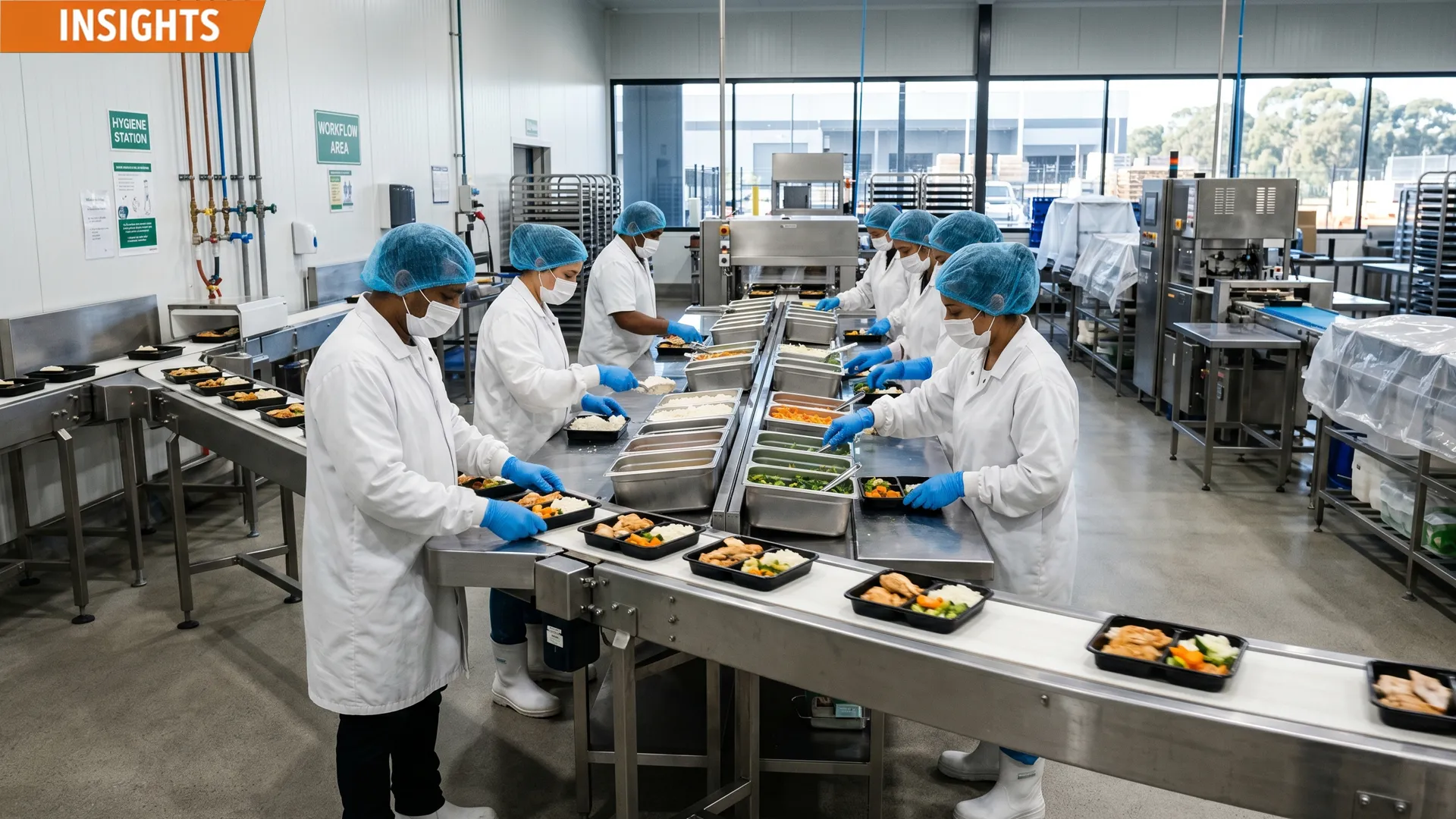
In food production, faster line speed can look like efficiency.
Sometimes it is.
But speed does not only change output.
It also changes what the worker is being asked to do:
- how quickly they move
- how little recovery they get between actions
- how much time they have to reset posture
- how consistently they follow hygiene steps
- and how well they maintain safe, controlled behaviour across the full shift
That is why line speed deserves closer review.
Across Victoria, many food manufacturers operate in environments where workers are expected to maintain:
- pace
- product consistency
- hygiene discipline
- PPE compliance
- repetitive task control
- and practical awareness of wet floors, line movement, and surrounding activity
When line speed increases, all of those demands can become harder to sustain well.
This matters because a faster line does not always create obvious immediate failure.
More often, it creates:
- more rushed movement
- reduced recovery between actions
- weaker posture
- lower concentration later in the shift
- more small handling or packing mistakes
- and more pressure on workers who are already trying to stay precise in a tightly controlled environment
That is why the real question is not just:
“Can the line run faster?”
It is:
“What does that faster speed change in worker behaviour, safety control, and product consistency?”
That is where good employers need to look earlier.
For the broader hub article, see our Food Production Safety in Victoria pillar guide on hygiene, PPE, wet-floor risk, repetitive work, fatigue, and safer worker onboarding in fast-paced sites.
Why Line Speed Is Not Just a Productivity Issue
Line speed often gets discussed mainly through:
- throughput
- output targets
- efficiency
- and operational timing
But on a food production floor, speed also affects:
- body movement
- handling quality
- worker concentration
- hygiene discipline
- error rates
- and how much control the site still has once repetition and fatigue begin building
That is why line speed is not only a production issue.
It is also a:
- safety issue
- quality issue
- fatigue issue
- and supervision issue
A line may technically run faster while still quietly creating:
- more awkward reach
- poorer handling technique
- weaker consistency
- reduced recovery time
- and more day-one exposure for workers who have not yet fully adapted to the pace
Good employers do not review speed in isolation.
They review what speed is doing to the people required to keep the line functioning well.
Where Faster Line Speed Usually Starts Creating Risk
A faster line often creates risk gradually rather than dramatically.
That may show up through:
- smaller repetitive movements happening more often
- less time to reset between tasks
- workers leaning or reaching more quickly
- more rushed tray, carton, or product handling
- reduced care in wet or tighter movement areas
- weaker PPE or hygiene discipline under pressure
- and less willingness to speak up when the pace no longer feels sustainable
It may also show up through quality drift such as:
- inconsistent packing
- more small handling errors
- weaker presentation
- or product-side mistakes that begin increasing because workers are staying busy rather than staying controlled
This matters because the line may still appear to be performing.
But under the surface, the site may already be trading:
- safer movement
- better posture
- clearer behaviour
- and cleaner quality control
for output pace that is becoming harder to sustain well.
That is exactly what employers need to catch early.
10 Practical Things Employers Should Review Early
1. Whether Workers Still Have Enough Time to Move Well
A faster line often reduces the time workers have to:
- position themselves properly
- reset posture
- handle items carefully
- or move through the task with enough control to keep the body stable
This matters because a movement can be safe at one pace and more exposed at another.
Good employers review not only:
- whether the task is getting done
but also:
- whether workers still have enough time to do it with controlled movement rather than rushed adaptation
That is one of the clearest early tests.
2. Whether Repetition Rate Has Quietly Become Too High

Line speed often increases repetition.
That means the worker may now be:
- reaching more often
- lifting more often
- packing more often
- turning more often
- or repeating the same hand and body pattern with less recovery in between
This matters because repetitive strain risk is shaped not only by the task itself, but by how often it now has to be repeated.
A line that speeds up may increase physical demand even if:
- the workstation stays the same
- the item stays the same
- and the job title stays the same
The pace changes the body load.
Our article on repetitive work in food manufacturing: what employers should review before injuries build explains why repetition rate often deserves closer review once line speed starts increasing task frequency across the shift.
3. Whether Posture and Reach Quality Are Being Lost Under Pressure
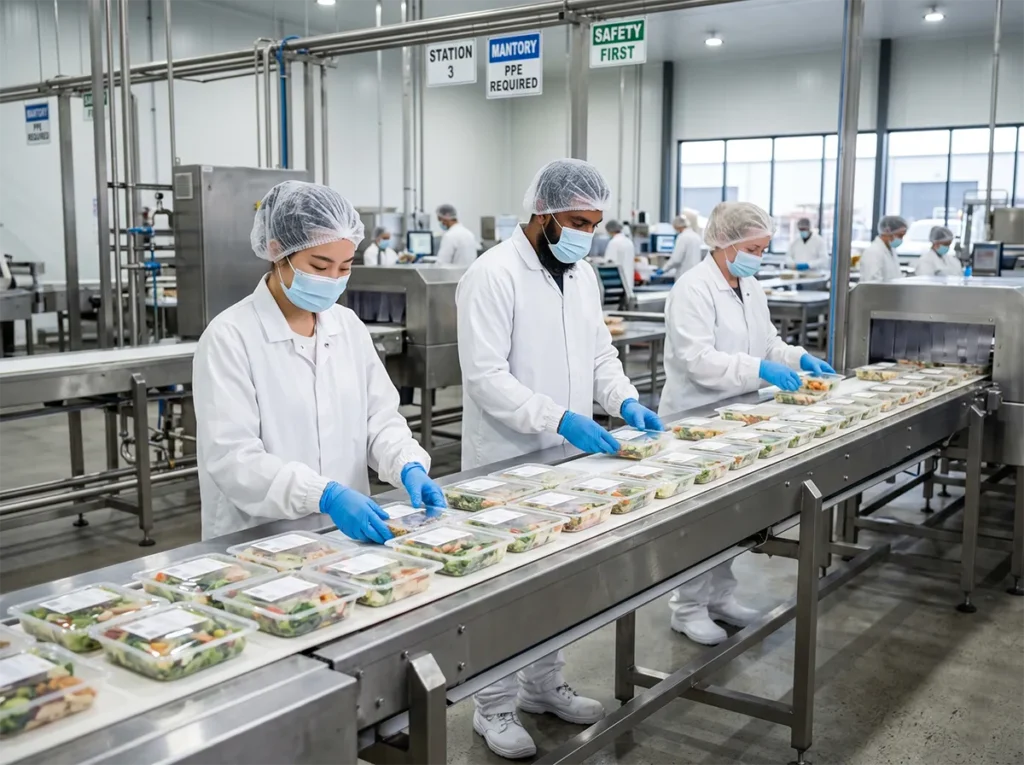
A worker under stronger pace pressure may:
- reach further without resetting
- lean more often
- twist more quickly
- skip small body adjustments
- or work from a poorer position because the line no longer leaves enough time to correct it
This matters because posture often weakens quietly under speed pressure.
The worker may still appear productive, but the task may now be:
- harder to sustain
- more awkward to perform
- and more likely to create fatigue or strain as the shift continues
Good employers review what the worker’s body is doing differently when the line runs faster.
4. Whether Fatigue Is Appearing Earlier in the Shift
A faster line does not only make the task harder.
It can also bring fatigue forward.
That means workers may begin showing:
- reduced concentration
- weaker movement control
- lower tolerance for repetitive work
- more visible physical strain
- and less consistent discipline
earlier than they would under a more sustainable pace.
This matters because fatigue changes what the site can reasonably expect the worker to keep doing well later in the shift.
If speed is pulling fatigue forward, it is also likely pulling:
- safety risk
- handling errors
- and quality drift
forward as well.
Our article on managing worker fatigue during long packing and production shifts looks at how workload and pace can bring fatigue forward earlier in the shift and weaken both safety and consistency.
5. Whether Hygiene Discipline Is Becoming Harder to Maintain
Food production is different from many industrial settings because pace affects more than physical movement.
It can also affect:
- hygiene routine
- PPE discipline
- process consistency
- and how carefully workers keep following the behavioural controls the site depends on
This matters because a faster line may cause workers to:
- rush small steps
- become less attentive to discipline
- take shortcuts under pressure
- or focus so heavily on keeping up that hygiene behaviour becomes less controlled
That is a serious issue.
Line speed should never be reviewed as separate from food-safe behaviour.
Our article on why PPE in food production protects both worker safety and food safety explains why hygiene discipline and protective-clothing behaviour often become harder to maintain when pace pressure rises too far.
6. Whether Manual Handling Has Become More Exposed
A task that involves:
- lifting
- carrying
- turning
- tray handling
- or product transfer
often becomes more risky under higher speed.
That is because the worker may have less time to:
- set up properly
- move carefully
- and keep the full handling sequence under control
This matters because manual handling often weakens under pace before anyone formally labels it a manual handling issue.
A stronger review looks at:
- how the task is being handled at the faster speed
not just - whether the task still appears achievable
Our article on manual handling risks in food production: what fast-paced sites often miss looks more closely at how lifting, carrying, and turning become more exposed when workers are moving under stronger pace pressure.
7. Whether New and Temporary Workers Can Realistically Adapt to the Pace

A settled worker may cope with a certain line speed better than a new one.
That is important.
A new or temporary worker may still be learning:
- the sequence
- the workstation rhythm
- the hygiene rules
- and the practical flow of the line
If the pace is already high, that worker may be much more likely to:
- guess
- rush
- fall behind quietly
- become fatigued early
- or focus so heavily on the speed that other controls weaken
This matters because higher line speed often magnifies day-one and early-shift risk.
Our article on bringing new workers into food production: how to reduce hygiene and safety risk on day one explains why faster production pace can create bigger risk for new and temporary workers who are still learning the site.
8. Whether Workers Feel Able to Speak Up When the Pace Stops Feeling Sustainable
Not every worker will say:
- the line is too fast
- I am getting tired
- I cannot maintain this safely
- or I am starting to lose control of the task
Many will simply try to keep up.
That means employers need to notice:
- visible rushing
- posture deterioration
- more small mistakes
- reduced confidence
- or growing silence from workers who are focused on not falling behind
This matters because line speed becomes more dangerous when workers feel pressure to keep coping instead of raising early warning signs.
A safer site makes those warning signs easier to surface.
9. Whether Quality Drift Is Starting to Appear in Small Ways
A faster line may still look productive while quality begins weakening in smaller ways.
That may include:
- less consistent presentation
- weaker packing accuracy
- more minor handling errors
- more correction needed later
- or product-side inconsistency that starts appearing under pace pressure
This matters because quality drift is often one of the earliest visible signals that the line speed is beginning to exceed what workers can sustain well.
That makes it a useful operational warning, not just a product issue.
If quality is drifting, safety control may also be under more pressure than the site realises.
10. Whether the Site Is Mistaking “Possible” for “Sustainable”
This is one of the biggest mistakes.
A line can often be run faster for a period.
The real question is whether it can be run:
- safely
- consistently
- hygienically
- and sustainably
across the actual shift, with the actual workers, under the actual site conditions.
Possible is not the same as sustainable.
A speed that workers can survive for one hour may still be too high to manage well:
- for eight hours
- during peak periods
- on repetitive tasks
- in wet areas
- or with newer workers added into the line
Good employers review sustainability, not just technical possibility.
That is a much stronger test.
What Better Line-Speed Control Usually Looks Like in Practice
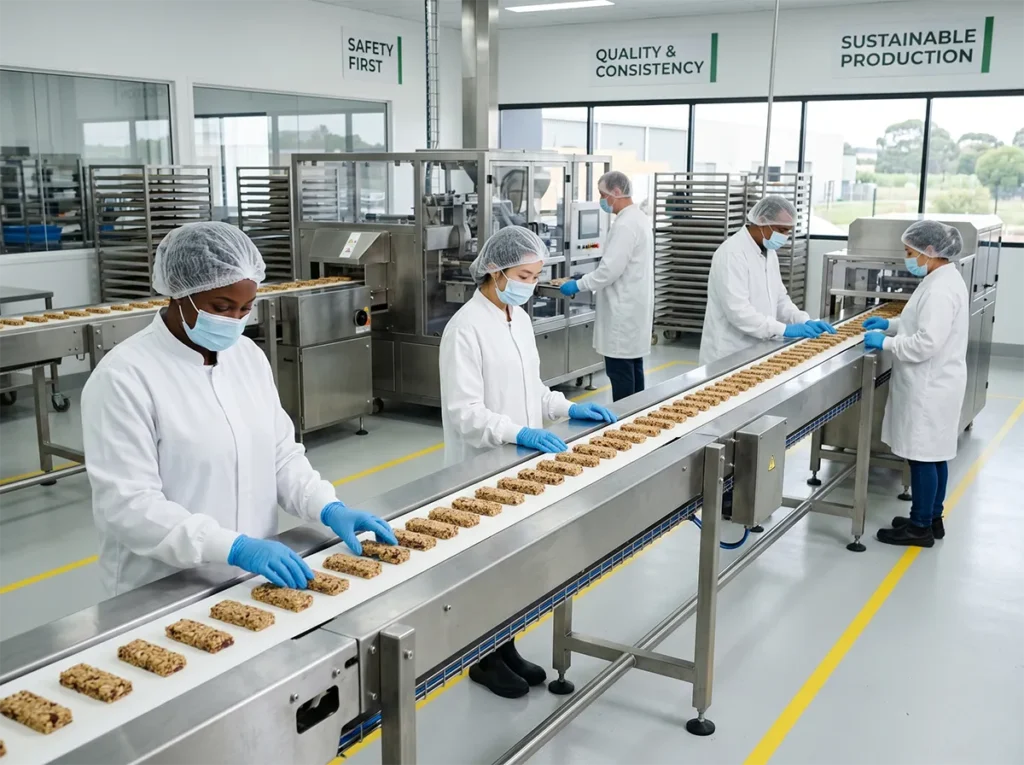
When line speed is being managed well, the site usually feels:
- controlled
- readable
- less rushed
- and more sustainable across the shift
In practice, that often means:
- workers still have enough time to move well
- repetition is not escalating too far
- posture is holding up better
- fatigue does not arrive too early
- hygiene discipline remains consistent
- and quality drift is not silently becoming the price of speed
It should not feel like:
- the line is only succeeding because workers are quietly absorbing more strain
- speed is being preserved by rushed adaptation rather than good control
- or problems are only being taken seriously once the pace has already started creating visible breakdown
Good line-speed control does not reject productivity.
It protects the conditions that make productivity sustainable.
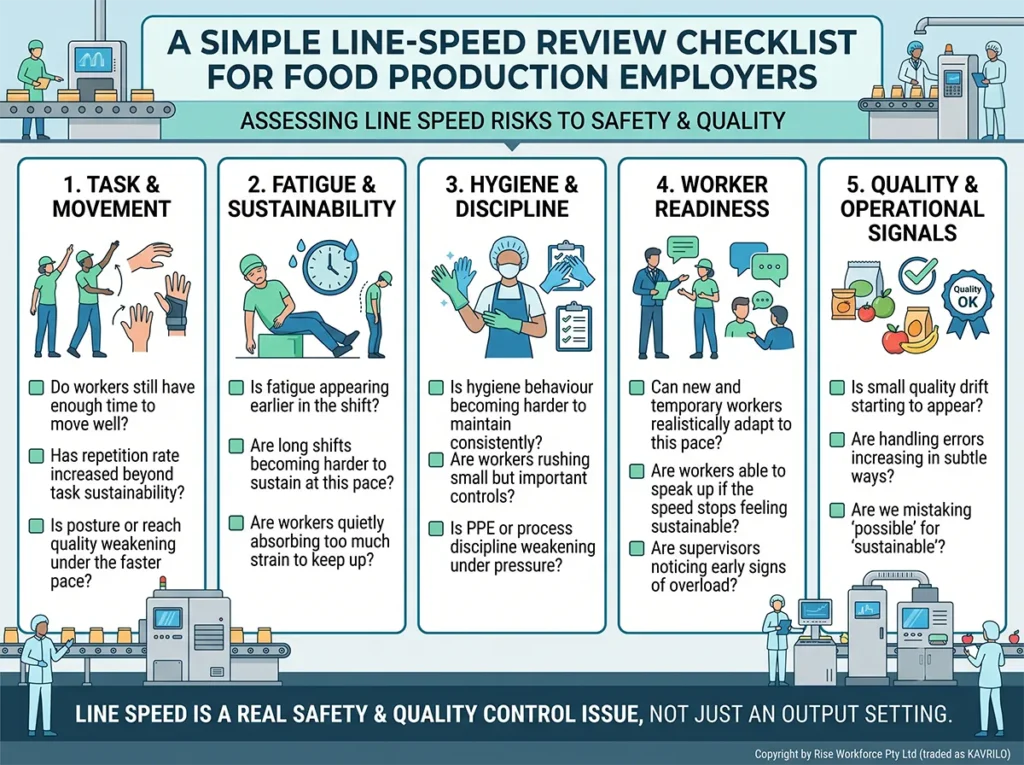
A Simple Line-Speed Review Checklist for Food Production Employers
Here is a practical checklist employers can use when reviewing whether line speed is increasing safety or quality risk.
Task and Movement
- Do workers still have enough time to move well?
- Has repetition rate increased beyond what the task can sustain safely?
- Is posture or reach quality weakening under the faster pace?
Fatigue and Sustainability
- Is fatigue appearing earlier in the shift?
- Are long shifts becoming harder to sustain at this pace?
- Are workers quietly absorbing too much strain to keep up?
Hygiene and Discipline
- Is hygiene behaviour becoming harder to maintain consistently?
- Are workers rushing small but important controls?
- Is PPE or process discipline weakening under pressure?
Worker Readiness
- Can new and temporary workers realistically adapt to this pace?
- Are workers able to speak up if the speed stops feeling sustainable?
- Are supervisors noticing early signs of overload?
Quality and Operational Signals
- Is small quality drift starting to appear?
- Are handling errors increasing in subtle ways?
- Are we mistaking “possible” for “sustainable”?
This kind of checklist helps employers review line speed as a real safety and quality control issue, not just an output setting.
Final Word
Faster line speed can increase safety and quality risk in food production because pace changes what workers can realistically sustain well.
For food manufacturers in Victoria, stronger outcomes usually come from:
- reviewing speed alongside repetition
- watching how posture and movement change under pressure
- noticing when fatigue arrives earlier
- protecting hygiene discipline
- and using quality drift as an early operational warning rather than waiting for larger failures
That is what helps reduce:
- rushed movement
- repetitive strain
- fatigue-driven errors
- weaker hygiene behaviour
- and the hidden cost of output gains that are being carried by too much worker strain underneath
Because in food production, a faster line is not automatically a better line.
It is only better if the site can still control what that speed is doing to people, process, and product.
Need Practical Labour Hire Support for Warehousing and Manufacturing in Melbourne’s South-East?
KAVRILO is building its approach around safety-aware workforce support, stronger local responsiveness, and clearer operational discipline for warehouse and industrial environments, including food production settings where hygiene discipline and day-one worker readiness matter.
Whether your site needs better shift coverage, stronger day-one worker readiness, or more dependable labour coordination in hygiene-sensitive environments, KAVRILO is focused on practical workforce support that fits controlled production sites.
Need warehouse and factory labour hire support with stronger day-one readiness and more dependable workforce support for controlled production environments? Talk to KAVRILO about practical labour support across Melbourne’s South-East.
Article Disclaimer
This article is provided for general information only and does not constitute legal, workplace relations, safety, taxation, payroll or other professional advice. Please seek advice specific to your circumstances before acting on this information.
Please read our Website Disclaimer for more information.