

Fatigue in food production is easy to underestimate.
That is often because it does not always appear dramatically at first.
Instead, it usually builds through:
- repetition
- pace
- time on feet
- longer shifts
- overtime
- reduced recovery
- and the slow effect of doing the same controlled task for long periods in a hygiene-sensitive environment
Across Victoria, many food manufacturers rely on workers to maintain:
- steady output
- product quality
- hygiene discipline
- safe movement
- and practical consistency
even when the shift is long and the production pace stays high.
That is where fatigue becomes more important than many sites first realise.
Because fatigue in food production does not only affect:
- energy
- or comfort
It can also affect:
- concentration
- decision-making
- manual handling
- repetitive movement quality
- PPE discipline
- and whether workers keep following site controls properly once the shift becomes harder to sustain
This matters even more in:
- long packing shifts
- higher-volume weeks
- seasonal production pressure
- and environments where the site expects both speed and discipline at the same time
That is why good employers do not treat fatigue as a vague wellbeing issue alone.
They review it as:
- a safety issue
- a performance issue
- and a production-control issue
That is where stronger fatigue management begins.
For the broader hub article, see our Food Production Safety in Victoria pillar guide on hygiene, PPE, wet-floor risk, repetitive work, fatigue, and safer worker onboarding in fast-paced sites.
Why Fatigue Matters So Much in Food Production
Food production sites often depend on workers staying consistent for long periods.
That consistency matters because the environment may require:
- repetitive hand work
- line discipline
- hygiene control
- careful movement
- correct PPE use
- and ongoing attention to process detail
Fatigue can weaken all of that.
A tired worker may still be trying hard, but fatigue can still reduce:
- focus
- movement quality
- posture control
- caution in wet areas
- willingness to speak up
- and the ability to maintain the same standard from the end of the shift as they did at the beginning
That is why fatigue is more than an individual comfort issue.
In food production, it can also affect:
- worker safety
- team stability
- hygiene consistency
- production quality
- and how well the site holds together under pace and time pressure
That is why employers need to think about fatigue earlier, not only after obvious problems appear.
Where Fatigue Usually Starts Building
Fatigue in food production often builds through combinations rather than one single cause.
That may include:
- long time on feet
- repetitive line work
- awkward reaching
- frequent packing movement
- high line speed
- limited task variation
- overtime
- insufficient recovery between shifts
- and production pressure that keeps workers moving without enough practical pacing review
It may also build more quickly in environments with:
- colder temperatures
- repetitive manual handling
- wet-area movement
- louder surroundings
- or stronger attention demands around hygiene and controlled behaviour
This matters because workers may not describe fatigue directly.
Instead, employers may first notice:
- slower movement
- more awkward handling
- lower concentration
- weaker posture
- more small mistakes
- less consistent PPE discipline
- or reduced confidence in carrying out routine tasks smoothly
Those are useful early signs.
10 Practical Things Employers Should Review Early
1. Whether Shift Length Is Being Matched to the Real Workload
A long shift is not always a problem by itself.
The real issue is whether the shift length matches:
- the physical demand
- the repetitive demand
- the pace
- and the amount of concentration the work continues to require
This matters because some tasks become much harder to sustain safely over time, even if they looked manageable in the first few hours.
Employers should review not only:
- how long the shift is
but also - how demanding the work remains across that time
That is a stronger fatigue question.
2. Whether Repetitive Packing or Line Tasks Are Draining Workers Quietly
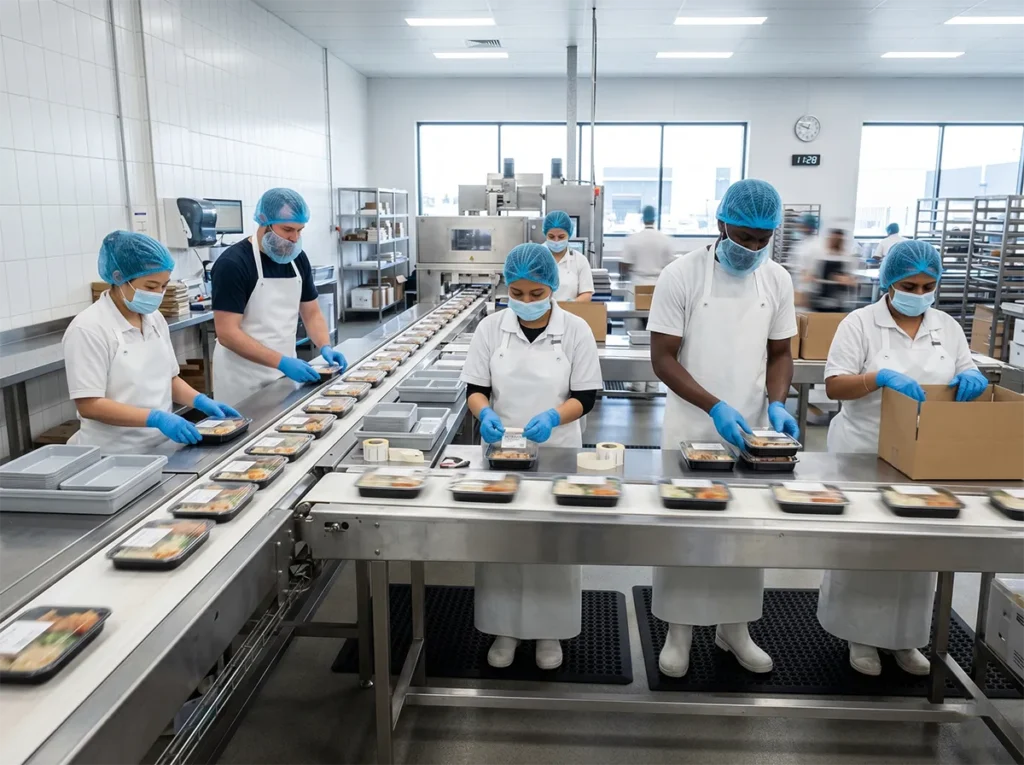
Food production fatigue often builds through repetition rather than obvious heavy effort.
That may include:
- repeated hand packing
- repeated reaching
- tray or carton handling
- repetitive standing work
- and line-based tasks with little variation
These jobs can look routine, but that is part of the risk.
A task that looks simple may still become:
- physically tiring
- mentally draining
- and harder to perform safely after hours of repetition
Good employers review whether repetitive work is creating fatigue quietly before discomfort becomes obvious enough to disrupt the shift.
Our article on repetitive work in food manufacturing: what employers should review before injuries build explains why line-based repetition often deserves earlier ergonomic review than many fast-paced sites first give it.
3. Whether Line Speed Is Changing Behaviour Late in the Shift
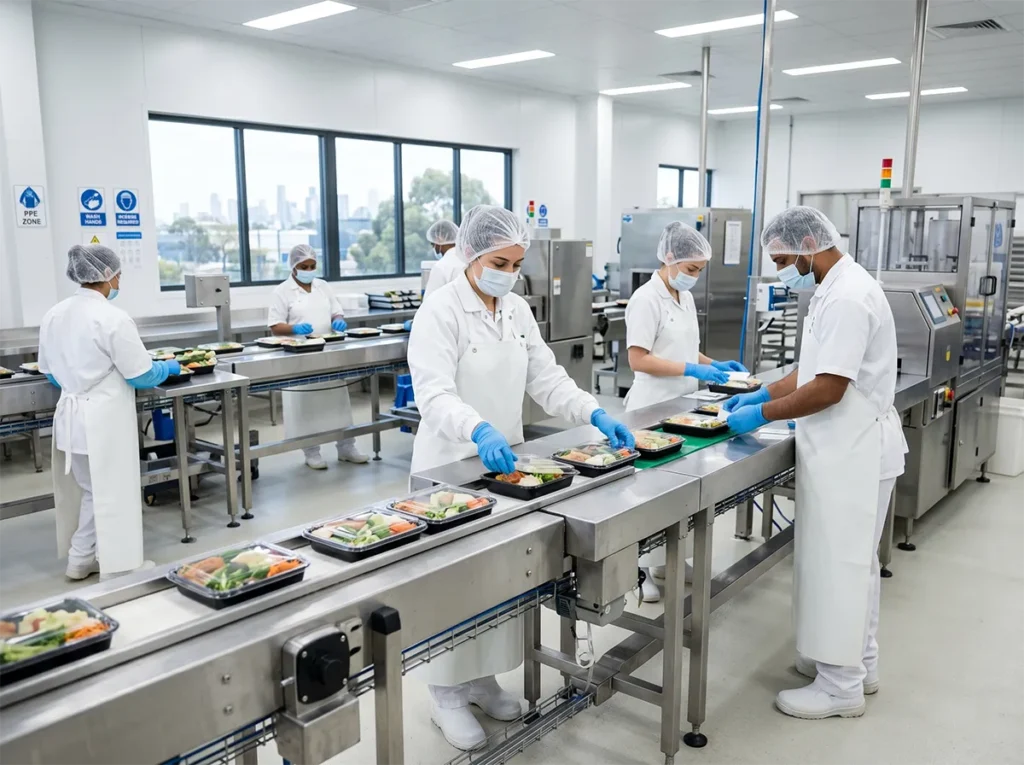
A worker may cope well with line speed early and still become more exposed as fatigue builds.
That may show up through:
- rushed movement
- weaker manual handling technique
- poorer attention to process
- reduced caution in wet areas
- or shortcuts around small but important hygiene and safety behaviours
This matters because line pace and fatigue often interact.
The faster the pace, the less spare attention the worker may have once tiredness starts affecting concentration and movement.
Good employers review not just the set speed of the line, but how workers are behaving on that line later in the shift.
Our article on how faster line speed can increase safety and quality risk in food production looks at how pace pressure can quietly change behaviour, concentration, and process discipline as fatigue builds.
4. Whether Break Structure Is Actually Supporting Recovery
Breaks only help if they are practical enough to support real recovery.
That means employers should think about:
- timing
- spacing
- how demanding the work is before the break
- and whether the worker is actually getting enough recovery value from the structure of the shift
This matters because a nominal break arrangement can still be weak if:
- the task intensity is high
- the shift is long
- or the fatigue point begins well before the break pattern is helping
Good employers review whether the break structure fits the actual work, not just the roster template.
5. Whether Workers Are Spending Too Long in the Same Physical Pattern
Fatigue risk grows when the body is asked to keep doing the same thing for too long.
That may include:
- fixed standing position
- repeated upper-limb motion
- repeated bending
- repeated side reach
- or the same packing or handling movement for long periods without enough variation
This matters because physical sameness creates its own fatigue load.
Even without obvious overexertion, the worker may still become:
- slower
- less comfortable
- less coordinated
- and more likely to lose movement quality later in the shift
Task variation and rotation deserve practical review where possible.
6. Whether Fatigue Is Affecting Hygiene Discipline
This is one of the reasons fatigue matters more in food production than many other environments.
A tired worker may still intend to do the right thing, but fatigue can weaken:
- attention to detail
- consistency of process
- PPE discipline
- responsiveness to site rules
- and overall behavioural control in a hygiene-sensitive setting
This matters because fatigue in food production can affect:
- worker safety
and - food safety discipline
at the same time.
That is why employers should review fatigue not only through injury risk, but also through how well workers continue following the site’s hygiene expectations late in the shift.
Our article on why PPE in food production protects both worker safety and food safety explains why protective-clothing discipline and hygiene behaviour often become harder to maintain when fatigue is not being managed well enough.
7. Whether Manual Handling Quality Drops as the Shift Goes On
Manual handling often looks strongest earlier in the day.
The real test is what happens later.
Fatigue can reduce:
- lifting quality
- turning control
- carrying stability
- and the worker’s willingness to reset position properly before repeating the movement again
This matters because some sites review manual handling as a static risk, when in reality the risk may be changing across the shift.
A worker who is safe at hour two may be more exposed at hour nine.
That is why fatigue and manual handling should be reviewed together, not separately.
Our article on manual handling risks in food production: what fast-paced sites often miss looks more closely at why repeated handling tasks deserve stronger review once fatigue starts affecting movement quality.
8. Whether New and Temporary Workers Are Less Able to Sustain the Shift
A new worker may still be learning:
- site pace
- movement flow
- hygiene discipline
- and how the work feels physically over time
That means fatigue can affect them earlier or differently than more settled workers.
This is especially important for:
- temporary workers
- casual labour
- and new starters entering food production from general warehouse or factory backgrounds
Employers should review whether these workers:
- understand the pace
- understand the physical demand
- and are being supported clearly enough before fatigue starts interacting with uncertainty
Our article on bringing new workers into food production: how to reduce hygiene and safety risk on day one explains why day-one clarity and stronger early supervision matter even more when workers are new to fast-paced food production environments.
9. Whether Workers Feel Able to Say When the Shift Is Becoming Hard to Sustain
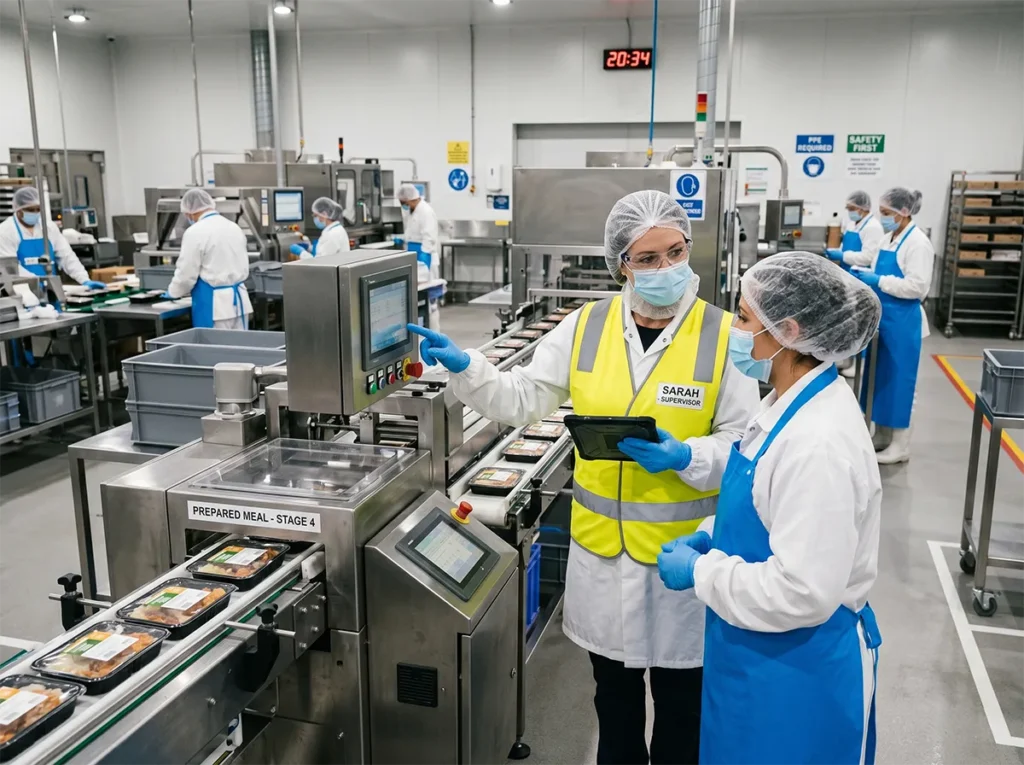
Some workers will not raise fatigue concerns easily.
That may be because they:
- do not want to look weak
- think the pace is simply expected
- are trying to prove themselves
- or assume discomfort is just part of the job
That means employers should not rely only on workers volunteering fatigue concerns.
They also need to notice:
- changes in movement
- reduced confidence
- more small errors
- more visible strain
- and workers becoming quieter or less responsive later in the shift
Good fatigue management depends on observation, not just self-reporting.
10. Whether Peak Periods Are Normalising Higher Fatigue as “Just Busy Season”
Busy periods often bring:
- longer hours
- more pressure
- stronger production targets
- and less tolerance for slowdown
That can make fatigue feel normal.
But normal does not mean controlled.
A site that says:
- “it’s always like this during peak”
may still be carrying more fatigue risk than it should.
Good employers review:
- what peak volume is doing to the body demands of the role
- whether fatigue is affecting conduct or consistency
- and whether temporary increases in volume are being allowed to weaken the safety and hygiene standard of the site
That review matters most before fatigue has already become embedded in the way the operation is coping.
What Better Fatigue Management Usually Looks Like in Practice
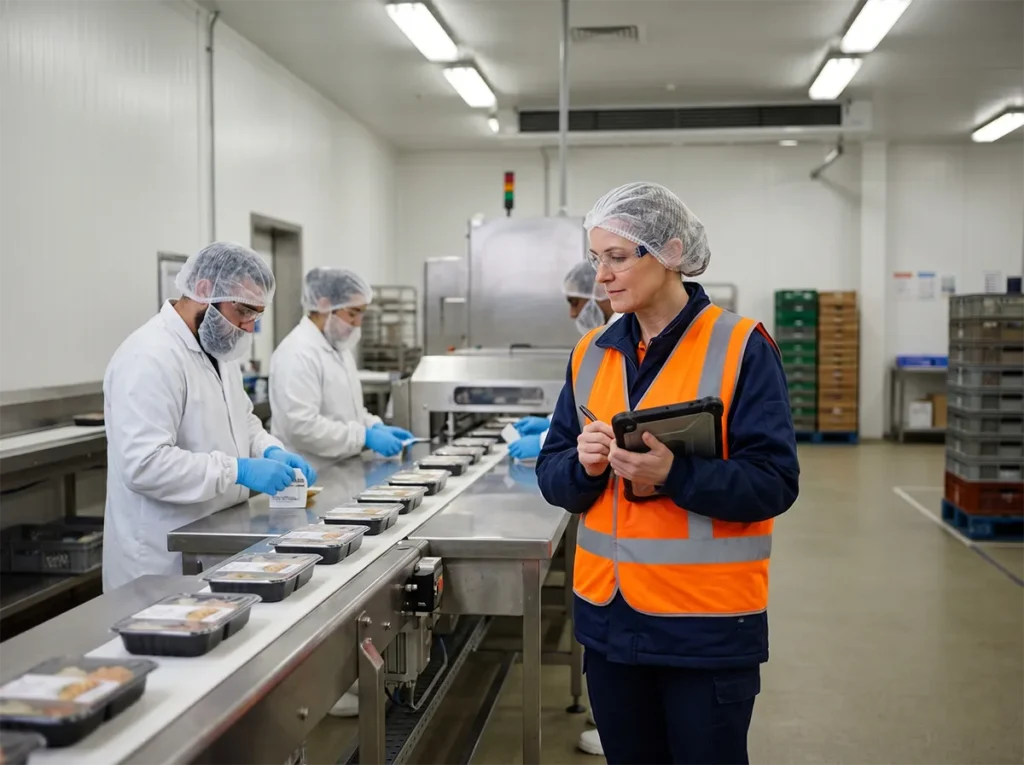
When fatigue is being managed better, the site usually feels:
- steadier
- more controlled
- less reactive
- and easier for workers to sustain across the full shift
In practice, that often means:
- line pace is being reviewed honestly
- repetitive demands are not being ignored
- break structure matches the real work
- manual handling quality does not collapse late in the shift
- supervisors notice early warning signs
- and workers are not expected to maintain the same standard indefinitely without enough recovery support
It should not feel like:
- the site only responds once workers are clearly struggling
- long shifts are treated as acceptable simply because they are common
- or fatigue is being seen as a personal weakness instead of a predictable operational risk
Good fatigue management does not remove workload.
But it helps stop workload from quietly eroding safety and discipline over time.
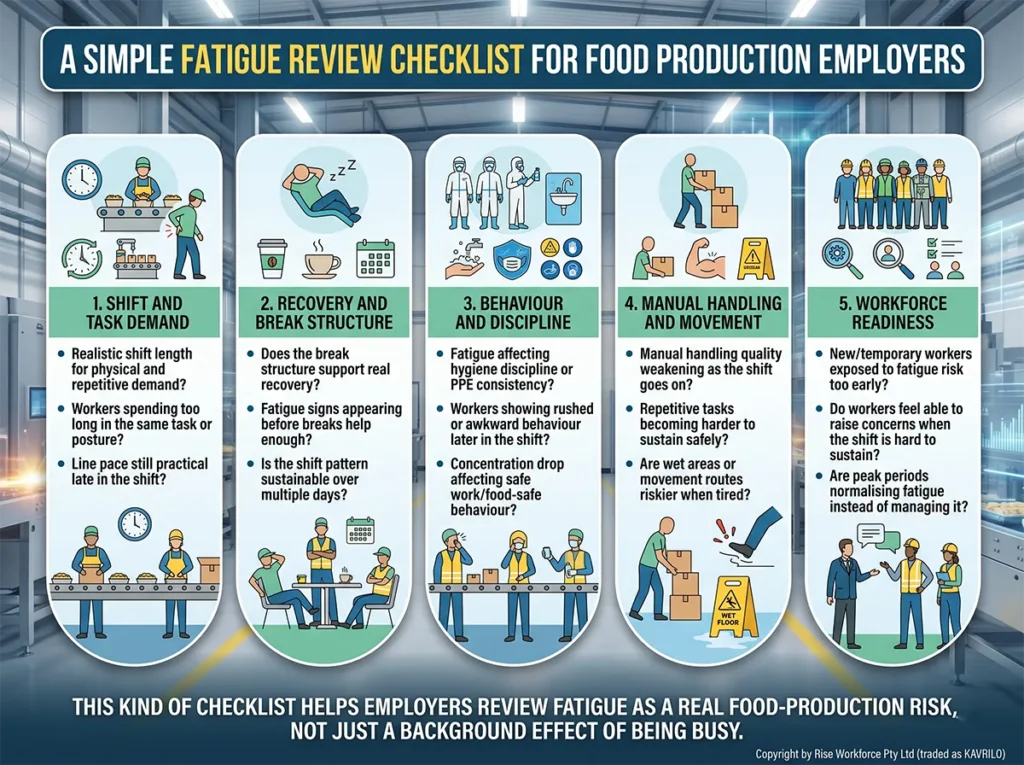
A Simple Fatigue Review Checklist for Food Production Employers
Here is a practical checklist employers can use when reviewing fatigue risk during long packing and production shifts.
Shift and Task Demand
- Is the shift length realistic for the physical and repetitive demand of the work?
- Are workers spending too long in the same task or posture?
- Is the line pace still practical late in the shift?
Recovery and Break Structure
- Does the break structure support real recovery?
- Are fatigue signs appearing before breaks are helping enough?
- Is the shift pattern sustainable over multiple days, not just one busy day?
Behaviour and Discipline
- Is fatigue affecting hygiene discipline or PPE consistency?
- Are workers showing more rushed or awkward behaviour later in the shift?
- Is concentration dropping in ways that affect safe work or food-safe behaviour?
Manual Handling and Movement
- Is manual handling quality weakening as the shift goes on?
- Are repetitive tasks becoming harder to sustain safely?
- Are wet areas or movement routes becoming riskier when workers are tired?
Workforce Readiness
- Are new or temporary workers being exposed to fatigue risk too early?
- Do workers feel able to raise concerns when the shift becomes hard to sustain?
- Are peak periods normalising fatigue instead of managing it?
This kind of checklist helps employers review fatigue as a real food-production risk, not just a background effect of being busy.
Final Word
Managing worker fatigue during long packing and production shifts matters because fatigue can weaken much more than energy alone.
For food manufacturers in Victoria, stronger outcomes usually come from:
- reviewing shift length against real workload
- recognising the strain of repetitive tasks earlier
- watching how line pace changes behaviour
- strengthening break and recovery thinking
- and noticing when fatigue is starting to affect both safety and hygiene discipline
That is what helps reduce:
- awkward movement
- weaker manual handling
- reduced concentration
- poorer PPE and hygiene consistency
- and the slow decline in shift quality that can happen when fatigue is treated as just part of the job
Because in food production, fatigue is not only about how tired a worker feels.
It is about what the site can still reasonably expect them to do safely and consistently by the end of the shift.
Need Practical Labour Hire Support for Warehousing and Manufacturing in Melbourne’s South-East?
KAVRILO is building its approach around safety-aware workforce support, stronger local responsiveness, and clearer operational discipline for warehouse and industrial environments, including food production settings where hygiene discipline and day-one worker readiness matter.
Whether your site needs better shift coverage, stronger day-one worker readiness, or more dependable labour coordination in hygiene-sensitive environments, KAVRILO is focused on practical workforce support that fits controlled production sites.
Need warehouse and factory labour hire support with stronger day-one readiness and more dependable workforce support for controlled production environments? Talk to KAVRILO about practical labour support across Melbourne’s South-East.
Article Disclaimer
This article is provided for general information only and does not constitute legal, workplace relations, safety, taxation, payroll or other professional advice. Please seek advice specific to your circumstances before acting on this information.
Please read our Website Disclaimer for more information.