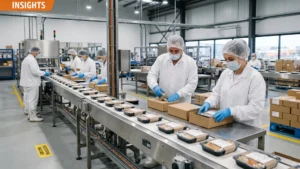

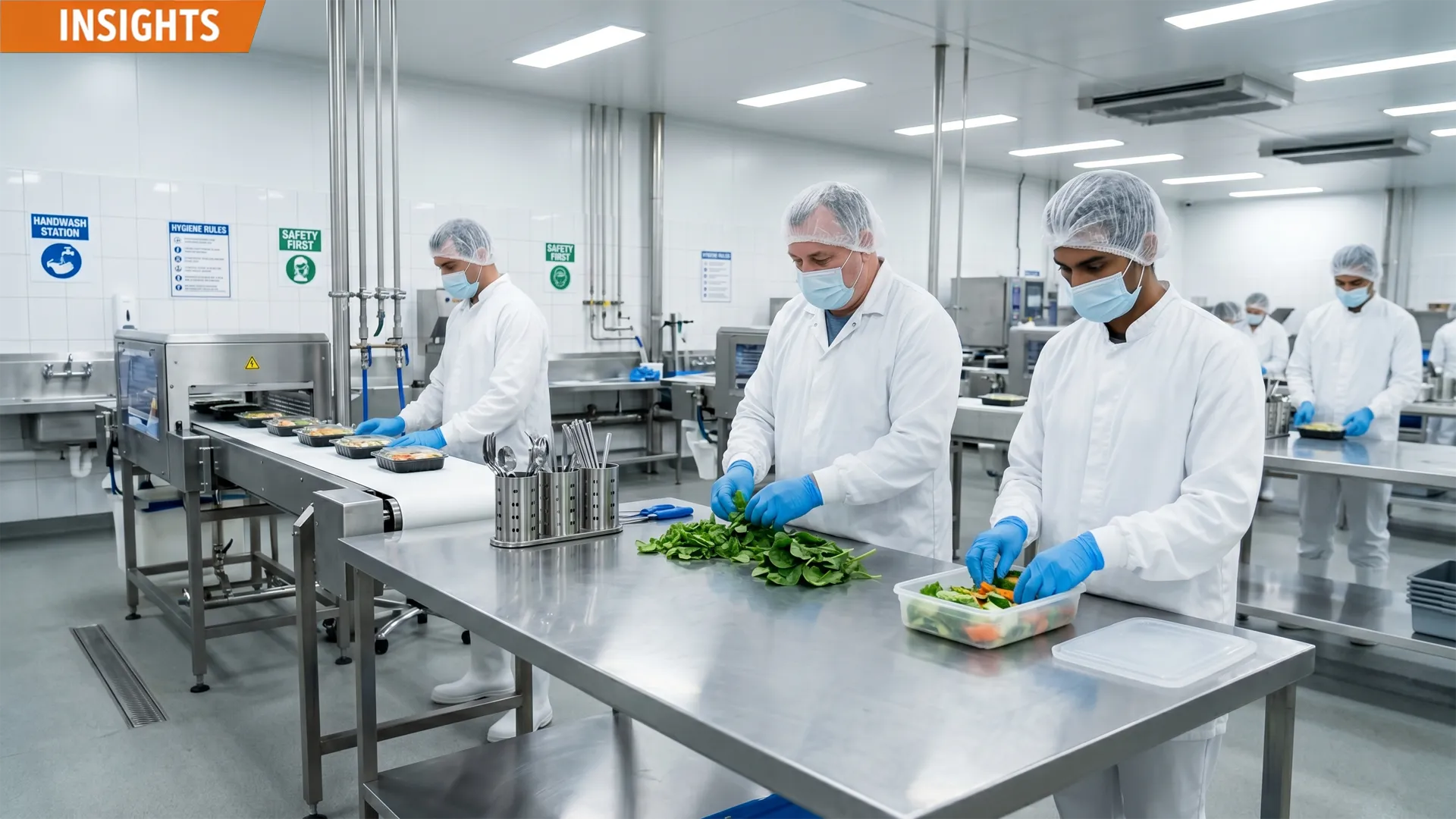
Food production is one of the clearest examples of where worker safety and product safety overlap every day.
That is what makes the sector different.
In many warehouse and factory settings, safety risks are already significant. But in food production, employers also need to think about:
- hygiene discipline
- contamination control
- protective clothing
- washdown conditions
- repetitive line work
- fatigue
- manual handling
- communication quality
- and whether new workers can enter the site without creating extra risk for either people or product
Across Victoria, food manufacturers often operate in environments that are:
- fast-paced
- highly structured
- hygiene-sensitive
- physically repetitive
- and less forgiving of weak onboarding or inconsistent worker behaviour
That means food production safety cannot be treated as a separate issue from operations.
It sits inside:
- how people enter the site
- how they dress
- how they move
- how they clean
- how they follow instructions
- and how well the business manages pressure when production speed increases
This matters even more when using:
- new starters
- temporary workers
- casual labour
- multilingual workforces
- or workers moving in from other industrial settings
A worker may have general factory experience and still be unfamiliar with the discipline required inside a food production environment.
That is why employers need more than broad safety awareness.
They need practical control over the daily crossover between:
- workplace safety
- hygiene
- and workforce readiness
That is where stronger food production safety begins.
If your site also relies on temporary or casual industrial workers, our warehouse and factory labour hire support approach focuses on practical worker readiness, local responsiveness, and safer day-one integration.
Why Food Production Safety Is Different from General Industrial Safety
Food production sites carry many of the same safety risks seen in other industrial environments:
- slips
- manual handling
- repetitive motion
- machinery interaction
- fatigue
- and shift pressure
But they also involve additional controls around:
- hygiene entry
- product protection
- contamination prevention
- protective clothing
- washdown conditions
- and worker behaviour that may directly affect food safety outcomes
That changes the way employers need to think.
A worker in food production is not only expected to work safely for their own protection.
They are also expected to work in a way that protects:
- the product
- the production area
- and the site’s hygiene discipline
This is why food production employers often need stronger control around:
- onboarding
- site entry
- PPE use
- hand hygiene
- zone discipline
- communication
- and day-one supervision
A weak setup in a general warehouse may create operational friction.
A weak setup in food production can create:
- worker risk
- hygiene risk
- process inconsistency
- and quality risk at the same time
That is why the standard needs to be higher.
Our article on why food production safety is different from general warehouse safety looks more closely at why food manufacturers need tighter worker controls, stronger hygiene discipline, and more structured site entry expectations.
Where Food Production Safety Usually Starts Breaking Down
Problems in food production safety rarely begin with one major failure.
More often, they build through smaller gaps such as:
- rushed site entry
- weak hygiene explanation
- unclear PPE expectations
- workers not fully understanding site rules
- slippery areas being treated as normal
- repetitive tasks continuing too long without enough review
- production pace overriding practical caution
- or supervisors assuming workers have understood more than they actually have
These issues matter because fast-paced food production often gives small problems less room to stay small.
A worker who is unclear on entry discipline may also be unclear on:
- contamination control
- zone expectations
- safe movement
- or what to do when something does not look right
That is why food production safety often depends on early control, not late correction.
Good employers usually review:
- how new workers are brought in
- where pressure is building
- what parts of the site become riskier when production speeds up
- and whether the workforce is actually working inside the hygiene and safety system the site believes it has in place
10 Things Food Manufacturers Need to Get Right
1. Make Hygiene Entry and Safety Entry Work Together
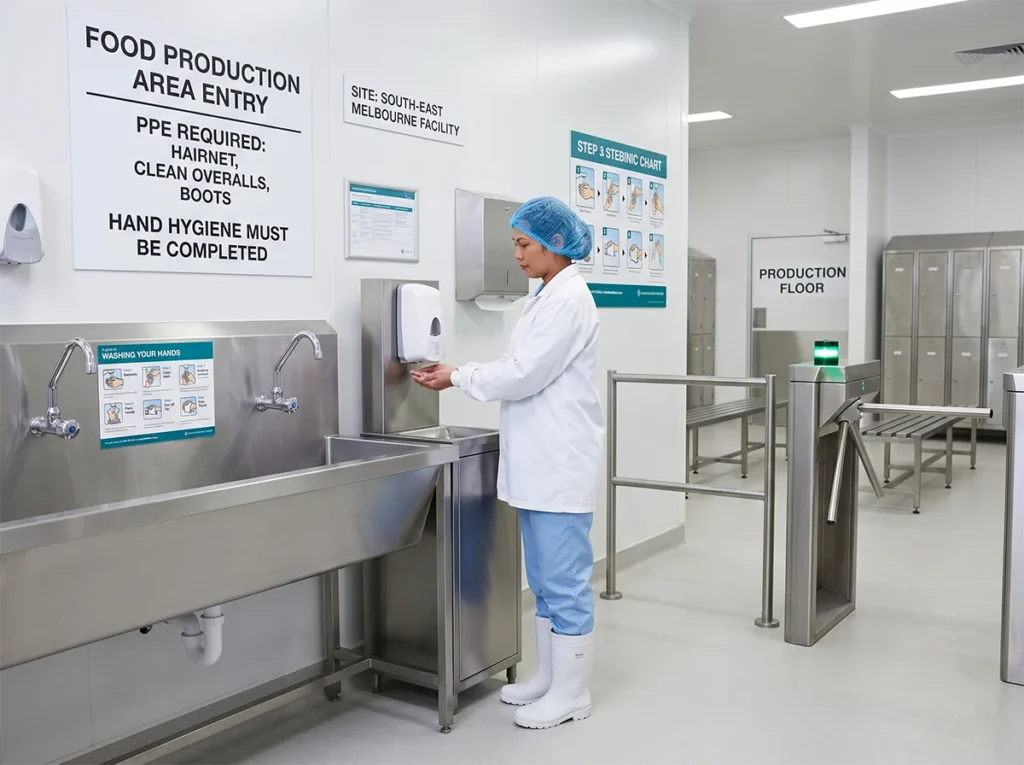
Entry procedures in food production are not only about access.
They are also about control.
Good employers make sure workers understand from the beginning:
- where to report
- what PPE and hygiene items are required
- what hand hygiene steps apply
- where site entry rules change by area
- and what must happen before active work starts
This matters because the first few minutes on site often set the standard for everything that follows.
If entry feels rushed, unclear, or inconsistent, the site is already more exposed than it should be.
Our article on food production site entry rules: what new workers need to understand before shift start explains the practical site-entry expectations employers should make clear before workers enter hygiene-sensitive production areas.
2. Treat PPE as Both Safety Control and Food Protection Control
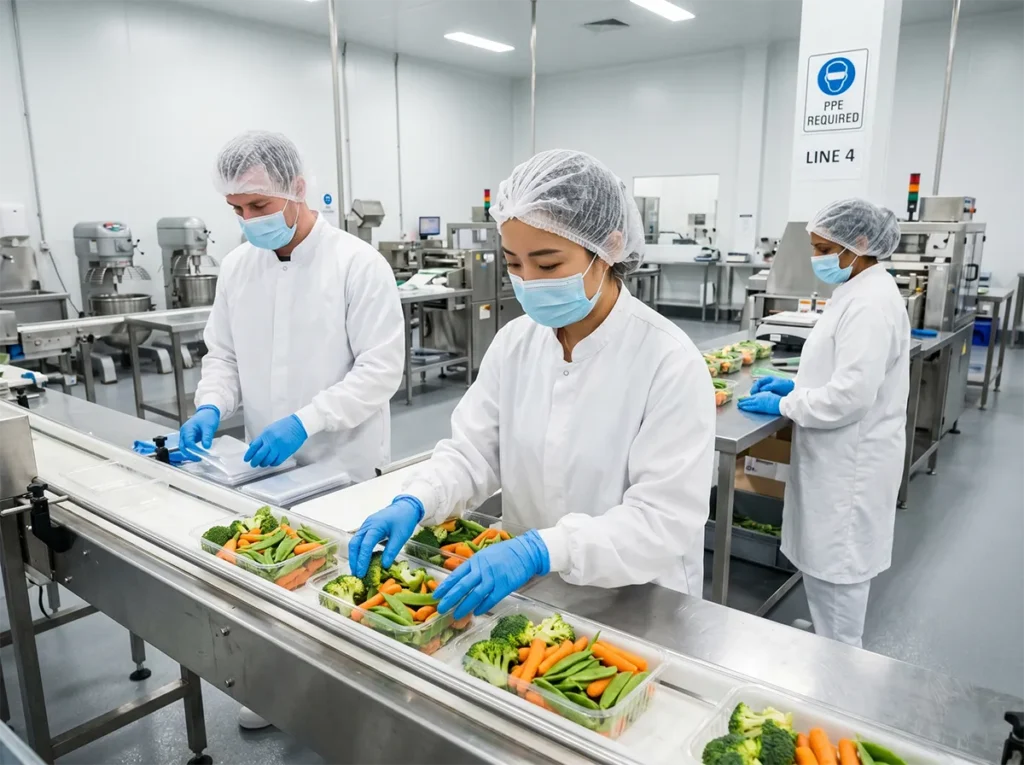
PPE in food production does more than protect the worker.
It often helps protect:
- the product
- the environment
- and the hygiene standard of the site itself
That means employers need workers to understand not just:
- what to wear
but also - why it matters
- how it should be worn
- when it should be changed
- and what mistakes weaken both safety and hygiene outcomes
This matters because PPE confusion in food production can create dual risk:
- worker exposure
- and food safety exposure
A stronger site treats PPE discipline as part of the operating system, not just a rule on the wall.
Our article on why PPE in food production protects both worker safety and food safety explains why correct protective clothing matters for both people and product in fast-paced food sites.
3. Control Wet Floors, Washdowns, and Drain Areas Properly
Food production sites often carry wet-area risk as part of normal operations.
That may include:
- washdown procedures
- drainage areas
- rinsing and cleaning zones
- moisture near production lines
- and floor conditions that change across the shift
These are not small hazards to normalise.
Good employers review:
- where wet-floor exposure builds
- whether workers understand the changing conditions
- whether walkways remain usable
- and whether routine cleaning practices are creating additional movement risk
A site that becomes “used to” slippery conditions is often a site that has stopped reviewing them honestly.
Our guide to wet floors, washdowns and drain areas: what food production sites should review early looks more closely at one of the most common and underestimated risk areas in food manufacturing environments.
4. Review Repetitive Work Before Fatigue and Strain Build Quietly
Fast-paced food production often involves:
- repetitive packing
- repetitive line work
- repetitive handling
- sustained standing
- and movement patterns that can look manageable until the same task has repeated for hours or weeks
This matters because repetitive risk often builds gradually.
Employers should review:
- task repetition
- line rhythm
- worker rotation
- signs of discomfort
- and whether the site is leaving repetitive strain issues too long before intervening
In many sites, the risk is not obvious in one moment.
It appears through repetition over time.
Our article on repetitive work in food manufacturing: what employers should review before injuries build explains why line-based strain problems often grow gradually before they become visible enough to force action.
5. Manage Worker Fatigue Properly on Longer or Faster Shifts
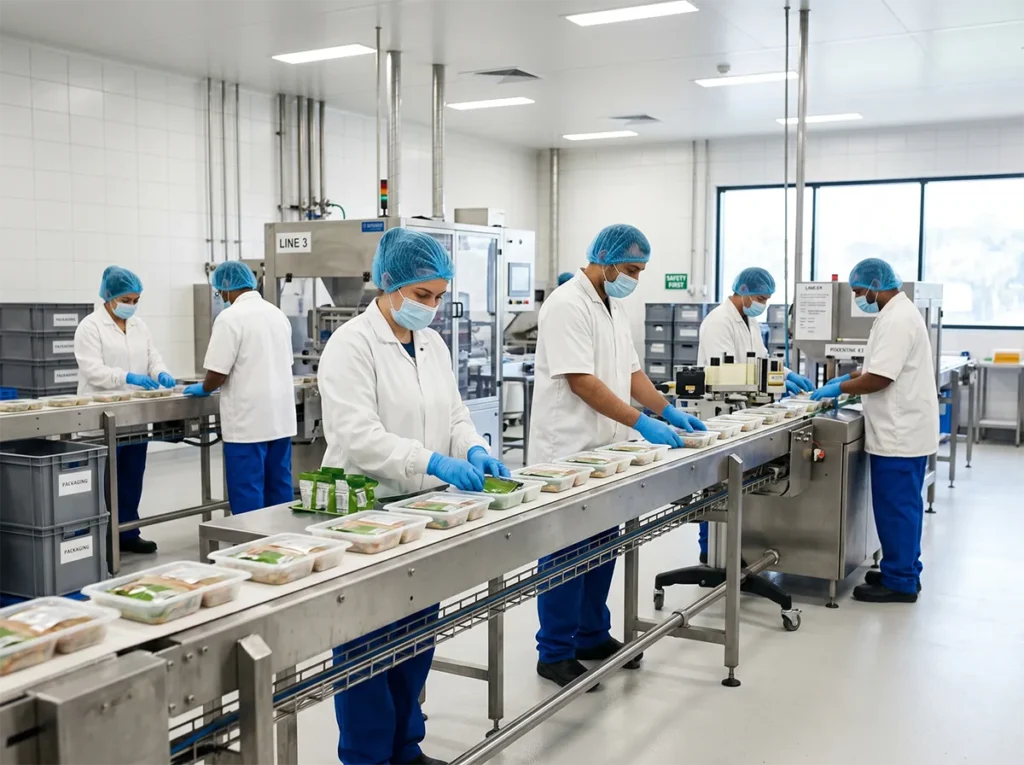
Fatigue matters in food production because it affects:
- concentration
- movement
- hygiene discipline
- manual handling
- decision-making
- and how well workers keep following site controls under pressure
This is especially important during:
- longer packing shifts
- overtime periods
- higher-volume weeks
- and times when line pace increases without enough recovery thinking around it
Good employers review not just shift length, but also:
- task intensity
- repetitive exposure
- break structure
- and whether fatigue is starting to affect behaviour before anyone says it directly
Our article on managing worker fatigue during long packing and production shifts looks at the practical signs of fatigue risk and what food manufacturers should review before longer shifts start weakening both safety and consistency.
6. Do Not Underestimate Manual Handling in Food Production
Manual handling in food production is often underestimated because the environment can look organised and repetitive.
But employers still need to think carefully about:
- lifts
- reaches
- repetitive movement
- awkward handling
- line-side transfer
- pallet interaction
- and the way speed can increase handling pressure
This matters because manual handling problems may not always come from obviously heavy loads.
They often come from:
- repeated smaller movements
- constrained body position
- and ongoing pace without enough review of the physical demand
Our guide to manual handling risks in food production: what fast-paced sites often miss explains why repeated handling tasks in food manufacturing can still create significant injury risk even when the work looks routine.
7. Bring New Workers in With Much Stronger Day-One Control
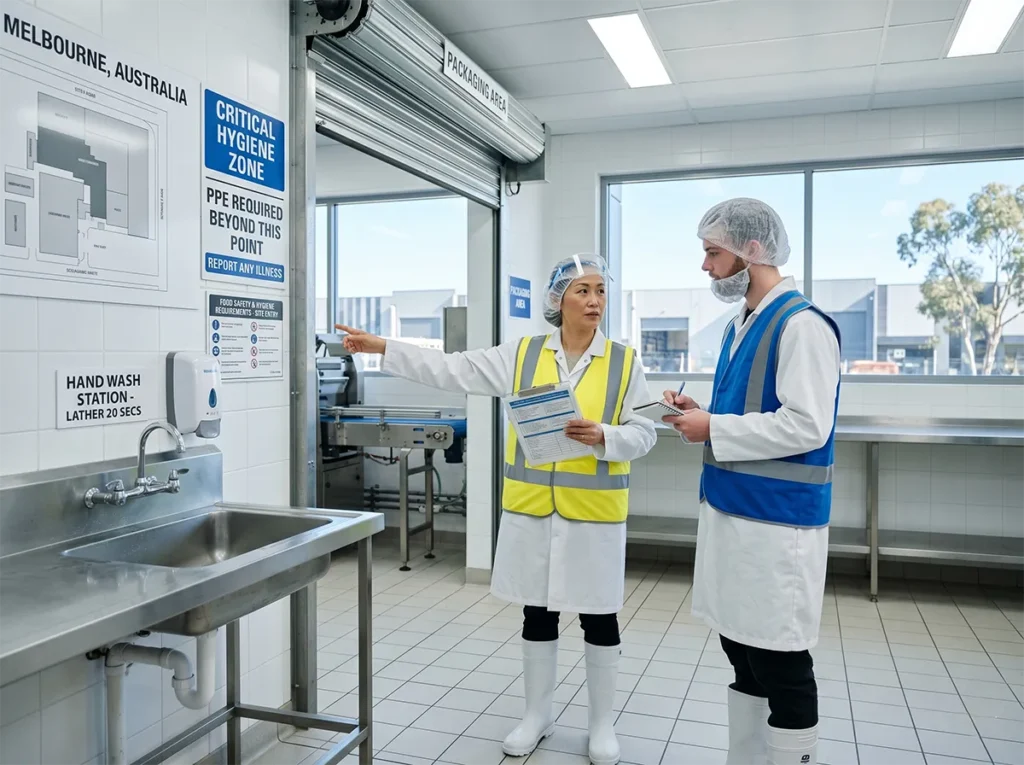
Food production is not the kind of environment where a new worker should be expected to “pick it up as they go”.
Good employers make sure day-one onboarding covers:
- entry procedures
- hygiene discipline
- PPE requirements
- safe movement rules
- food handling boundaries
- reporting expectations
- line behaviour
- and who supervises the worker early
This matters because a worker who is new to food production may not yet understand:
- contamination-sensitive behaviour
- hygiene zones
- washdown risk
- or how tightly controlled the environment needs to be compared with a general warehouse
Our article on bringing new workers into food production: how to reduce hygiene and safety risk on day one looks at what employers should cover before new or temporary workers enter active production areas.
8. Make Inductions Work for Multilingual Workforces
Many food production sites rely on workers from diverse language backgrounds.
That is normal.
But it means induction quality matters even more.
Good employers do not assume that:
- a quick verbal briefing
- a form to sign
- or a general instruction given once
means the worker has fully understood what matters.
A stronger induction in food production should make sure workers can understand:
- key hygiene rules
- site movement expectations
- PPE use
- contamination-sensitive behaviour
- and what to do if something is unclear
This is especially important for new and temporary workers who may already be processing a lot of unfamiliar information.
Our article on how to run safer food production inductions for non-English speaking workers explains how employers can make safety and hygiene expectations much clearer on multilingual sites.
9. Watch What Faster Line Speed Is Doing to Behaviour
Higher production speed can quietly change how workers behave.
That may show up through:
- rushed movement
- weaker hygiene discipline
- reduced attention to manual handling
- poorer communication
- shortcuts around PPE or process steps
- and growing fatigue that begins affecting consistency
This matters because employers can sometimes focus on output and miss the fact that line speed is starting to weaken the behaviour controls the site depends on.
Good employers review whether increased pace is changing:
- worker behaviour
- task quality
- safety margins
- and site discipline
before something more serious happens.
Our article on how faster line speed can increase safety and quality risk in food production explains why pace pressure can begin affecting both workforce safety and production consistency if it is not reviewed early.
10. Treat Temporary and Casual Worker Readiness as a Core Risk Control
Food production employers sometimes bring in temporary support during:
- busy periods
- leave cover
- shift gaps
- and demand spikes
That can be useful.
But it only works well if the site takes worker readiness seriously.
A temporary worker who is unclear on:
- hygiene
- PPE
- site behaviour
- contamination risk
- or line expectations
can create more risk very quickly.
Good employers review:
- what temporary workers need before shift start
- what supervision they receive
- and whether the site is expecting too much site understanding too soon
Our article on what host employers should check before putting casual workers into food production looks at the practical safety and hygiene questions employers should review before temporary workers enter fast-paced food sites.
What Better Food Production Safety Usually Looks Like in Practice
When food production safety is being managed well, the site usually feels:
- controlled
- structured
- clean
- readable
- and difficult to misunderstand
In practice, that often means:
- entry rules are clear
- PPE is consistent
- wet areas are being managed honestly
- repetitive and fatigue risks are reviewed before they escalate
- supervisors are not assuming workers understood more than they did
- and new workers are being brought in with stronger day-one control
It should not feel like:
- hygiene and safety are being treated as separate issues
- workers are guessing too much
- fast pace is weakening site discipline
- or repeated risks are being normalised just because they are common in food production environments
Good food production safety is visible in how the site runs, not just in what policy says.
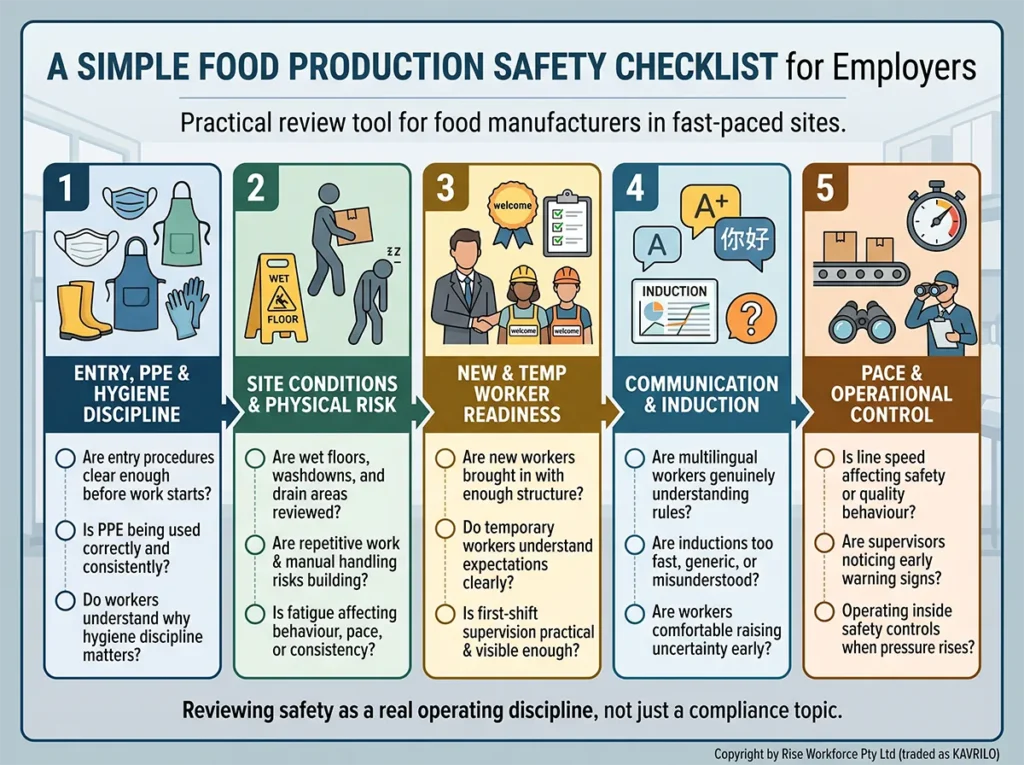
A Simple Food Production Safety Checklist for Employers
Here is a practical checklist food manufacturers can use when reviewing safety in fast-paced sites.
Entry, PPE, and Hygiene Discipline
- Are entry procedures clear enough before work starts?
- Is PPE being used correctly and consistently?
- Do workers understand why hygiene discipline matters, not just what to wear?
Site Conditions and Physical Risk
- Are wet floors, washdowns, and drain areas being reviewed properly?
- Are repetitive work and manual handling risk building quietly?
- Is fatigue affecting behaviour, pace, or consistency?
New and Temporary Worker Readiness
- Are new workers being brought in with enough structure?
- Do temporary workers understand the hygiene and safety expectations clearly enough?
- Is first-shift supervision practical and visible enough?
Communication and Induction
- Are multilingual workers genuinely understanding key rules?
- Are inductions too fast, too generic, or too easy to misunderstand?
- Are workers comfortable raising uncertainty early?
Pace and Operational Control
- Is line speed affecting safety or quality behaviour?
- Are supervisors noticing early warning signs?
- Is the site still operating inside its intended safety and hygiene controls when pressure rises?
This kind of checklist helps employers review food production safety as a real operating discipline, not just a compliance topic.
Final Word
Food production safety in Victoria matters because fast-paced food sites depend on stronger control than many general industrial environments.
For food manufacturers, better outcomes usually come from:
- stronger hygiene entry
- better PPE discipline
- more honest wet-area review
- earlier response to repetitive and fatigue risk
- clearer induction
- and better worker readiness from day one
That is what helps reduce:
- preventable injury risk
- hygiene inconsistency
- contamination-sensitive behaviour failures
- weak onboarding
- and operational pressure that should have been controlled earlier
Because in food production, safety is not only about protecting workers.
It is also about protecting the way the site operates.
That is not just better compliance.
It is better production control.
Need Practical Labour Hire Support for Warehousing and Manufacturing in Melbourne’s South-East?
KAVRILO is building its approach around safety-aware workforce support, stronger local responsiveness, and clearer operational discipline for warehouse and industrial environments, including food production settings where worker readiness and day-one clarity matter.
Whether your site needs better shift coverage, stronger day-one worker readiness, or more dependable labour coordination in hygiene-sensitive environments, KAVRILO is focused on practical workforce support that fits controlled production sites.
Need warehouse and factory labour hire support with stronger day-one readiness and more dependable workforce support for controlled production environments? Talk to KAVRILO about practical labour support across Melbourne’s South-East.
Article Disclaimer
This article is provided for general information only and does not constitute legal, workplace relations, safety, taxation, payroll or other professional advice. Please seek advice specific to your circumstances before acting on this information.
Please read our Website Disclaimer for more information.