
Repetitive work is one of the easiest risks in food manufacturing to underestimate.
That is often because the task can look:
- ordinary
- controlled
- familiar
- and manageable
right up until the point the strain has already been building for too long.
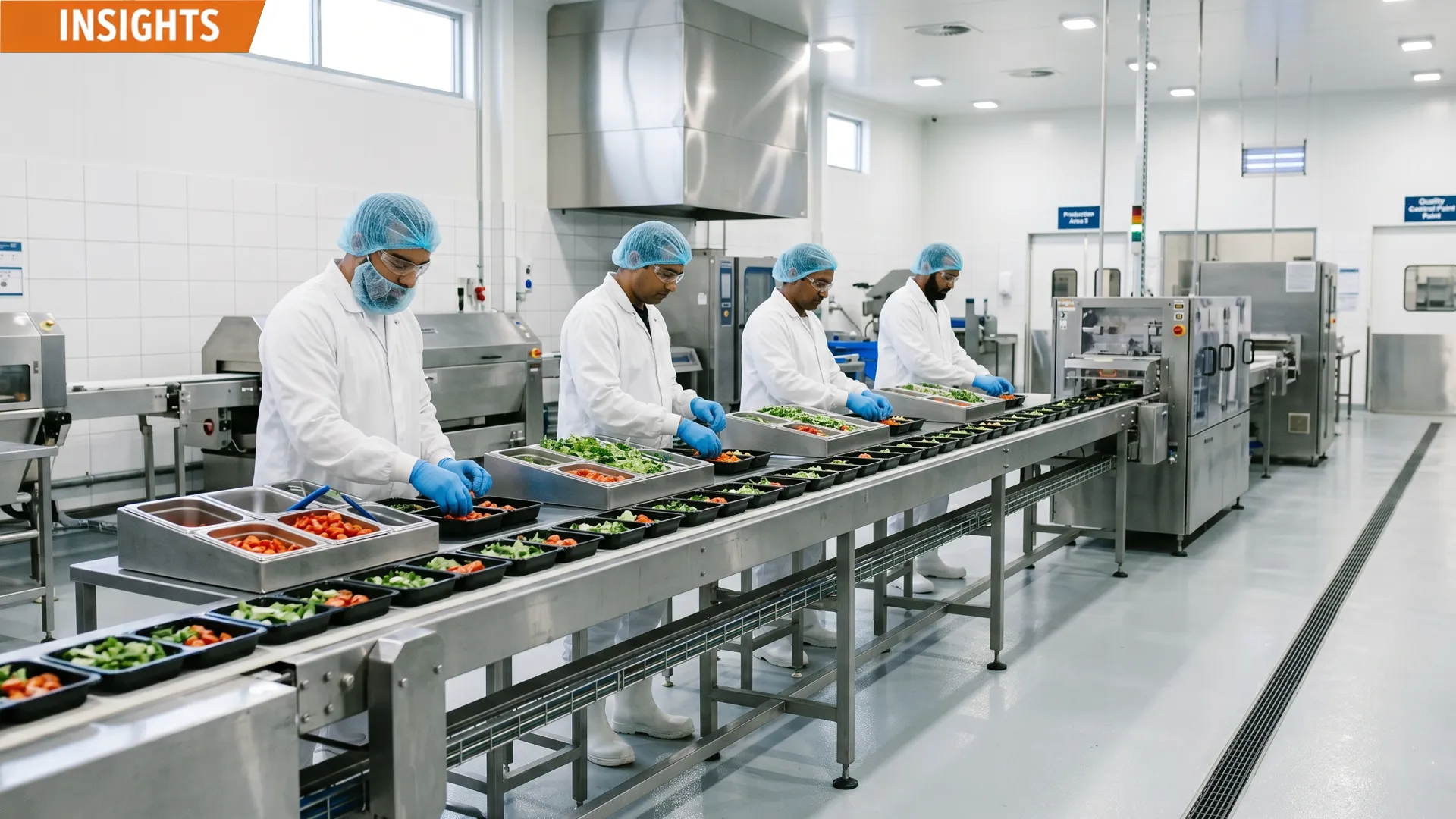
Across Victoria, many food production sites rely on repeated movements such as:
- packing
- sorting
- trimming
- lifting
- placing
- sealing
- stacking
- and line-based handling
These tasks may not always look dramatic.
But when they are repeated at pace, across long shifts, with limited variation, they can quietly increase:
- fatigue
- discomfort
- reduced movement quality
- weaker posture
- lower concentration
- and the early conditions that lead to more obvious injury risk later
That is why repetitive work matters so much.
In food manufacturing, employers are often asking workers to maintain:
- consistency
- speed
- hygiene discipline
- and controlled movement
at the same time.
That means a repetitive task is not only a physical issue.
It is also affected by:
- line pace
- shift length
- task design
- workstation setup
- recovery time
- and whether the site is noticing early warning signs before they become bigger problems
Good employers do not wait for an injury report before reviewing repetitive work.
They look earlier at what the task is actually asking the body to do, and how long the site expects that pattern to continue.
That is where stronger control begins.
For the broader hub article, see our Food Production Safety in Victoria pillar guide on hygiene, PPE, wet-floor risk, repetitive work, fatigue, and safer worker onboarding in fast-paced sites.
Why Repetitive Work Risk Builds So Quietly
One of the hardest things about repetitive work is that it rarely begins with a major event.
It usually develops through:
- the same reach
- the same lift
- the same hand movement
- the same standing position
- the same packing motion
- or the same line-side action
repeated across hours, shifts, and weeks.
That is why it is easy for a site to think:
- the task is light
- the worker is coping
- the line is running
- and nothing serious is happening
when in reality the problem may already be building under the surface.
This matters because repetitive work often becomes visible only after:
- workers slow down
- discomfort becomes more obvious
- posture starts changing
- movement becomes awkward
- or supervisors begin seeing more errors, more fatigue, or more strain behaviour on the floor
By then, the risk has often been present for some time.
That is why earlier review matters so much.
Why Repetitive Work Is a Bigger Issue in Fast-Paced Food Production
Food manufacturing often combines repetition with:
- production speed
- hygiene discipline
- time pressure
- long periods on feet
- manual handling
- and less task variation than some other industrial settings
That combination matters.
A worker is not only repeating the task.
They may also be repeating it while:
- keeping up with a line
- wearing controlled PPE
- maintaining food-safe behaviour
- and staying physically consistent in a structured environment
That can increase the strain more quickly than employers expect.
A task that looks simple in isolation may become much harder to sustain when:
- the line pace stays high
- the posture is fixed
- the workstation is awkward
- or the task continues for longer than the body is coping with well
That is why repetitive work in food manufacturing deserves review as a practical systems issue, not just a worker-tolerance issue.
10 Practical Things Employers Should Review Before Injuries Build
1. How Often the Same Movement Is Repeated
This is the most obvious starting point, but it still gets missed.
Employers should review:
- what movement is being repeated
- how frequently it repeats
- how long the worker stays in that pattern
- and whether the same body area is being loaded again and again without enough variation
This matters because repetition itself is part of the risk.
A movement does not need to be heavy to become problematic.
It may become risky simply because it is repeated too often, for too long, with too little recovery.
Good review starts with understanding the real repetition rate of the task, not just the job title.
2. Whether the Task Looks Light but Feels Heavy Over Time
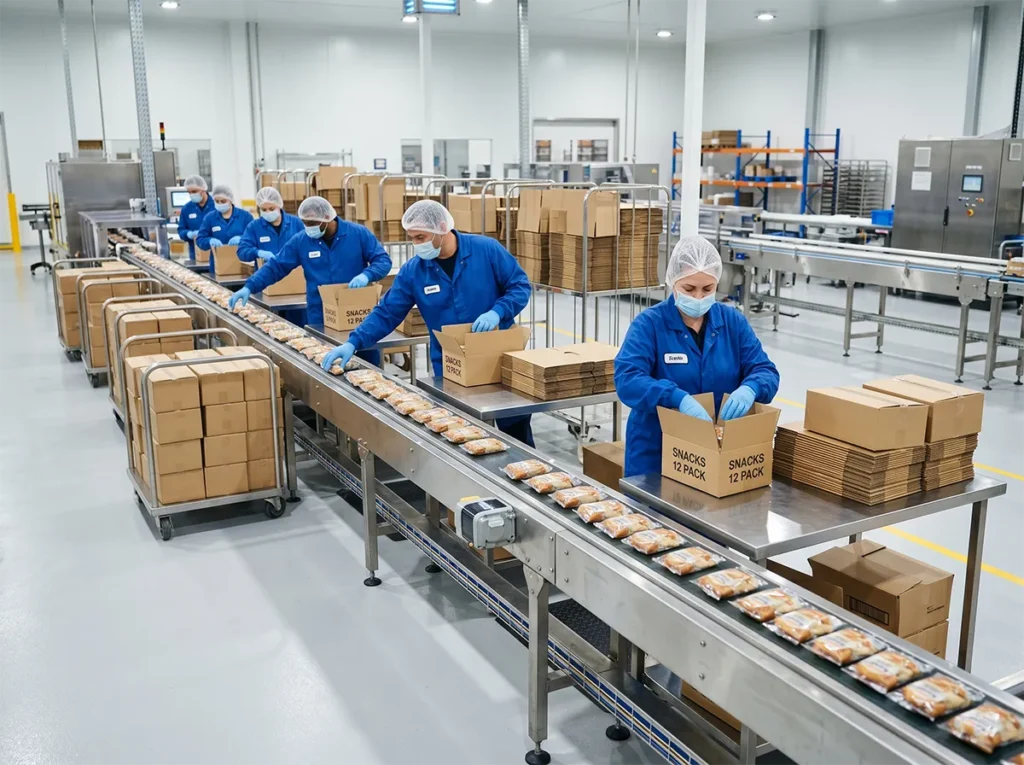
Some repetitive tasks are underestimated because they do not involve obviously heavy loads.
That may include:
- small-item packing
- repetitive reaching
- tray handling
- repeated sealing
- sorting
- or fine hand work performed across long periods
These tasks can still become physically demanding because:
- the same muscles are working repeatedly
- posture is held too long
- movement range is limited
- and the pace leaves little time for natural recovery
This matters because “not heavy” does not mean “not tiring”.
A task can still build significant strain through repetition alone.
3. Whether Line Pace Is Increasing the Strain
A repetitive task becomes harder to sustain when speed increases.
That is especially true in food production, where line pace may quietly reduce:
- movement control
- posture quality
- recovery between actions
- and the worker’s ability to reset properly before repeating the movement again
This matters because the body may cope with the same task at one pace but struggle at another.
Good employers review:
- how line speed interacts with the physical demand of the job
not just - whether the task can technically be done
Our article on how faster line speed can increase safety and quality risk in food production explains why pace pressure can quietly change movement quality, concentration, and risk on fast-moving lines.
4. Whether Workers Stay in the Same Posture Too Long
Repetition is not only about movement.
It is also about body position.
Employers should review whether workers are spending too long:
- standing in one place
- reaching the same way
- leaning forward repeatedly
- twisting slightly but often
- or working at a height that keeps the body under steady tension
This matters because fixed or repeated posture can build strain even when the task seems simple.
A workstation that keeps the worker in the wrong position long enough can quietly increase fatigue and discomfort before anyone calls it an injury problem.
5. Whether the Workstation Setup Is Helping or Harming the Task

A repetitive job can become much harder when the workstation is poorly matched to the task.
That may include:
- awkward bench height
- poor placement of items
- too much reach
- poor container position
- limited space for body movement
- or setup that encourages the same awkward posture all shift
This matters because sites sometimes treat repetitive strain as a worker issue when the setup itself is driving a large part of the problem.
A better setup often improves:
- comfort
- rhythm
- control
- and long-shift sustainability
That is worth reviewing before injuries build.
6. Whether Fatigue Is Starting to Change Movement Quality
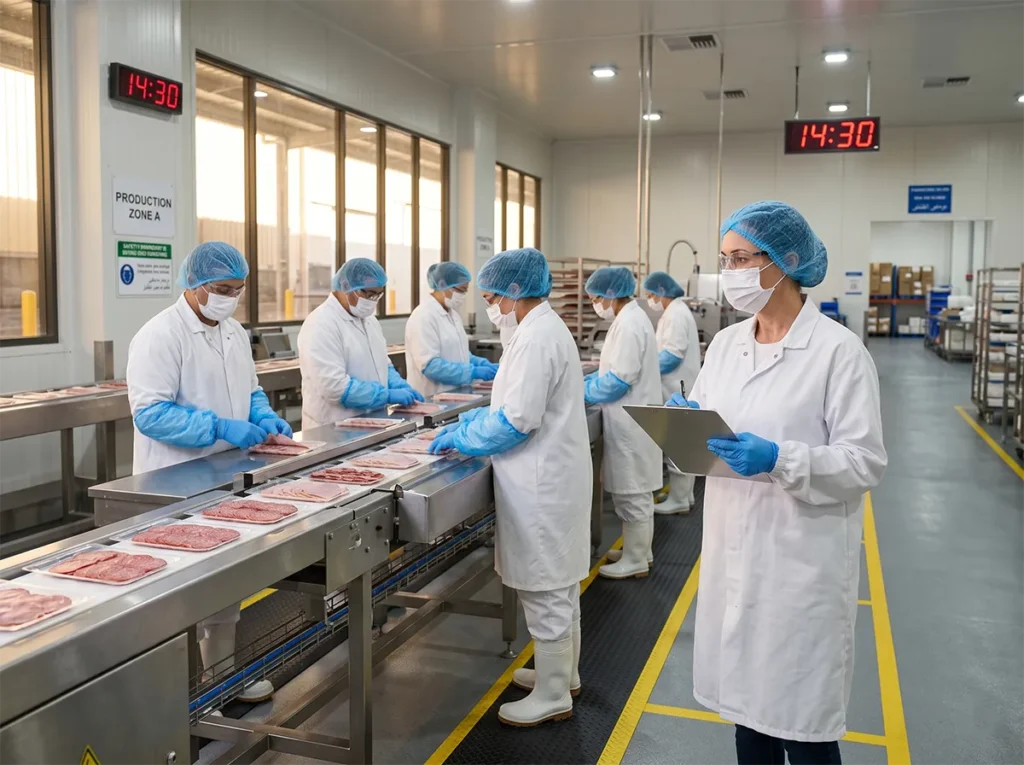
A repetitive task may look controlled early in the shift and much weaker later.
That is why employers should review how the worker is moving:
- after several hours
- late in the shift
- during high-volume periods
- and after repeated exposure across the week
Fatigue can change:
- posture
- lift quality
- hand speed
- balance
- coordination
- and willingness to reset properly between actions
This matters because repetitive strain often builds faster once fatigue starts affecting the body’s control of the task.
Our article on managing worker fatigue during long packing and production shifts explains why repetitive tasks often become more risky once tiredness begins affecting movement quality and concentration later in the shift.
7. Whether Task Variation or Rotation Is Strong Enough
A repetitive task is harder to sustain when workers have too little variation.
Employers should review:
- whether rotation exists
- whether it is meaningful
- whether the alternate task actually changes the body demand
- and whether workers are still spending too much total time loading the same body areas even across nominally different jobs
This matters because not all task variation is real variation.
Two different jobs may still stress:
- the same posture
- the same hand pattern
- or the same muscle groups
A stronger review looks at whether rotation actually changes the strain profile, not just the workstation name.
8. Whether New and Temporary Workers Are Being Exposed Too Quickly
A new worker may not yet understand:
- the true pace of the task
- the body control it requires
- how to pace themselves safely
- or how long the movement pattern stays repetitive across the shift
This is especially important for:
- temporary workers
- casual labour
- and workers moving in from general warehouse or factory settings
Good employers review whether these workers are being brought into repetitive tasks with:
- enough day-one guidance
- enough visible supervision
- and realistic early expectations
A worker who is unfamiliar with the environment may tire earlier or move less efficiently than a settled worker, even if they look capable at first glance.
Our article on bringing new workers into food production: how to reduce hygiene and safety risk on day one explains why new and temporary workers often need stronger early guidance before being exposed to fast-paced repetitive production work.
9. Whether Workers Are Showing Early Signs of Strain
Sites do not need to wait for formal injury reports to know repetitive work may be becoming a problem.
Early signs may include:
- workers stretching the same area repeatedly
- reduced range of movement
- slower posture reset
- visible stiffness
- more awkward handling
- reduced pace consistency
- or workers quietly changing how they perform the task to cope with discomfort
These signs matter.
They often show the task is asking more of the body than the site has formally acknowledged yet.
Good employers use these signals early rather than waiting until the problem becomes more serious and harder to reverse.
10. Whether the Site Is Treating Repetition as “Just Part of the Job”
This is often the biggest issue of all.
Many food sites know a task is repetitive.
The problem starts when that fact becomes accepted without enough review.
That can sound like:
- “it’s always repetitive here”
- “that’s just line work”
- or “everyone gets used to it”
Those attitudes are risky.
Repetition may be part of the job.
But unmanaged repetition should not be treated as acceptable simply because it is common.
Good employers keep asking:
- is this task still sustainable?
- what is the body being asked to do repeatedly?
- and are we seeing signs that the task needs changing before injuries build?
That is a much stronger mindset.
What Better Repetitive-Work Control Usually Looks Like in Practice

When repetitive work is being managed better, the site usually feels:
- more sustainable
- more controlled
- less physically draining
- and easier for workers to perform steadily across the shift
In practice, that often means:
- repetition is being reviewed honestly
- line pace is being considered as part of the risk
- workstation setup supports better posture
- fatigue effects are not being ignored
- task variation is meaningful
- and supervisors are noticing early signs of strain instead of waiting for a more obvious problem
It should not feel like:
- workers are simply expected to endure the same motion indefinitely
- discomfort is being normalised because the task looks routine
- or productivity is being preserved by quietly pushing repetitive strain further into the shift until someone eventually breaks down
Good control does not always mean slow work.
But it does mean work that the body can sustain more safely over time.
A Simple Repetitive-Work Review Checklist for Food Manufacturing Employers
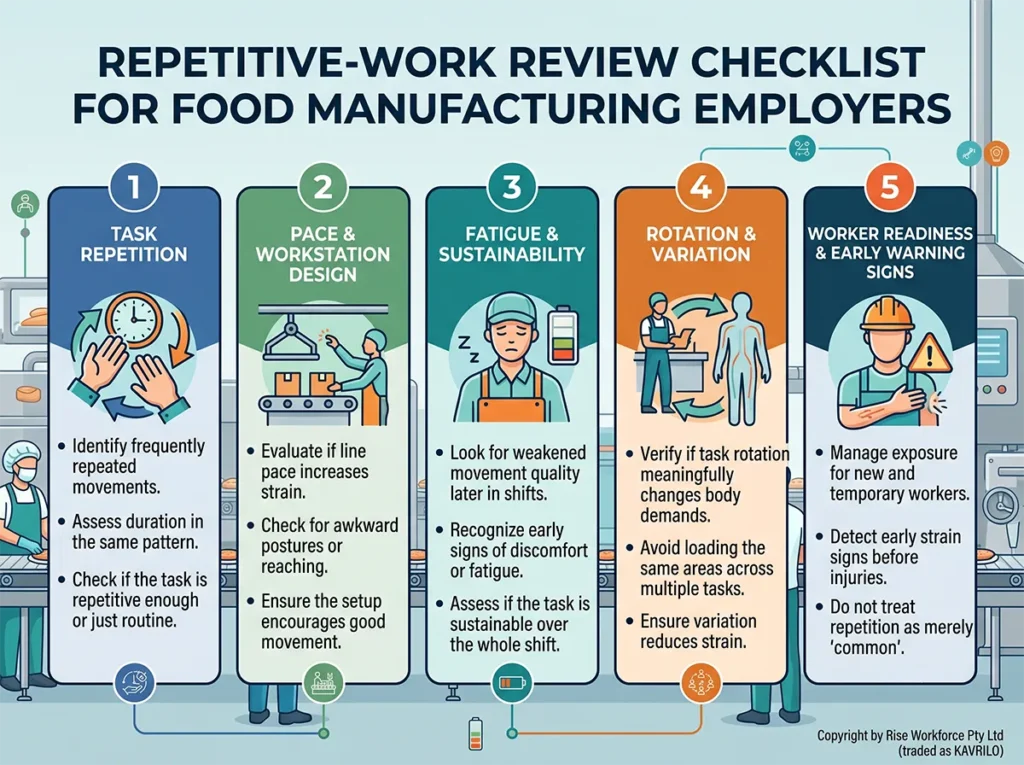
Here is a practical checklist employers can use when reviewing repetitive work on food production lines.
Task Repetition
- What movement is being repeated most often?
- How long do workers stay in the same pattern?
- Is the task being reviewed as repetitive enough, or only as routine?
Pace and Workstation Design
- Is line pace increasing strain?
- Is the workstation encouraging awkward reach or posture?
- Does the setup support good movement or make it harder?
Fatigue and Sustainability
- Does movement quality weaken later in the shift?
- Are workers showing signs of discomfort or fatigue earlier than expected?
- Is the task sustainable across the full shift, not just the first hours?
Rotation and Variation
- Does task rotation genuinely change the body demand?
- Are workers still loading the same areas across multiple tasks?
- Is variation meaningful enough to reduce strain?
Worker Readiness and Early Warning Signs
- Are new and temporary workers being exposed too quickly to repetitive line work?
- Are early strain signs being noticed before injury reports appear?
- Is the site treating repetition as manageable just because it is common?
This kind of checklist helps employers review repetitive work before strain becomes embedded in the way the operation runs.
Final Word
Repetitive work in food manufacturing deserves earlier review because the risk often builds gradually while the line still appears to be running normally.
For employers in Victoria’s food manufacturing sector, stronger outcomes usually come from:
- understanding the true repetition rate of the task
- reviewing pace and workstation setup together
- noticing how fatigue changes movement
- improving task variation where possible
- and acting on early signs of strain before they become larger injury problems
That is what helps reduce:
- discomfort that gets normalised
- weaker posture and movement
- fatigue-driven decline in task quality
- preventable repetitive strain
- and the hidden physical cost of keeping repetitive work under review too late
Because in food manufacturing, a repetitive task can stay quiet for a long time.
That does not mean it is under control.
Need Practical Labour Hire Support for Warehousing and Manufacturing in Melbourne’s South-East?
KAVRILO is building its approach around safety-aware workforce support, stronger local responsiveness, and clearer operational discipline for warehouse and industrial environments, including food production settings where hygiene discipline and day-one worker readiness matter.
Whether your site needs better shift coverage, stronger day-one worker readiness, or more dependable labour coordination in hygiene-sensitive environments, KAVRILO is focused on practical workforce support that fits controlled production sites.
Need warehouse and factory labour hire support with stronger day-one readiness and more dependable workforce support for controlled production environments? Talk to KAVRILO about practical labour support across Melbourne’s South-East.
Article Disclaimer
This article is provided for general information only and does not constitute legal, workplace relations, safety, taxation, payroll or other professional advice. Please seek advice specific to your circumstances before acting on this information.
Please read our Website Disclaimer for more information.