

For warehouse and factory employers, labour problems rarely arrive with plenty of notice.
More often, they appear through:
- same-day absences
- rising volume
- seasonal pressure
- last-minute shift gaps
- sudden workload changes
- or the slow realisation that the site is already carrying more strain than it should
That is why staffing support needs to be more than available.
It needs to be:
- responsive
- practical
- local enough to understand the corridor
- and grounded enough to support the real conditions of the site
Across Dandenong and the broader South-East Melbourne industrial corridor, many employers operate in fast-moving warehouse and factory environments where labour issues affect operations quickly. In these conditions, slow or generic staffing support can create more frustration than relief.
A business may still receive workers.
But if the response is too slow, the fit is too generic, or the site context is not understood properly, the floor may still end up carrying:
- avoidable friction
- extra supervisor strain
- weaker attendance reliability
- and more instability than the business expected
That is why local staffing support matters so much.
For South-East Melbourne employers, especially those in and around Dandenong, the difference is often not just whether support exists.
It is whether that support can respond in a way that is:
- close enough
- informed enough
- and practical enough
to actually reduce pressure when the operation needs it most.
For the broader local market overview, see our Staffing South-East Melbourne pillar guide for Dandenong warehouse and factory employers.
Why Response Speed Matters So Much in Warehouse and Factory Staffing
In industrial environments, labour problems often become operational problems very quickly.
A shift gap does not stay inside administration for long.
It can quickly affect:
- dispatch flow
- production timing
- forklift and floor coordination
- supervisor workload
- team pressure
- and how calmly the site starts and finishes the day
That is why response speed matters.
When a business needs workforce support, it often does not need it in a broad future sense.
It needs it in a practical, time-sensitive sense.
That may mean:
- today’s shift
- tomorrow morning’s start
- this week’s volume increase
- or urgent cover during a period where the site is already under pressure
A slow response in those conditions can make the labour problem harder to solve, even if the support eventually arrives.
That is why faster staffing support is not just a convenience.
It is part of operational control.
Why Local Understanding Changes Staffing Outcomes
A local staffing approach is not only about geography.
It is also about whether the labour support understands:
- the industrial areas
- the warehouse and factory mix
- the practical travel realities
- the pace of local sites
- and the kind of labour pressure businesses in the South-East actually experience
This matters because South-East Melbourne is not one uniform labour market.
Different areas and sites may have different pressures around:
- travel access
- start times
- shift patterns
- warehouse intensity
- factory pace
- and the kind of workers who are more likely to sustain the role over time
A local support model is usually better placed to understand those things in practical terms.
That can improve:
- speed of response
- role matching
- reliability of labour coverage
- and the site’s overall confidence in the support it is receiving
10 Practical Reasons Employers Often Need Faster, More Local Staffing Support
1. Labour Gaps Often Need Action Before the Shift Starts
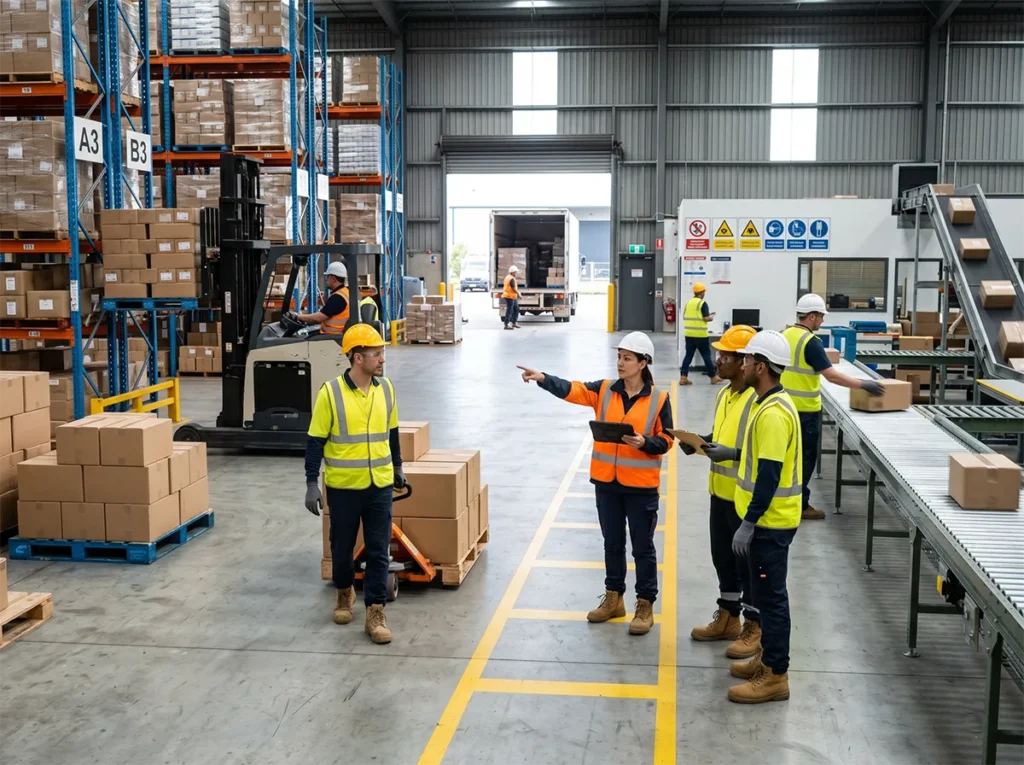
One of the biggest reasons local staffing support matters is timing.
A warehouse or factory usually cannot afford to wait too long once a labour problem is clear.
That may include:
- same-day absences
- late cancellations
- short-notice demand changes
- or a site realising the roster is weaker than expected before work begins
In these situations, support needs to move fast enough to still be useful.
That is why employers often value staffing support that feels:
- responsive
- reachable
- and practical under pressure
rather than support that only works well when everything has plenty of lead time.
2. Local Labour Pools Often Improve Practical Coverage
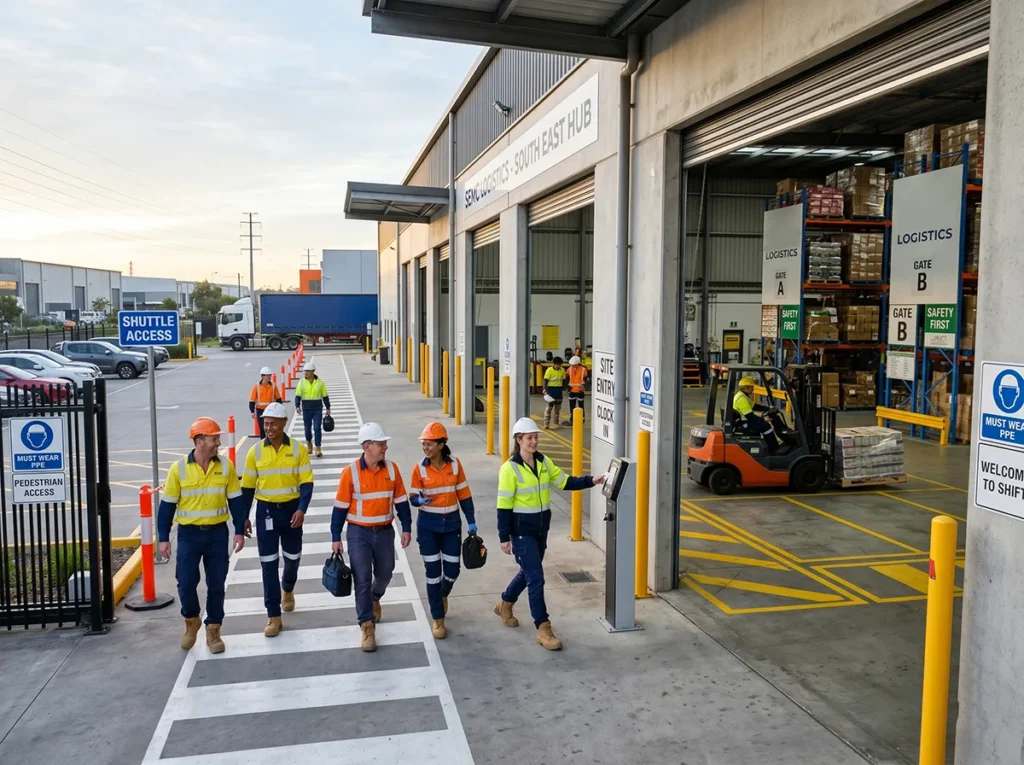
Workers who are closer to the site often have practical advantages around:
- travel time
- punctuality
- short-notice availability
- and the ability to sustain the shift over time
That is why faster local staffing support often works better in practice.
It can improve the chances of:
- realistic coverage
- stronger attendance
- and less friction around travel practicality
This is especially important in the South-East, where industrial sites can be active, start times can be early, and commuting across multiple areas may weaken reliability more than employers first expect.
Our article on why local workers often improve punctuality and reduce turnover explains why local access often supports stronger attendance, lower travel-related disruption, and steadier labour coverage over time.
3. Generic Staffing Models Often Miss Site-Specific Realities
A business may say it needs:
- warehouse labour
- factory support
- pick packers
- process workers
- or casual industrial staffing
But that broad label does not always explain the real conditions of the site.
A stronger local staffing partner is more likely to ask:
- what kind of site is this really?
- how fast is the pace?
- what shifts are hardest to cover?
- what does the worker actually need to handle?
- what kind of local fit makes the placement more likely to hold?
That matters because generic matching often creates:
- weaker fit
- more supervisor correction
- and labour support that looks helpful at first but creates more friction once the worker reaches the floor
A local approach is often stronger because it pays more attention to those details.
4. Travel Practicality Still Shapes Reliability in the South-East
This is a major issue that employers sometimes underestimate.
A worker may be willing to take the shift and still struggle later if:
- the travel is too long
- the route is awkward
- the industrial-area access is weak
- the start time is too early
- or the shift becomes hard to sustain once the routine becomes real
That is why local staffing support matters.
A more local workforce approach is usually better placed to think practically about:
- how realistic the commute is
- whether the shift pattern is sustainable
- and whether the worker is likely to keep attending, not just accept the first shift
Our guide to how transport and travel time affect shift reliability in South-East Melbourne explains why commute realism still affects punctuality, attendance, and worker retention more than many employers first expect.
5. Faster Support Helps Reduce Supervisor Pressure
When the site is short on labour, supervisors often feel the pressure first.
They may have to:
- reallocate tasks
- absorb shift gaps
- answer labour questions
- support weaker-fit workers
- and keep the floor moving while solving staffing issues at the same time
That is why quicker, more practical labour support matters.
A stronger staffing response can help reduce:
- avoidable delay
- repeated scramble
- and the extra burden placed on team leaders when labour issues drag on too long
The faster the labour support becomes useful, the more the site can protect its internal leadership capacity.
6. Local Knowledge Often Improves Worker Matching
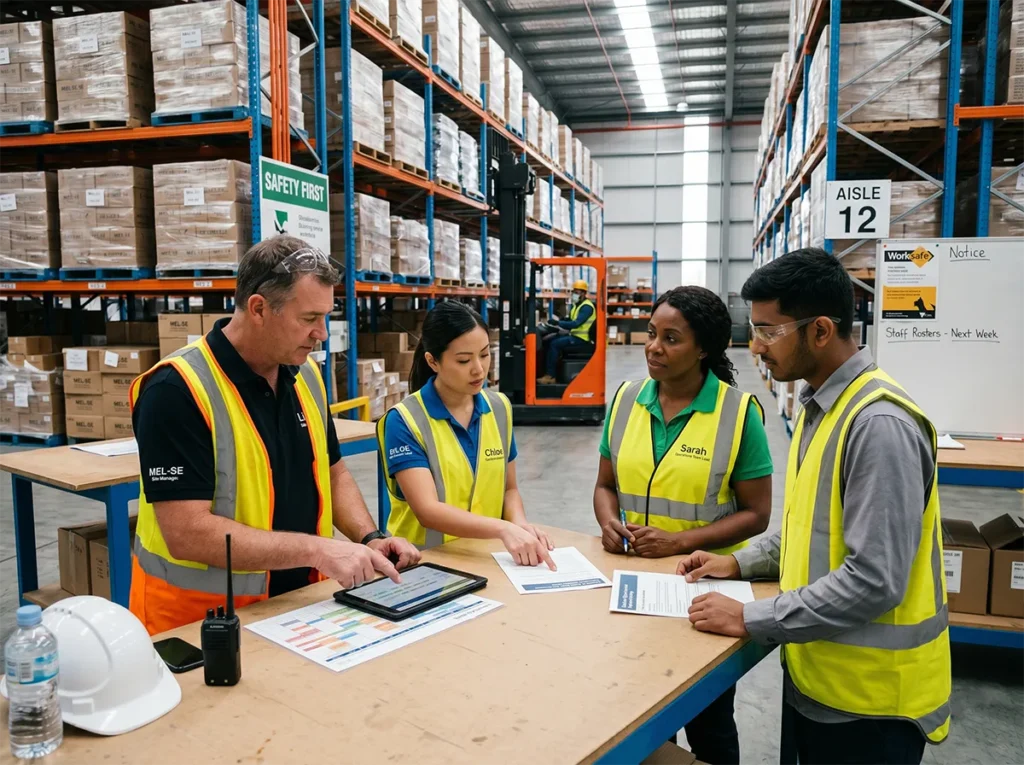
A local staffing model is often better placed to understand:
- which suburbs and worker pools are more practical for which sites
- what kinds of warehouse or factory environments are harder to staff
- how shift patterns affect reliability
- and where poor fit is more likely to create friction
This matters because better matching is one of the biggest differences between:
- labour support that reduces pressure
and - labour support that simply fills a space
A more local, site-aware approach often improves:
- role realism
- worker suitability
- and early shift stability
That is where local knowledge becomes a real operational advantage.
Our article on why site fit matters more than headcount in warehouse and factory staffing explains why better worker matching usually improves operations more than simply filling numbers quickly.
7. Peak Periods Expose Weak Staffing Support Quickly
Busy periods such as:
- end-of-year demand
- customer surges
- seasonal warehouse peaks
- and leave coverage periods
often show whether staffing support is truly practical.
A slower or more generic model may struggle when the business needs:
- faster response
- steadier local labour reach
- and support that understands how the corridor behaves under pressure
That is why employers often notice the value of local support most clearly during the busiest periods.
A workforce partner that understands Dandenong and South-East Melbourne can often respond more realistically when labour pressure rises across the whole area at once.
Our article on preparing your Dandenong warehouse for the end-of-year rush looks at how earlier labour planning and more practical support can reduce warehouse pressure before peak season fully arrives.
8. Local Support Often Makes Communication Simpler
Good staffing support is not just about finding workers.
It is also about how clearly the business can communicate:
- what it needs
- what changed
- what the site is really like
- and how urgently support is required
A local support model often makes those conversations easier because it is:
- closer to the corridor
- more familiar with local site types
- and usually more grounded in the language of practical warehouse and factory operations
This matters because faster, clearer communication usually reduces:
- role mismatch
- weak expectation-setting
- and repeated friction once the shift is already underway
9. Faster Support Usually Improves Confidence in the Coverage Plan
A warehouse or factory runs better when the employer feels:
- the labour issue is being taken seriously
- the support is practical
- and the response is not disconnected from the real needs of the site
That confidence matters.
It affects:
- planning decisions
- shift management
- supervisor calm
- and how much operational pressure the business feels while labour gaps are being resolved
A local, responsive approach often improves that confidence because the support feels:
- more direct
- more useful
- and less like a generic service trying to fit the site into a standard process
10. Better Local Staffing Support Often Reduces Long-Term Friction, Not Just Short-Term Gaps
This may be the biggest point of all.
A good local staffing model does more than help fill today’s shift.
Over time, it can help improve:
- labour reliability
- worker fit
- response speed
- local workforce continuity
- and the employer’s ability to manage labour pressure with less repeated disruption
That is why the strongest staffing support often becomes:
- part of the workforce strategy
not just - part of the emergency response
For South-East Melbourne employers, especially those in Dandenong, this matters because the same labour pressures often return again and again.
A stronger local approach helps the site solve them more practically over time.
What Better Local Staffing Support Usually Looks Like in Practice
When local staffing support is working well, the difference is usually visible quickly.
It tends to feel:
- faster
- clearer
- more practical
- and more connected to the real conditions of the site
In practice, that often means:
- the response is quicker
- the role is understood more realistically
- the labour support feels grounded in the South-East corridor
- the worker fit is stronger
- the site carries less avoidable friction
- and supervisors are not left solving the same labour problems alone
It should not feel like:
- the business is explaining the same site realities repeatedly to someone who does not really know the area
- support arrives too slowly to reduce the pressure properly
- or the labour coverage feels generic rather than useful
Good local staffing support usually feels like it fits the operation, not just the vacancy.
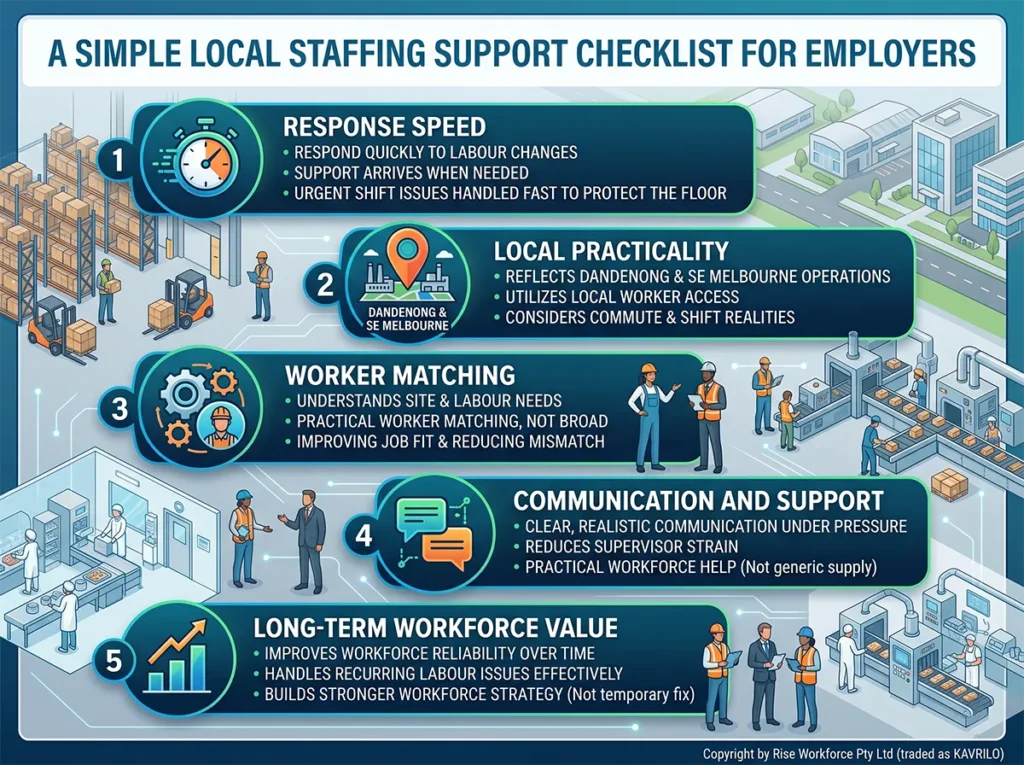
A Simple Local Staffing Support Checklist for Employers
Here is a practical checklist employers can use when reviewing whether their current staffing support is fast, local, and practical enough.
Response Speed
- Can our staffing support respond quickly enough when labour pressure changes suddenly?
- Is the support still useful by the time it arrives?
- Are urgent shift issues being handled fast enough to protect the floor?
Local Practicality
- Does the support reflect how Dandenong and South-East Melbourne actually operate?
- Is local worker access being used well enough?
- Are commute and shift realities being considered properly?
Worker Matching
- Does the staffing support understand our site type and actual labour needs?
- Are workers being matched practically, not just broadly?
- Is fit improving, or are we repeatedly solving mismatch on the floor?
Communication and Support
- Is communication clear, realistic, and useful under pressure?
- Does the support reduce supervisor strain or add to it?
- Are we receiving practical workforce help or just generic labour supply?
Long-Term Workforce Value
- Is our staffing support improving reliability over time?
- Does it help us handle recurring labour issues more effectively?
- Is it becoming part of a stronger workforce strategy, not just a temporary fix?
This kind of checklist helps employers review staffing support by how useful it is operationally, not just how available it sounds.
Final Word
South-East Melbourne employers often need faster, more local staffing support because labour problems on industrial sites become operational problems very quickly.
For employers across Dandenong and the wider corridor, stronger staffing outcomes usually come from support that is:
- faster to respond
- more realistic about local travel and labour conditions
- better at worker matching
- clearer in communication
- and more grounded in how the South-East actually operates day to day
That is what helps reduce:
- avoidable shift disruption
- weaker labour fit
- slow coverage response
- excess supervisor strain
- and the repeated frustration of workforce support that sounds available but does not feel practical enough when the site is under pressure
Because for active warehouse and factory businesses, local support is not only about being nearby.
It is about being useful quickly enough to make a real difference.
That is not just better service.
It is better operational support.
Need Practical Labour Hire Support for Warehousing and Manufacturing in Melbourne’s South-East?
KAVRILO is building its approach around safety-aware workforce support, stronger local responsiveness, and clearer operational discipline for warehouse and industrial environments.
Whether your site needs support during busy periods, stronger shift reliability, or more dependable labour coordination across the South-East, KAVRILO is focused on practical workforce support that fits controlled warehouse and factory environments.
Need warehouse and factory labour hire support with stronger local responsiveness and more dependable shift coverage? Talk to KAVRILO about workforce support across Melbourne’s South-East.
Article Disclaimer
This article is provided for general information only and does not constitute legal, workplace relations, safety, taxation, payroll or other professional advice. Please seek advice specific to your circumstances before acting on this information.
Please read our Website Disclaimer for more information.