

For warehouse employers, good workers usually stand out quickly.
Not because they are perfect.
And not because they necessarily work the fastest on day one.
They stand out because they make the shift easier to run.
Across Dandenong and the wider South-East Melbourne corridor, warehouses often operate under:
- shift pressure
- dispatch deadlines
- changing labour demand
- forklift and pedestrian movement
- supervisor workload
- and the need for workers to settle in quickly without creating avoidable friction
That is why good warehouse workers matter so much.
A stronger worker usually helps the site through:
- reliable attendance
- practical pace
- clearer communication
- better site discipline
- lower correction needs
- and stronger awareness of how warehouse work actually functions under pressure
In other words, a good worker often reduces operational strain, not just fills a spot on the roster.
That matters in South-East Melbourne because the warehouse market is active, labour competition is real, and many employers are not just looking for labour.
They are looking for dependable labour that actually helps the floor run better.
That is what separates a merely available worker from a genuinely valuable one.
For the broader local market overview, see our Staffing South-East Melbourne pillar guide for Dandenong warehouse and factory employers.
Why Employers Notice Good Workers So Quickly
A weak worker often creates signs early:
- repeated basic questions
- slow adjustment
- attendance doubt
- weak pace
- poor awareness
- or constant supervisor correction
A stronger worker often shows the opposite.
They may not know everything immediately.
But they tend to:
- listen well
- follow direction more cleanly
- settle into the workflow faster
- and avoid creating unnecessary disruption while learning the site
That is why employers often notice good workers quickly.
They improve the feel of the shift.
In practical terms, they usually make things:
- calmer
- clearer
- more dependable
- and easier to manage under real warehouse conditions
That does not mean they never need support.
It means the support tends to go further because the worker is responding well to it.
What “Good” Usually Means in Warehouse Reality
A good warehouse worker is not just someone with general experience.
In practice, employers usually value workers who can:
- turn up reliably
- handle the physical rhythm of the work
- follow site rules
- communicate clearly enough when something is unclear
- and keep working steadily without creating unnecessary friction for the team
That may sound simple.
But in active warehouse environments, those qualities make a big difference.
This is especially true in South-East Melbourne, where many warehouse sites need workers who can adapt to:
- fast dispatch
- changing order volume
- structured pick-and-pack work
- pallet movement
- manual handling
- and practical floor discipline around traffic, timing, and supervisor direction
A good worker is usually someone who fits that environment well enough to become useful quickly and sustainably.
10 Things Good South-East Melbourne Warehouse Workers Usually Get Right
1. They Turn Up Reliably
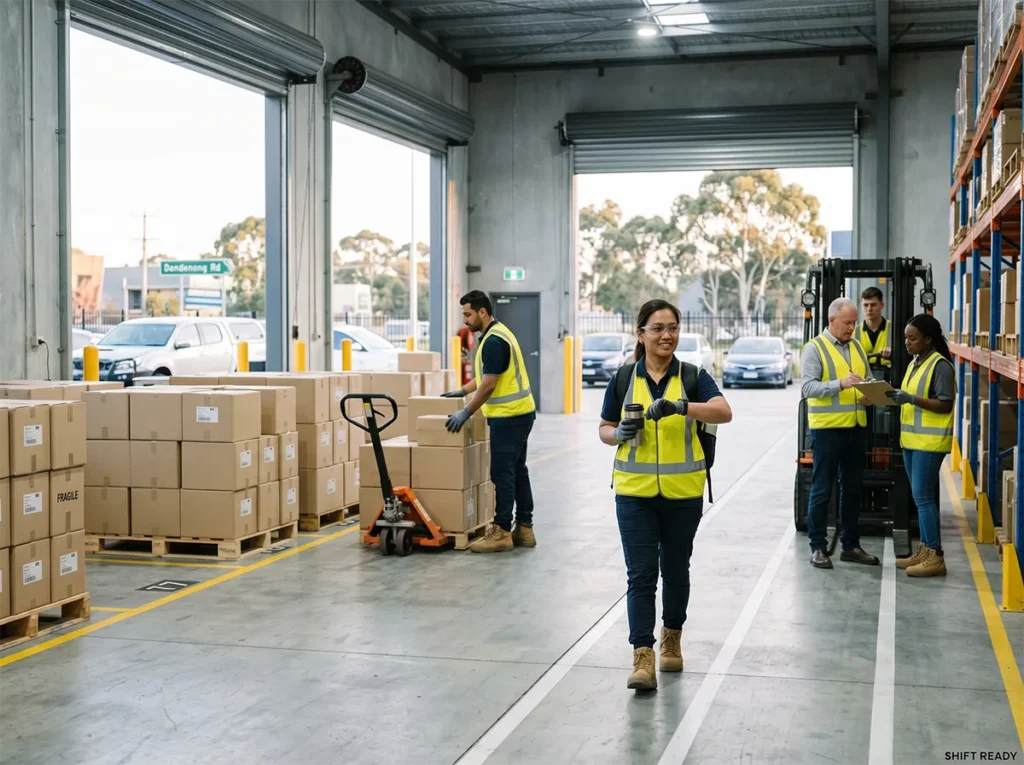
This is still one of the biggest markers of worker quality.
A good worker usually gets the basics right first:
- turning up
- arriving on time
- being ready to start
- and showing they can sustain attendance over time
This matters because reliability is what the rest of the shift depends on.
A worker may have skills, but if attendance is weak, the site still carries:
- disruption
- supervisor pressure
- reallocation of work
- and less confidence in the labour coverage overall
Good workers usually earn trust early because they are dependable before they are exceptional.
Our article on why local workers often improve punctuality and reduce turnover explains why practical site access and local labour reach often support stronger attendance and shift stability.
2. They Settle Into the Site Without Needing Excessive Correction
A stronger worker usually does not need everything repeated multiple times.
They tend to:
- listen properly
- follow directions more accurately
- take in site expectations earlier
- and reduce the amount of repeated correction supervisors need to give
That is valuable because a worker who settles in faster becomes useful faster.
In a busy warehouse, that matters a lot.
A worker who still needs support but applies it well is usually much easier to keep than one who creates ongoing friction around basic routine, movement, or task flow.
3. They Understand That Pace Matters, But So Does Control
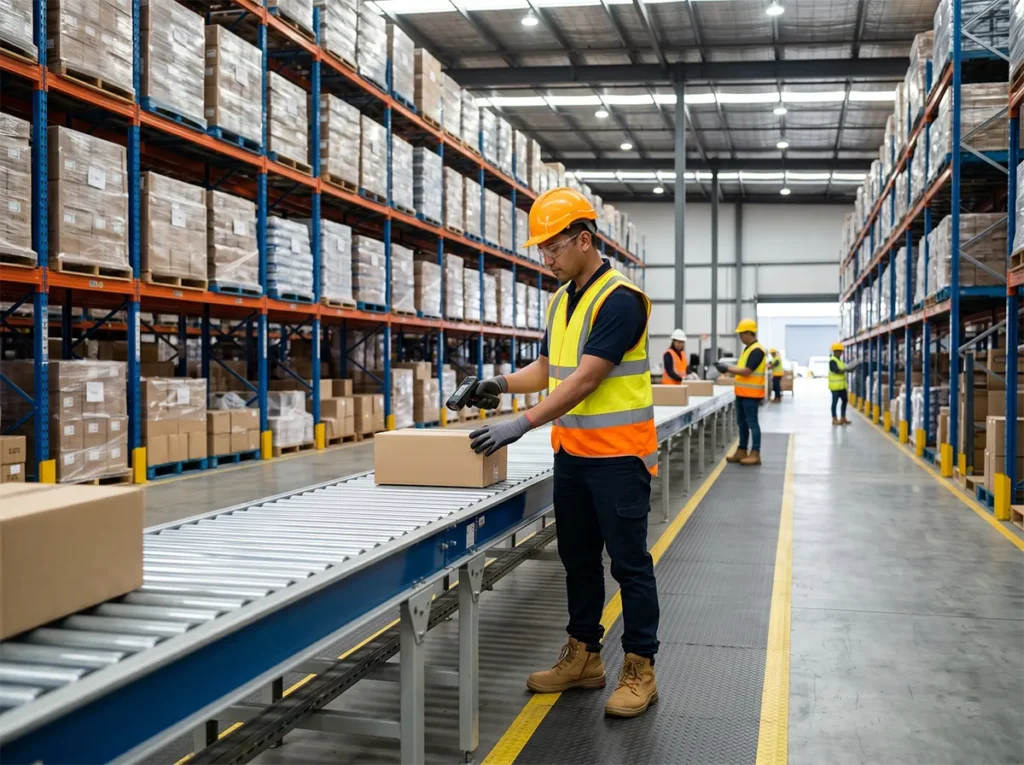
Good warehouse workers usually understand something important:
The goal is not just to move fast.
It is to move well.
That means they usually show:
- practical pace
- less wasted movement
- better task rhythm
- and more awareness of how to keep productivity steady without becoming careless
This matters because warehouses often need:
- output
- consistency
- and lower error rates
not just frantic speed.
A good worker usually finds a steadier balance between:
- pace
and - control
That makes them more reliable under real shift pressure.
4. They Respect Site Rules and Floor Discipline
Warehouse work depends heavily on discipline.
That includes:
- following traffic and walkway rules
- respecting staging areas
- handling stock properly
- using PPE correctly
- and working inside the site’s actual operating system instead of improvising their own
Good workers usually show early that they understand:
- the site has a structure
- and they are there to work within it
This matters because workers who ignore small site rules often create bigger friction later.
A stronger worker tends to recognise that discipline is part of being productive, not separate from it.
5. They Communicate Clearly When Something Is Unclear
A good warehouse worker does not need to know everything immediately.
But they do usually know when to ask.
That means they are more likely to:
- clarify instructions
- raise confusion earlier
- ask before making the wrong assumption
- and communicate in a way that helps the shift rather than slows it down
This matters because warehouse errors often start with:
- unclear assumptions
- tasks done the wrong way
- or a worker staying silent too long because they do not want to ask
Good workers usually communicate just enough to stay aligned with the site and avoid unnecessary mistakes.
6. They Handle the Real Physical Demands of the Role
Some workers suit industrial work broadly but not the actual physical reality of the site.
A good worker usually proves they can handle:
- the movement
- the time on feet
- the repetition
- the pace
- and the practical physical load of the role
This matters because a worker who struggles with the real physical side of the job may:
- slow down quickly
- disengage
- become inconsistent
- or drop off after only a few shifts
A stronger worker usually shows that the role is sustainable for them, not just technically possible for one day.
Our guide to why site fit matters more than headcount in warehouse and factory staffing explains why physical demands, shift structure, and environment fit often matter more than filling numbers quickly.
7. They Work Well With the Existing Team
A warehouse shift usually depends on more than individual effort.
It depends on how people work together.
Good workers often stand out because they:
- slot into the team more easily
- follow the shift flow properly
- avoid creating unnecessary tension
- and support the wider operation rather than only focusing on their own corner of the work
This matters because even capable workers can become difficult to keep if they create:
- communication friction
- avoidable conflict
- or constant coordination problems on the floor
A stronger worker often helps the warehouse feel more stable, not just more staffed.
8. They Stay Useful Beyond the First Shift
Some workers make a good first impression but do not sustain it.
A better worker usually proves useful:
- after day one
- after the first busy shift
- after the routine becomes normal
- and once the site is asking for more than just initial energy
This matters because sustainable value is much more important than a short good start.
A good worker often keeps showing:
- steadier attendance
- better rhythm
- lower supervision need
- and more trustworthiness over time
That is usually when employers begin seeing real long-term workforce value.
9. They Make Casual Staffing Feel More Stable
Some of the best casual workers make the site feel less temporary than the labour model suggests.
They may:
- keep turning up consistently
- learn the site properly
- become easier to roster
- and support continuity in a way that reduces the pressure of constant refill staffing
This is especially valuable in South-East Melbourne, where industrial demand often means good workers are worth holding onto.
A good casual worker often becomes someone the site wants back because they reduce uncertainty on the floor.
Our article on when good casual workers become permanent looks at what employers should think about when dependable casual workers begin standing out as longer-term workforce value.
10. They Improve Confidence in the Shift
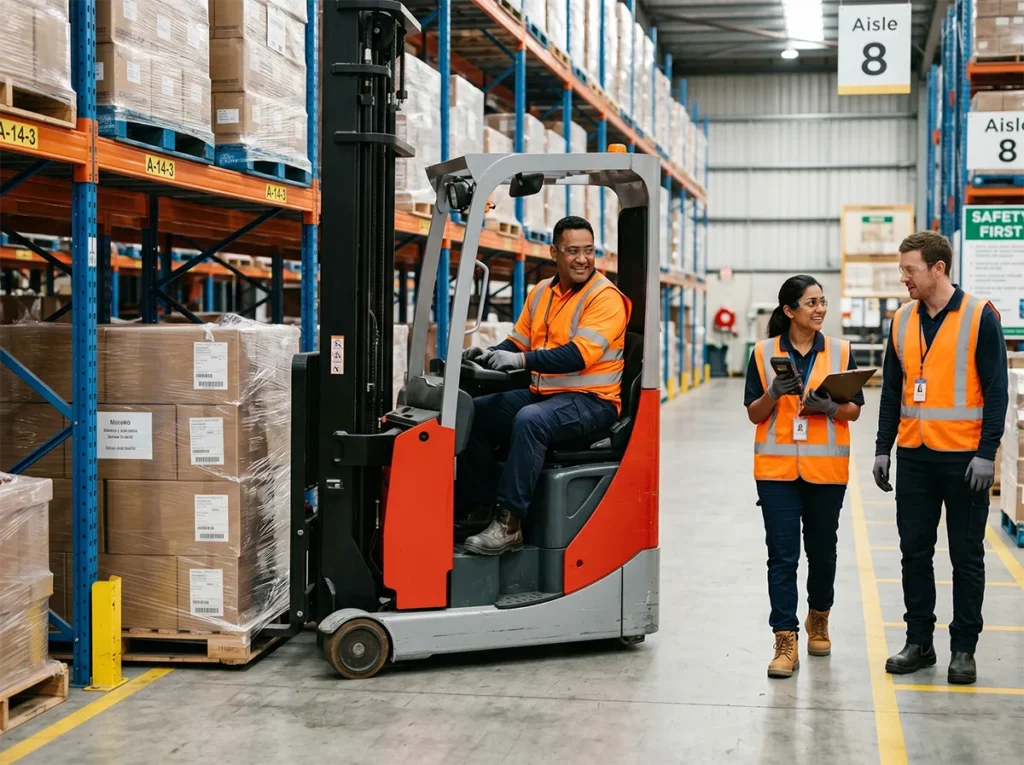
This is sometimes the clearest sign of all.
A good worker usually improves confidence.
Supervisors feel:
- more comfortable assigning them work
- more confident they will follow the task properly
- and less worried that the shift will absorb unnecessary friction because of them
That confidence is valuable.
It affects:
- how calmly the operation runs
- how much pressure leaders carry
- and how the business thinks about future workforce decisions
A good worker is not only someone who can do the task.
They are someone the site feels safer relying on.
What Employers Should Be Careful Not to Confuse With Quality
A worker being energetic is not always the same as being dependable.
A worker being confident is not always the same as being disciplined.
A worker being available is not always the same as being a good fit.
That is why employers should be careful not to confuse:
- speed alone with quality
- loud confidence with practical capability
- short-term enthusiasm with long-term reliability
- or general warehouse experience with true site suitability
Good workers usually prove themselves through:
- consistency
- fit
- reliability
- and lower friction over time
That is a better test than first impressions alone.
What Better Warehouse Labour Usually Looks Like in Practice
When the warehouse has stronger workers on shift, the difference is usually visible.
It tends to feel:
- steadier
- more controlled
- more productive
- and less exposed to avoidable disruption
In practice, that often means:
- attendance is stronger
- workers settle in faster
- supervisors are not repeating basics constantly
- the team rhythm holds more easily
- and the site spends less time recovering from mismatch
It should not feel like:
- every shift begins with uncertainty
- workers are present but not really helping
- or the site is carrying the hidden cost of poor labour quality under the surface
Good workers often make the whole operation feel lighter, even when the workload stays heavy.
A Simple Warehouse Worker Quality Checklist for Employers
Here is a practical checklist employers can use when reviewing what stronger warehouse workers usually get right.
Reliability
- Are they turning up consistently?
- Are they on time and ready to start?
- Are they sustainable across multiple shifts, not just one good day?
Site Fit
- Do they suit the pace, demands, and structure of the site?
- Are they settling in without excessive correction?
- Can they handle the actual role, not just the general job title?
Work Habits
- Do they balance pace with control?
- Do they respect site rules and floor discipline?
- Do they communicate clearly when something is unclear?
Team and Shift Value
- Are they helping the team rhythm rather than disrupting it?
- Do supervisors trust them more over time?
- Are they becoming useful beyond the first shift?
Workforce Strategy
- Are we recognising the difference between availability and real quality?
- Are we protecting stronger workers once they prove themselves?
- Is our labour support helping us identify and keep the right people close?
This kind of checklist helps employers focus on the qualities that actually improve the floor, not just the roster.

Final Word
Good South-East Melbourne warehouse workers usually get the practical things right first.
For warehouse employers across Dandenong and the broader South-East, that often means:
- reliable attendance
- steadier pace
- lower correction needs
- stronger site discipline
- better team fit
- and a more sustainable contribution to the shift over time
That is what helps reduce:
- labour instability
- weak shift starts
- repeated mismatch
- extra supervisor strain
- and the constant feeling that the roster is full but the floor is still under-supported
Because a genuinely good worker does more than fill a shift.
They help the operation run better.
That is not just better labour.
It is better operational support.
Need Practical Labour Hire Support for Warehousing and Manufacturing in Melbourne’s South-East?
KAVRILO is building its approach around safety-aware workforce support, stronger local responsiveness, and clearer operational discipline for warehouse and industrial environments.
Whether your site needs support during busy periods, stronger shift reliability, or more dependable labour coordination across the South-East, KAVRILO is focused on practical workforce support that fits controlled warehouse and factory environments.
Need warehouse and factory labour hire support with stronger local responsiveness and more dependable shift coverage? Talk to KAVRILO about workforce support across Melbourne’s South-East.
Article Disclaimer
This article is provided for general information only and does not constitute legal, workplace relations, safety, taxation, payroll or other professional advice. Please seek advice specific to your circumstances before acting on this information.
Please read our Website Disclaimer for more information.