
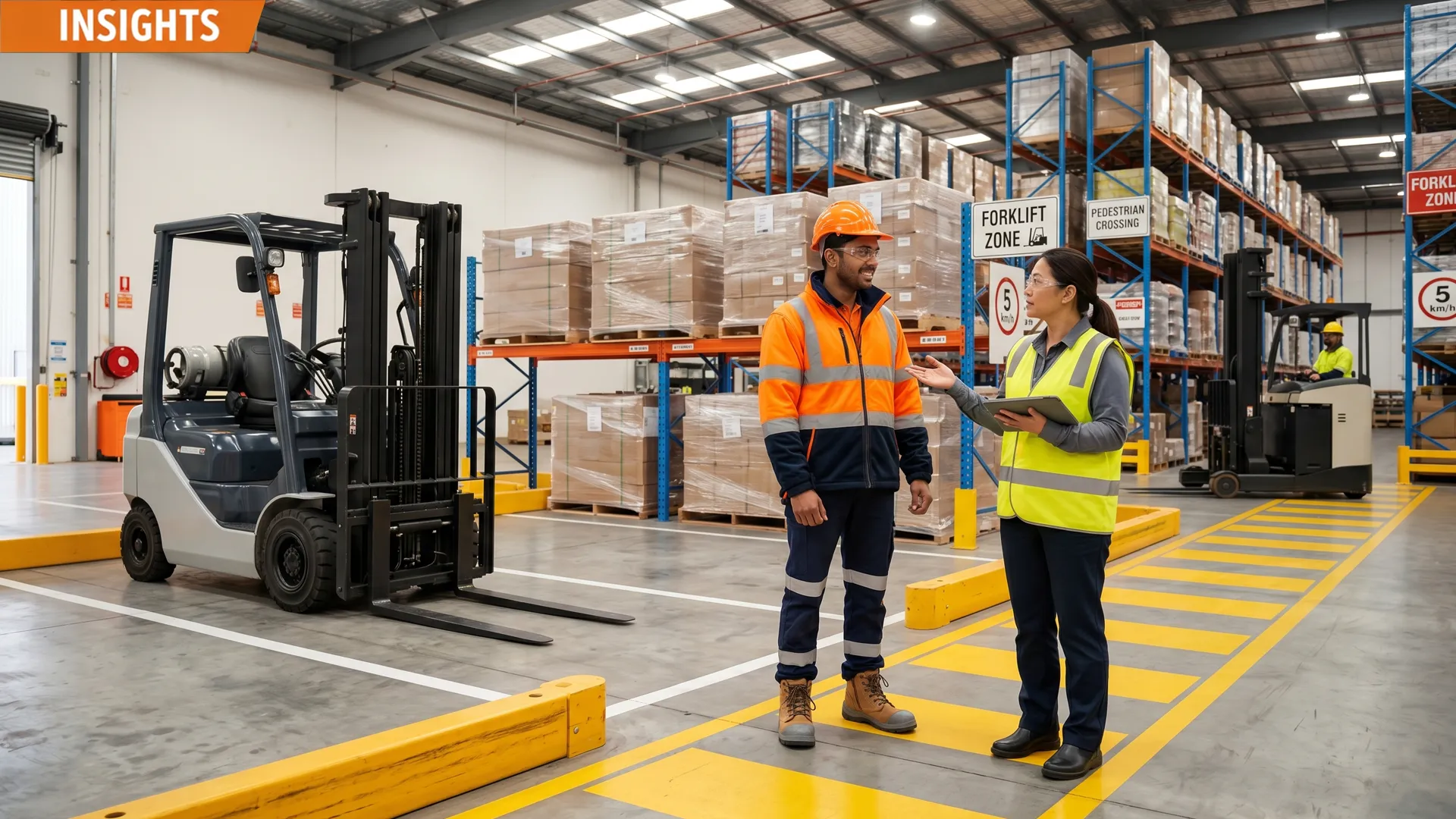
Most forklift placements do not fail because of one dramatic mistake.
They usually go wrong through smaller issues that build quickly once the operator reaches the floor.
That might include:
- a vague role brief
- weak day-one induction
- poor explanation of traffic routes
- unclear supervision
- inconsistent direction from different managers
- unrealistic first-shift expectations
- or a licensed operator being treated as though site readiness is automatic
Across Melbourne’s South-East, many warehouse and logistics sites rely on forklift support during:
- absenteeism
- peak dispatch periods
- seasonal pressure
- growth phases
- and short-notice operational gaps
That support can be highly valuable. But forklift work sits inside one of the clearest risk areas on a warehouse floor. So when the placement is not set up properly, the problems often show up early:
- the operator looks unsure in traffic areas
- supervisors spend time correcting basics
- route behaviour is inconsistent
- local pressure points are being misread
- and avoidable exposure starts growing before the shift has settled in
That is why good employers do not only ask whether a forklift operator is licensed or available.
They also ask whether the placement has been prepared in a way that gives the operator a fair and safe chance of succeeding on the site.
Because when forklift placements go wrong, the cause is often not the operator alone.
It is the way the host employer set the placement up.
For the broader employer overview, see our forklift safety and licence checks in Victoria pillar guide on operator fit, site induction, traffic control, and first-shift supervision.
Why Forklift Placements Usually Go Wrong in Practice
A weak forklift placement usually begins with weak setup.
That can happen when:
- the role is explained too broadly
- the provider is not given enough detail about the site
- the operator arrives without enough context
- no one clearly owns the first-shift supervision
- or the host assumes that licence plus experience is enough
That is where avoidable friction begins.
The operator may be capable.
The provider may be responsive.
The site may be busy but well intentioned.
But if the placement enters the floor with poor clarity, the host employer often ends up dealing with:
- extra supervision pressure
- weaker traffic discipline
- repeated correction
- uncertainty in high-risk movement areas
- and preventable near misses that should have been reduced before the shift began
That is why the best prevention is usually not reactive correction later.
It is stronger setup before active movement starts.
What Early Placement Failure Often Looks Like
When a forklift placement is not landing well, there are usually signs early.
These may include:
- the operator asking basic route questions well into the shift
- hesitation at crossings, dock areas, or blind corners
- unclear understanding of who supervises them
- repeated correction on movement basics
- too much confidence in an unfamiliar area
- uncertainty around reporting or exclusion zones
- awkward interaction with pedestrians
- or managers saying, “This is not really what we expected”
These signs matter because they often point to problems in:
- role briefing
- site induction
- task fit
- traffic explanation
- supervision
- or communication between the host employer and labour hire provider
The earlier these issues are recognised, the easier they are to correct.
10 Common Host Employer Mistakes That Increase Risk
1. Giving a Vague Forklift Role Brief
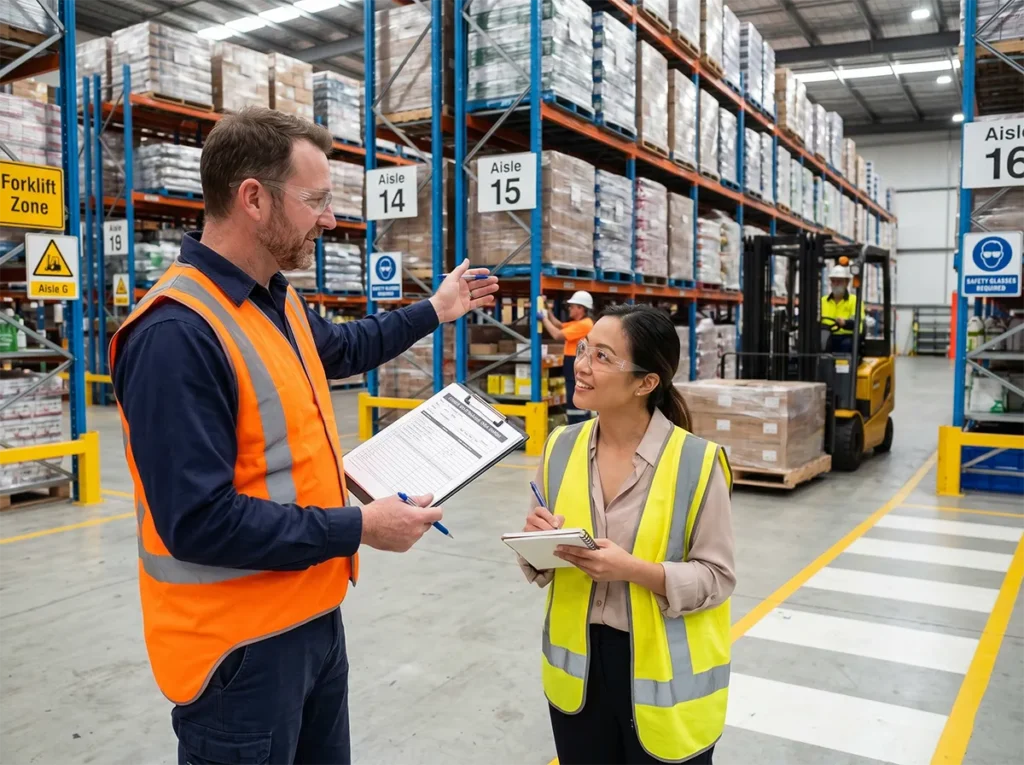
This is one of the most common starting problems.
A host employer may request:
- a forklift driver
- a warehouse forklift operator
- or forklift labour hire support
But that title alone often does not say enough.
It may not explain:
- whether the work is replenishment, dispatch, dock movement, or mixed-floor activity
- how busy the traffic environment is
- what pedestrian interaction exists
- how tight the layout is
- whether visibility is restricted in key areas
- or what level of pace and local caution the role actually demands
When the brief is too vague, the placement can be weaker from the beginning.
A better brief helps the provider understand the real forklift environment, not just the label.
Our article on choosing forklift labour hire in Victoria explains why role clarity, operator fit, and site detail matter so much before a forklift placement begins.
2. Assuming Licence Equals Full Site Readiness
A forklift operator may hold the correct licence and still be unfamiliar with:
- your traffic flow
- your dock pressure
- your crossings
- your blind spots
- your staging layout
- your local pedestrian behaviour
- and your supervisor structure
A common host-employer mistake is assuming:
- “they’ve done forklift work before”
- “they’ll pick up the site quickly”
- or “the floor is easy enough to read”
Often, it is not.
A licence helps confirm operating eligibility.
It does not remove the need for:
- site-specific induction
- route guidance
- early supervision
- and clearer local traffic expectations
3. Rushing the Day-One Forklift Induction
Some forklift placements go wrong because the site is already under pressure before the operator arrives.
That can lead to:
- a very quick briefing instead of real induction
- crossings being explained too loosely
- dock rules not being shown properly
- blind spots being left to discovery
- and the operator being sent into active movement too early
This creates risk quickly.
Even an experienced operator can struggle if:
- they do not know the preferred routes
- they are unsure how the local traffic behaves
- they do not understand the pressure points
- or they begin the shift while still trying to interpret the floor around them
A rushed forklift induction often creates problems that take much longer to fix later.
Our guide to forklift inductions for new and temporary operators breaks down what employers should cover on day one before a forklift operator enters active warehouse movement.
4. Leaving First-Shift Supervision Too Loose
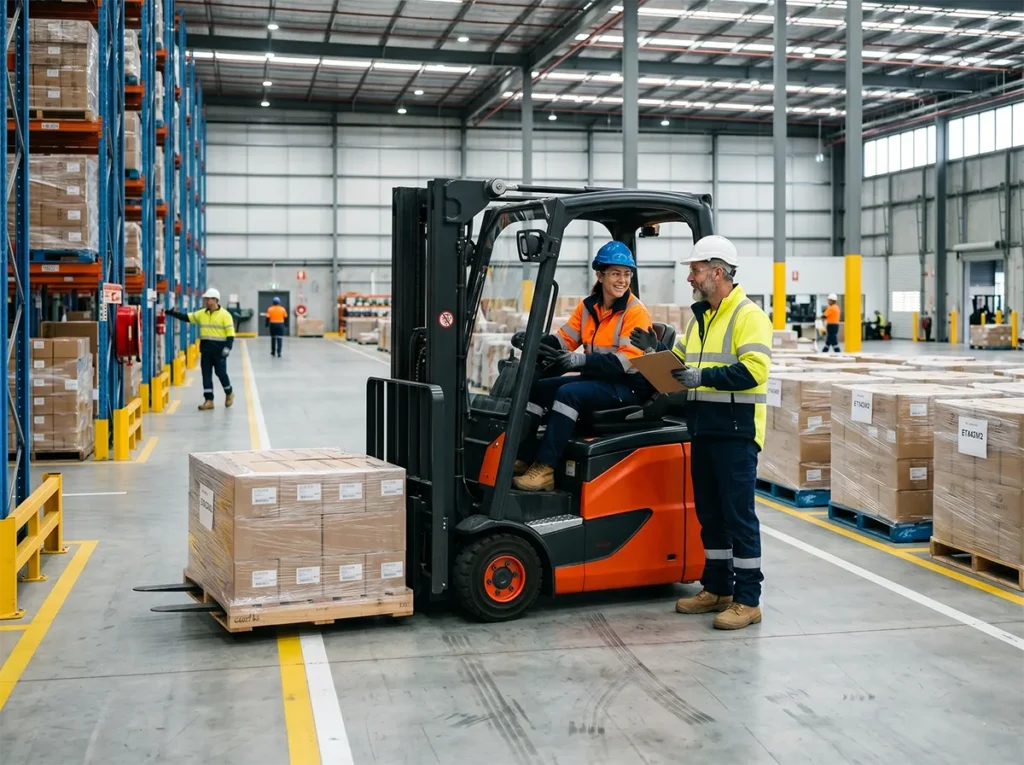
A forklift operator should know:
- who owns their first-shift support
- who gives movement direction
- who answers route or traffic questions
- and who steps in if something feels unclear
When that is vague, the operator may:
- rely on informal direction
- hesitate in the wrong places
- follow the wrong local habits
- or stay quiet too long when something does not feel right
Good placements usually settle faster when early supervision is clearly owned by one visible person.
Loose first-shift oversight is one of the simplest mistakes to avoid, but it still creates a lot of preventable friction.
Our article on who should supervise new forklift operators explains why visible early oversight matters so much on busy warehouse floors and what strong first-shift supervision should actually look like.
5. Failing to Explain Local Traffic Logic Properly
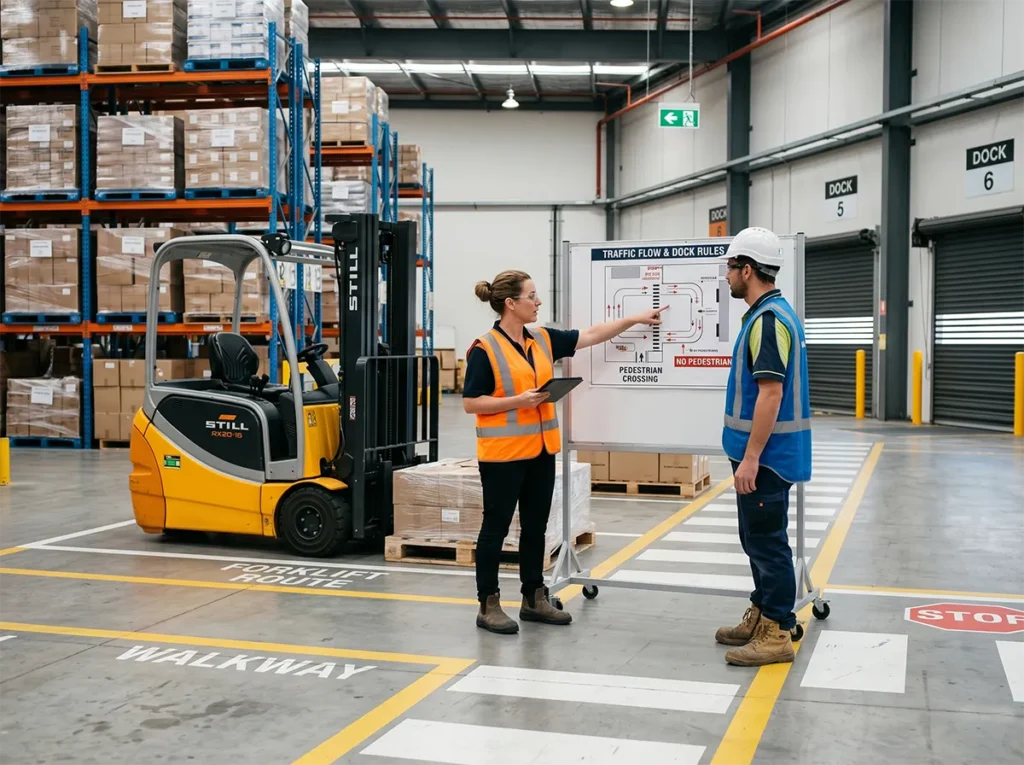
This matters especially in warehouse and logistics environments.
A forklift operator who does not understand:
- preferred travel routes
- crossings
- blind corners
- dock approaches
- active pedestrian areas
- or one-way movement logic
can become exposed very quickly.
Some host employers assume the floor markings speak for themselves.
Often they do not.
Traffic logic should be shown clearly, not left to guesswork.
A forklift placement weakens very quickly when the operator is technically capable but still reading the floor by trial and error.
Our guide to warehouse traffic management shows how stronger route control, crossings, and movement discipline help reduce forklift and pedestrian risk before close calls start building.
6. Putting the Operator Into the Wrong Kind of Forklift Environment
Sometimes the issue is not conduct.
It is fit.
For example:
- the role is more dock-intensive than expected
- the floor is tighter than described
- the traffic pressure is heavier than the brief suggested
- the staging layout is more complex than the operator is used to
- or the pedestrian interaction is stronger than the site recognised
Good host employers review:
- whether the operator truly suits the task
- whether the real warehouse conditions match the original request
- and whether the site is asking the operator to adapt too fast in a more exposed environment than expected
A poor site fit often gets mistaken for a poor operator.
Sometimes the real issue is the way the placement was set up.
Our article on how warehouse layout increases or reduces forklift risk explains why aisle width, visibility, crossings, staging pressure, and floor design need review early if you want safer forklift placements.
7. Treating Reporting and Near Misses as Secondary
A forklift operator should know from the start:
- what to report
- who to report it to
- and that raising issues early is expected
When reporting is vague, operators are more likely to:
- stay quiet about blocked crossings
- ignore awkward sightlines
- say nothing about a close call
- delay reporting poor staging
- or keep moving in conditions that should have been reviewed
That weakens the placement quickly.
A site that wants safer forklift use should make reporting feel simple and useful from day one.
8. Allowing Mixed Messages Between Supervisors
Placements often become unstable when different people on site say different things.
For example:
- one supervisor insists on the preferred route
- another tells the operator to take a quicker shortcut
- one manager treats the dock as tightly controlled
- another waves people through casually
- one person expects early reporting
- another makes the operator feel like it is a nuisance
This creates confusion very quickly.
It also makes the operator look less settled than they really are, because they are trying to work inside inconsistent local standards.
Good host employers reduce this risk by keeping key traffic and forklift expectations consistent across the people directing the shift.
9. Ignoring Early Warning Signs in the First Shift
The first shift usually tells you a lot.
Good employers watch for:
- hesitation at the same crossing
- repeated uncertainty around route choices
- weak warning behaviour
- too much confidence in a blind area
- awkward dock movement
- poor pedestrian interaction
- or signs that the operator has not been brought onto the floor clearly enough
A common mistake is seeing these signs but waiting too long to correct them.
Early intervention matters.
It is easier to fix:
- route understanding
- supervision gaps
- local traffic logic
- or weak reporting clarity
on shift one than after several poor or unsafe shifts.
Our article on forklift near misses in warehouses explains why small close calls often reveal bigger layout, supervision, and traffic-control issues before a more serious incident occurs.
10. Blaming the Operator for a Weak Placement Setup
This is one of the most important points.
Sometimes an operator is genuinely the wrong fit.
But sometimes the operator is being blamed for problems that really came from:
- a weak role brief
- poor induction
- unclear route explanation
- weak supervision
- dock pressure that was underestimated
- inconsistent local direction
- or a floor layout that made the first shift much harder than it needed to be
Good host employers do not ignore performance issues.
But they also review honestly whether the site set the placement up properly in the first place.
That is where smarter correction begins.
What Better Forklift Placements Usually Feel Like in Practice
When a forklift placement is set up properly, the difference is usually visible early.
It tends to feel:
- calmer
- clearer
- easier to supervise
- easier to induct
- and less exposed to avoidable first-shift friction
In practice, that often means:
- the role was explained properly
- the operator knows the preferred routes
- dock and crossing logic are clear
- supervision is visible
- the operator knows who to report to
- and the site is not spending the whole shift correcting setup mistakes that should have been prevented earlier
That is usually the result of better host-employer preparation, not luck.
A Simple Forklift Placement Risk Checklist for Employers
Here is a practical checklist employers can use before and during a forklift placement.
Before the Operator Arrives
- Have we described the actual forklift task clearly?
- Have we explained the real site conditions, traffic pressure, and layout?
- Do we know who will own the induction and early supervision?
On Day One
- Has the operator been shown preferred routes, crossings, blind spots, and dock rules?
- Do they know who supervises them?
- Have reporting expectations and site standards been made clear enough before active movement starts?
During the First Shift
- Are we seeing signs of hesitation, poor fit, or repeated correction?
- Are unsafe assumptions being corrected early?
- Are we reviewing whether the setup, not just the operator, needs adjustment?
Ongoing Control
- Are key traffic and movement messages consistent across supervisors?
- Are changes in layout or floor pressure being re-explained clearly?
- Are early warning signs being used to improve future forklift placements?
This kind of checklist helps employers prevent many of the issues that make forklift placements harder and riskier than they need to be.

Final Word
When forklift placements go wrong, the cause is often not the fact that forklift labour hire or temporary support was used.
It is the way the placement was set up.
For warehouse employers across Melbourne’s South-East, the strongest improvements usually come from:
- clearer role briefs
- better induction
- stronger supervision
- clearer traffic and dock guidance
- aligned reporting
- and more honest review of site fit and floor conditions
That is what helps reduce:
- weak placements
- avoidable confusion
- first-shift friction
- inconsistent site control
- and preventable forklift exposure in active warehouse environments
Because good forklift support depends not only on who is sent.
It depends on how well the host employer prepares the floor to receive them.
That is not just better compliance.
It is better warehouse control.
Need Practical Labour Hire Support for Warehousing and Manufacturing in Melbourne’s South-East?
KAVRILO is building its approach around safety-aware workforce support, clearer communication, and stronger operational discipline for warehouse and industrial environments.
Whether your site needs better shift coverage, stronger day-one worker readiness, or more dependable labour coordination for forklift-related work, KAVRILO is focused on practical workforce support that fits controlled warehouse and factory environments.
Need warehouse and factory labour hire support with stronger day-one readiness and a practical safety-aware approach? Talk to KAVRILO about workforce support across Melbourne’s South-East.
Article Disclaimer
This article is provided for general information only and does not constitute legal, workplace relations, safety, taxation, payroll or other professional advice. Please seek advice specific to your circumstances before acting on this information.
Please read our Website Disclaimer for more information.