
Container unloading is one of the most physically demanding jobs in warehousing. When it’s done well, it’s fast, controlled, and predictable. When it’s done poorly, it turns into injuries, heat stress, damaged stock, and a crew that burns out after two hours.
In South-East Melbourne (Dandenong South, Hallam, Keysborough, Braeside and nearby industrial areas), container teams are often used to clear inbound freight quickly. The challenge is always the same:
How do you unload fast without breaking people?
The answer is a rotation plan — not “work harder.” A simple, safe rotation keeps output high for the full shift and reduces injuries that take good workers off your floor.
Below is a practical rotation system you can use (and a few site controls that make it work).
1) The reality: speed drops when fatigue rises
Most container teams start strong, then output falls off. Why?
- repetitive bending and twisting
- lifting uneven cartons
- tight space and poor airflow
- heat buildup (especially in warmer months)
- rushed stacking that creates rework
If you push the same two people in the container for hours, you’ll get:
- slower movement
- more errors and drops
- higher injury risk
- workers calling in sick next shift
A rotation plan protects pace.
2) The safest container unload setup (3 roles)
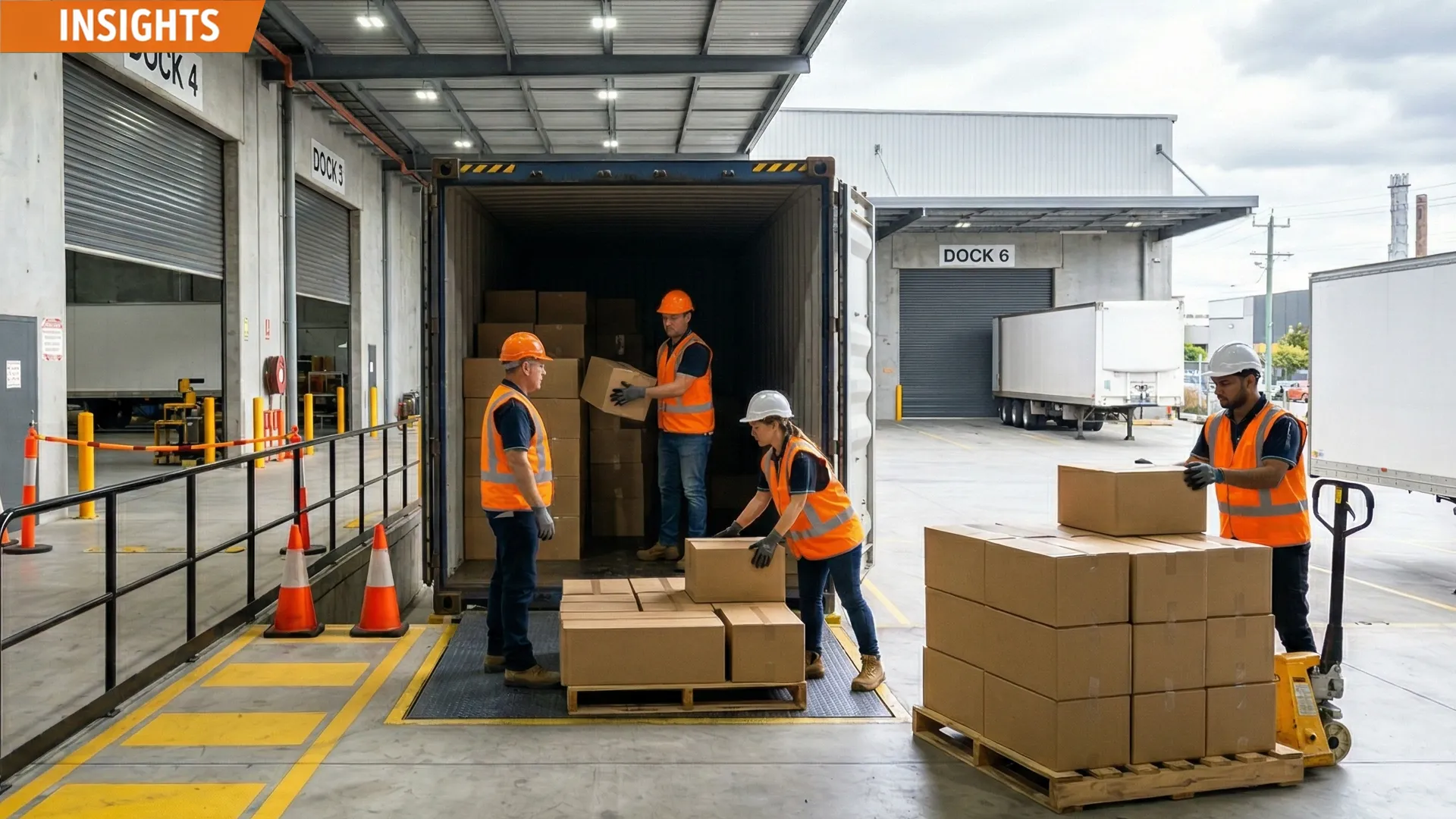
A simple “three-role” system creates safe flow:
Role A: Inside the container (picker/feeder)
- passes cartons out in a controlled rhythm
- keeps the container floor clear
- avoids throwing cartons or twisting awkwardly
Role B: At the container mouth (transfer)
- receives cartons and turns them onto a pallet or conveyor
- controls flow (prevents pile-ups)
- watches for damaged cartons and unstable stacks
Role C: Pallet builder / runner (outside)
- builds stable pallets, wraps where needed
- moves pallets to staging
- keeps the pathway clear and safe
This structure reduces chaos and prevents the common failure point: cartons piling up at the door.
3) The rotation plan that maintains speed (and reduces injuries)
For most sites, a simple rotation works:
Standard rotation (recommended)
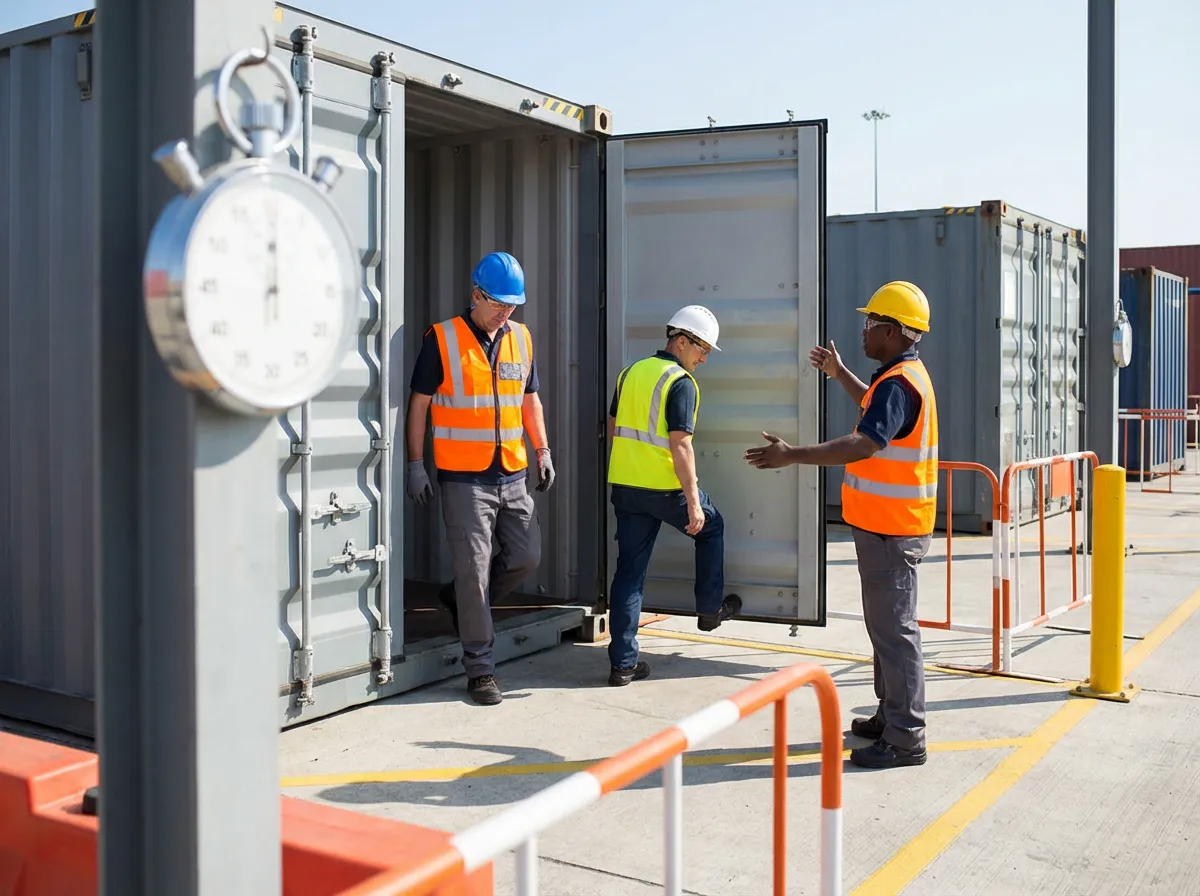
- Rotate every 20–30 minutes between Roles A, B, and C
- Aim for equal time inside the container across the shift
- Use a supervisor or leading hand to manage the changeovers
If the crew is small (e.g., 3 people), rotate on a timer. If the crew is larger (4–6), rotate in pairs.
Why it works: it spreads the highest-risk work (inside the container) across the team.
When to rotate more frequently
Rotate every 15–20 minutes if:
- it’s hot or humid
- cartons are heavy or awkward
- the container is poorly stacked
- the team is new or not conditioned
4) Manual handling rules that protect speed
Safety rules are not the enemy of speed. Bad movement is.
The fastest teams do these basics:
- keep cartons close to the body
- avoid twisting (turn feet, “nose over toes”)
- use legs, not back
- avoid throwing cartons
- pause for a reset when posture breaks down
If you see people twisting repeatedly, you’re watching tomorrow’s injury claim.
5) Heat stress and hydration: the silent productivity killer
Container work heats up quickly — even in cooler weather. Heat stress reduces speed and increases error rate.
Simple controls:
- schedule water breaks every rotation
- use fans at the container mouth if possible
- allow short cool-down breaks
- monitor early signs: dizziness, cramps, heavy sweating, confusion
A 2-minute water break every 20–30 minutes is not “lost time.” It prevents bigger losses later.
6) Pallet quality is a productivity tool
Unloading fast doesn’t matter if pallets collapse, stock is damaged, or the wrap fails in transit.
Set pallet rules:
- stable base
- heavy cartons at bottom
- even edges, no overhang
- wrap consistently (especially for mixed cartons)
- label or segregate damaged items immediately
A clean pallet build prevents rework and keeps dispatch smooth.

7) Pre-start briefing: 90 seconds that saves 90 minutes
Container crews perform better when the brief is clear.
Before starting, confirm:
- expected carton types (fragile? heavy? mixed?)
- where pallets go (staging zones)
- damaged stock procedure
- rotation timing
- PPE (gloves, steel caps, hi-vis)
- who the supervisor is
A quick brief prevents the “everyone doing their own thing” problem.
8) Site layout: clear the path to move faster
Most slowdowns aren’t inside the container — they’re outside:
- blocked staging zones
- pallets stored in walkways
- forklift congestion
- no wrap/tape available
- no clear place for damaged cartons
Fix the environment:
- keep a clear “pallet out” route
- assign a staging zone
- ensure wrap, tape, cutters are stocked
- separate pedestrian/forklift paths
A clean flow outside the container keeps the unload moving.
9) Supervision: the leading hand is your pace controller
If no one controls flow, it turns into a sprint. A good leading hand:
- keeps the rhythm steady
- watches posture and fatigue
- enforces rotation timing
- stops unsafe behaviour early
- keeps pallets stable and staged properly
The result is steady output across the shift.
10) What “fast” actually means in container unloading
Fast is not “violent.” Fast is:
- steady rhythm
- safe movement
- minimal drops and damage
- consistent pallet builds
- a team that can work again tomorrow
If your team is destroyed after one container, your system is too aggressive.
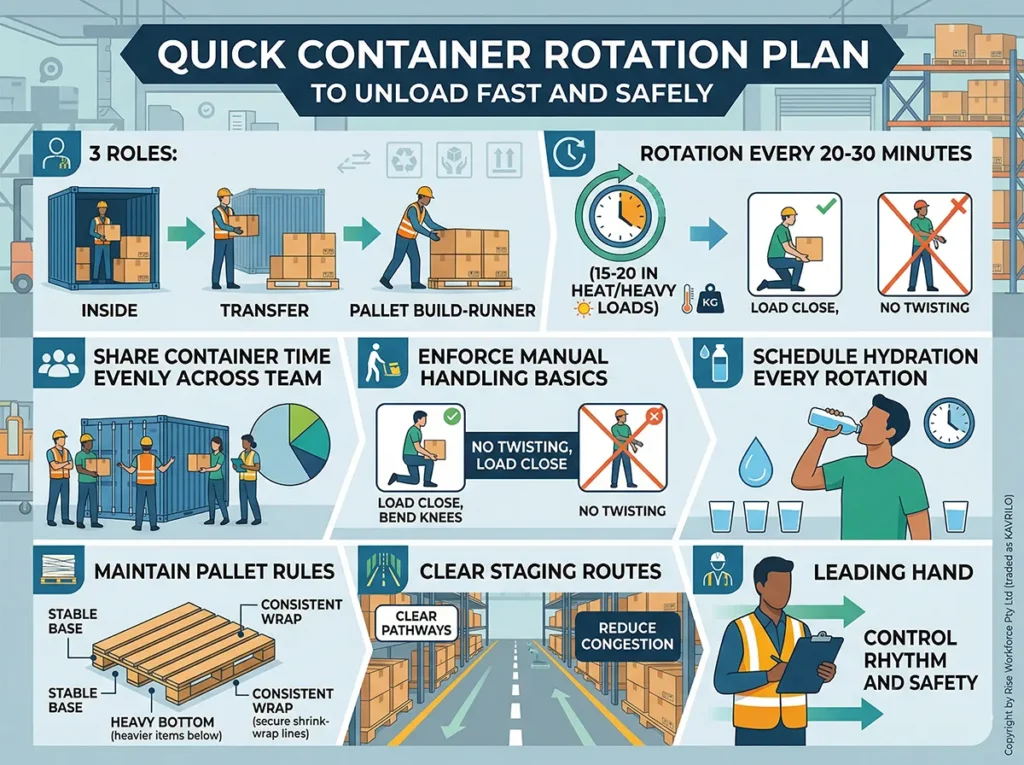
Quick Container Rotation Plan
To unload fast and safely:
- Use 3 roles: inside / transfer / pallet build-runner
- Rotate every 20–30 minutes (15–20 in heat/heavy loads)
- Share container time evenly across the team
- Enforce manual handling basics (no twisting, load close)
- Schedule hydration every rotation
- Maintain pallet rules (stable base, heavy bottom, consistent wrap)
- Clear staging routes and reduce congestion
- Use a leading hand to control rhythm and safety
Final takeaway
Container unloading is won by system, not toughness. A rotation plan keeps people safe and keeps output high over the full shift — which is what your warehouse actually needs.
Need reliable container unloading teams in South-East Melbourne? KAVRILO supplies job-ready labour hire workers and supports safe site standards that keep your operation moving.
Article Disclaimer
This article is provided for general information only and does not constitute legal, workplace relations, safety, taxation, payroll or other professional advice. Please seek advice specific to your circumstances before acting on this information.
Please read our Website Disclaimer for more information.