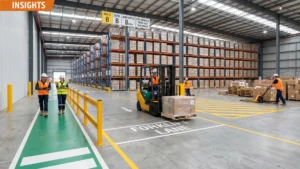
Read more about the article When Forklift Placements Go Wrong: Common Host Employer Mistakes That Increase Risk
Most forklift placement problems begin with weak setup, not one dramatic mistake on the floor.

When Forklift Placements Go Wrong: Common Host Employer Mistakes That Increase Risk

Forklift placements rarely go wrong because of one issue alone. More often, risk builds through vague role briefs, weak induction, poor route explanation, inconsistent supervision, and unrealistic first-shift expectations. Here is what good warehouse employers in Victoria watch early to reduce avoidable forklift risk
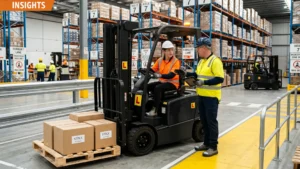
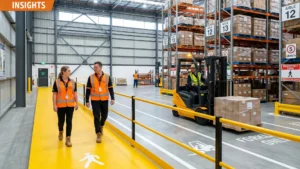
Read more about the article Who Should Supervise New Forklift Operators on Busy Warehouse Floors?
A new forklift operator settles more safely when early supervision is visible, practical, and closely tied to the real traffic pressure on the floor.

Who Should Supervise New Forklift Operators on Busy Warehouse Floors?

A new forklift operator does not just need a licence and a machine. They also need the right early supervision on the floor. In busy warehouses, weak first-shift supervision can quickly turn small uncertainties into traffic risk, poor habits, and preventable near misses. Here is what good employers in Victoria should get right.

Read more about the article Loading Dock Forklift Safety: What Warehouse Employers Should Not Overlook
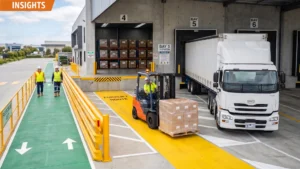
Loading dock forklift safety depends on more than operator skill — it also depends on layout, visibility, supervision, and movement control.

Loading Dock Forklift Safety: What Warehouse Employers Should Not Overlook

Loading docks often combine forklifts, trucks, pedestrians, time pressure, and reduced visibility in the same working space. That makes them one of the highest-risk areas on many warehouse sites. Here is what employers in Victoria should not overlook when reviewing loading dock forklift safety.

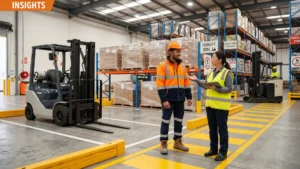
Read more about the article How Warehouse Layout Increases or Reduces Forklift Risk
Warehouse layout plays a major role in how safely forklifts, pedestrians, and stock movement interact under real operating conditions.

How Warehouse Layout Increases or Reduces Forklift Risk

Forklift risk is shaped by more than driver behaviour alone. In warehouses, aisle width, crossings, staging pressure, blind spots, and pedestrian routes all influence how safely forklifts can move. Here is what good employers in Victoria review early when assessing whether layout is helping or hurting forklift safety.

Read more about the article Warehouse Traffic Management: How to Reduce Forklift and Pedestrian Risks
Clear separation between forklifts and pedestrians is one of the most practical controls in warehouse safety.

Warehouse Traffic Management: How to Reduce Forklift and Pedestrian Risks

Forklift and pedestrian interaction is one of the clearest warehouse safety risks across Melbourne’s South-East. Here is how employers can strengthen warehouse traffic management, reduce avoidable incidents, and create safer conditions for direct staff, contractors, and labour hire workers.