

When a warehouse needs forklift support, the pressure is often immediate.
A shift needs covering.
Dispatch is building.
Receiving volume is up.
A regular operator is absent.
The floor still needs to move.
In those moments, speed matters. But good employers know that choosing forklift labour hire is not just about who can send someone first.
Across Melbourne’s South-East, warehousing and logistics sites often rely on temporary forklift support during:
- peak periods
- absenteeism
- seasonal spikes
- shift gaps
- growth periods
- and short-notice operational pressure
That support can be extremely useful. But forklift work carries clear risk. So if the operator, provider, or site setup is not right, the placement can create:
- avoidable confusion
- weak first-shift control
- traffic exposure
- extra supervision pressure
- and preventable near misses
That is why good employers do not only ask:
“Can you send a forklift driver?”
They also ask:
- Is the licence suitable for the task?
- Does the operator fit the actual warehouse conditions?
- Has the site context been explained properly?
- Will this placement support safer traffic behaviour from day one?
- Is the provider helping reduce risk, or just filling a gap fast?
Those are better questions.
Because with forklift labour hire, the cost of weak setup can show up quickly on the floor.
For the broader employer overview, see our forklift safety and licence checks in Victoria pillar guide on operator fit, day-one readiness, site traffic control, and practical forklift risk reduction.
Why Forklift Labour Hire Needs More Care Than General Shift Coverage
Forklift placements are not the same as general labour coverage.
A forklift operator is not just entering a role. They are entering:
- active traffic systems
- blind corners
- pedestrian interaction
- dock pressure
- staging zones
- and site-specific movement logic that may not be obvious at first glance
That is why forklift labour hire needs stronger checking early.
A provider may be able to send a licensed operator quickly.
But the better question is whether that operator is a safe and practical fit for:
- your site
- your equipment
- your floor conditions
- your layout
- and your first-shift supervision capacity
Good employers understand that a forklift placement affects more than productivity.
It also affects:
- how much support supervisors need to provide
- how safely traffic is managed
- how smoothly the operator settles in
- and whether the site is making the first shift easier or more exposed than it needs to be
That is why choosing well matters.
What the Wrong Forklift Labour Hire Choice Often Looks Like
A weak forklift labour hire choice does not always look obvious before the shift starts.
It often becomes visible later through things like:
- the operator being licensed but unfamiliar with the actual environment
- the role brief being too vague
- the provider not understanding the traffic pressure on site
- weak day-one induction fit
- supervisors needing to correct basics repeatedly
- the operator looking unsure in key movement areas
- or avoidable friction around routes, crossings, and dock behaviour
Sometimes the problem is not the operator alone.
It may be that:
- the site did not explain the role properly
- the provider focused only on speed
- the traffic complexity was underestimated
- or the placement was treated like a simple forklift shift when the real task was much more site-sensitive
That is why early checking matters so much.
A forklift labour hire placement is only as strong as the setup around it.
10 Things Employers Should Check Early
1. Whether the Provider Understands the Actual Forklift Task
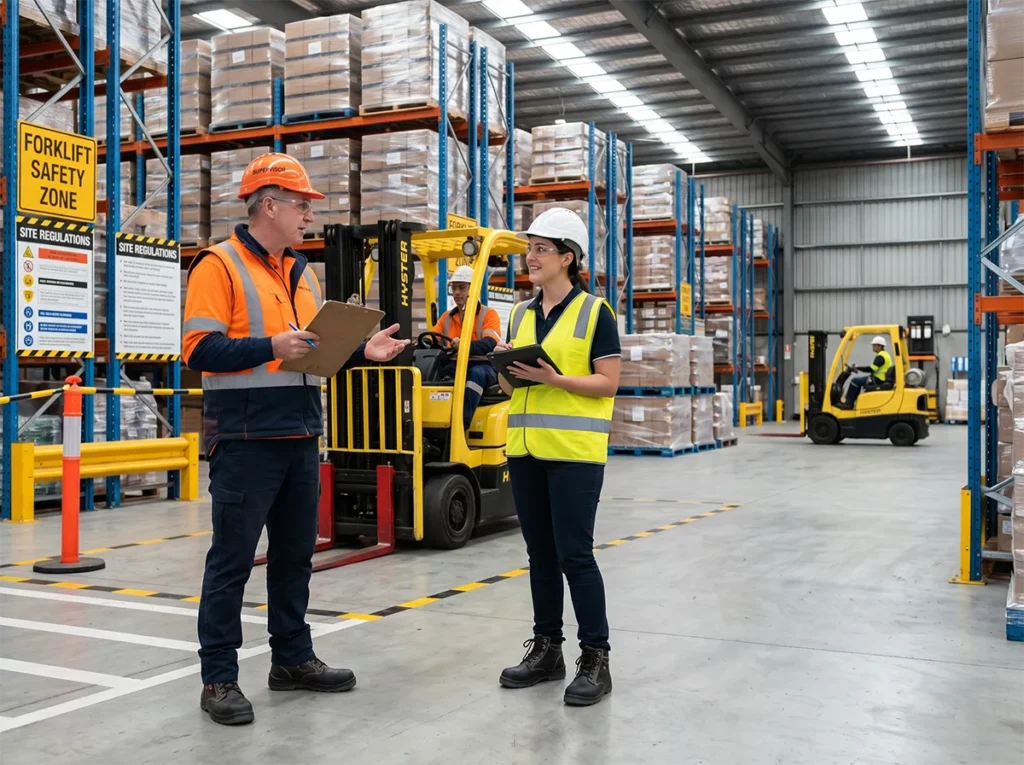
A strong provider should want to understand more than the words:
“forklift driver needed.”
They should want to know:
- what forklift task the operator will actually perform
- whether the role involves dock work, replenishment, or mixed floor movement
- what the layout is like
- how much traffic pressure exists
- whether pedestrians and forklifts overlap regularly
- and whether the role sits in a more controlled or higher-pressure area
This matters because forklift work varies heavily between sites.
A provider who does not ask these kinds of questions may be focusing more on fast supply than safer fit.
2. Whether the Licence Suits the Real Work
A forklift operator may hold a licence and still not be the right match for the actual task or environment.
Good employers should check whether:
- the licence class matches the forklift work being done
- the operator fits the real warehouse conditions
- and the role brief was clear enough for the provider to make a sensible match
This is especially important if the site includes:
- tighter aisles
- busier traffic flow
- dock pressure
- mixed pedestrian movement
- or more complex route logic than a general forklift role might suggest
A licence is essential.
But good employers know it is not the only check.
Our article on LF and LO forklift licence checks in Victoria explains what employers should verify before a forklift operator starts shift and why licence fit should always be tied to the real task.
3. Whether the Provider Understands Your Site Type
Not every forklift environment is the same.
A provider should understand whether your site is:
- high-volume dispatch
- replenishment-heavy warehousing
- mixed warehouse and factory
- food production with forklift movement
- dock-intensive logistics
- or a tighter layout where visibility and turning pressure matter more
This matters because different site types create different forklift expectations around:
- pace
- route complexity
- crossings
- visibility
- pedestrian interaction
- and first-shift support needs
A provider who understands your site type is more likely to help send an operator who is closer to the mark from the beginning.
4. Whether the Role Brief Has Been Explained Clearly Enough
Good forklift labour hire starts with a strong brief.
That means the employer should be clear about:
- what forklift task is actually involved
- what area of the site the operator will work in
- how busy the traffic conditions are
- what local pressure areas matter
- whether the operator will work near loading docks
- and what level of first-shift supervision is realistic
If the role is described too broadly, the provider may still send a licensed person — but the fit may be weaker than it first appears.
A better brief usually leads to a better placement.
5. Whether Day-One Induction Has Been Thought Through Properly
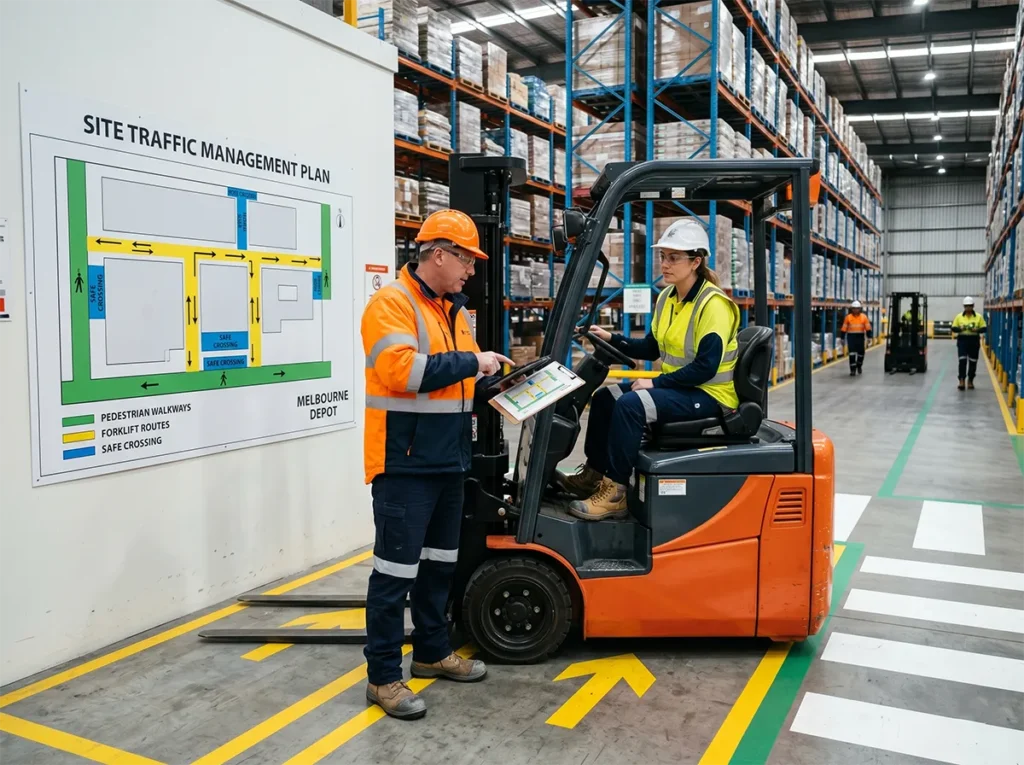
A forklift labour hire operator should not be dropped into an active floor with the assumption that licence plus experience is enough.
Good employers should check whether the site is ready to show:
- traffic routes
- crossings
- blind spots
- dock rules
- pedestrian interaction points
- PPE expectations
- reporting pathways
- and who owns first-shift supervision
This matters because even a capable operator can be exposed if the warehouse logic is unfamiliar.
Our guide to forklift inductions for new and temporary operators explains what employers should cover on day one before a licensed operator enters active warehouse traffic.
6. Whether the Provider Helps Reduce First-Shift Friction
A stronger provider helps make the placement easier to settle in safely.
That may show up through:
- clearer pre-shift communication
- more realistic discussion of operator fit
- practical awareness of site requirements
- and a better understanding of what the operator is actually walking into
Good employers should notice whether the provider is helping reduce:
- guesswork
- weak matching
- unclear role setup
- and avoidable first-shift confusion
If the provider is only focused on speed, the site may end up carrying the extra burden later through weaker onboarding and supervision pressure.
7. Whether the Site Has Enough Supervision Capacity for the First Shift
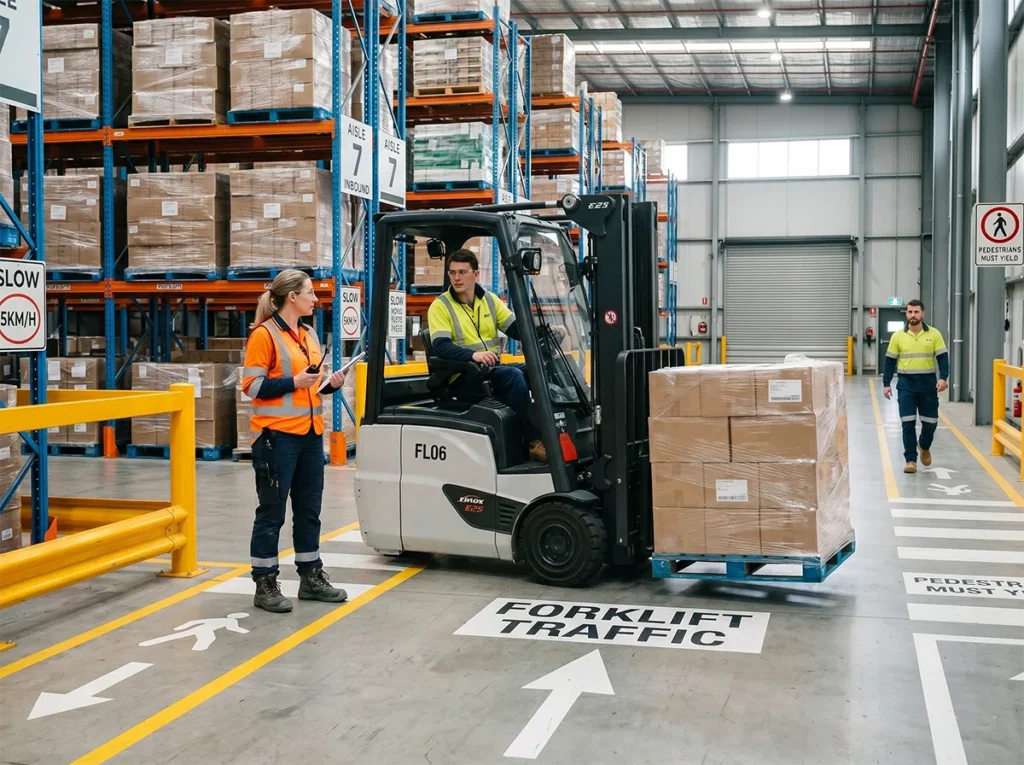
Not every forklift placement needs the same level of early support.
Good employers should ask:
- Can we supervise this operator properly in the first shifts?
- Do we have someone who knows the site well enough?
- Is the floor already too stretched to integrate someone safely right now?
- Are we sending the operator into a high-pressure area without enough visible oversight?
This matters because a good placement still needs good site support.
A strong provider helps, but the host employer still controls the environment the operator enters.
Our article on who should supervise new forklift operators explains why visible early oversight matters so much on busy warehouse floors and what good first-shift supervision should actually look like.
8. Whether Traffic and Pedestrian Risk Has Been Considered Honestly
Forklift labour hire should not be treated as though all sites carry the same traffic exposure.
Good employers should think about:
- how many pedestrians move nearby
- where the crossings sit
- whether dock activity changes visibility
- whether the layout is tight or open
- and whether overflow staging is already affecting the routes
A provider can only support a strong placement if the site itself has thought honestly about the environment being offered.
A rushed forklift booking into a weak traffic layout can create more risk than expected very quickly.
Our guide to how warehouse layout increases or reduces forklift risk explains why aisle width, blind spots, crossings, and staging pressure should be reviewed before a forklift placement begins.
9. Whether the Operator Is Being Chosen for Suitability, Not Just Availability
This is one of the most important practical checks.
A good forklift labour hire provider should not think only in terms of:
- who is available first
They should also think about:
- who suits the actual site
- who can settle into the movement style more safely
- who is more likely to work under the local pressure conditions
- and who is a better fit for the actual forklift environment being described
Good employers usually notice the difference quickly.
A provider who thinks in terms of suitability often helps reduce risk before the shift even begins.
10. Whether the Provider Feels Like a Long-Term Safety and Operations Fit
The best forklift labour hire relationships do not feel like one-off transactions.
They feel like:
- clearer communication
- better role understanding
- more practical operator fit
- and easier coordination when the floor is under pressure
That is why good employers should ask:
- Does this provider understand our environment?
- Do they seem serious about forklift safety and day-one readiness?
- Would we trust them with a busier or more exposed area later?
- Are they helping make placements safer and easier to manage over time?
That is a stronger standard than simply asking who can send someone now.
What Good Forklift Labour Hire Usually Looks Like in Practice
When forklift labour hire is working well, the placement usually feels:
- clearer
- calmer
- easier to settle
- and less exposed to avoidable first-shift problems
In practice, that often means:
- the role was described properly
- the provider understood the floor conditions
- the licence fit was checked properly
- induction was prepared clearly
- supervision was visible enough
- and the site was not left correcting basic setup issues after the shift had already begun
It should not feel like:
- the operator is reading the floor for the first time without enough guidance
- the provider guessed the site conditions
- or the host is discovering what the real role was only after the operator arrives
Good forklift labour hire feels like a better-supported placement, not just faster headcount.
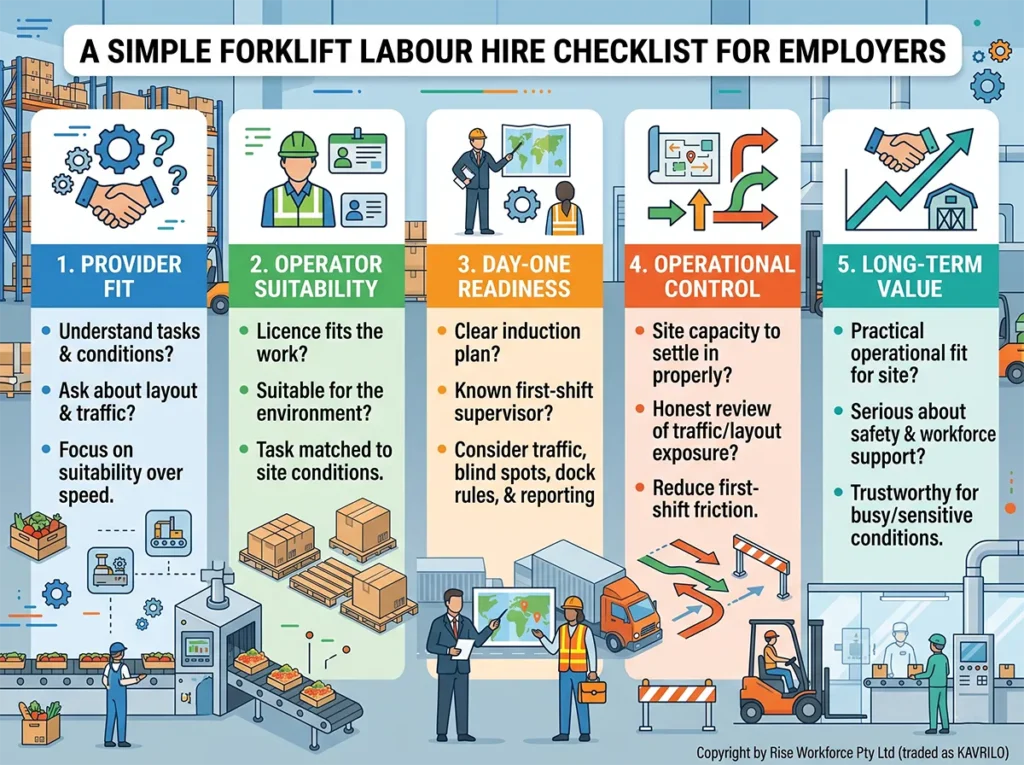
A Simple Forklift Labour Hire Checklist for Employers
Here is a practical checklist employers can use when choosing forklift labour hire.
Provider Fit
- Does the provider understand the actual forklift task and warehouse conditions?
- Have they asked enough about layout, traffic, and pressure areas?
- Do they seem focused on suitability, not just speed?
Operator Suitability
- Does the licence fit the real work?
- Does the operator seem likely to suit the actual environment?
- Is the task being matched properly to the site conditions?
Day-One Readiness
- Is induction planned clearly enough?
- Do we know who will supervise the first shift?
- Have traffic routes, blind spots, dock rules, and reporting been considered?
Operational Control
- Does the site have capacity to settle the operator in properly?
- Is the traffic and layout exposure being reviewed honestly?
- Are we reducing first-shift friction or creating more of it?
Long-Term Value
- Does the provider feel like a practical operational fit for our site?
- Are they serious about forklift safety and clearer workforce support?
- Would we trust them again under busier or more sensitive conditions?
This kind of checklist helps employers choose forklift labour hire more carefully than simply asking who can fill the next shift fastest.
Final Word
Choosing forklift labour hire in Victoria matters because a forklift placement affects much more than shift coverage.
For warehouse employers across Melbourne’s South-East, the right choice usually supports:
- better licence and task fit
- stronger day-one readiness
- clearer traffic awareness
- more practical induction
- better first-shift supervision
- and safer integration into the real conditions of the floor
That is what helps reduce:
- weak placements
- avoidable confusion
- extra supervision pressure
- traffic-related exposure
- and preventable forklift risk in busy warehouse environments
Because a forklift labour hire operator is not just filling a role.
They are entering a live traffic system that needs strong support from the beginning.
That is not just better staffing.
It is better warehouse control.
Need Practical Labour Hire Support for Warehousing and Manufacturing in Melbourne’s South-East?
KAVRILO is building its approach around safety-aware workforce support, clearer communication, and stronger operational discipline for warehouse and industrial environments.
Whether your site needs better shift coverage, stronger day-one worker readiness, or more dependable labour coordination for forklift-related work, KAVRILO is focused on practical workforce support that fits controlled warehouse and factory environments.
Need warehouse and factory labour hire support with stronger day-one readiness and a practical safety-aware approach? Talk to KAVRILO about workforce support across Melbourne’s South-East.
Article Disclaimer
This article is provided for general information only and does not constitute legal, workplace relations, safety, taxation, payroll or other professional advice. Please seek advice specific to your circumstances before acting on this information.
Please read our Website Disclaimer for more information.