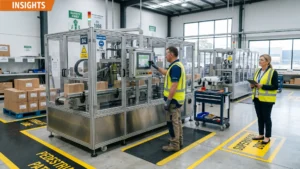
Read more about the article Machine Operator Labour Hire in Melbourne: A Practical Guide for Employers
Successful machine operator labour hire depends on accurate role information, suitable worker matching, site-specific induction and appropriate supervision.

Machine Operator Labour Hire in Melbourne: A Practical Guide for Employers

Machine operator labour hire can help Melbourne manufacturers respond to production peaks, absences and changing demand. But a successful placement requires more than an available worker. Employers need accurate job briefs, relevant experience checks, site-specific induction, verified competency, appropriate supervision and clear communication when machinery or duties change.

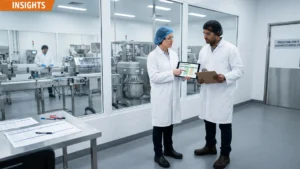
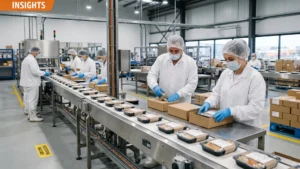
Read more about the article What Food Manufacturers Should Expect from a Labour Hire Partner on Safety and Hygiene
A strong labour hire partner for food production should support more than staffing. It should also support hygiene discipline, PPE readiness, and safer first-shift worker behaviour.

What Food Manufacturers Should Expect from a Labour Hire Partner on Safety and Hygiene

A labour hire partner for food production should do more than send workers. For Victorian food manufacturers, it should also support hygiene discipline, PPE readiness, clearer onboarding, stronger site fit, and safer first-shift behaviour. Here is what employers should reasonably expect from a labour hire partner operating in hygiene-sensitive production environments.

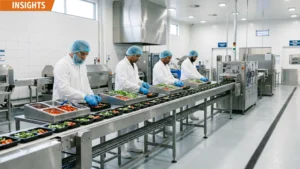
Read more about the article Choosing Labour Hire for Food Production in Victoria: What Employers Should Check Early
Food-production labour hire should be judged by more than speed. Employers should also check hygiene awareness, worker readiness, communication, and day-one control.

Choosing Labour Hire for Food Production in Victoria: What Employers Should Check Early

Labour hire can help food manufacturers stay flexible, but food production sites need more than fast labour supply. In Victoria, employers should check whether a labour hire provider understands hygiene-sensitive environments, PPE discipline, multilingual induction, day-one readiness, and first-shift support before workers enter active production. Here is what to check early.

Read more about the article How to Reduce Cross-Contamination Risk When Bringing Temporary Workers into Food Manufacturing
Temporary labour can support food manufacturing well, but only when workers enter the site with clear hygiene discipline, correct PPE use, and stronger behavioural control from the first shift.

How to Reduce Cross-Contamination Risk When Bringing Temporary Workers into Food Manufacturing

Temporary labour can help food manufacturers stay flexible, but only if workers enter the site with clear hygiene discipline, correct PPE use, and stronger behavioural control from the first shift. In fast-paced Victorian food manufacturing, cross-contamination risk often increases when temporary workers are underprepared for the site’s real standards. Here is what employers should review early.

Read more about the article What Host Employers Should Check Before Putting Casual Workers into Food Production
Casual labour can support food production well, but only when worker readiness is checked properly before the first shift begins.

What Host Employers Should Check Before Putting Casual Workers into Food Production

Casual labour can help food manufacturers stay flexible, but only if worker readiness is checked properly before shift start. In fast-paced Victorian food production, host employers need to review hygiene understanding, PPE discipline, site entry, movement behaviour, communication, and first-shift supervision before placing casual workers into active production areas. Here is what to check early.

Read more about the article How Faster Line Speed Can Increase Safety and Quality Risk in Food Production
A faster line can improve output, but it can also quietly increase safety and quality risk when movement, recovery, and discipline stop keeping pace.

How Faster Line Speed Can Increase Safety and Quality Risk in Food Production

Faster line speed can improve output, but it can also quietly increase safety and quality risk when worker movement, fatigue, hygiene discipline, and task control stop keeping pace. In fast-paced Victorian food production, employers need to review what line speed is changing on the floor before small issues become bigger operational problems.

Read more about the article Manual Handling Risks in Food Production: What Fast-Paced Sites Often Miss
Manual handling risk in food production often builds through repetition, pace, awkward reach, and wet-area movement rather than one obvious heavy lift.

Manual Handling Risks in Food Production: What Fast-Paced Sites Often Miss

Manual handling risk in food production is not always obvious. In fast-paced Victorian sites, repeated lifting, reaching, carrying, turning, tray handling, and line-side movement can quietly become more dangerous when pace, fatigue, wet floors, and workstation design are not reviewed properly. Here is what employers often miss.

Read more about the article Managing Worker Fatigue During Long Packing and Production Shifts
Fatigue in food production affects more than comfort. It can also weaken concentration, manual handling, hygiene discipline, and line consistency.

Managing Worker Fatigue During Long Packing and Production Shifts

Fatigue in food production does not only affect worker comfort. It can also weaken concentration, movement quality, hygiene discipline, manual handling, and line consistency. In fast-paced Victorian packing and production environments, employers need to review fatigue earlier and more practically than many sites do. Here is what to look at.

Read more about the article Repetitive Work in Food Manufacturing: What Employers Should Review Before Injuries Build
Repetitive work can look routine long before it starts creating real fatigue, discomfort, and injury risk in food manufacturing.

Repetitive Work in Food Manufacturing: What Employers Should Review Before Injuries Build

Repetitive work in food manufacturing often looks routine long before it starts causing real strain. In fast-paced Victorian production sites, repeated packing, reaching, lifting, trimming, handling, and line-based movement can quietly build fatigue, discomfort, and injury risk over time. Here is what employers should review before those problems become harder to control.

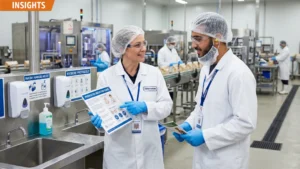
Read more about the article How to Run Safer Food Production Inductions for Non-English Speaking Workers
A safer induction is not about saying more. It is about making the most important hygiene and safety controls much harder to misunderstand.

How to Run Safer Food Production Inductions for Non-English Speaking Workers

A worker can nod through an induction and still leave unclear on hygiene, PPE, movement rules, and day-one expectations. In fast-paced Victorian food production, that creates real safety and food-safety risk. Here is how employers can run safer inductions for non-English speaking workers without making the process vague, rushed, or ineffective.