
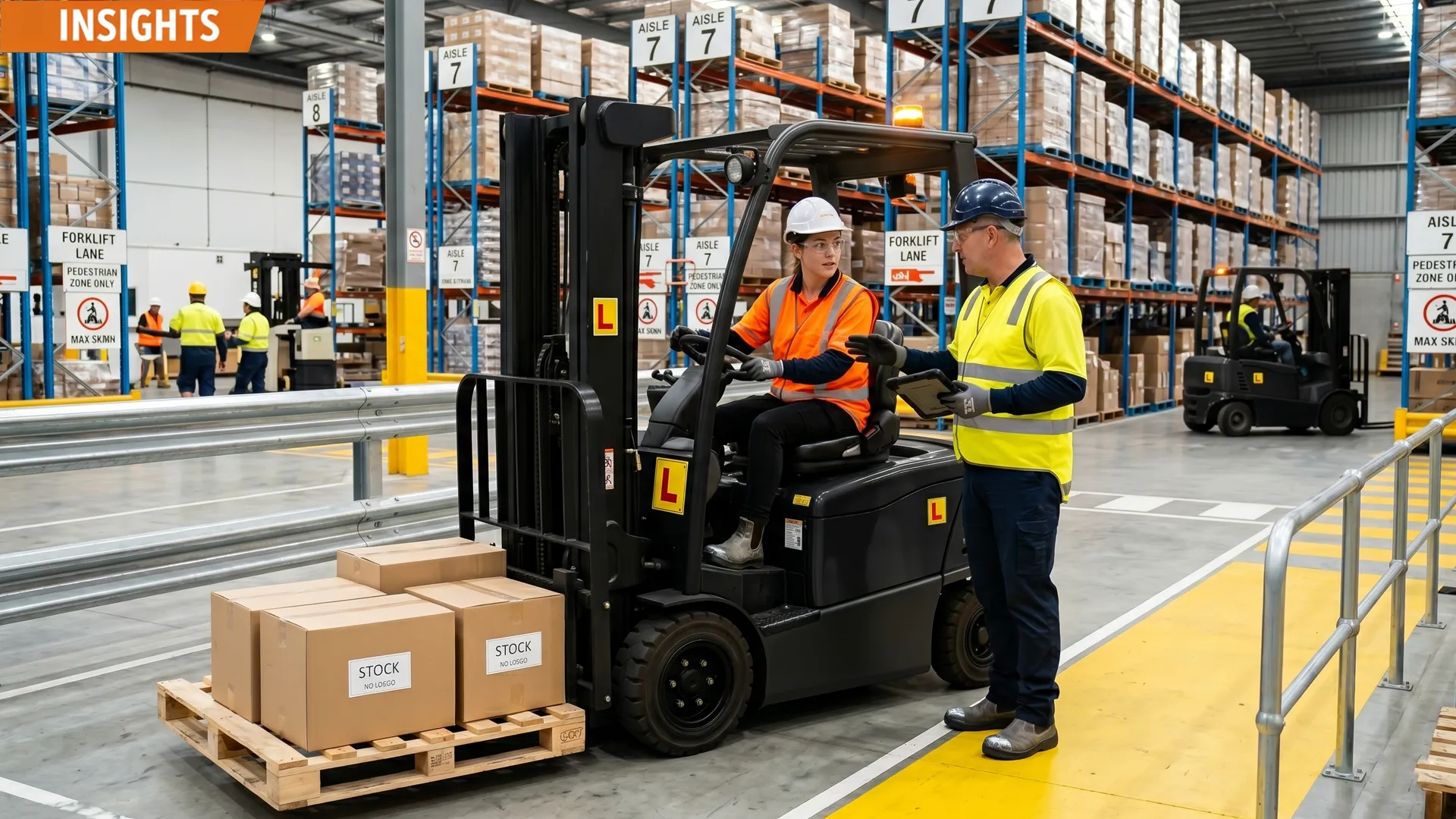
A forklift operator can hold the right licence, complete induction, and still need stronger support during the first shifts.
That is especially true on a busy warehouse floor.
Across Melbourne’s South-East, many warehouses and logistics sites bring in:
- new forklift operators
- temporary drivers
- labour hire operators
- workers transferring from another site
- and returning operators who have not yet settled back into the local floor conditions
In each case, the operator may be capable.
But capability does not remove the need for supervision.
That is because the first shifts often involve:
- unfamiliar traffic flow
- local blind spots
- mixed pedestrian movement
- dispatch pressure
- dock congestion
- layout quirks
- and site-specific habits the operator has not yet fully read
This is where the question of supervision matters.
A new forklift operator does not just need someone technically “in charge”. They need the right kind of supervision:
- visible enough
- practical enough
- consistent enough
- and close enough to correct the small issues before they become bigger ones
Good employers understand that first-shift supervision is one of the most practical controls on a busy warehouse floor.
Because if no one clearly owns the early oversight, then:
- uncertainty lasts longer
- poor habits settle faster
- traffic rules become easier to misread
- and near misses become more likely before the site realises the placement is not fully in control
For the broader employer overview, see our forklift safety and licence checks in Victoria pillar guide on licence fit, induction, traffic control, and first-shift operator readiness.
Why First-Shift Supervision Matters So Much
A new forklift operator often looks more settled than they really are.
They may appear:
- confident
- licensed
- calm
- and ready to work
But on a new floor, there are still things they do not yet know fully, such as:
- which crossing carries the most pressure
- where visibility tightens unexpectedly
- how pedestrians usually behave in certain areas
- where dispatch urgency changes movement standards
- or which corners and routes need more caution than they seem to at first glance
That is why early supervision matters.
Without it, a new operator may begin to:
- rely on guesswork
- copy the wrong local habits
- misread route expectations
- or carry small uncertainties too long because no one visible is owning the early support properly
A strong supervisor helps reduce:
- uncertainty
- repeated correction
- poor first-shift habits
- and preventable close calls during the most vulnerable period of the placement
What Good Supervision Should Actually Do
Good forklift supervision is not just about standing nearby.
It should help the operator:
- understand how the floor behaves in real conditions
- know who to ask when something is unclear
- feel comfortable raising questions early
- correct small movement issues before they repeat
- and settle into the site’s actual traffic culture more safely
In practice, strong supervision should reduce:
- avoidable confusion
- wrong-route movement
- weak warning habits
- inconsistent crossing behaviour
- and the temptation to “just work it out” in a pressured environment
This matters because on a busy warehouse floor, small misunderstandings often create the first warning signs of bigger risk.
A supervisor should help catch those signs early.
Who Should Actually Supervise a New Forklift Operator?
1. Someone Who Knows the Site, Not Just the Job Title
The best supervisor is not necessarily the person with the most senior title.
It is usually the person who understands:
- the site layout
- the local traffic pressure
- the blind spots
- the dock behaviour
- the movement rules
- and how the floor actually operates under real conditions
This matters because a new forklift operator needs site guidance, not just generic forklift knowledge.
A supervisor who knows the site well is much more likely to notice:
- where the operator is hesitating
- where the route is being misread
- and where small movement issues are starting to form
2. Someone Visible Enough During the First Shifts
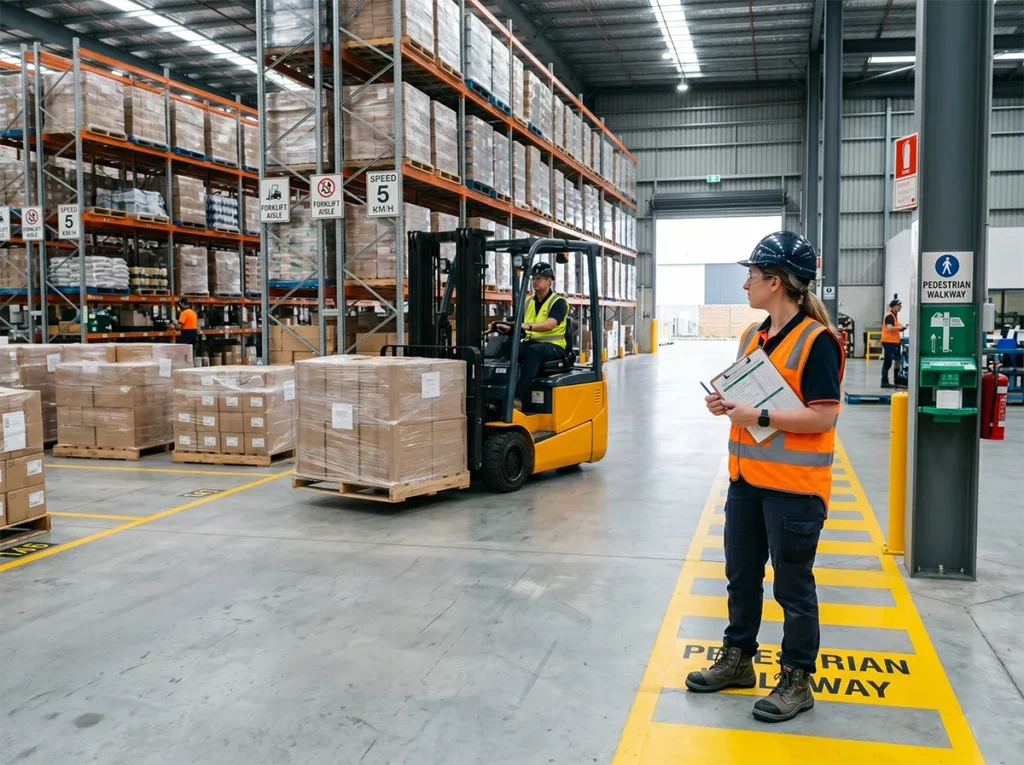
A supervisor should not be technically assigned and practically unavailable.
On day one and early shifts, the operator should know:
- who owns their support
- where to find them
- and that they are visible enough to step in when needed
This does not mean standing beside the forklift every minute.
It does mean being present enough that the operator is not left interpreting:
- route logic
- dock behaviour
- crossing pressure
- or local movement expectations
mostly alone.
Visible early supervision helps the operator settle faster and more safely.
3. Someone Who Can Correct Calmly and Early
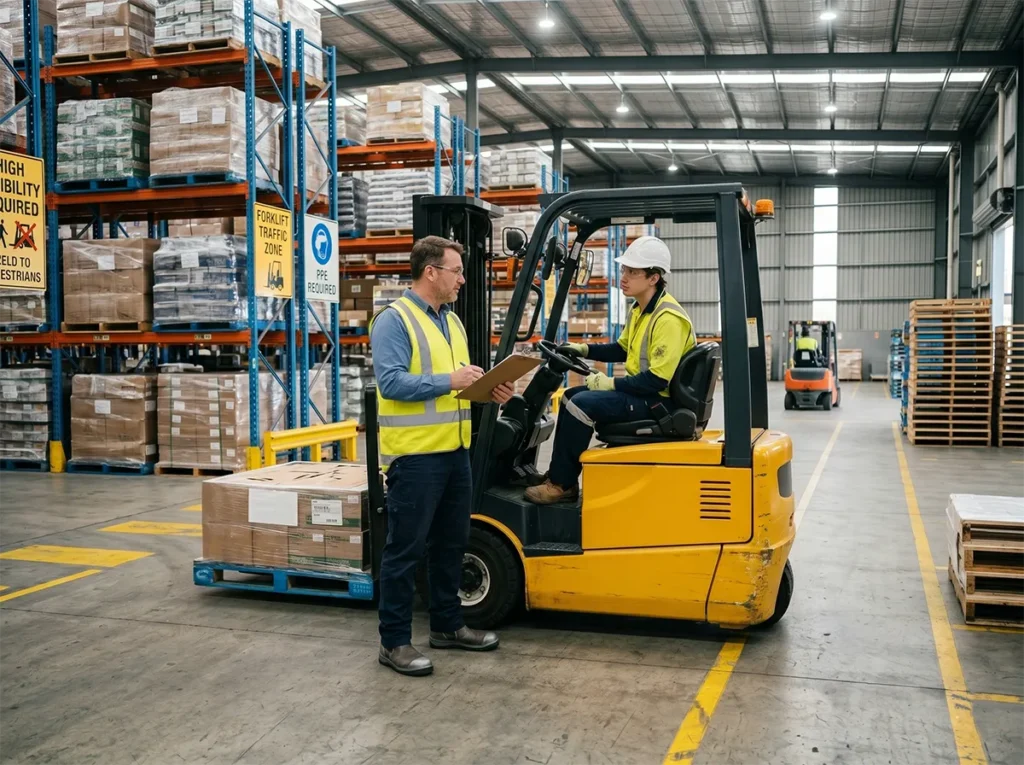
The best forklift supervision is practical, not performative.
A strong supervisor:
- notices small issues early
- corrects them calmly
- explains the local expectation clearly
- and prevents awkward habits from becoming routine
This matters because new operators often need:
- small route corrections
- traffic reminders
- crossing guidance
- or local caution points explained in context
Those corrections work best when they happen:
- early
- consistently
- and without turning normal first-shift questions into a problem
A calm supervisor makes the operator more likely to ask, listen, and adjust.
4. Someone Who Understands Both Traffic and Task Pressure
A forklift supervisor needs to understand more than movement.
They also need to understand:
- the work pace
- replenishment pressure
- dispatch timing
- dock urgency
- and how those pressures can quietly change operator behaviour
This matters because a forklift operator may appear fine until:
- the shift speeds up
- the dock gets busy
- the crossings become more active
- or the operator begins trading caution for flow
A good supervisor can recognise when pressure is starting to shape movement decisions — and step in before the standard drops.
5. Someone Who Can Judge Whether the Operator Is Truly Settling In
A licensed operator can still be a weak site fit in the first shifts.
Good supervisors watch for:
- repeated basic questions
- hesitation in the same area
- awkward route choices
- poor corner behaviour
- too much confidence too early
- or weak awareness of pedestrian interaction
These signs do not always mean the operator is unsuitable.
Sometimes they simply mean:
- the site needs to explain more clearly
- the area is harder to read than expected
- or the operator needs stronger support before independence increases
A good supervisor helps make that judgement early.
10 Practical Things Good Supervisors Watch Early
1. Whether the Operator Understands the Traffic Routes

A new forklift operator should not be left to guess:
- which routes are preferred
- where the site expects slower movement
- where crossings are active
- or what route should not be improvised under pressure
Good supervisors check this early rather than assuming the induction was enough by itself.
Our guide to warehouse traffic management shows how stronger route control, crossings, and floor discipline help reduce forklift and pedestrian risk on busy warehouse floors.
2. Whether Corners, Crossings, and Blind Spots Are Being Handled Properly
Supervisors should pay close attention to:
- corner approach speed
- warning use
- crossing behaviour
- blind spot caution
- and whether the operator is reading visibility limits realistically
These are some of the first places where risk begins to show.
3. Whether the Operator Is Becoming Too Casual Too Early
Some new operators settle fast and then become more relaxed than the floor allows.
That can look like:
- taking corners a little quicker
- trusting familiar routes too soon
- reducing caution around pedestrian areas
- or assuming they now understand the floor fully after only a short time
Good supervisors catch this early.
Confidence is useful.
Premature familiarity is not.
4. Whether the Operator Knows Who to Ask
A new forklift operator should not be left wondering:
- who gives task direction
- who owns traffic questions
- who handles safety concerns
- and who they speak to when something feels unclear
A good supervisor helps make this obvious from the beginning.
5. Whether the Operator Is Using Warnings and Controls Consistently
Good supervisors do not only look at whether the operator is moving.
They look at how the operator is moving.
That includes:
- horn use
- speed choice
- stopping behaviour
- corner approach
- reversing awareness
- and general consistency under pressure
This is often where small habits become visible before they become routine.
Our article on common forklift driving habits that increase risk explains the small behaviour patterns supervisors should notice and correct before they become normal on the warehouse floor.
6. Whether Dock or Dispatch Pressure Is Changing the Operator’s Behaviour
Busy dock and dispatch areas often reveal the real need for supervision.
A good supervisor watches whether the operator’s standards change when:
- loading pressure rises
- people gather near the dock
- the route becomes tighter
- or dispatch timing starts affecting movement decisions
This matters because the floor rarely stays calm all shift.
A supervisor should be watching the operator where the site becomes hardest to read, not only where the floor is easiest.
7. Whether Pedestrian Interaction Looks Predictable
Supervision should include the interaction between the operator and nearby pedestrians.
That means checking:
- whether the operator respects the pedestrian space properly
- whether crossings are being approached cautiously
- whether pedestrians look comfortable with the movement
- and whether the overall interaction feels controlled and predictable
A forklift operator can be technically competent and still create weak pedestrian trust if movement feels too close, too rushed, or too casual.
8. Whether the Operator Is Reporting Concerns Early
A stronger supervisor encourages reporting from the beginning.
That includes concerns about:
- blocked crossings
- poor visibility
- awkward dock movement
- unusual floor pressure
- equipment issues
- or anything else affecting safe forklift operation
A new operator may notice things regular staff have become used to.
Good supervision makes it easier for those observations to be raised early instead of staying unspoken.
Our guide to forklift near misses in warehouses explains why early warnings and close calls should be reviewed quickly before a more serious incident develops.
9. Whether the Site Setup Needs Adjusting, Not Just the Operator
A good supervisor does not blame every issue on the driver.
Sometimes the real problem is:
- weak route visibility
- poor crossing logic
- clutter pressure
- staging too close to movement
- or a dock setup that is making the operator’s job harder than it should be
That is why supervision should also include review of the floor itself.
The best supervisors do not just correct people.
They also recognise when the system around the person needs tightening.
10. When the Operator Is Ready for Less Direct Oversight
Strong supervision is not about permanent close watching.
It is about knowing when the operator:
- understands the routes
- is reading the floor well
- follows the site standards consistently
- asks sensible questions
- and is no longer showing the same uncertainty as the first shifts
A good supervisor helps the operator move from:
- close early oversight
to - more normal operating independence
But that transition should be based on what the floor is showing, not guesswork.
What Weak Supervision Usually Looks Like
Most sites show warning signs when forklift supervision is too weak.
Those signs may include:
- the operator does not clearly know who owns their first shift
- repeated basic corrections keep appearing
- different supervisors give different messages
- unsafe habits go unchallenged because the floor is busy
- or the site assumes the operator is “fine now” before that is really clear
These signs matter.
Because weak supervision usually does not fail all at once.
It fails gradually through:
- inconsistency
- invisibility
- assumption
- and slow response to early warning signs
Good employers notice that before something more serious forces the issue.
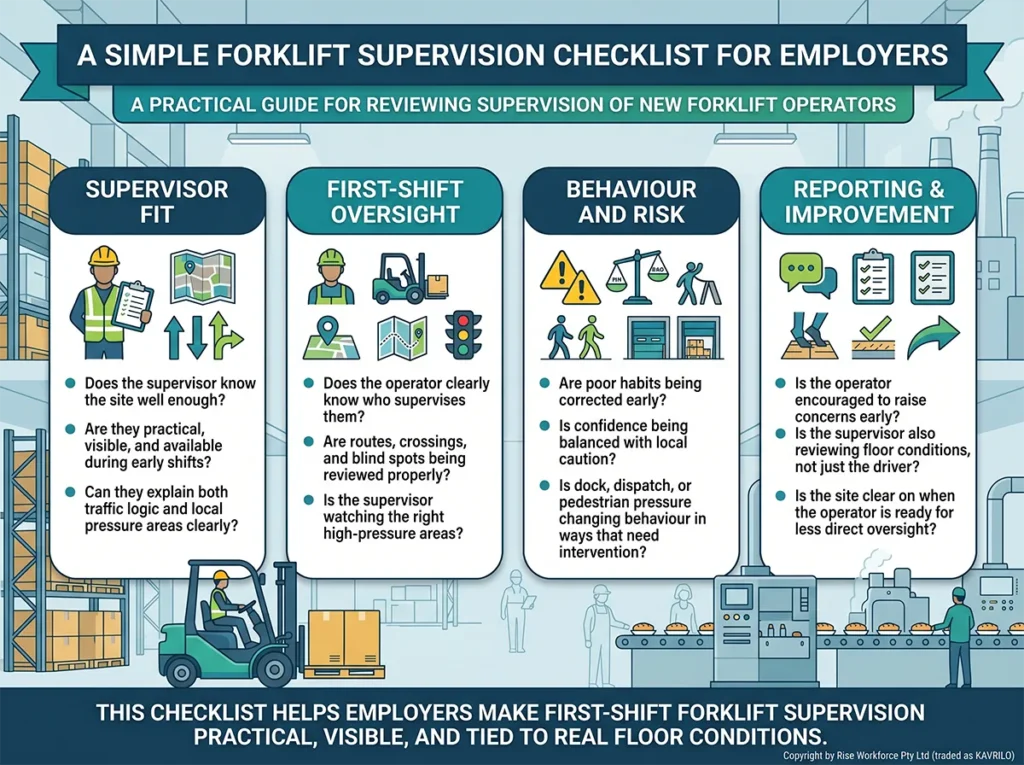
A Simple Forklift Supervision Checklist for Employers
Here is a practical checklist employers can use when reviewing supervision for new forklift operators.
Supervisor Fit
- Does the supervisor know the site well enough?
- Are they practical, visible, and available during early shifts?
- Can they explain both traffic logic and local pressure areas clearly?
First-Shift Oversight
- Does the operator clearly know who supervises them?
- Are routes, crossings, and blind spots being reviewed properly?
- Is the supervisor watching the right high-pressure areas?
Behaviour and Risk
- Are poor habits being corrected early?
- Is confidence being balanced with local caution?
- Is dock, dispatch, or pedestrian pressure changing behaviour in ways that need intervention?
Reporting and Improvement
- Is the operator encouraged to raise concerns early?
- Is the supervisor also reviewing floor conditions, not just the driver?
- Is the site clear on when the operator is ready for less direct oversight?
This kind of checklist helps employers make first-shift forklift supervision practical, visible, and tied to real floor conditions.
Final Word
Who supervises a new forklift operator matters because the first shifts often shape how safely that operator settles into the warehouse.
For employers across Melbourne’s South-East, stronger first-shift control usually comes from:
- assigning the right supervisor
- making them visible enough early
- correcting calmly and consistently
- watching the real traffic pressure points
- and reviewing both the operator and the floor conditions honestly
That is what helps reduce:
- avoidable confusion
- poor early habits
- weak pedestrian interaction
- repeated correction
- and preventable risk on busy warehouse floors
Because a new forklift operator does not just need a machine and a licence.
They need the right person owning the early supervision clearly enough for the site to stay in control.
That is not just better oversight.
It is better warehouse control.
Need Practical Labour Hire Support for Warehousing and Manufacturing in Melbourne’s South-East?
KAVRILO is building its approach around safety-aware workforce support, clearer communication, and stronger operational discipline for warehouse and industrial environments.
Whether your site needs better shift coverage, stronger day-one worker readiness, or more dependable labour coordination for forklift-related work, KAVRILO is focused on practical workforce support that fits controlled warehouse and factory environments.
Need warehouse and factory labour hire support with stronger day-one readiness and a practical safety-aware approach? Talk to KAVRILO about workforce support across Melbourne’s South-East.
Article Disclaimer
This article is provided for general information only and does not constitute legal, workplace relations, safety, taxation, payroll or other professional advice. Please seek advice specific to your circumstances before acting on this information.
Please read our Website Disclaimer for more information.