
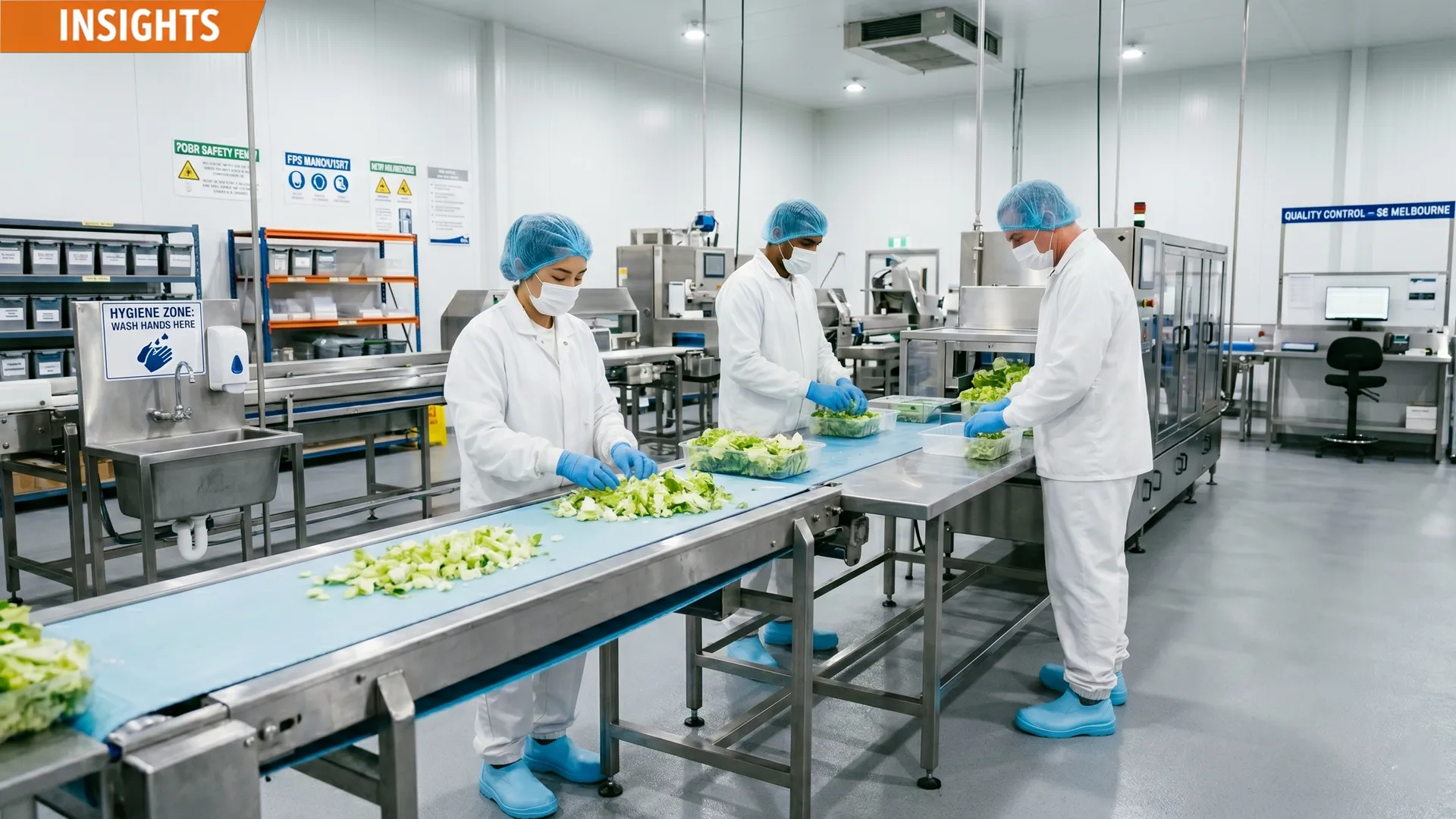
In food production, food safety does not begin only with systems, paperwork, or audit preparation.
It begins with the people who enter the site, follow the process, handle the product, and work inside the standards that the business depends on every day.
That is especially true when using casual or temporary labour.
Across Melbourne’s South-East, food manufacturers in ready meals, dairy, bakery, meat, chilled packing, and cleanroom-like production environments often rely on labour flexibility to support output, cover absences, and manage production pressure. But labour flexibility should not mean lower expectations.
You can learn more about our approach to food production labour hire support across Melbourne’s South-East.
If anything, it means expectations around site readiness, hygiene discipline, and worker behaviour need to be clearer.
Food manufacturers should not expect labour hire workers to arrive as finished experts in every site-specific detail. But they should expect the right foundations:
- hygiene awareness
- willingness to follow process
- PPE discipline
- reliable attendance
- clear communication
- respect for food safety standards
Because in food production, the wrong worker habits can create risk quickly. The right worker habits reduce it.
Why Food Safety and Labour Hire Are Closely Connected
Some people still think labour hire is mainly about filling gaps.
In food production, that mindset is too narrow.
When a worker joins a hygiene-sensitive environment, they are not only filling a headcount. They are entering a system that may involve:
- GMP requirements
- allergen controls
- hygiene zones
- cold-chain expectations
- product handling rules
- line discipline
- PPE compliance
- strict reporting standards
That means food safety and labour hire are directly connected.
The question is not just:
Can this worker do the task?
It is also:
Can this worker work safely, cleanly, and reliably within the site’s standards?
That is why food manufacturers should expect more than availability alone. They should expect a worker who can support the site without creating avoidable hygiene, handling, or behavioural risk.
What Food Manufacturers Should Expect from Labour Hire Workers
Good labour hire in food production should not aim for the lowest possible standard. It should aim for workers who are site-ready, coachable, and capable of working within controlled environments.
Here are the core things food manufacturers should expect.
1. Basic GMP Awareness
Labour hire workers do not need to sound like QA specialists. But they should arrive with a basic understanding that food production is not “just another shift”.
Manufacturers should expect workers to understand that:
- hygiene matters
- contamination risks are real
- PPE is part of the job
- site rules are there for a reason
- product handling affects safety and quality
- shortcuts can create bigger operational problems
A worker with basic GMP awareness is easier to onboard, easier to correct, and less likely to create obvious avoidable issues on day one.
Our guide to GMP basics for workers explains the hygiene habits that help workers settle into food sites more effectively.
2. Willingness to Follow Site Process
This is one of the biggest ones.
Even experienced workers should not walk into a food site acting as though every factory runs the same way.
Manufacturers should expect labour hire workers who are willing to:
- listen during induction
- follow hygiene entry steps
- respect site-specific movement rules
- wear PPE correctly
- ask questions when unsure
- accept correction professionally
A worker who is highly experienced but resistant to process can be more disruptive than a less experienced worker with the right attitude.
In controlled environments, willingness to follow the system matters a lot.
3. PPE Discipline
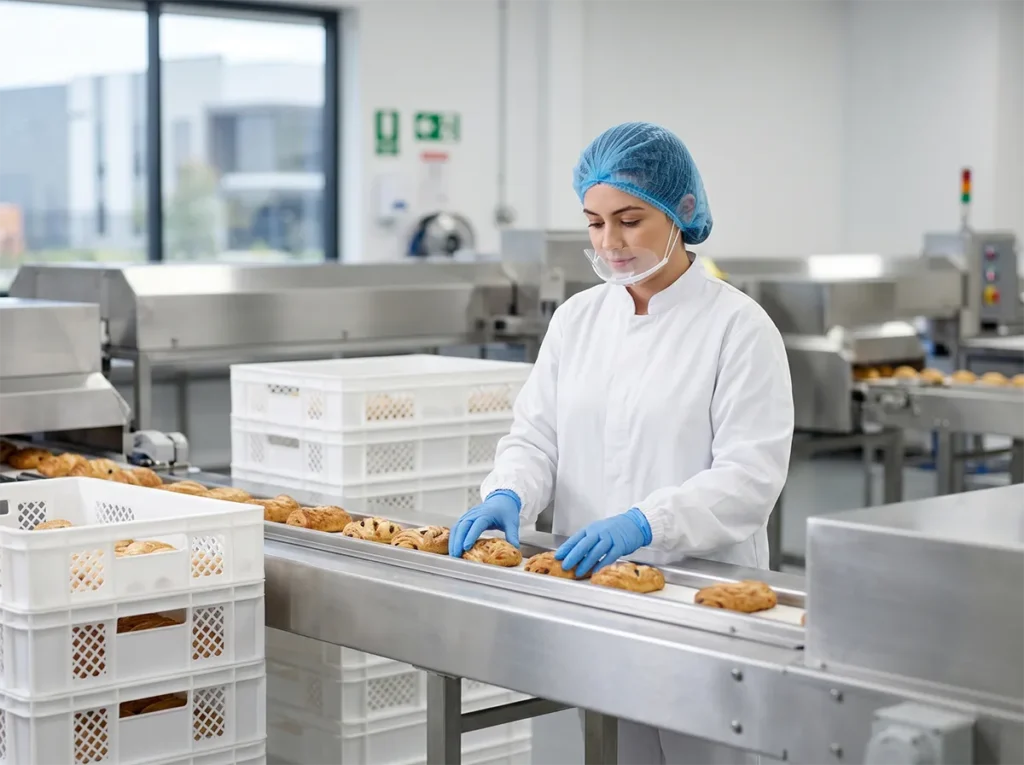
Food manufacturers should expect labour hire workers to treat PPE seriously.
That includes:
- wearing the correct PPE
- wearing it properly
- understanding that PPE may differ between areas
- not touching or adjusting it carelessly
- following glove-change rules
- respecting hygiene and gowning procedures
This is especially important in environments such as:
- chilled production
- high-care packing
- allergen-sensitive lines
- raw and cooked separation zones
- cleanroom-like processing areas
Poor PPE habits are often one of the fastest ways a worker creates a poor first impression.
4. Respect for Hygiene Zones and Restricted Areas
Food production sites often separate work areas for a reason.
Manufacturers should expect labour hire workers to respect:
- raw versus cooked separation
- high-care and low-care zones
- allergen and non-allergen areas
- ingredient and packing zones
- chilled and non-chilled movement rules
A worker who thinks it is acceptable to “just step over there for a second” can create contamination risk very quickly.
Good labour hire workers should be coachable enough to stay within site boundaries and disciplined enough not to improvise carelessly.
You can also read our article on food production PPE to understand how proper protective equipment supports both food safety and worker readiness.
5. Reliable Attendance and Punctuality
Food safety does not sit separately from attendance.
On production sites, unreliable attendance can affect:
- line balance
- hygiene entry timing
- changeover support
- break coverage
- supervisor pressure
- decision-making under workload stress
Manufacturers should expect labour hire workers to:
- arrive on time
- be ready for the shift
- communicate early if a genuine issue arises
- understand that start-of-shift control matters
A worker who is present but unpredictable still creates operational risk.
Reliable attendance is one of the most practical signs that a worker can support a controlled production environment.
6. Calm, Clean Habits Under Pressure
Food sites do not always run under ideal conditions.
Lines speed up. Coverage changes. Product backs up. Shift pressure builds.
Manufacturers should expect labour hire workers who can stay reasonably steady under pressure rather than workers who:
- rush badly
- get careless with handling
- stop following hygiene rules
- ignore labels or presentation
- become difficult to direct
- create unnecessary chaos when the pace increases
The best casual workers are often not the loudest or fastest-looking. They are the ones who can keep standards intact while the environment stays busy.
7. Useful Communication
Good workers do not need to talk constantly. But they do need to communicate when it matters.
Manufacturers should expect labour hire workers who can:
- report damage or quality concerns
- raise hygiene issues early
- speak up if unsure
- communicate attendance issues properly
- escalate problems instead of hiding them
- respond to supervisor direction without friction
In food production, communication is part of risk control.
A quiet worker who communicates at the right time is far more useful than a worker who stays silent while problems build.
8. Respect for Product Handling and Presentation
Some workers think food production is only about speed and output.
But product handling matters too.
Manufacturers should expect labour hire workers to treat product carefully, including:
- correct pack counts
- neat presentation
- controlled handling
- correct positioning of trays or cartons
- proper treatment of damaged or rejected items
- attention to labels and packaging
This is especially important on lines where presentation, labelling, or pack integrity are visible to customers or downstream clients.
Fast workers who mishandle product often create more rework than value.
9. Coachability on Day One
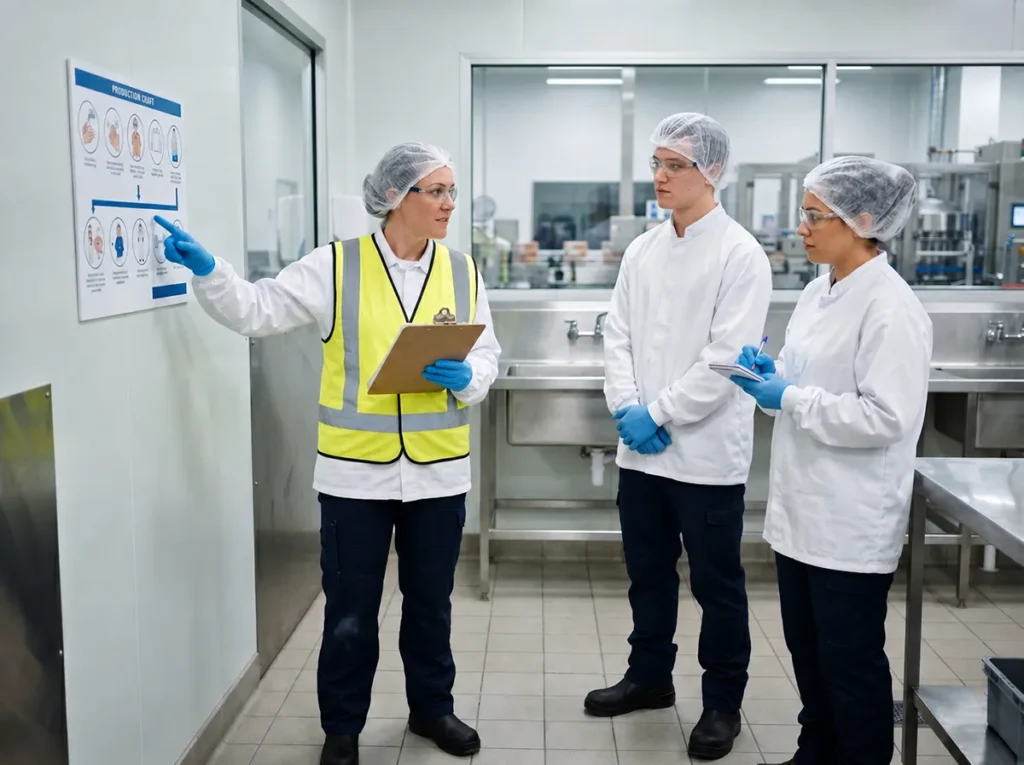
No labour hire worker will know every site-specific detail before arrival.
That is normal.
What matters is whether the worker can settle in quickly and respond well to site instruction.
Manufacturers should expect workers who are:
- teachable
- observant
- respectful of correction
- willing to adapt
- not defensive about site rules
Coachability matters because it reduces friction during induction, helps standards settle faster, and lowers the chance of repeated preventable mistakes.
Our article on food factory inductions also explains what good workers pay attention to on day one in hygiene-sensitive environments.
10. Behaviour That Builds Confidence, Not Uncertainty
Food manufacturers do not only assess skill. They also assess whether the worker feels safe to rely on.
Workers who build confidence usually:
- arrive prepared
- look switched on
- follow entry and PPE process properly
- respect site boundaries
- ask sensible questions
- do not overcomplicate the shift
- work calmly
- avoid preventable issues
Workers who create uncertainty often:
- treat hygiene casually
- guess instead of asking
- cut corners
- move between areas carelessly
- create doubt around whether they can be trusted in the environment
That difference matters, especially on repeat bookings.
What Labour Hire Should Really Deliver in Food Production
From a manufacturer’s point of view, labour hire should not simply deliver “someone available”.
It should deliver workers with enough foundational discipline to step into a food environment and support the site with less friction.
That means labour hire should help provide workers who are:
- presentable
- punctual
- hygiene-aware
- PPE-compliant
- coachable
- site-disciplined
- calm under pressure
- aware that food production is different from general warehousing
That does not remove the site’s role in induction, training, and supervision. But it does make onboarding smoother and risk easier to manage.
A Simple Employer Checklist: What to Expect from Labour Hire Workers on Food Sites
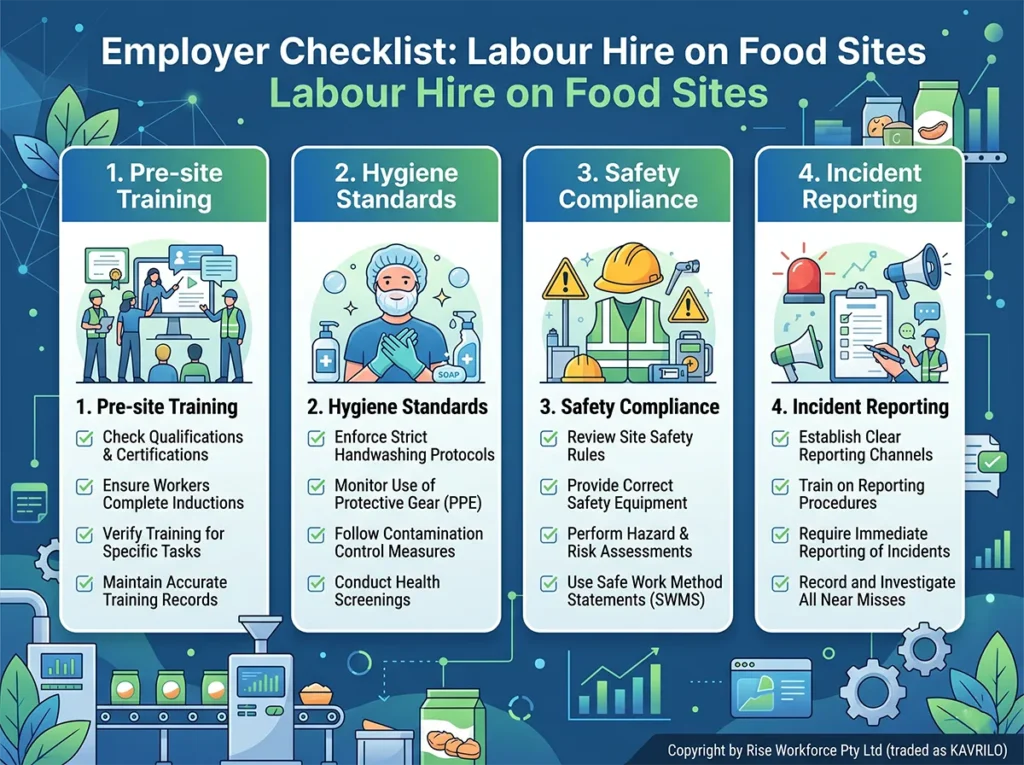
Here is a practical checklist food manufacturers can use when thinking about labour hire support in food production.
Baseline Worker Expectations
- understands that hygiene matters
- follows basic GMP and PPE expectations
- listens during induction
- respects site movement and handling rules
- communicates appropriately when needed
Day One Indicators
- arrives on time and ready
- follows entry procedures properly
- takes correction well
- does not argue with food safety rules
- pays attention to workflow, not just the task in front of them
Signs the Worker Is Likely to Be a Good Fit
- calm under pressure
- clean, controlled work habits
- useful communication
- respectful attitude
- steady attendance and site discipline
Signs of Elevated Risk
- casual attitude to hygiene
- repeated PPE mistakes
- zone or movement shortcuts
- poor communication
- resistance to site process
- avoidable product-handling errors
This kind of checklist can help frame food safety expectations in a practical way, especially when using casual staffing.
You can also read our guide to allergen and cross-contamination rules to see how simple worker habits can affect food safety very quickly.
What Good Labour Hire Support Should Feel Like
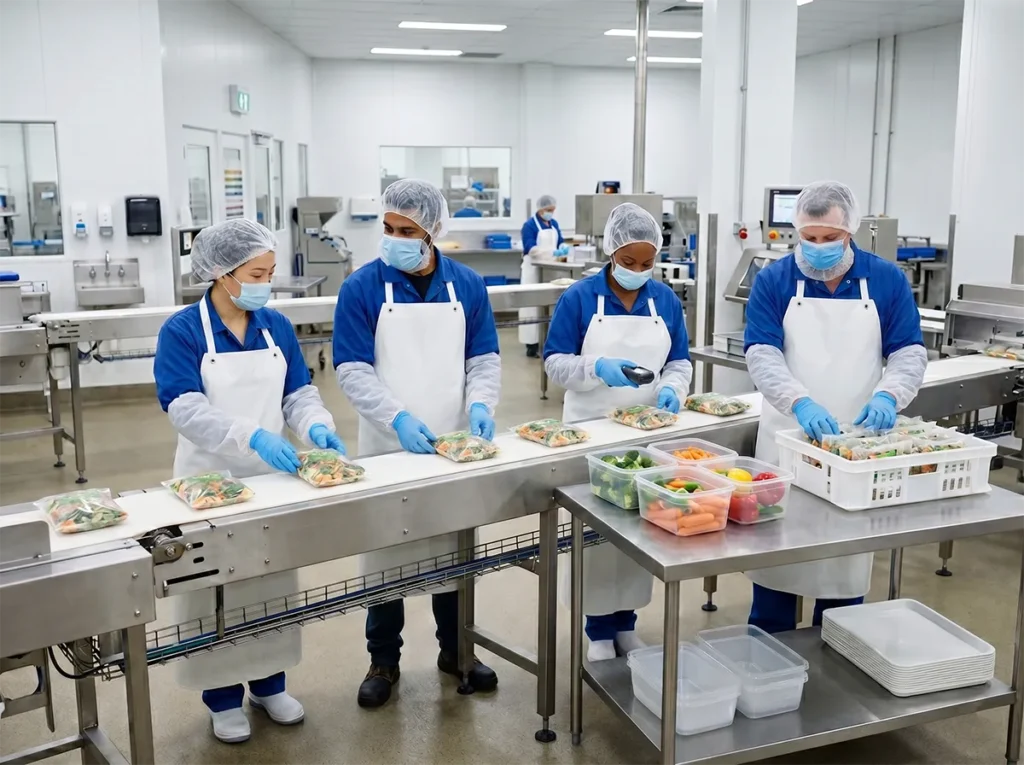
From the client side, good labour hire support in food production should feel like:
- less avoidable friction
- clearer communication
- better shift readiness
- fewer basic hygiene problems
- workers who settle faster into controlled environments
- a stronger chance of repeatable staffing support
It should not feel like:
- constant preventable correction
- unclear worker standards
- repeated process issues
- casual attitudes to food safety
- uncertainty about whether the worker understands the environment
Food production is too sensitive for that.
Final Word
Food safety starts with systems — but it also starts with people.
The workers on the floor are part of how food safety is maintained, not separate from it. That is why food manufacturers should expect more than availability from labour hire workers in hygiene-sensitive environments.
They should expect workers who can support the site through:
basic GMP awareness, PPE discipline, reliable attendance, respectful communication, and willingness to follow process.
That does not mean expecting perfection.
It means expecting the right foundations.
Because in food production, the right worker habits help protect:
- the product
- the line
- the standard
- and the client’s confidence in the staffing support they receive
Looking for labour hire support in food production across Melbourne’s South-East?
KAVRILO is building its focus in food production labour hire with a practical, safety-aware approach that values hygiene discipline, site readiness, and dependable workforce support.
Talk to KAVRILO about practical, hygiene-aware workforce support for food manufacturing environments.
Article Disclaimer
This article is provided for general information only and does not constitute legal, workplace relations, safety, taxation, payroll or other professional advice. Please seek advice specific to your circumstances before acting on this information.
Please read our Website Disclaimer for more information.