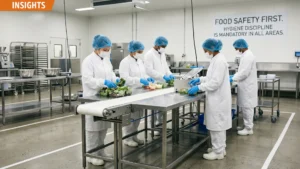

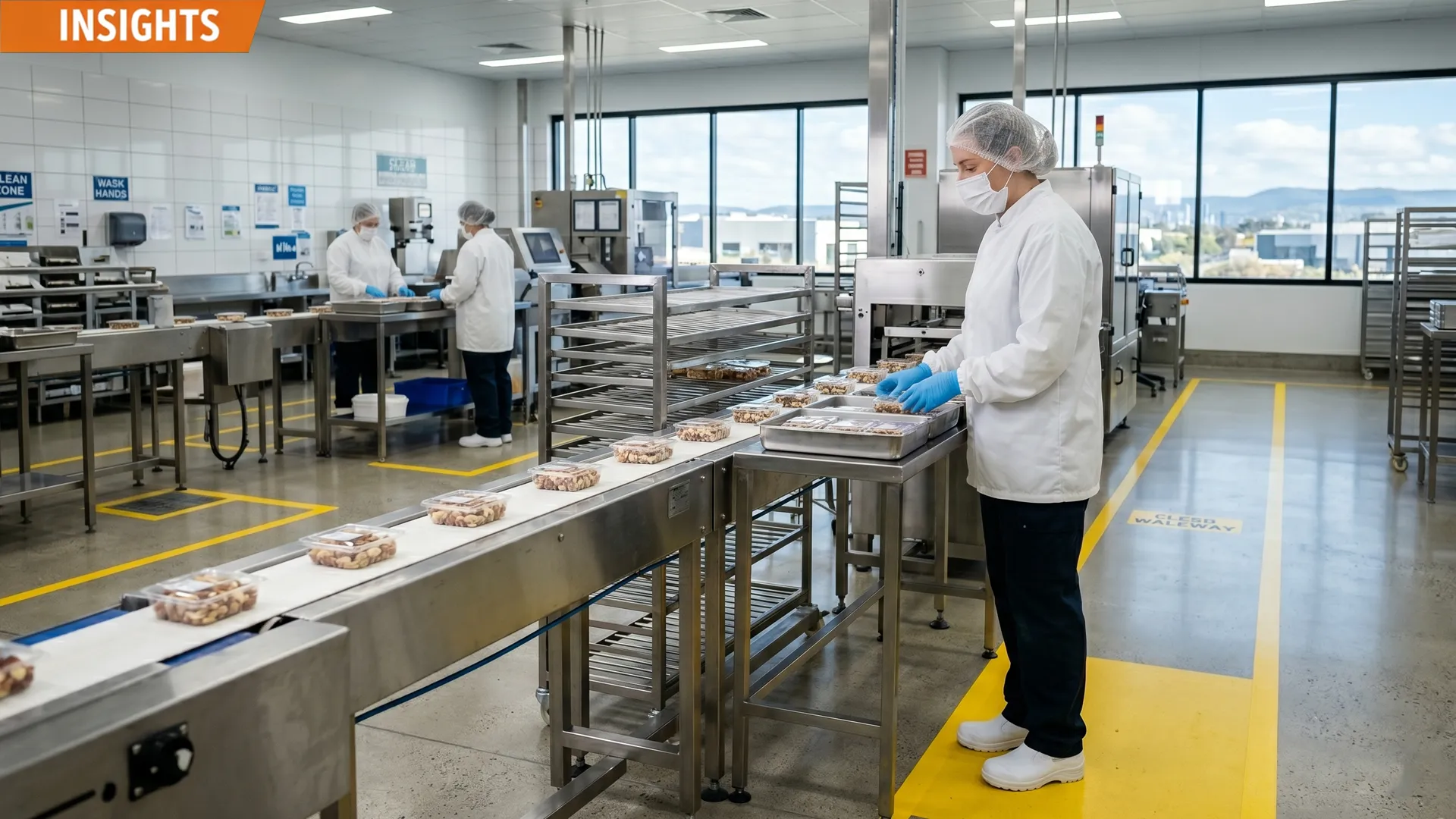
In food production, PPE is not just about looking ready for work.
What you wear on site can affect food safety, product quality, worker safety, and client confidence. That is why PPE matters so much in food production environments across Melbourne’s South-East, especially in ready meals, dairy, bakery, meat, chilled packing, and cleanroom-like lines.
A lot of workers think PPE is just a checklist:
hairnet on, gloves on, done.
But good workers understand that PPE is part of how the site controls risk. If PPE is worn incorrectly, changed at the wrong time, or treated casually, problems can start quickly. That can mean food safety risk, contamination concerns, supervisor attention, or being seen as not site-ready.
If you want to stay trusted and keep getting booked, PPE habits matter more than many workers realise.
If you want to be considered for future food production roles, you can join the KAVRILO roster for opportunities across Melbourne’s South-East.
Why PPE Matters So Much in Food Production
On many sites, PPE is doing more than one job at once.
It may help protect:
- the worker
- the product
- nearby co-workers
- equipment and process areas
- hygiene-sensitive zones
- client and audit expectations
That means PPE is not only about personal protection. In food production, it is also about preventing contamination and supporting GMP standards.
When workers wear PPE properly, they help the site maintain:
- product integrity
- hygiene discipline
- allergen control
- cleaner handling standards
- safer movement through different areas
That is why food factories often take PPE very seriously from day one.
What PPE Food Production Workers May Need
The exact PPE depends on the site, the product, and the area you are working in.
Common PPE in food production can include:
- hairnets
- beard covers
- gloves
- masks
- clean coats or gowns
- aprons
- sleeve covers
- insulated outerwear in cold environments
- steel-capped boots
- high-vis clothing in traffic or dispatch areas
- hearing protection in noisier environments
- safety glasses where required
Not every site uses every item. But one common mistake is assuming the same PPE setup applies everywhere.
It does not.
A chilled dairy site may differ from a bakery. A ready-meals factory may differ from a general packing room. A cleanroom-like environment may require tighter gowning discipline than a standard warehouse-adjacent production area.
Good workers pay attention to the actual site rules instead of guessing.
10 Practical PPE Habits Good Workers Build Early
1. Wear the Correct PPE for That Site
Do not assume that because you wore certain gear at your last job, the same setup applies here.
On day one, workers should pay attention to:
- what PPE is mandatory
- what is optional
- what is site-issued
- what must stay in certain areas
- what needs changing between zones
A worker who guesses often gets corrected early. A worker who checks and follows the process looks more switched on.
2. Put PPE On Properly — Not Half Properly
PPE only works properly if it is worn the way the site expects.
That means:
- hair fully inside the hairnet
- beard cover fitted correctly if required
- gloves fitted and changed when needed
- gown or coat worn properly, not loosely
- outerwear zipped or secured where required
- boots suitable for the floor and task
Half-correct PPE is one of the quickest ways to look careless.
Food factories notice this early because poor PPE discipline often leads to bigger hygiene or contamination risks later.
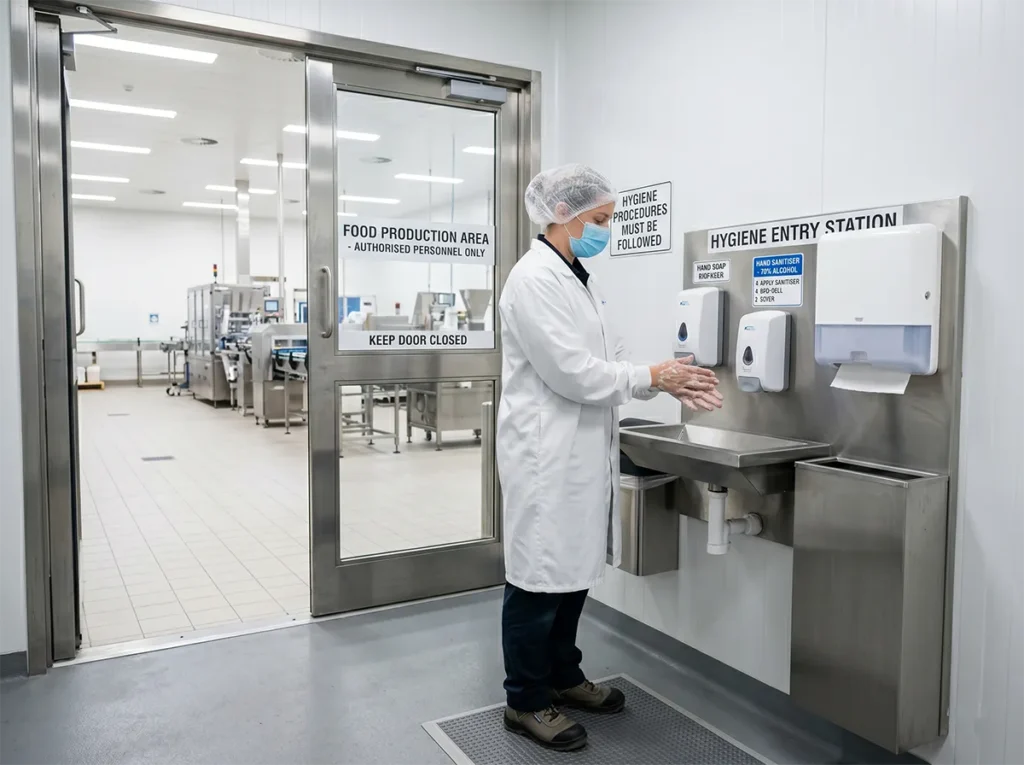
3. Understand That Gloves Are Not “Magic”
A lot of workers become too relaxed once gloves are on.
But gloves do not automatically make everything clean or safe.
Gloves can spread contamination if workers:
- touch the wrong surface
- touch their face
- adjust PPE too often
- handle waste and then product
- move between areas without changing correctly
- keep wearing damaged or overused gloves
Good workers understand that gloves are part of the hygiene system — not a shortcut around it.
4. Hairnets and Beard Covers Matter More Than People Think
Hair control is one of the most basic food production rules, but workers sometimes treat it too casually.
That can include:
- loose hair around the hairline
- beard covers worn poorly
- touching or adjusting hair coverings repeatedly
- assuming short hair means the rule matters less
Sites do not usually see this as a small issue. They see it as part of whether the worker understands hygiene discipline properly.
If a site requires hairnets or beard covers, wear them properly and leave them alone unless site rules require adjustment or replacement.
You can also read our guide to GMP basics for workers to strengthen your everyday hygiene habits on site.
5. Steel-Capped Boots Still Matter in Food Production
Some workers hear “food production” and think mainly about hygiene PPE.
But many food sites still involve:
- pallets
- trolleys
- racks
- wet floors
- repetitive lifting
- dispatch movement
- manual handling
- storage or warehouse crossover areas
That is why steel-capped boots often remain essential.
Workers who turn up in the wrong footwear can create safety issues before the shift even begins.
Good footwear is not just about compliance. It helps with comfort, grip, movement, and safer handling over a full shift.
6. PPE Rules Can Change Between Areas
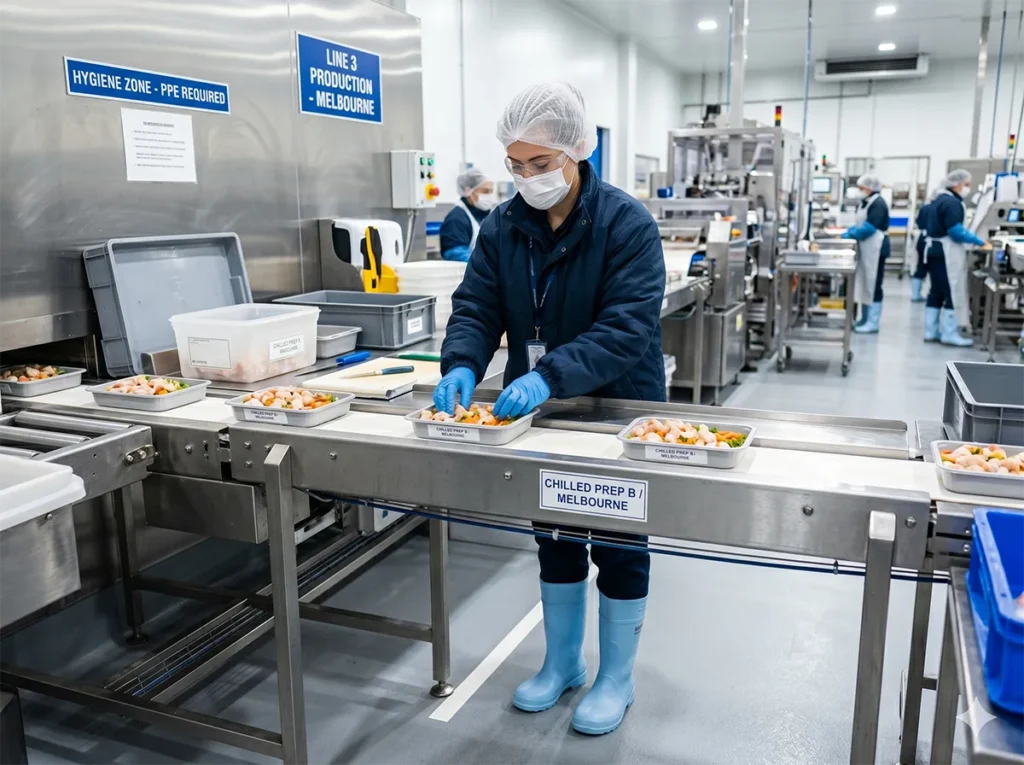
One of the biggest mistakes workers make is assuming that once they are “dressed”, they are set for the whole shift.
Some sites require different PPE depending on:
- production versus dispatch
- cold versus ambient areas
- low-care versus high-care zones
- allergen versus non-allergen lines
- packaging versus ingredient handling areas
That means PPE discipline is not just about putting gear on once. It is also about knowing:
- where it must change
- when glove changes are required
- what should not move between zones
- what must be removed before breaks or area changes
Workers who understand this are much easier to trust.
If your work also involves temperature-controlled environments, our article on cold room work tips covers PPE, pace, and cold stress in chilled food production sites.
7. Do Not Keep Touching or Adjusting PPE
Some workers do this without noticing.
They touch:
- gloves
- masks
- hairnets
- beard covers
- sleeves
- gowns
- aprons
over and over again throughout the shift.
This matters because constant PPE adjustment can become a contamination issue, especially if hands or gloves are no longer clean.
It also makes a worker look unsettled and less disciplined.
If PPE fits properly from the start, there should be much less need to keep touching it.
8. PPE Supports Food Safety and Worker Safety Together
PPE is sometimes talked about as if it is either about food safety or about worker protection.
In reality, on many sites it helps with both.
For example:
- gloves may support hygiene and task safety
- coats and gowns help reduce contamination risk
- hair control protects product integrity
- boots help reduce injury risk on active floors
- cold-area gear helps workers stay effective and safe in chilled conditions
Good workers understand that PPE is part of the site’s whole control system.
That is why sites often react quickly when PPE is ignored.
9. Ask Early if You Are Not Sure
If you are unsure about PPE, ask before guessing badly.
That includes questions like:
- Do I need to change gloves before entering this area?
- Does this coat stay in this room?
- Is this beard cover required here?
- Are my boots suitable for this floor?
- Does this line need different PPE?
- What changes on return from break?
Asking early is better than creating avoidable risk or getting corrected in front of others after the shift has already started.
Good workers do not pretend to know everything. They clarify what matters.
10. Supervisors Notice PPE Habits Very Quickly
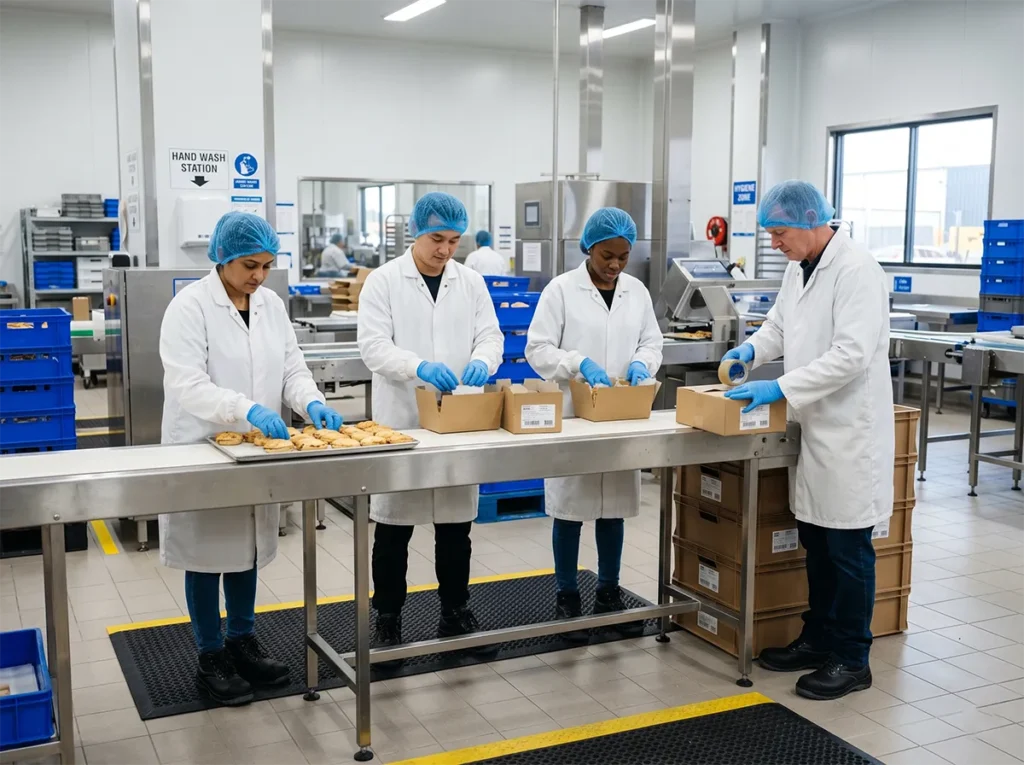
If you want to keep getting booked, it helps to know what supervisors notice early.
They usually remember workers who:
- arrive in the right gear
- follow PPE rules properly
- do not keep adjusting everything
- understand zone changes
- look clean and controlled
- take correction well
- treat food safety rules seriously
They also notice workers who:
- argue about PPE
- keep forgetting glove changes
- touch their face or hair coverings constantly
- wear gear incorrectly
- move between areas carelessly
- act as though PPE rules are “too much”
On food sites, PPE habits often shape first impressions very quickly.
You can also read our article on food factory inductions to understand what good workers pay attention to on day one.
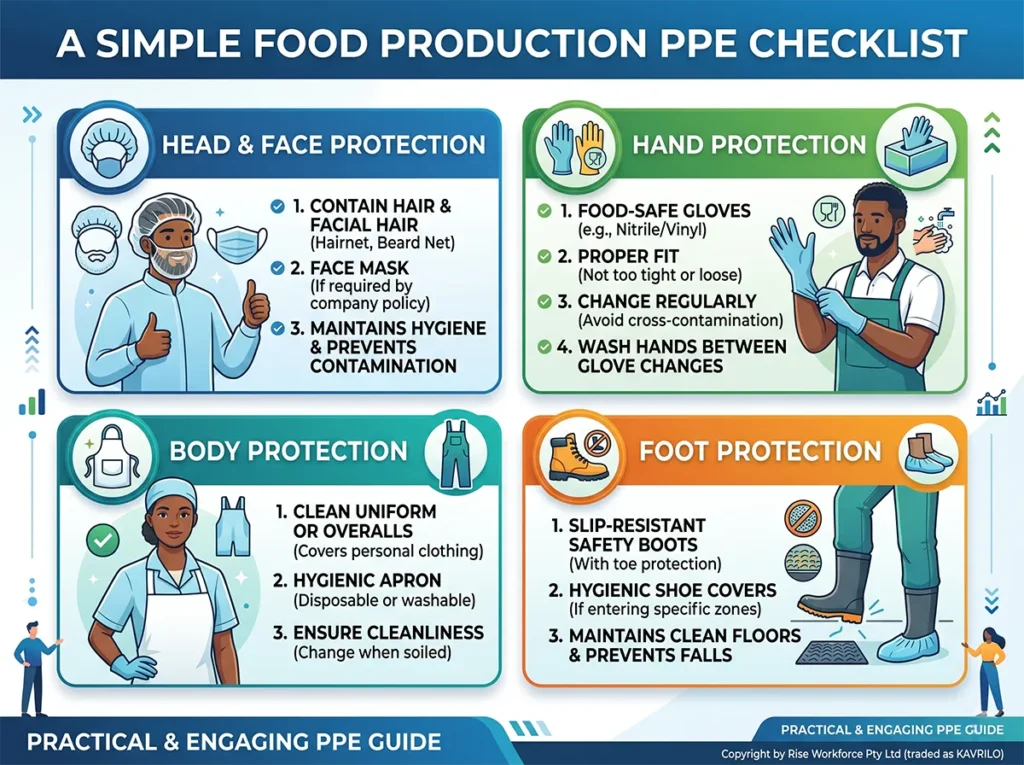
A Simple Food Production PPE Checklist
Here is a practical checklist workers can run through before and during shift.
Before the Shift
- I know what PPE the site requires
- I have the right footwear for the role
- I am ready to follow site-issued PPE rules instead of guessing
- I understand that this site may differ from my last one
At Site Entry
- my hairnet is fitted properly
- my beard cover is fitted properly if required
- my coat, gown, apron, or outerwear is on correctly
- my gloves are on correctly where required
- I completed any hand hygiene or entry procedure properly
During the Shift
- I am not touching or adjusting PPE unnecessarily
- I am changing gloves correctly when required
- I am following area-specific PPE rules
- I am keeping product safety and hygiene in mind
- I am asking early if I am unsure
During Breaks and Area Changes
- I know what PPE must be removed, changed, or replaced
- I am not carrying the wrong PPE into the wrong zone
- I am following the site process on return
This kind of checklist helps workers stay clean, calm, and site-ready.
Final Word
Food production PPE is not just about what workers wear. It is about how workers support hygiene, safety, and product protection on shift.
When workers wear PPE properly, they help reduce risk, protect standards, and make life easier for the site. That is one of the reasons supervisors notice PPE habits so quickly.
If you want to stay trusted in food production, think beyond “Have I put the gear on?”
Think:
Am I wearing it properly, keeping it clean, and following the site’s PPE rules the way they expect?
That is what helps protect the product.
That is what helps protect you.
And that is what helps keep you getting booked.
Looking for food production work in Melbourne’s South-East?
KAVRILO is building its focus in food production labour hire with a practical, safety-aware approach that values hygiene discipline, site fit, and dependable workforce support across different production environments.
Stay connected with KAVRILO for future opportunities in packing, processing, and hygiene-focused production environments.
Article Disclaimer
This article is provided for general information only and does not constitute legal, workplace relations, safety, taxation, payroll or other professional advice. Please seek advice specific to your circumstances before acting on this information.
Please read our Website Disclaimer for more information.