
In warehouse and factory work, manual handling isn’t “extra.” It’s the job.
In South-East Melbourne sites (Dandenong South, Hallam, Keysborough, Braeside and nearby industrial areas), most injuries don’t come from one big lift. They come from repeated small lifts, rushed movements, twisting, and fatigue — especially when people are trying to hit rate.
If you want steady shifts, the best long-term strategy is simple:
Work safely, work consistently, and stay available.
Workers who handle loads safely are more likely to:
- avoid injury downtime
- stay reliable across the week
- be rebooked by sites
- build a strong reputation with supervisors
This guide covers the practical manual handling basics that keep you safe and keep you getting booked.
1) The goal isn’t “strong” — it’s “smart”
Manual handling is about position, technique, and control, not toughness.
Most warehouse injuries come from:
- bending at the waist repeatedly
- twisting while lifting or carrying
- reaching away from the body
- rushing to keep up
- lifting when the path isn’t clear
You don’t need to be the strongest person on-site. You need to move in a way that protects your back, shoulders, and knees.
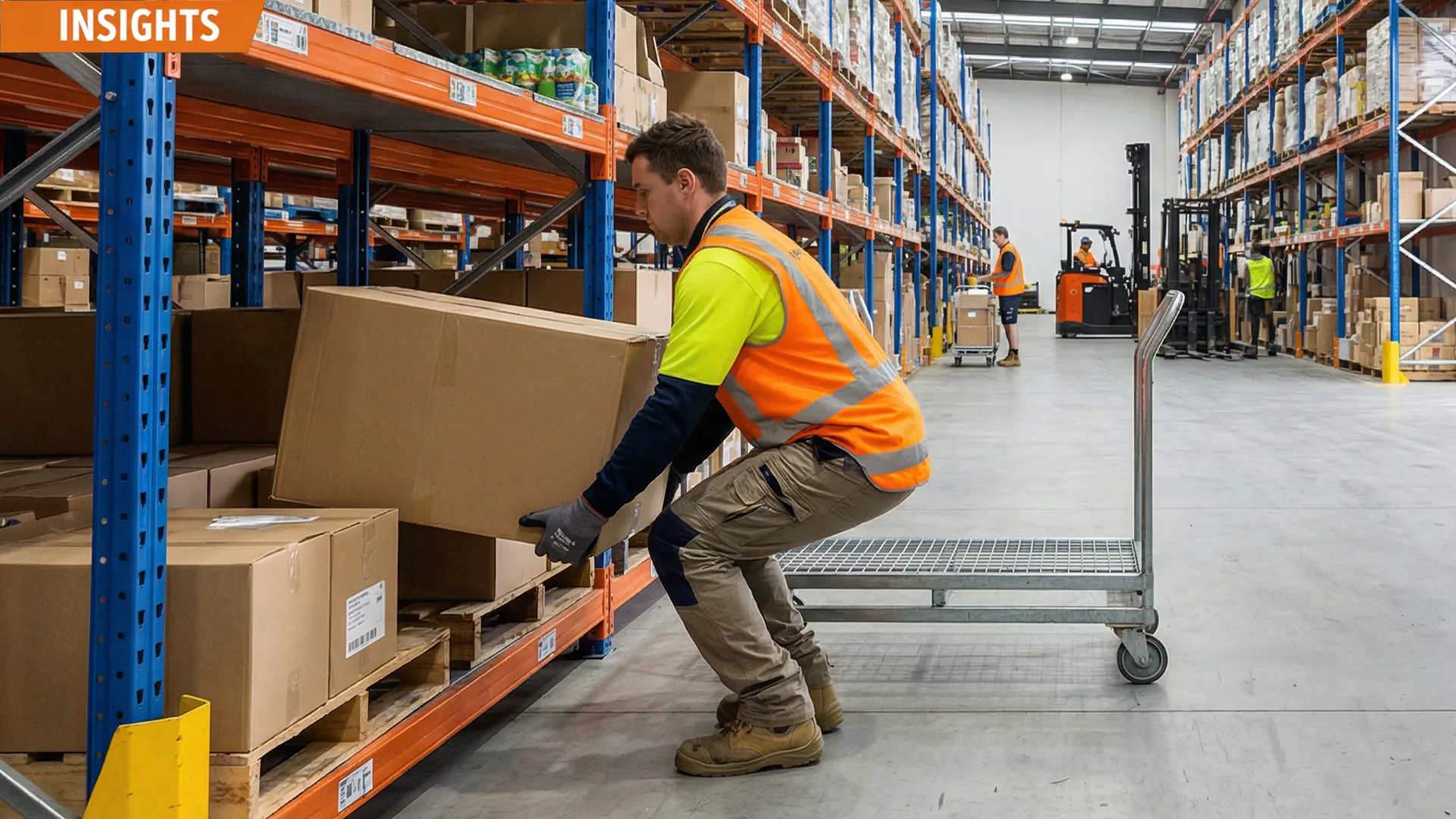
2) The core rule: keep the load close
If the load is far from your body, your back works harder.
Do this:
- step closer
- bring the carton close to your torso
- keep your elbows in
- avoid lifting with arms extended
This one habit prevents most strain injuries.
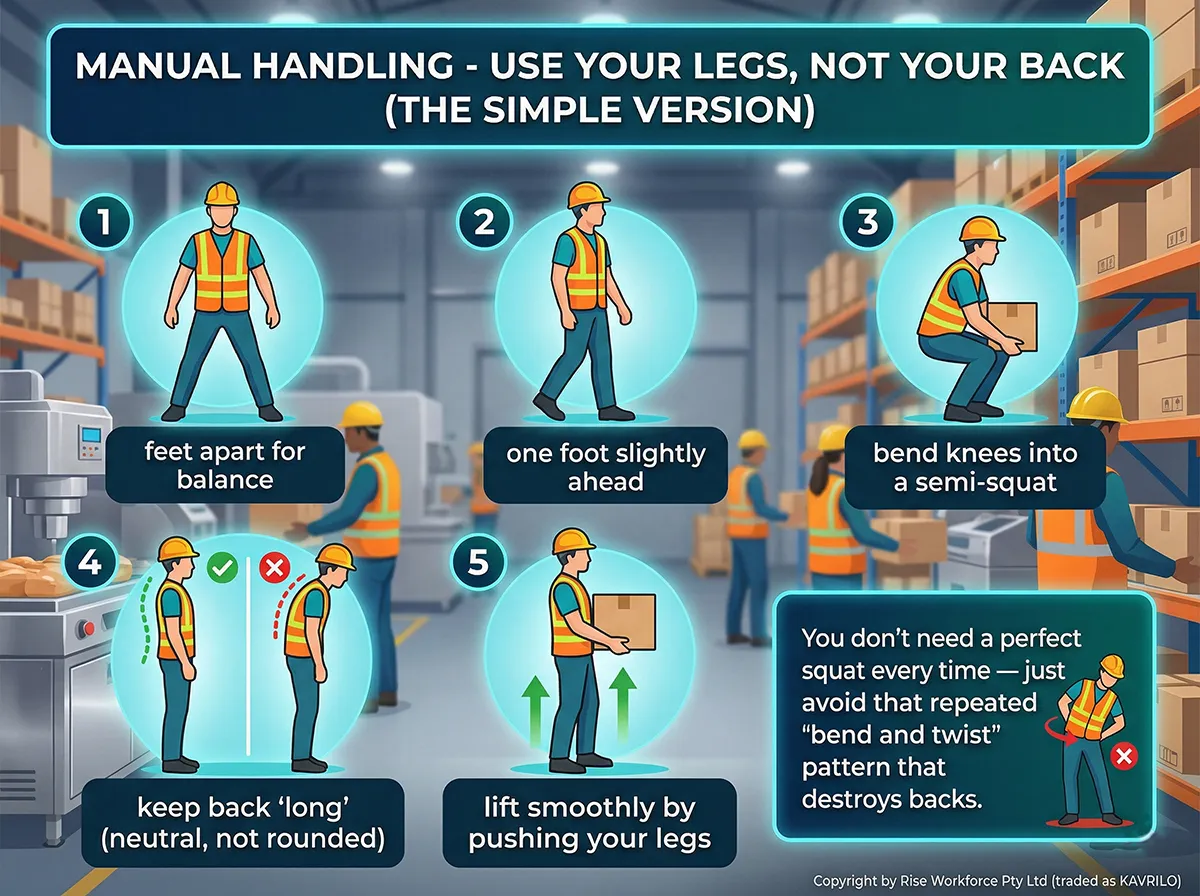
3) Use your legs, not your back (the simple version)
You’ve heard this before, but here’s the real practical version:
- feet apart for balance
- one foot slightly ahead
- bend knees into a semi-squat
- keep back “long” (neutral, not rounded)
- lift smoothly by pushing through your legs
You don’t need a perfect squat every time — just avoid that repeated “bend and twist” pattern that destroys backs.
4) Never twist with a load — turn your feet (“nose over toes”)
Twisting is the fastest way to injure your back.
If you need to change direction:
- move your feet first
- turn your whole body
- keep the load close
A simple rule:
Your nose should point where your toes point.
If your toes are forward and your nose is sideways, you’re twisting.
5) Plan the move before you lift (it saves time and prevents injury)
Most strain happens because people lift, then realise:
- the path is blocked
- the pallet is unstable
- there’s nowhere to put the carton
- they need to step over something
Take 3 seconds:
- check your destination
- clear your path
- check the pallet condition
- choose the right placement
Planning feels “slower,” but it prevents drops, awkward holds, and rework.
6) Know your limits — and ask for help early
In South-East warehouses, many roles involve cartons that vary in weight. Don’t guess.
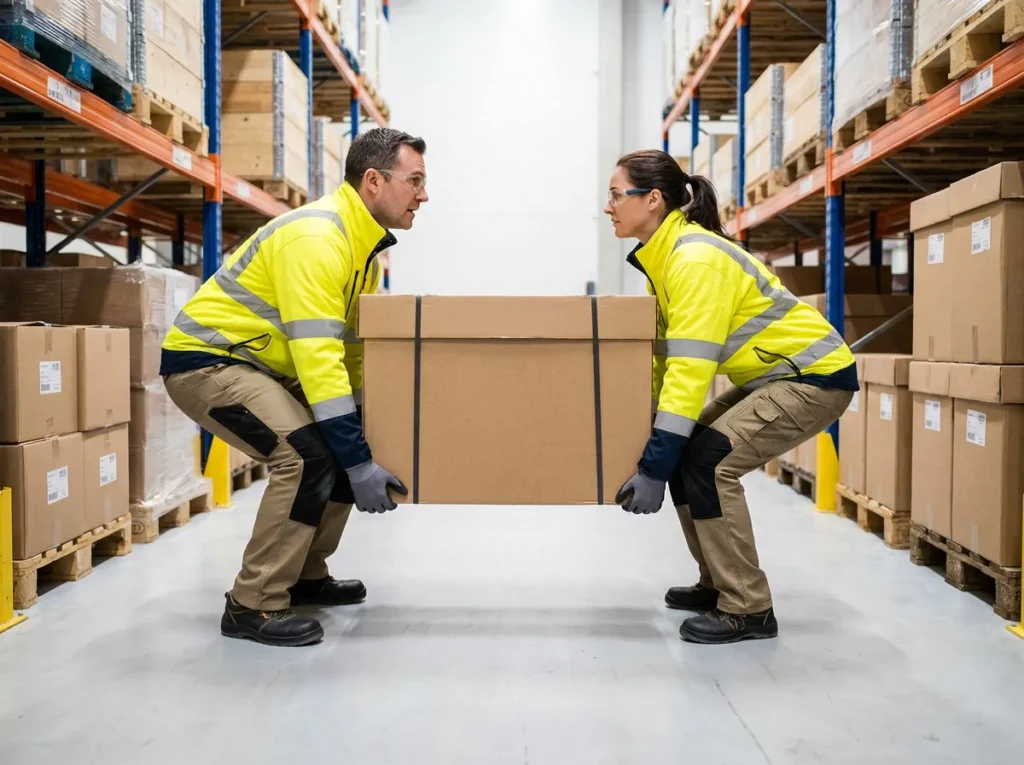
If it feels too heavy or awkward:
- use a trolley
- ask for a two-person lift
- use mechanical assistance (pallet jack, lifter)
Asking for help doesn’t make you look weak — it shows safety awareness. Most supervisors prefer a worker who speaks up over a worker who silently injures themselves.
7) Use micro-breaks to prevent fatigue
Fatigue makes technique sloppy — that’s when injuries happen.
Use micro-breaks:
- 5–10 seconds every few minutes to reset posture
- change hands when carrying (if safe)
- switch tasks if you can (pick, pack, stage)
Short resets keep you consistent all shift.
8) Keep your work area tidy (trip hazards cause manual handling injuries too)
Manual handling isn’t just lifting. It’s movement.
Common injury triggers:
- loose wrap on the floor
- broken pallets
- cartons in walkways
- cluttered packing stations
If you see a hazard, report it or fix it if safe. A clean work area protects you and everyone else.
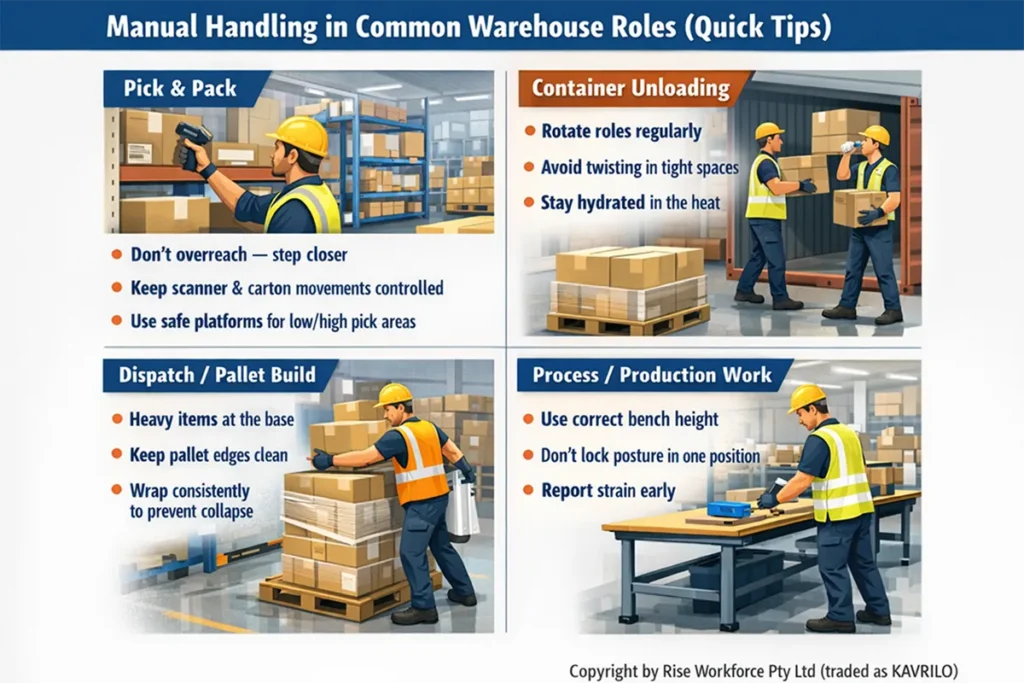
9) Manual handling in common warehouse roles (quick tips)
Pick & pack
- don’t overreach — step closer
- keep scanner and carton movements controlled
- use safe platforms for low/high pick areas (site approved)
Container unloading
- rotate roles regularly
- avoid twisting in tight spaces
- stay hydrated (heat makes injuries more likely)
Dispatch / pallet build
- heavy items at the base
- keep pallet edges clean (no overhang)
- wrap consistently to prevent collapse and rework
Process/production work
- use correct bench height when possible
- don’t lock your posture in one position for too long
- report repetitive strain early (don’t wait until it’s serious)
10) Why manual handling affects your bookings
Here’s the truth: sites rebook workers they can rely on.
Injuries cause:
- missed shifts
- inconsistent attendance
- slower output
- safety concern flags
Workers who move safely tend to:
- last longer on-site
- work more consistently
- cause fewer incidents
- get requested again
So manual handling isn’t just “safety.” It’s job security.
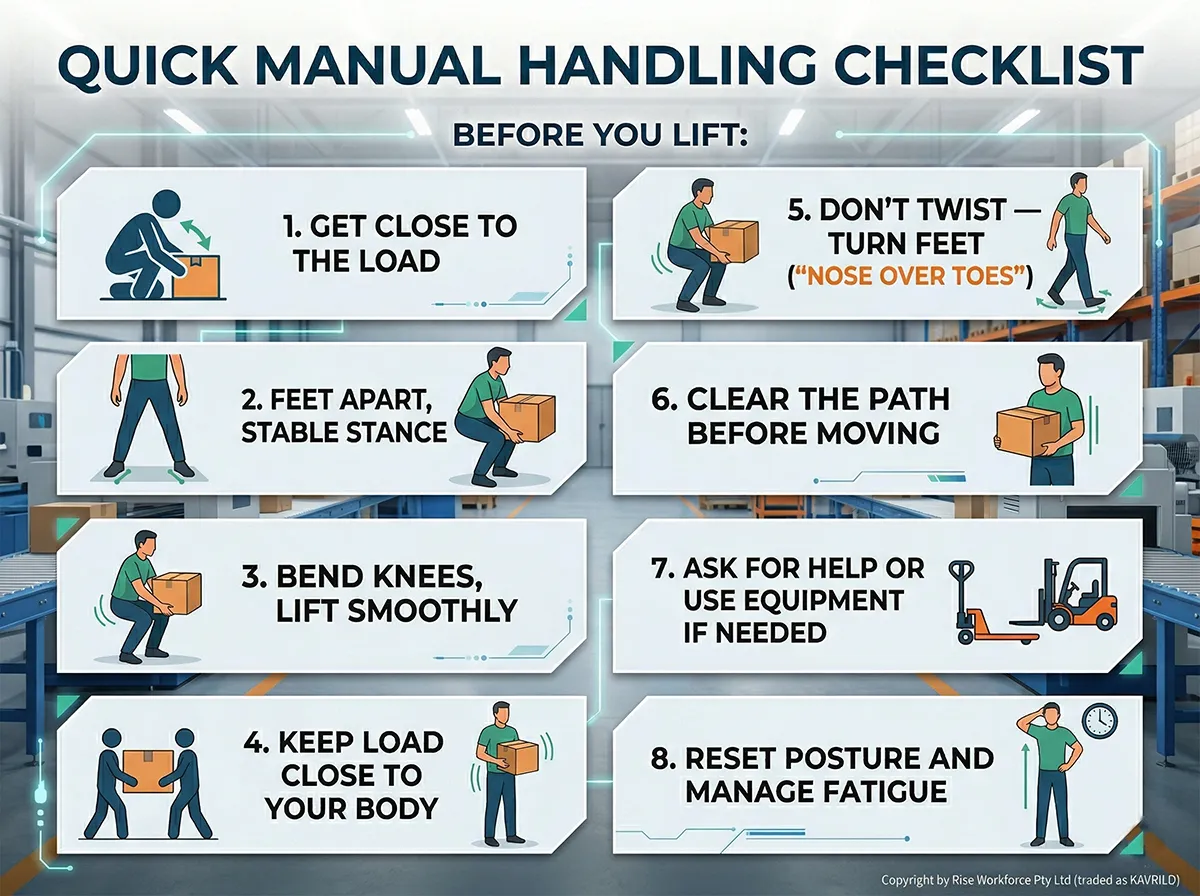
Quick manual handling checklist
Before you lift:
- get close to the load
- feet apart, stable stance
- bend knees, lift smoothly
- keep load close to your body
- don’t twist — turn feet (“nose over toes”)
- clear the path before moving
- ask for help or use equipment if needed
- reset posture and manage fatigue
Final takeaway
Good manual handling keeps you:
- safe
- consistent
- available for shifts
- rebooked by sites
If you want steady warehouse and factory work in South-East Melbourne, this is one of the simplest skills that pays off.
Looking for warehouse shifts? Join the KAVRILO roster and we’ll match you to roles that suit your skills and site requirements — with safety as the standard.
Article Disclaimer
This article is provided for general information only and does not constitute legal, workplace relations, safety, taxation, payroll or other professional advice. Please seek advice specific to your circumstances before acting on this information.
Please read our Website Disclaimer for more information.