
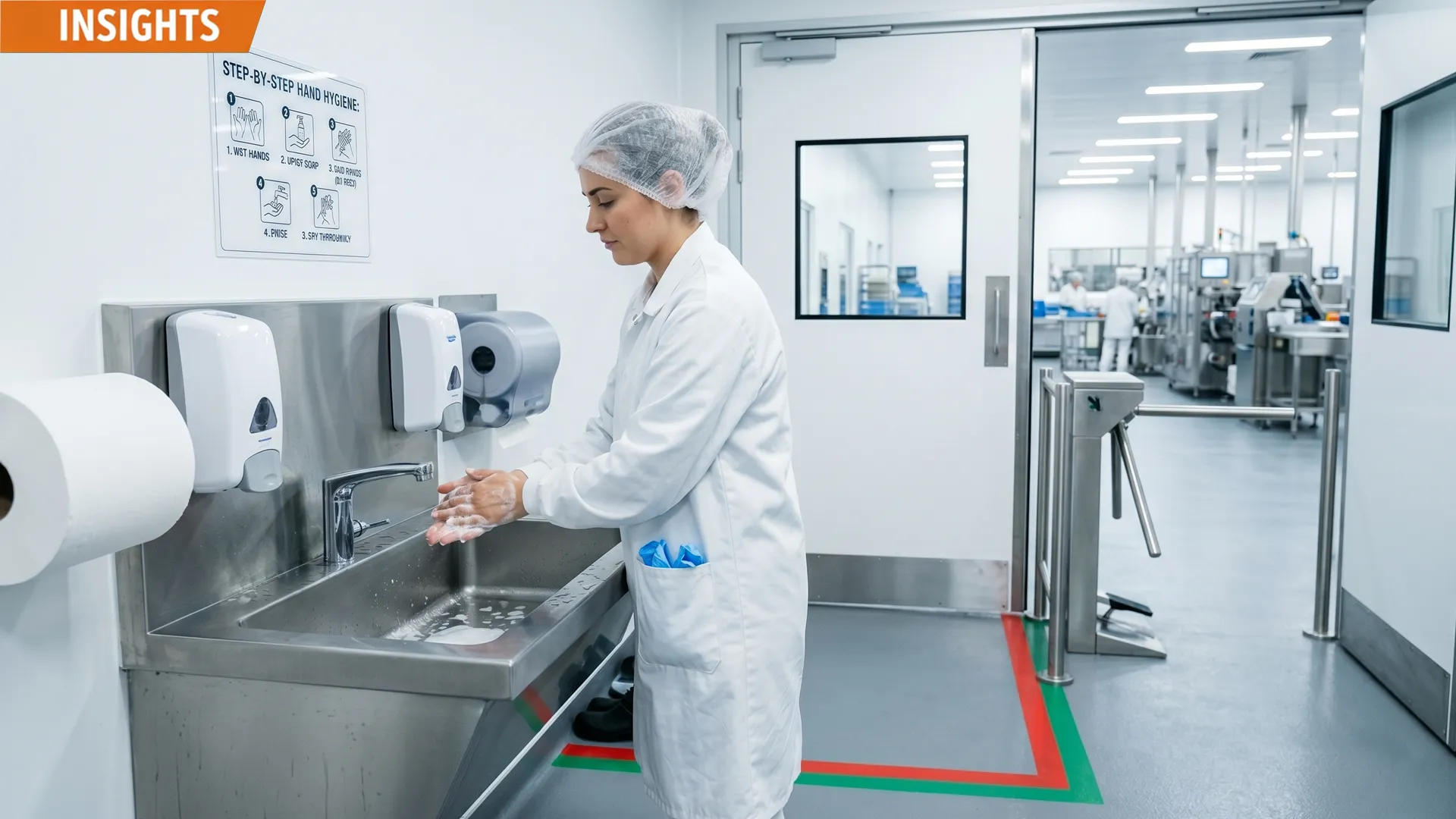
In food production, the shift often begins before the worker reaches the line.
It begins at entry.
That is because site entry in food manufacturing is not just about arrival.
It is one of the first and most practical control points for:
- hygiene
- PPE
- movement discipline
- contamination prevention
- worker readiness
- and early safety behaviour
Across Victoria, many food production sites require workers to follow tighter entry expectations than they would in general warehouse or factory environments.
That may include:
- reporting to the right person
- following a hygiene sequence
- putting on correct PPE properly
- understanding where they can and cannot go
- moving through controlled entry points
- and starting the shift with the right behaviour before active work begins
This matters because a weak entry process can create day-one risk very quickly.
A worker who is unsure about:
- where to report
- what to wear
- what hygiene steps apply
- or how the site controls movement
may already be outside the intended standard before they even start the task.
That is why food production site entry should never be treated as a small administrative detail.
It is one of the first tests of whether the worker is actually ready for the environment.
Good employers make entry:
- clear
- structured
- practical
- and difficult to misunderstand
That is how day-one hygiene and safety risk starts getting reduced early.
For the broader hub article, see our Food Production Safety in Victoria pillar guide on hygiene, PPE, wet-floor risk, repetitive work, fatigue, and safer worker onboarding in fast-paced sites.
Why Site Entry Matters So Much in Food Production
Site entry matters because it sets the standard for everything that follows.
If the worker enters the site:
- clearly
- calmly
- and under the right controls
then the shift starts with stronger discipline.
If entry feels:
- rushed
- vague
- inconsistent
- or too dependent on assumption
then the worker may begin the shift already carrying uncertainty about what matters.
That is a serious issue in food production because the environment often expects workers to understand:
- hygiene behaviour
- protective clothing
- movement boundaries
- wet-area awareness
- contamination-sensitive conduct
- and who owns their first-shift guidance
before production work begins.
This means site entry is not separate from safety.
It is part of:
- safety
- hygiene
- and operational control
That is why a stronger site does not leave entry to chance.
What Makes Food Production Entry Different from General Factory Entry
A general warehouse or factory may still have:
- sign-in procedures
- PPE checks
- safety briefing points
- and supervisor direction before work begins
Food production often goes further.
It may also require:
- hand hygiene or sanitising steps
- correct sequencing of clothing and protective items
- stricter zone awareness
- more controlled entry movement
- stronger expectation around cleanliness and presentation
- and closer alignment between entry behaviour and food-safe conduct
That changes the importance of entry.
In food production, site entry is not just about getting the worker inside the building.
It is about making sure they enter the production environment in a way that:
- protects themselves
- protects the site
- and protects the product-facing conditions the employer is trying to maintain
This is one reason workers from general industrial backgrounds still need stronger orientation when entering food manufacturing.
Our article on why food production safety is different from general warehouse safety explains why food manufacturing environments require tighter behavioural and hygiene control from the very start of the shift.
10 Practical Site Entry Rules New Workers Need to Understand Early
1. Know Exactly Where to Report First

A new worker should not be guessing where the shift really begins.
Good sites make it clear:
- where the worker reports
- who meets them
- who checks entry readiness
- and who owns the first part of their shift
This matters because workers who arrive uncertain often begin:
- looking in the wrong place
- asking the wrong person
- or starting the day with unnecessary confusion
A stronger entry process removes that uncertainty early.
2. Understand That Entry Steps Are Part of the Safety System
Some workers see site entry as a formality.
In food production, that is the wrong mindset.
Entry steps often form part of the site’s actual control system.
That means workers need to understand that:
- PPE is not optional background clothing
- hygiene steps are not decorative
- and entry sequence exists for practical reasons
This matters because a worker who treats entry casually is more likely to treat:
- clothing discipline
- hygiene control
- and movement rules
casually as well.
Good sites explain that entry procedure is already part of working safely and food-safely.
3. Put On PPE Correctly Before Entering Controlled Areas
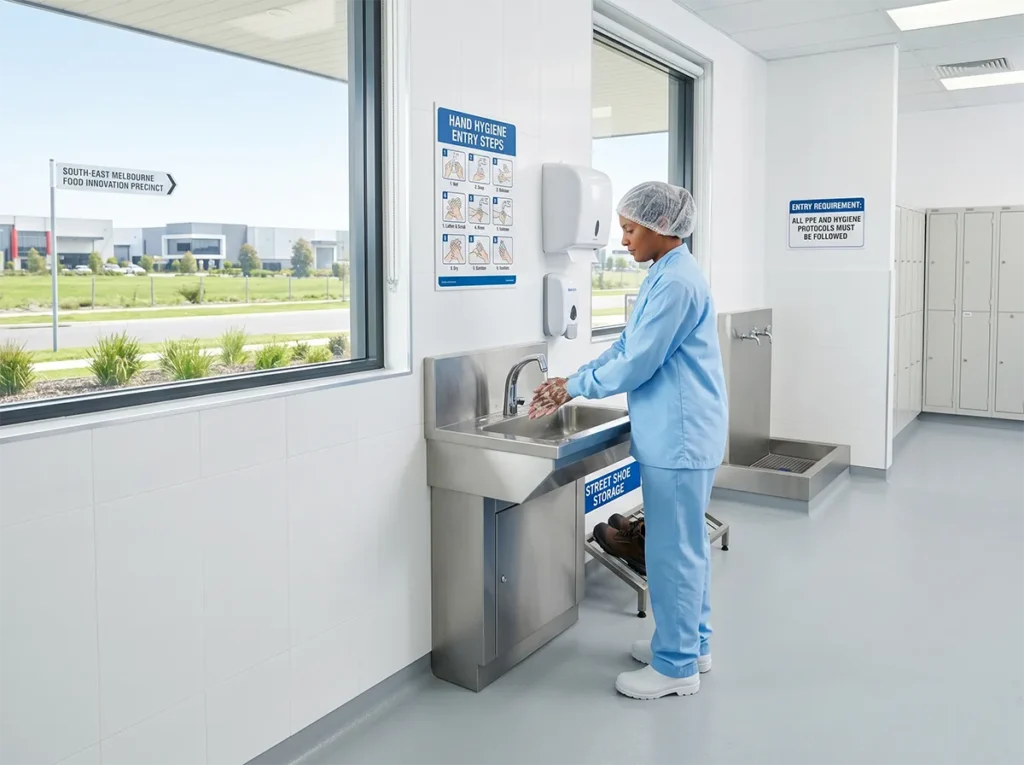
Correct PPE use should usually happen before the worker enters the relevant production space.
That means workers need clear understanding of:
- what must be worn
- how it should be worn
- what must be covered
- what items apply to the area
- and when PPE use begins
This is important because food production PPE often protects:
- the worker
- the hygiene standard
- and the product-facing environment at the same time
A worker who enters the site with incomplete or poorly worn PPE may already be creating risk before work begins.
Our article on why PPE in food production protects both worker safety and food safety explains why protective clothing in food manufacturing should be treated as a dual control from the first point of entry.
4. Follow Hygiene Sequence Properly, Not Selectively
In food production, sequence matters.
Workers may need to complete certain steps in the right order, such as:
- reporting first
- putting on protective items properly
- following hand hygiene procedure
- entering through the right point
- and waiting for final clearance before moving into the working area
This matters because a worker may think:
- “I already know what this is”
- or “I can do this quickly”
and still miss the discipline the site depends on.
Good employers make sure new workers understand that skipping steps or changing the order is not a small issue.
It weakens the control the site is trying to maintain.
5. Understand Where You Can and Cannot Go
Food production sites often rely on stronger movement control than general industrial settings.
That means workers need to know:
- which areas are theirs
- which areas require permission or supervision
- what routes should be used
- and what spaces should not be crossed casually
This matters because movement through the wrong area may affect:
- hygiene control
- process discipline
- and overall confidence that the worker understands the environment
A stronger site makes these boundaries clear before the worker starts moving independently.
6. Treat Cleanliness and Presentation as Work-Readiness Issues
In food production, how a worker presents at entry may also be part of site control.
That includes:
- suitable clothing under protective gear where relevant
- clean presentation
- and respecting that the site expects a higher standard before work begins than some general industrial settings might require
This matters because employers are not only managing personal neatness.
They are managing readiness for a controlled environment.
A worker who does not understand this may struggle with the broader discipline of the site as well.
7. Ask Questions Before Entering the Production Area, Not After a Mistake
A new worker should feel able to ask:
- where they go next
- whether the PPE is correct
- whether they have completed the hygiene sequence properly
- and whether they are ready to move forward
This matters because uncertainty at entry is much easier to fix before the worker reaches active production.
Good sites make it clear that:
- asking early is normal
- guessing is not the better option
- and quiet confusion is not the same as readiness
That simple difference prevents many day-one mistakes.
8. Understand That Entry Rules Still Matter When the Site Is Busy
Busy conditions do not reduce the importance of entry control.
In fact, they often increase it.
When the site is under pressure, workers may feel tempted to:
- speed up entry
- skip questions
- follow others without understanding
- or assume the basics can be corrected later
That is risky.
Food production employers need workers to understand that entry rules still apply:
- during peak periods
- during urgent staffing situations
- and on days when the operation feels rushed
A site that weakens entry discipline under pressure often weakens broader safety and hygiene control at the same time.
9. Multilingual Workers Need Entry Rules Made Practically Clear
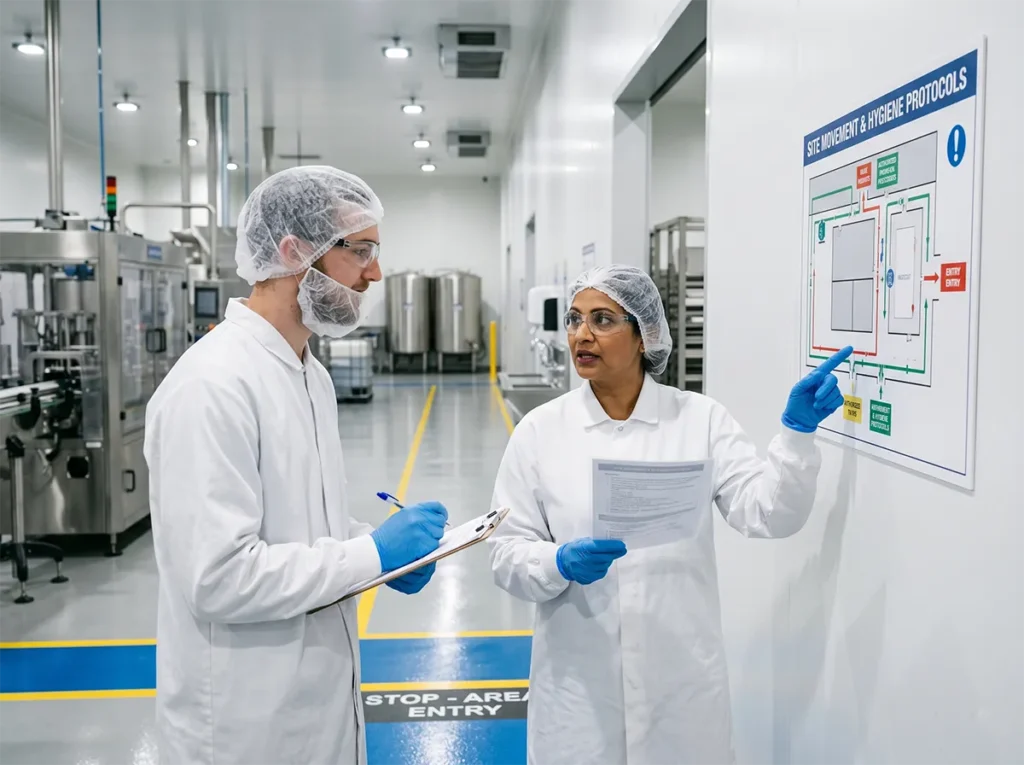
A worker may appear to understand entry instructions and still be unsure about:
- sequence
- boundaries
- PPE details
- hygiene steps
- or when they are actually cleared to proceed
This is especially important on multilingual sites.
Good employers do not rely only on one fast verbal explanation.
They make entry rules:
- practical
- visible
- reinforced
- and easy to follow
That matters because a misunderstanding at entry often becomes:
- a hygiene risk
- a movement risk
- or a confidence problem during the first shift
Our article on how to run safer food production inductions for non-English speaking workers] looks at how employers can make site rules, hygiene steps, and worker expectations much clearer on multilingual food manufacturing sites.
10. Wait Until You Are Actually Ready to Start
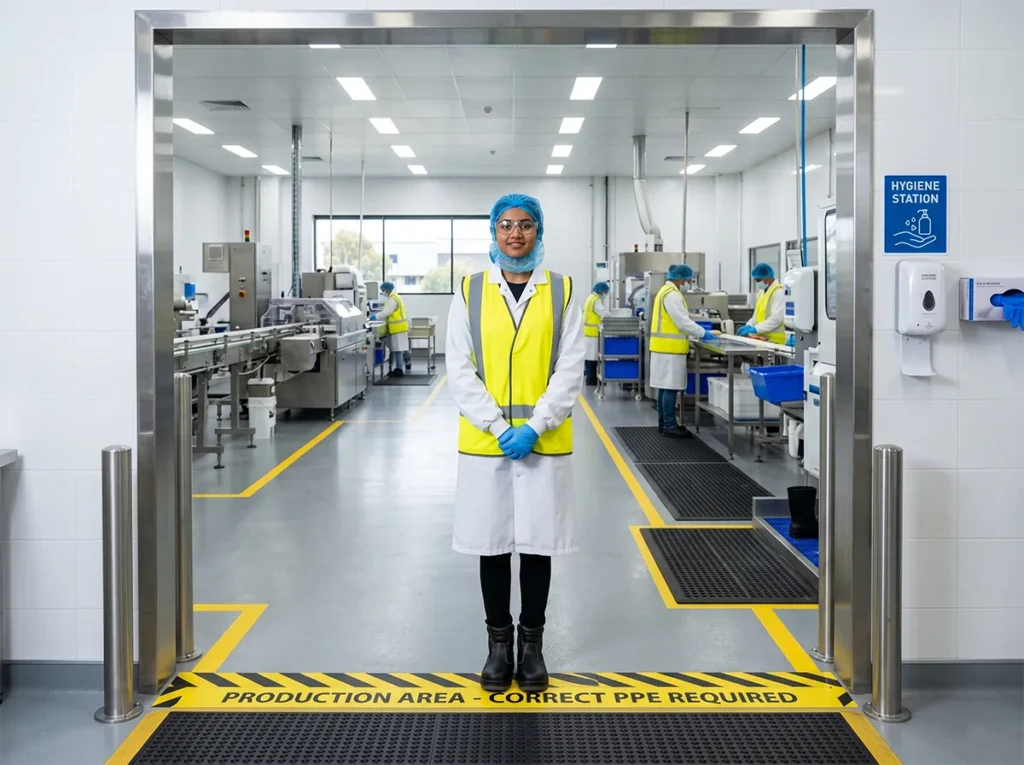
One of the most important entry rules is also one of the simplest:
Do not move into the working environment before you are actually ready.
That means workers should not treat:
- arrival
- partial PPE
- or a general idea of where the line is
as the same thing as being properly prepared to start.
A stronger site makes sure the worker understands:
- readiness is confirmed, not assumed
- and shift start begins after the correct controls are in place
This prevents the common problem of workers entering active production while still:
- underbriefed
- underprepared
- or unclear on what the site expects from them
What Better Site Entry Usually Looks Like in Practice
When site entry is being managed well, it usually feels:
- calm
- structured
- visible
- and hard for the worker to misread
In practice, that often means:
- the worker knows where to report
- PPE and hygiene steps are clear
- movement boundaries are explained
- questions are easy to ask early
- multilingual workers can still follow the sequence properly
- and no one is being rushed into production before readiness is clear
It should not feel like:
- workers are following others without understanding
- entry control varies depending on who is on shift
- or first-shift readiness is being judged by silence instead of real understanding
Good site entry usually makes the rest of the shift safer, cleaner, and easier to supervise.
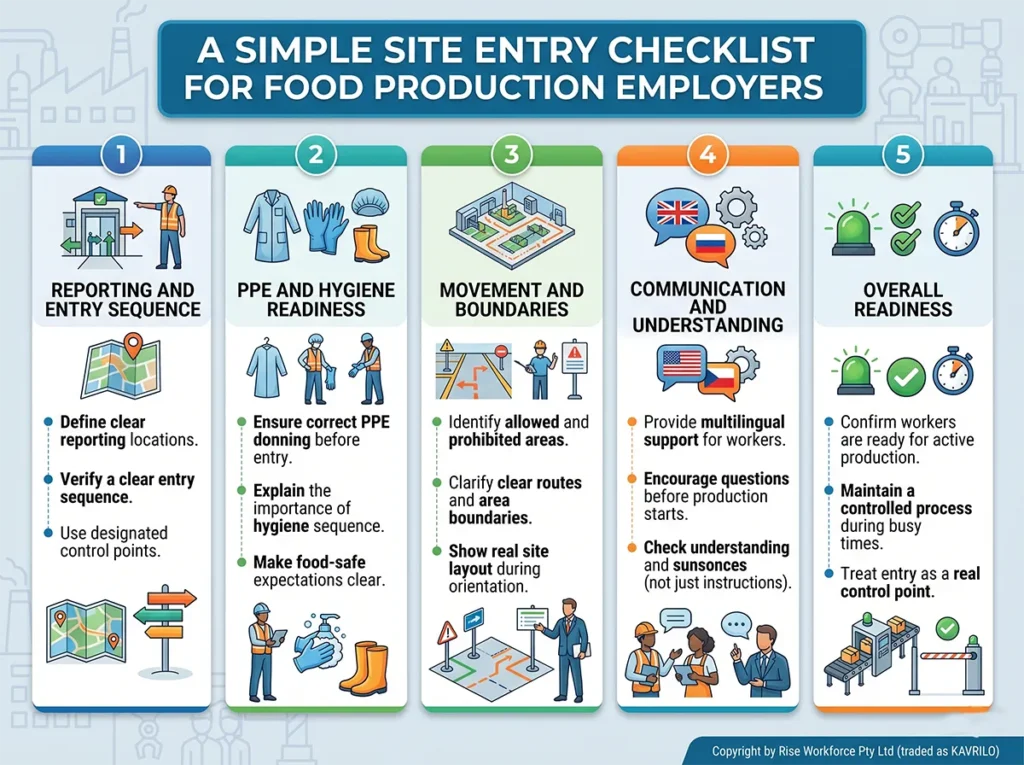
A Simple Site Entry Checklist for Food Production Employers
Here is a practical checklist employers can use when reviewing site entry for new workers.
Reporting and Entry Sequence
- Does the worker know where to report first?
- Is the site entry sequence clear enough?
- Are workers entering the environment through the right control points?
PPE and Hygiene Readiness
- Is PPE being put on correctly before entry?
- Do workers understand why the hygiene sequence matters?
- Are food-safe entry expectations being explained as clearly as safety expectations?
Movement and Boundaries
- Do workers know where they can and cannot go?
- Are routes and area boundaries clear enough before independent movement starts?
- Are workers being shown the real site layout, not just broad instructions?
Communication and Understanding
- Can multilingual workers follow the entry process clearly?
- Are questions being encouraged before production starts?
- Are we checking understanding or just delivering instructions?
Overall Readiness
- Are workers entering active production only after they are actually ready?
- Is the entry process still controlled when the site is busy?
- Are we treating site entry as a real control point or just an administrative step?
This kind of checklist helps employers review entry as one of the first practical safety and hygiene controls on the site.
Final Word
Food production site entry rules matter because the shift often becomes safer or weaker before the worker even reaches the line.
For food manufacturers in Victoria, stronger outcomes usually come from:
- clearer reporting points
- more controlled PPE and hygiene sequence
- better movement boundaries
- stronger multilingual communication
- and a more disciplined approach to deciding when a worker is truly ready to start
That is what helps reduce:
- preventable day-one confusion
- hygiene mistakes
- weak PPE use
- unnecessary movement risk
- and the false assumption that arrival means readiness
Because in food production, site entry is not just how the worker gets inside.
It is one of the first ways the site protects what happens next.
Need Practical Labour Hire Support for Warehousing and Manufacturing in Melbourne’s South-East?
KAVRILO is building its approach around safety-aware workforce support, stronger local responsiveness, and clearer operational discipline for warehouse and industrial environments, including food production settings where hygiene discipline and day-one worker readiness matter.
Whether your site needs better shift coverage, stronger day-one worker readiness, or more dependable labour coordination in hygiene-sensitive environments, KAVRILO is focused on practical workforce support that fits controlled production sites.
Need warehouse and factory labour hire support with stronger day-one readiness and more dependable workforce support for controlled production environments? Talk to KAVRILO about practical labour support across Melbourne’s South-East.
Article Disclaimer
This article is provided for general information only and does not constitute legal, workplace relations, safety, taxation, payroll or other professional advice. Please seek advice specific to your circumstances before acting on this information.
Please read our Website Disclaimer for more information.