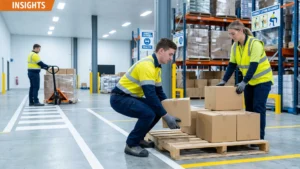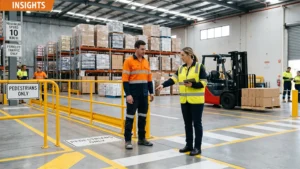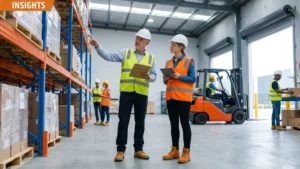


Melbourne’s industrial heartland — especially across Dandenong South, Hallam, Keysborough, Braeside, and the wider South-East corridor — is built on warehousing, logistics, and manufacturing activity.
These environments keep goods moving and production targets on track, but they also carry real workplace risks. Forklift traffic, manual handling, repetitive work, machine interaction, housekeeping failures, loading dock movement, fatigue, and changing labour demands can all create pressure points on site.
That is why WorkSafe Victoria compliance matters so much.
For employers, supervisors, and site managers, compliance is not just about avoiding notices, claims, or penalties. It is about building a workplace where:
- risks are identified early
- hazards are managed properly
- workers understand what is expected
- systems stay consistent even when the site is busy
- and everyone has a better chance of going home safely at the end of the shift
In practice, strong WorkSafe compliance is rarely built through paperwork alone. It comes from clear systems, practical risk control, site discipline, and consistent follow-through.
This guide breaks down what that means in a real-world warehousing and manufacturing context.
If your business also uses temporary workforce support, see our practical labour hire support approach for warehouse and factory environments.
What WorkSafe Victoria Compliance Means in Practice
A lot of employers hear “compliance” and think first about documents:
- policies
- inductions
- registers
- checklists
- incident forms
- training records
Those things matter. But on their own, they are not enough.
In practical terms, WorkSafe Victoria compliance means creating and maintaining a work environment that is safe and without risks to health, so far as is reasonably practicable. That means employers need to do more than react after something goes wrong.
It means actively looking at:
- what could hurt someone
- how likely it is
- how serious the consequences could be
- what controls are already in place
- and what needs to improve
A compliant site is not a site that simply has documents on file.
It is a site where those controls are visible in daily operations.
That includes:
- safer traffic flow
- clearer supervision
- stronger housekeeping
- practical inductions
- PPE discipline
- machine guarding
- better communication
- and a culture where hazards and near misses are taken seriously
You can also explore our safety-focused approach to see how practical site readiness, worker onboarding, and OHS discipline fit into day-to-day operations.
Understanding the Employer’s Duty of Care
Under Victorian OHS law, employers have a primary duty to provide and maintain a working environment that is safe and without risks to health, so far as is reasonably practicable.
For warehouse and manufacturing employers, that duty goes well beyond basic PPE.
It includes things like:
- maintaining safe systems of work
- providing safe plant and equipment
- controlling hazards on the floor
- giving workers the information, instruction, training, and supervision they need
- monitoring conditions where necessary
- and making sure the work environment itself is properly maintained
This duty extends across the workplace, including to:
- direct employees
- labour hire workers
- contractors
- visitors
- and other people who may be affected by the business’s operations
That is why compliance cannot be treated as a side issue.
It sits inside how the business actually runs.
Common Risk Areas in Warehousing and Manufacturing

Every site is different, but some hazards come up again and again in industrial environments across Melbourne’s South-East.
1. Forklift and Pedestrian Interaction
This is one of the clearest risk areas in warehousing and logistics.
Problems often arise when:
- traffic routes are unclear
- pedestrians cut through active forklift zones
- floor markings are faded or ignored
- supervision is weak
- speed and visibility are not managed properly
- loading and unloading areas become congested
Sites that manage this well usually have:
- designated walkways
- physical barriers where appropriate
- visible traffic controls
- pre-start checks
- and a clear expectation that vehicle and pedestrian movement are not left to chance
For employers using extra workforce support during busy periods, our article on temporary labour in food production explains how rushed onboarding and unclear site expectations can increase avoidable risk.
2. Manual Handling and Repetitive Tasks
Many warehouse and manufacturing injuries do not come from a single dramatic event. They build up through:
- awkward lifting
- repeated bending or twisting
- poor workstation layout
- fast repetitive work
- fatigue
- poor product placement
- and rushing under pressure
Manual handling risk should not be reduced to “lift properly” posters.
It needs practical control through job design, layout, supervision, and realistic work expectations.
3. Machinery and Plant Hazards
On manufacturing sites, machinery risks often centre around:
- missing or inadequate guarding
- unsafe access points
- poor lockout practices
- bypassed controls
- untrained operation
- and poor maintenance follow-up
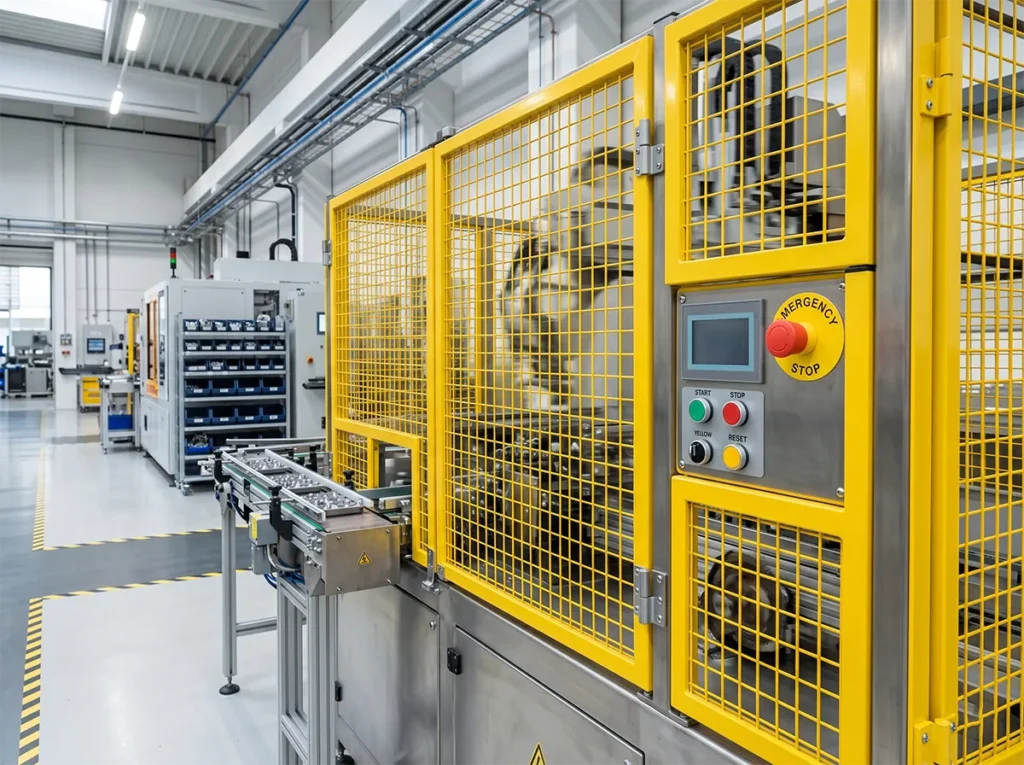
Machine guarding and emergency stop access are not decorative safety features.
They are fundamental control measures.
4. Housekeeping, Slips and Trips
Poor housekeeping is often underestimated.
But cluttered aisles, damaged pallets, poor waste control, loose wrapping, spills, and obstructed exits can create:
- trip hazards
- fire risks
- slower emergency response
- and an overall drop in site discipline
Housekeeping is often one of the clearest visible signs of whether a site is being run with real control.
5. Fatigue, Pace and Pressure
Busy sites often focus on output.
But pressure affects safety.
When workers are fatigued, rushed, undersupervised, or repeatedly stretched, the risk of:
- manual handling mistakes
- missed hazards
- poor judgement
- shortcuts
- and communication failures
can rise quickly.
That is why compliance is not just about physical hazards.
It is also about how work is structured and managed.
Applying the Hierarchy of Controls Properly
When a hazard is identified, the next question is not simply, “What PPE should we use?”
A stronger compliance approach uses the hierarchy of controls, starting with the most effective measures first.
Elimination
Can the hazard be removed entirely?
Examples:
- removing a damaged pallet storage area from use
- stopping unsafe access across an active loading zone
- removing unnecessary obstacles from walkways
Substitution
Can the risk be reduced by replacing the hazard with something safer?
Examples:
- using a safer chemical
- changing an unsafe piece of equipment
- replacing a risky handling process with a lower-risk alternative
Engineering Controls
Can people be isolated from the hazard?
Examples:
- machine guarding
- barriers between forklifts and pedestrians
- conveyor layout changes
- mechanical aids for lifting
- improved ventilation or extraction systems
Administrative Controls
Can the way work is done be changed?
Examples:
- safe work procedures
- job rotation
- exclusion zone rules
- induction and retraining
- scheduling controls
- supervision and sign-off processes
PPE
PPE is important, but it is the last line of defence, not the first.
Examples:
- high-vis clothing
- steel-capped boots
- gloves
- eye protection
- hearing protection
Sites often over-rely on PPE because it is easy to issue.
But WorkSafe-style thinking expects employers to go further and control the hazard at a stronger level where reasonably practicable.
You can also read more about our practical approach to OHS and how stronger site controls support safer placements and clearer accountability.
Why Induction and Supervision Matter So Much
Many avoidable incidents happen because the worker:
- did not understand the site
- did not know the traffic flow
- did not know which hazards mattered most
- did not understand the task properly
- or was left to work without enough guidance
That is why induction matters.
A good induction should make clear:
- the site’s key hazards
- emergency processes
- traffic and movement rules
- PPE expectations
- reporting pathways
- restricted areas
- machine or handling risks relevant to the role
- and who the worker should go to when unsure
But induction alone is not enough.
Supervision matters just as much, especially when:
- workers are new
- labour hire workers are placed on site
- processes are changing
- the site is under pressure
- or the task is higher risk
A site that expects workers to “figure it out as they go” is creating avoidable exposure.
Our article on food factory inductions also explains what good workers pay attention to on day one, and why stronger onboarding helps reduce avoidable mistakes early.
Labour Hire, Contractors and Multi-Employer Responsibility
This area matters strongly for your audience.
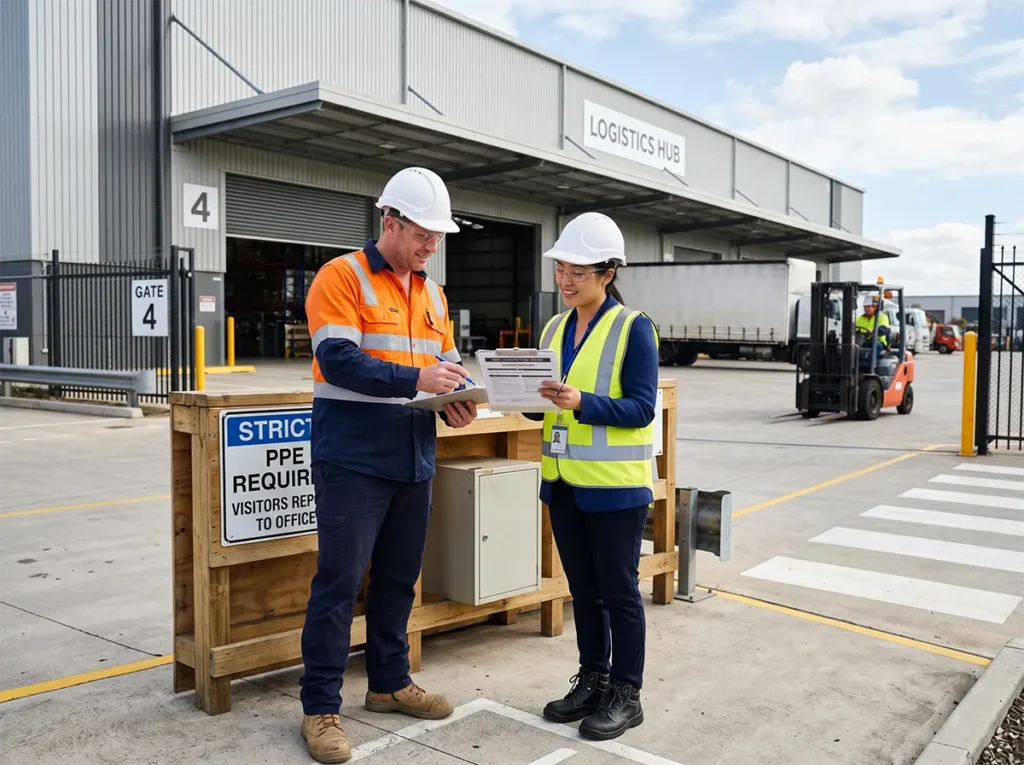
On multi-employer sites, safety responsibility does not disappear because a worker is not directly employed by the host.
If a labour hire worker is placed into a host environment, the host still needs to ensure that site-specific risks, supervision, and systems of work are properly managed.
That includes:
- explaining the hazards on site
- providing site-specific induction
- ensuring supervision is in place
- making sure the work environment is safe
- and avoiding mixed messages between the host and labour hire provider
Strong labour hire coordination means:
- role requirements are clear before placement
- the worker is suitable for the environment
- site rules are explained properly
- incident reporting expectations are aligned
- and safety concerns are escalated early
This is where proactive site assessment becomes especially valuable.
When labour hire is coordinated well, it supports the site.
When it is poorly managed, it can create confusion and inconsistency very quickly.
You can also read what manufacturers should expect from labour hire workers for a practical look at worker suitability, hygiene discipline, and site-ready behaviour in controlled environments.
Why Near Miss Reporting Matters
One of the strongest indicators of a mature safety culture is whether people report:
- hazards
- unsafe conditions
- and near misses
A near miss is valuable because it shows you where the system almost failed.
For example:
- a forklift almost clips a pedestrian
- a pallet almost falls from racking
- a worker nearly slips on wrapping left in an aisle
- a machine guard is found loose before someone uses the equipment
If that event is ignored because “nothing actually happened”, the site loses one of its best opportunities to improve before a real injury occurs.
Good reporting culture usually depends on three things:
- workers know what to report
- they know who to report it to
- and they believe they can speak up without being dismissed or blamed
A site that treats near misses seriously is usually much better placed to improve controls over time.
Clear reporting culture also works better when workers are reliable, engaged, and easy to communicate with, which is one reason why attendance matters on food sites more than many businesses realise.
Notifiable Incidents and Follow-Up
Some incidents are not just internal matters. They may require escalation and formal response.
That is why employers should have a clear process for:
- immediate response
- preserving the scene where required
- internal escalation
- external notification where relevant
- documentation
- and corrective action follow-up
The exact legal threshold for a notifiable incident should always be checked carefully at the time of the event. But operationally, the key principle is simple:
serious incidents must never be handled casually.
Even where an event is not legally notifiable, the site should still review:
- what happened
- why it happened
- what controls failed
- and what action is required to reduce recurrence
Compliance is strengthened when incident response leads to improvement, not just paperwork closure.
What a More Proactive Compliance Approach Looks Like
Reactive safety says:
- “We’ll deal with it after something happens.”
Proactive safety says:
- “What are the risks now, and what needs tightening before something goes wrong?”
A more proactive approach usually includes:
- regular site walk-throughs
- practical hazard review
- early escalation of unsafe conditions
- checking how the floor actually operates, not just what the procedure says
- reviewing incidents and near misses properly
- stronger worker onboarding
- and reviewing labour hire placements carefully before they begin
This is especially important in fast-moving industrial environments, where pressure can normalise shortcuts if nobody steps back to look at the broader picture.
A Practical WorkSafe Compliance Checklist for Warehouses and Factories
Here is a simple checklist you can use as a practical compliance prompt.
Workplace and Traffic Control
- Are pedestrian and vehicle routes clearly separated?
- Are floor markings, barriers, and signage visible and respected?
- Are loading and dispatch areas being managed safely?
Plant, Equipment and Workstations
- Are machine guards in place and functioning?
- Are emergency stops accessible?
- Are manual handling risks being reduced through layout and equipment where possible?
Induction and Supervision
- Are new workers inducted before work begins?
- Do labour hire workers receive the same site-specific safety information as direct staff?
- Is supervision appropriate for the task and the worker’s experience level?
PPE and Site Discipline
- Are PPE expectations clear and enforced?
- Are housekeeping standards being maintained consistently?
- Are workers following safe movement and reporting expectations?
Reporting and Improvement
- Are hazards and near misses being reported?
- Are incidents being reviewed properly?
- Are corrective actions followed through and documented?
If several of these areas feel weak or inconsistent, the site may be carrying more exposure than it appears.

If you are reviewing your own site systems, you can also see how we approach food safety and site readiness across warehouse and factory environments.
Common Mistakes That Weaken Compliance
Some of the most common compliance problems are not dramatic. They come from normalised weak habits such as:
- relying too heavily on PPE instead of stronger controls
- rushing induction because the site is busy
- assuming experienced workers do not need supervision
- treating labour hire workers as someone else’s safety responsibility
- tolerating poor housekeeping
- ignoring near misses because no one was injured
- allowing mixed messages between managers, supervisors, and agencies
- letting production pressure override basic site discipline
These issues often build slowly.
That is why they are easy to miss until a claim, complaint, or serious incident forces attention back onto them.
Our guide to food safety labour hire workers explains why host employers should expect more than availability when bringing workers into controlled environments.
Final Word
WorkSafe Victoria compliance in manufacturing and warehousing is not just about policies, signs, or documents on file.
It comes down to how the site actually functions:
- how hazards are identified
- how risks are controlled
- how workers are inducted
- how supervision is maintained
- how labour hire is coordinated
- and how seriously near misses and incidents are treated
For employers across Melbourne’s South-East, the goal is not perfection.
It is stronger control, clearer systems, and fewer avoidable gaps.
That is what helps protect:
- your workers
- your operations
- your reputation
- and your ability to run a safer, more resilient site
A practical safety culture is built on action, not intention.
And that is where better compliance begins.
Need Practical Labour Hire Support for a Warehouse or Manufacturing Site in Melbourne’s South-East?
KAVRILO is building its approach around safety-aware workforce support, clear site coordination, and stronger operational discipline for warehouse and factory environments.
Whether you need support during busy periods, shift coverage, or more dependable labour coordination on active industrial sites, KAVRILO is focused on practical workforce support that fits controlled environments.
Need warehouse or factory labour hire support with a practical safety-aware approach?
Talk to KAVRILO about workforce support for warehousing, logistics, and manufacturing operations across Melbourne’s South-East.
Article Disclaimer
This article is provided for general information only and does not constitute legal, workplace relations, safety, taxation, payroll or other professional advice. Please seek advice specific to your circumstances before acting on this information.
Please read our Website Disclaimer for more information.