
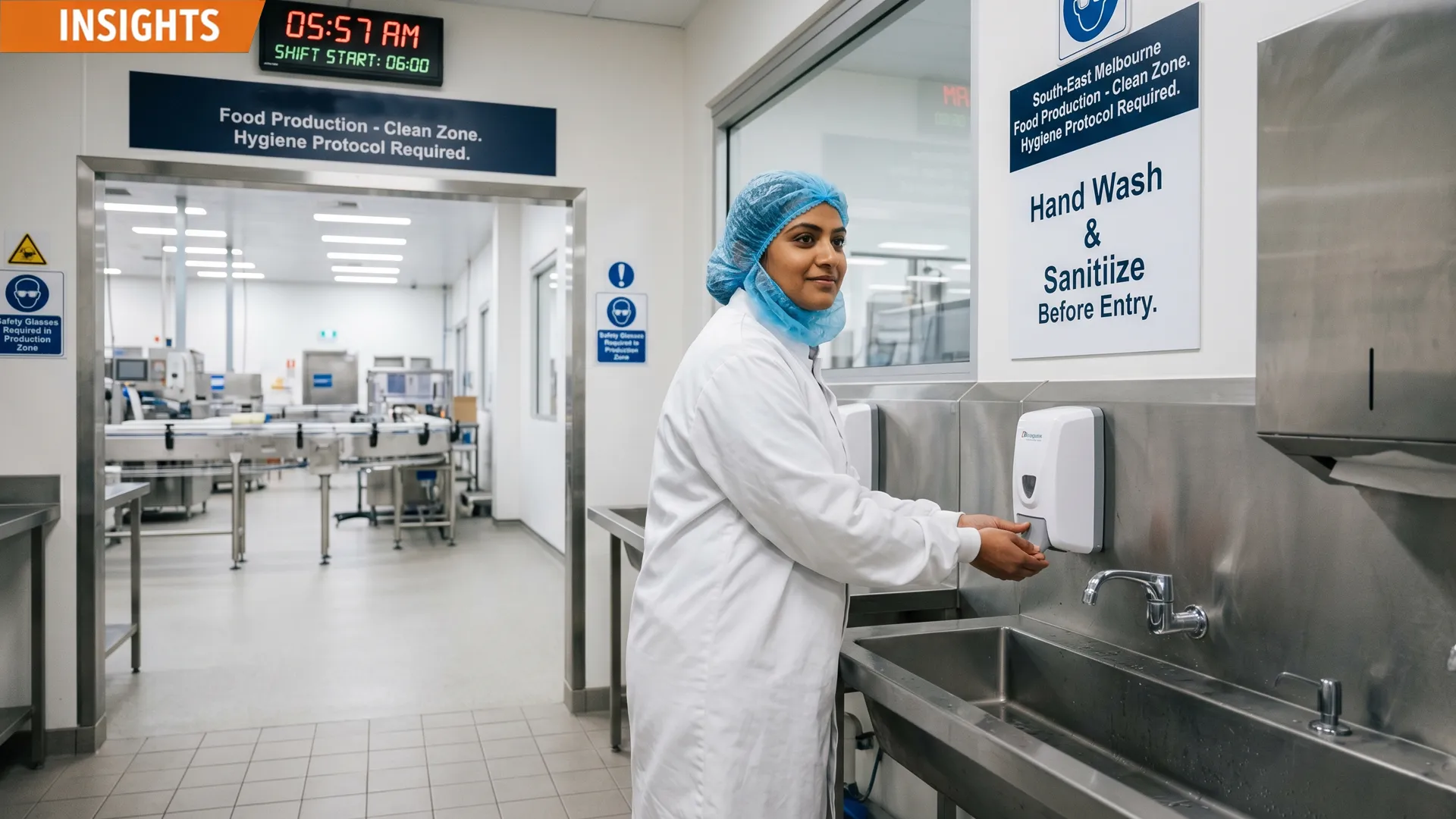
A lot of workers think attendance is simple.
Turn up, do the shift, go home.
But in food production, reliable attendance affects far more than whether one person is missing from the floor. It can affect line flow, hygiene control, product handling, break coverage, team pressure, and overall shift stability.
Across Melbourne’s South-East, food production sites in ready meals, dairy, bakery, meat, chilled packing, and cleanroom-like environments often rely on tightly planned labour, especially on early starts, repetitive lines, and hygiene-sensitive operations. When one worker is late, absent, or difficult to rely on, the impact can spread quickly.
That is why reliable attendance matters more in food production than many workers realise.
On these sites, attendance is not just about being present. It is about being dependable enough for the operation to trust you.
If you want to be considered for future food production roles, you can join the KAVRILO roster for opportunities across Melbourne’s South-East.
Why Attendance Has a Bigger Impact in Food Production
In some workplaces, one absent worker mainly means the rest of the team is a bit busier.
In food production, the effects can be wider.
That can include:
- line imbalance
- rushed coverage
- delayed starts
- hygiene process pressure
- disrupted break planning
- product handling strain
- supervisors moving people between roles
- increased risk of mistakes under pressure
On food sites, especially fast-moving ones, headcount and timing matter.
If the site expects a certain number of people for a packing line, chilled area, ingredient room, or dispatch task, one missing person can affect the whole rhythm of the shift.
That is why dependable attendance is often seen as part of food safety and operational discipline, not just personal reliability.
Why Punctuality Matters Too
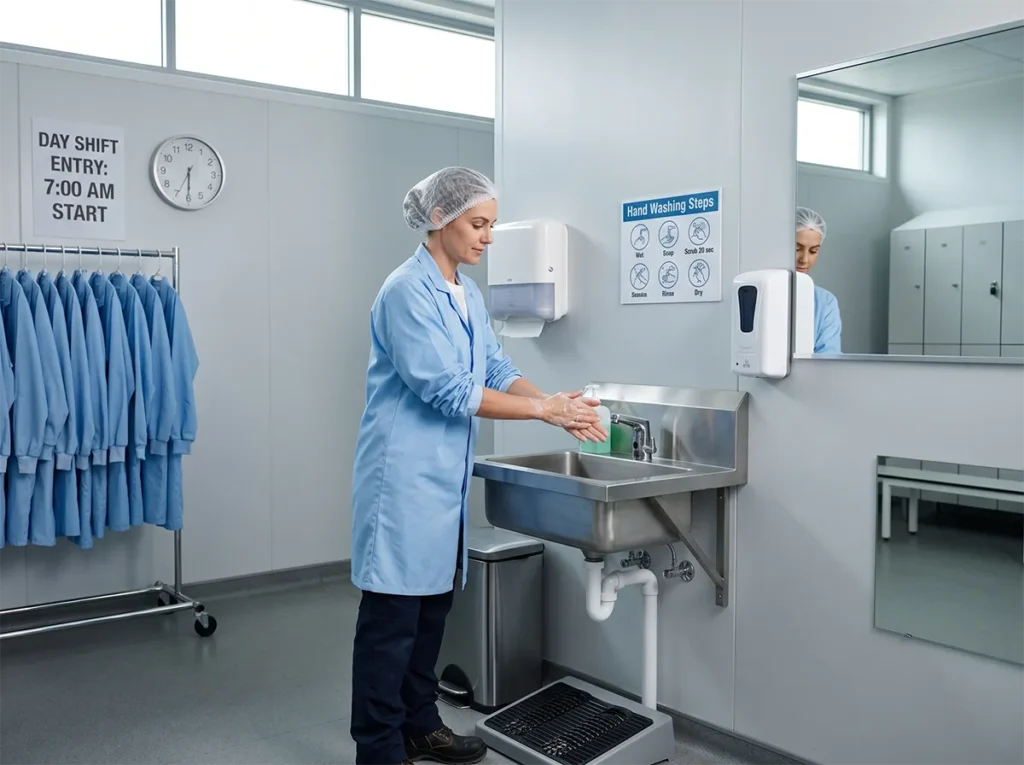
Reliable attendance is not only about whether you turn up. It is also about when you turn up.
If a shift starts at 6:00 am, arriving at 6:02 am may not sound serious in normal conversation. But on some food sites, even small delays can affect:
- entry procedures
- induction handovers
- PPE and hygiene entry timing
- line readiness
- shift briefings
- changeover support
- start-of-run accuracy
That does not mean sites expect workers to be robots. But it does mean punctuality matters for more than appearances.
Workers who arrive on time consistently are easier to trust because they do not create preventable disruption before the shift has even settled.
10 Reasons Reliable Attendance Matters on Food Production Sites
1. Food Production Lines Depend on Planned Headcount
Packing and processing lines are often designed around a certain number of workers.
If one person is missing, the result can be:
- slower throughput
- rushed repositioning
- gaps in the line
- unnecessary pressure on others
- more mistakes as people try to cover extra tasks
That is why attendance is not just an HR issue. It affects how the actual line runs.
Good workers understand that turning up reliably helps the whole shift function properly.
2. Hygiene-Sensitive Work Does Not Always Allow Easy Last-Minute Swaps
In some food environments, it is not always easy to move people around casually.
The site may need workers who understand:
- the hygiene zone
- product handling rules
- allergen controls
- line sequence
- cleaning expectations
- PPE requirements
That means replacing someone at the last minute is not always simple.
Reliable attendance matters because food sites often need the right worker, not just any available worker.
3. Late Arrivals Can Disrupt Entry and Start-of-Shift Control
On food production sites, workers may need to complete:
- handwashing
- sanitising
- PPE entry procedures
- pre-start instructions
- line briefings
- attendance checks
- area-specific setup
If someone arrives late, those processes can get compressed or disrupted.
That creates pressure at exactly the point where the site is trying to begin the shift in a clean, controlled way.
Workers who arrive on time help the site start properly.
4. Unreliable Attendance Increases Pressure on the Rest of the Team
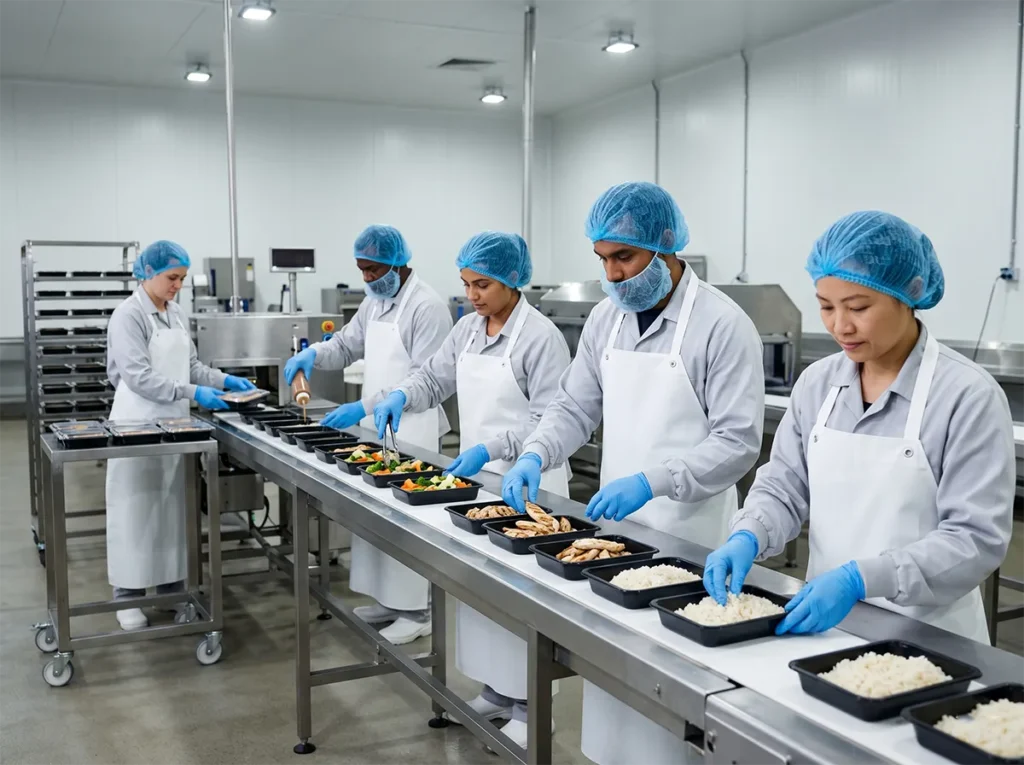
Food production teams notice quickly when someone is hard to rely on.
That is because the rest of the shift may have to absorb the impact through:
- extra physical workload
- faster pace
- changed positions
- delayed breaks
- more supervisor intervention
- greater frustration across the team
A worker may think, “It was only one shift.”
But on the floor, the effect often feels bigger than that.
Good attendance helps reduce unnecessary pressure for everyone else.
5. Rushed Coverage Can Affect Food Safety
When a team is short and trying to keep up, the risk is not only slower work.
It can also mean:
- corners being cut
- hygiene rules being rushed
- product handling getting sloppier
- communication breaking down
- errors being missed
- tired or distracted workers making poor decisions
That is why attendance links back to food safety more than many workers realise.
Steady staffing helps support steady standards.
You can also read our guide to GMP basics for workers to understand how steady staffing supports steady hygiene standards.
6. Attendance Shapes Whether You Are Seen as Bookable
In labour hire and casual work, attendance often becomes part of your reputation very quickly.
Sites remember workers who:
- turn up on time
- are ready for the shift
- communicate properly if something changes
- do not create uncertainty around start times
They also remember workers who:
- go quiet
- turn up late repeatedly
- give last-minute notice without proper explanation
- look unreliable even if their actual work on the floor is decent
A worker can be reasonably capable and still get fewer future shifts if their attendance is hard to trust.
7. Good Communication Matters If You Are Genuinely Unable to Attend
Reliable attendance does not mean life never happens.
People get sick. Emergencies happen. Travel issues happen.
What matters is how you communicate.
On food sites, poor communication can create just as much frustration as the absence itself.
If you are genuinely unable to attend, good practice usually means:
- giving notice as early as possible
- contacting the correct person
- being clear and direct
- not disappearing
- not waiting until the last minute if you already know there is a problem
Good workers understand that communication is part of reliability.
Our article on food factory inductions also explains what good workers pay attention to on day one, including reporting lines and site rules.
8. Repeated Attendance Problems Can Override Other Strengths
Some workers assume that if they work hard when they do show up, attendance will not matter as much.
Usually, that is not how sites see it.
A worker may be:
- fast
- physically strong
- experienced
- good on the line
But if they are often late, often absent, or hard to contact, supervisors may still lose confidence in them.
That is because reliability affects planning. And on production sites, planning matters every day.
9. Early Starts and Shift Routine Matter in Food Production
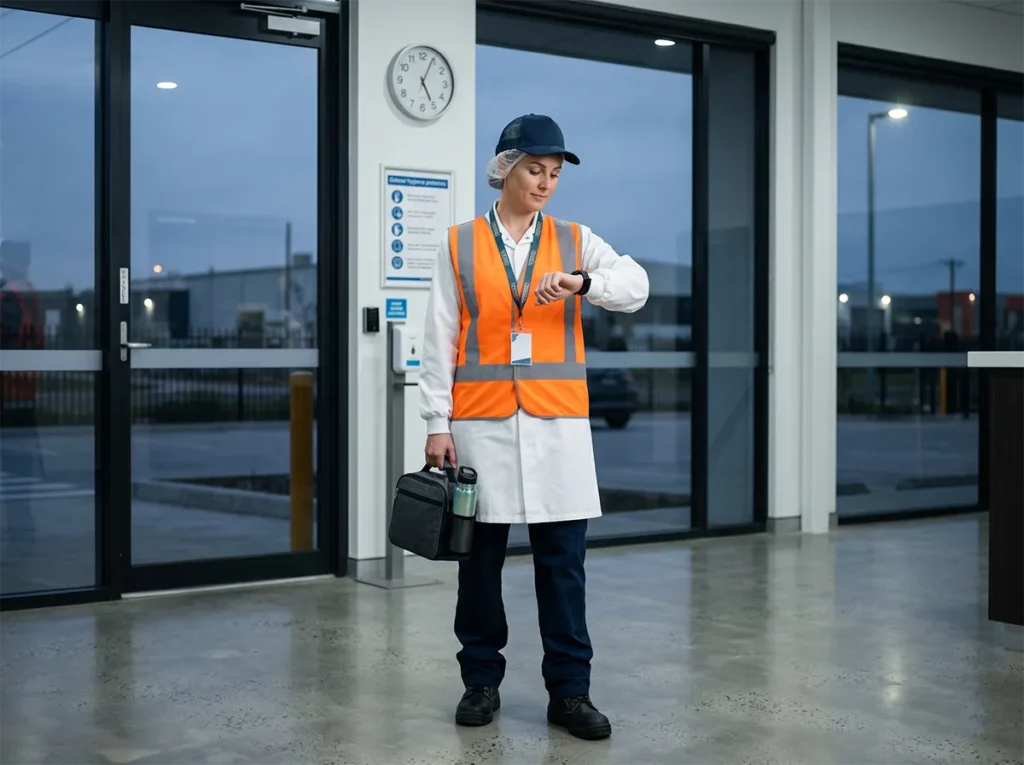
A lot of food production work involves:
- early starts
- fixed shift windows
- production timing
- dispatch deadlines
- cleaning schedules
- changeovers between runs
That means attendance is often tied closely to routine.
Workers who build good habits around sleep, travel, food, and shift preparation are usually more consistent.
Reliable attendance often starts before the shift, not at the site gate.
If your work also involves chilled environments, our guide to cold room work tips covers early starts, PPE, and staying steady in cold conditions.
10. Attendance Builds Trust Over Time
One good shift helps.
Repeated reliability builds trust.
That trust is often what leads to:
- more bookings
- repeat requests
- longer placements
- stronger supervisor feedback
- better chances of being considered again
In casual food production work, trust is one of the most valuable things a worker can build.
Attendance is one of the fastest ways to build it — or lose it.
You can also read our article on food production PPE to make sure your day starts properly before you even reach the line.
What Good Workers Usually Do Differently
Workers who are known for reliable attendance often have simple habits that protect them from preventable problems.
They tend to:
- plan travel properly
- allow extra time for early starts
- prepare PPE and work items the night before
- go to bed early when rostered on morning shift
- save the right contact details
- communicate early if a real issue comes up
- take attendance seriously even when the work is casual
This does not mean they never have problems. It means they manage them better.
That difference is often what sites notice.
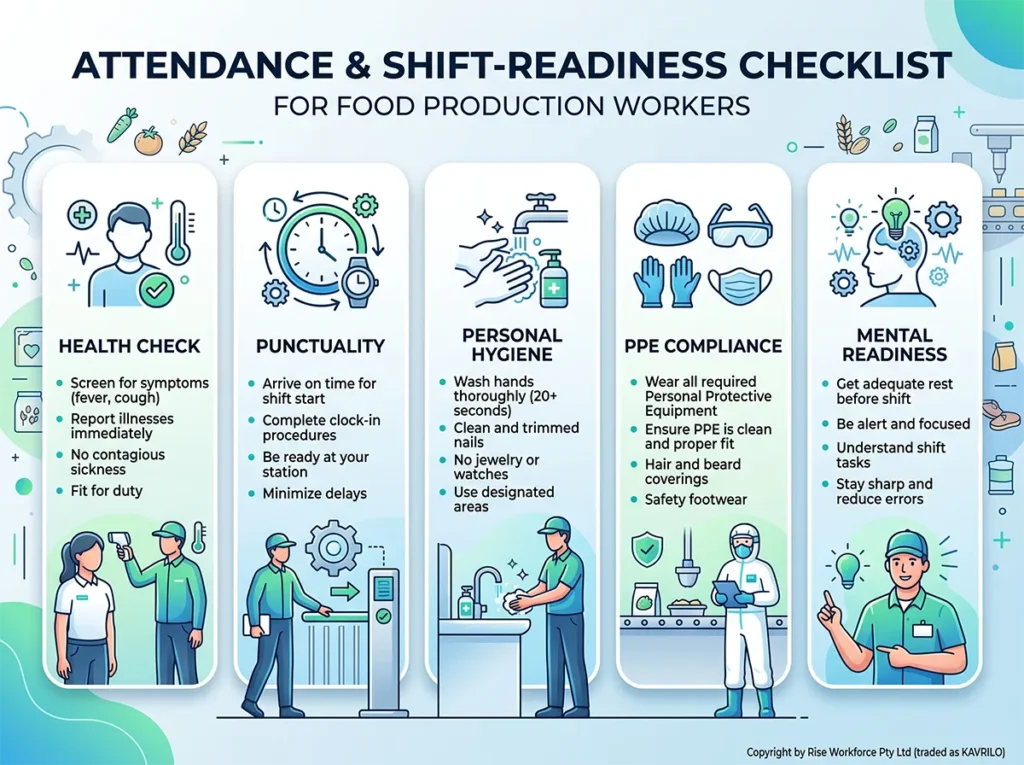
A Simple Attendance & Shift-Readiness Checklist
Here is a practical checklist workers can use to stay more dependable.
The Night Before
- I know my shift start time and location
- I know how I am getting there
- I have allowed enough travel time
- I have my PPE and work items ready
- I am setting myself up properly for sleep and an early start if needed
Before Leaving for Shift
- I am leaving with enough buffer time
- I have the right contact details saved
- I am ready for site entry and PPE requirements
- I am not assuming I can “just make it” at the last minute
If Something Goes Wrong
- I contact the right person early
- I explain the issue clearly
- I do not disappear or leave it too late if I already know there is a problem
- I understand that communication is part of reliability
The Right Attendance Mindset
- be ready
- be on time
- communicate early
- be dependable
This kind of checklist is simple, but it helps workers protect the one thing supervisors notice very quickly: reliability.
What Supervisors Usually Notice
If you want to keep getting booked, it helps to understand what supervisors usually notice first.
They remember workers who:
- arrive on time
- are ready to start properly
- do not create uncertainty at the beginning of shift
- communicate well when needed
- settle into the line without drama
- can be relied on week after week
They also notice workers who:
- arrive just late enough to disrupt the start
- regularly cut timing too close
- fail to communicate properly
- create uncertainty around whether they will show up
- make the team guess what is happening
In food production, reliable attendance often becomes part of your reputation very quickly.
Final Word
Reliable attendance matters in every job. But in food production, it affects more than just one worker’s shift.
It supports line flow, hygiene control, workload balance, planning, and team confidence. That is why sites value workers who are not only capable on the floor, but dependable before the shift even begins.
If you want to stay trusted and keep getting booked, think beyond:
Can I do the job when I get there?
Also think:
Can the site rely on me to be there, on time, and ready to start properly?
That is what helps build trust.
And in food production, trust often leads to more work.
Looking for food production work in Melbourne’s South-East?
KAVRILO is building its focus in food production labour hire with a practical, safety-aware approach that values hygiene discipline, site fit, and dependable workforce support across different production environments.
Stay connected with KAVRILO for future opportunities in packing, processing, and hygiene-focused production environments.
Article Disclaimer
This article is provided for general information only and does not constitute legal, workplace relations, safety, taxation, payroll or other professional advice. Please seek advice specific to your circumstances before acting on this information.
Please read our Website Disclaimer for more information.