
A pallet almost falls, but does not.
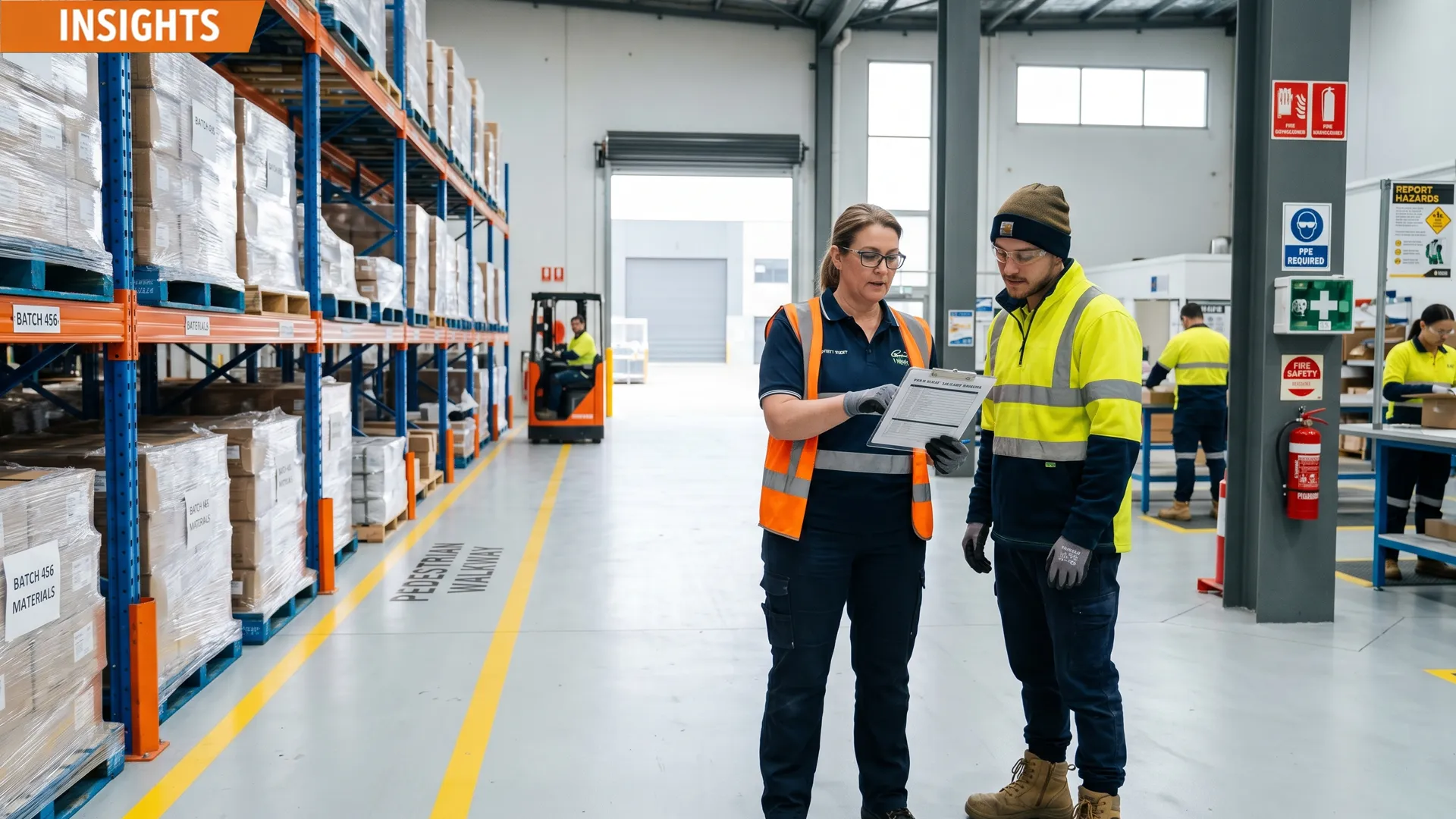
A forklift stops just in time.
A worker slips but catches themselves.
A wrapping machine jams in a way that could have caused injury, but does not.
On busy warehouse and factory floors, these moments are easy to dismiss because nothing “serious” happened in the end.
But that is exactly why they matter.
Across Melbourne’s South-East, warehousing, logistics, food production, and manufacturing sites often run under pressure. Movement is constant, output matters, and workers are focused on getting through the shift safely and efficiently. In that kind of environment, a near miss can feel like something minor — a lucky escape, a passing moment, a problem that sorted itself out.
Good employers see it differently.
They understand that near misses are often one of the clearest early warnings a site will get. They show where:
- traffic flow is breaking down
- visibility is poor
- supervision is weak
- layout is creating pressure
- workers are improvising
- or unsafe habits are becoming normal
That makes near miss reporting one of the most practical tools in workplace safety.
Because the safest sites are usually not the ones with no reported near misses.
They are the ones that notice them, take them seriously, and use them to improve controls before someone gets hurt.
For a broader employer overview, see our WorkSafe Victoria compliance in manufacturing and warehousing guide for practical hazard control, onboarding, and operational safety discipline.
What a Near Miss Actually Tells You
A near miss is not just an event that “almost caused harm”.
It is evidence that something in the system came close to failing.
That might be:
- a forklift entering a shared space too fast
- a worker stepping into an active plant area
- a pallet stacked unsafely
- an object falling from height
- poor visibility at an aisle crossing
- a slippery surface
- a worker using an awkward shortcut
- or a task being rushed in a way that increased exposure
The injury may not have happened this time.
But the risk was real enough that it could have.
That is why a near miss should be treated as useful site intelligence.
It tells employers:
- where the actual pressure points are
- what workers are experiencing on the floor
- and where controls may look adequate on paper but are weaker in practice
A serious incident often has smaller warnings before it.
Near misses are often those warnings.
Why Near Misses Are Often Underreported
One of the biggest problems is not that near misses happen.
It is that many of them are never reported properly.
Workers may stay quiet because:
- no one was actually injured
- they do not want to make trouble
- they think the issue is too small
- they assume someone else will mention it
- they believe nothing will change anyway
- or they are unsure who to tell
Supervisors may also underreact because:
- the shift is busy
- production is moving
- nothing “serious” came from it
- or the issue looks too familiar to seem urgent
That is where risk grows.
If near misses are normalised, the site loses one of its best chances to strengthen control before a real injury, claim, or escalation occurs.
Where Near Misses Commonly Show Up in Warehouses and Factories
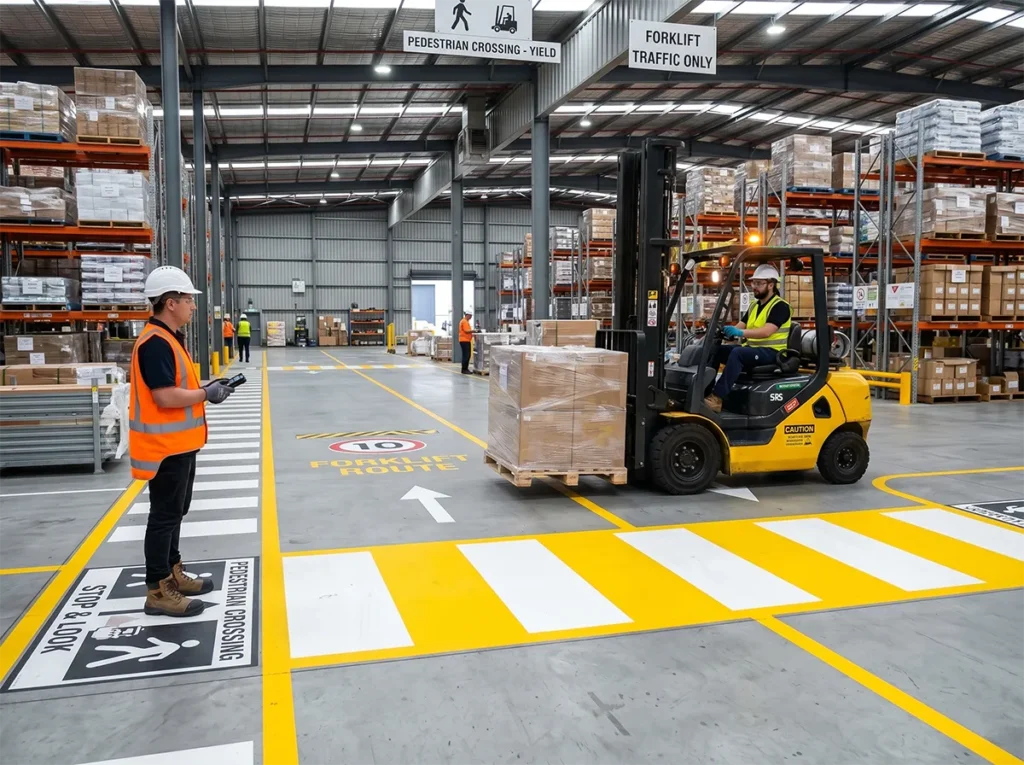
Near misses tend to appear in familiar pressure areas.
These often include:
- forklift and pedestrian crossings
- loading docks
- dispatch zones
- manual handling tasks
- pallet stacking and racking
- congested aisles
- machinery interaction points
- maintenance areas
- repetitive line work
- and shift-change periods
They also show up more often when:
- new workers are on site
- labour hire workers are not inducted clearly enough
- workflow changes have not been reviewed properly
- floor discipline has slipped
- supervision is stretched
- or the site is pushing hard through busy periods
That is why good near miss reporting is not only about individual awareness.
It is also about understanding where operational pressure is creating exposure.
What Good Employers Look for Early
1. Repeated Patterns, Not Just Isolated Events
A single near miss matters.
But repeated near misses in the same area matter even more.
Good employers look for patterns such as:
- repeated congestion near dispatch
- regular blind-spot issues at aisle intersections
- the same walkway being blocked
- repeated awkward lifting in the same zone
- recurring issues with unstable pallets
- or the same machine area creating close calls
Patterns tell you the issue is likely structural, not random.
That means the answer may sit in:
- layout
- traffic control
- supervision
- staging
- workflow design
- or task setup
not just in reminding workers to “be careful”.
2. What Workers Are Actually Telling You
Workers often describe near misses in simple language.
For example:
- “The forklift came around too fast.”
- “I didn’t know that was an active lane.”
- “That pallet looked unstable.”
- “People always cut through there.”
- “There was nowhere safe to stand.”
- “I nearly lost grip because the box was awkward.”
- “That walkway is always blocked.”
These comments matter.
Good employers do not dismiss them as casual complaints.
They use them as practical clues about:
- layout problems
- visibility issues
- poor traffic control
- weak induction
- or task design that is creating preventable pressure
3. Whether the Existing Control Actually Works in Real Conditions
A common problem is assuming a risk is “controlled” because:
- the site has lines on the floor
- the procedure exists
- signage is in place
- the induction was given
- or PPE has been issued
But near misses often show that the control is not holding up under real working conditions.
For example:
- floor markings may exist, but pedestrians still cross active lanes
- a manual handling procedure may exist, but the workstation still forces awkward reaching
- a machine guard may be fitted, but unsafe access is still happening nearby
- a site rule may exist, but new workers clearly do not understand it yet
That is why near misses should prompt a simple question:
Does this control work properly on a busy shift, with real people, real pressure, and real movement?
4. Whether New or Temporary Workers Are More Exposed
Near misses often highlight where new workers are vulnerable.
That includes labour hire workers who may:
- not know the layout yet
- not understand traffic flow
- be unsure about restricted areas
- not recognise the supervisor structure
- or feel hesitant to speak up early
If near misses are more common around new starters, the site should review:
- induction quality
- supervisor visibility
- first-shift support
- task fit
- and whether the worker was placed into a role with enough site-specific clarity
A good worker can still be exposed if day-one controls are too weak.
Our article on site safety inductions for labour hire workers explains what host employers should cover on day one to reduce avoidable confusion, unsafe assumptions, and early-shift exposure.
5. Whether Reporting Pathways Are Too Weak or Too Vague
Workers are far more likely to report near misses when they know:
- what counts as one
- who to tell
- how to tell them
- and that they will be taken seriously
Good employers review whether workers actually understand:
- where reporting goes
- whether it can be verbal, written, or both
- who follows it up
- and what happens next
If reporting feels unclear, formal, slow, or pointless, many small incidents will never surface.
That weakens the site’s ability to improve.
6. Whether Supervisors Treat Near Misses Like Useful Information
Supervisors play a major role here.
If a near miss is met with:
- dismissal
- frustration
- blame
- or no follow-up
workers quickly learn that reporting is not worth it.
Good employers support supervisors to treat near misses as:
- early warnings
- practical floor-level insight
- and opportunities to tighten controls before something worse occurs
That does not mean overreacting to every event.
It means not wasting the information the site has just been given.
7. How Quickly the Site Responds
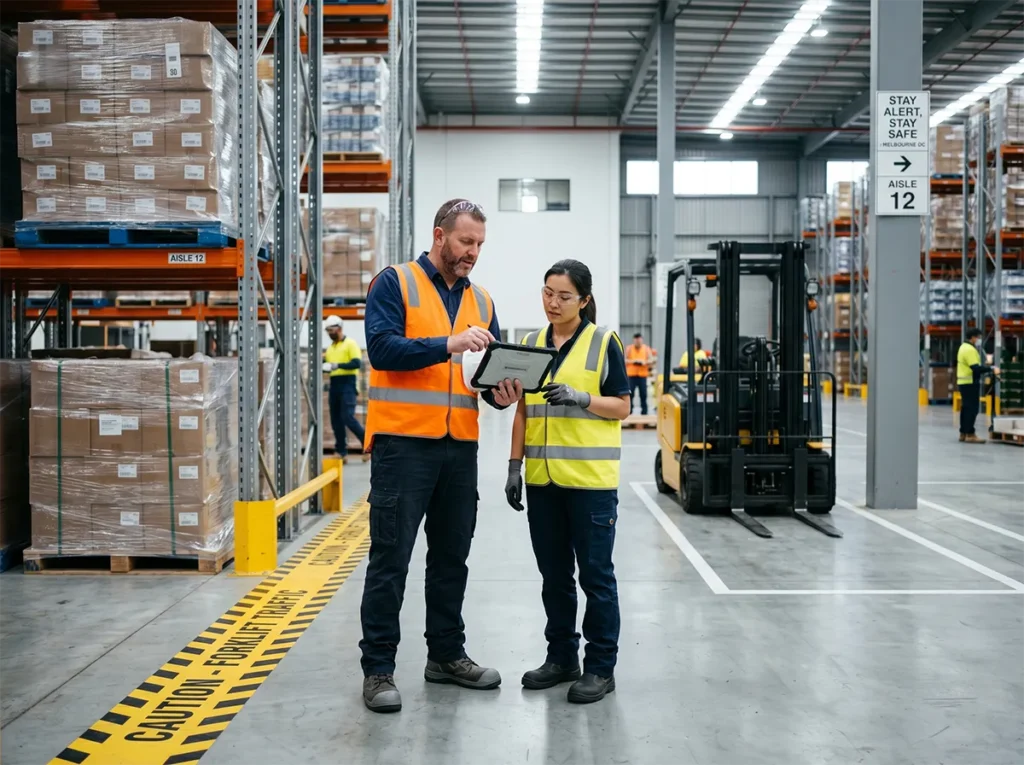
Reporting matters, but response matters just as much.
If a worker reports:
- a blocked crossing
- a loose pallet
- poor visibility at an aisle end
- a slippery floor
- a conveyor issue
- or a recurring shortcut through a plant zone
and nothing changes, then the site teaches everyone that reporting achieves very little.
Good employers review:
- how quickly issues are checked
- whether interim controls are put in place
- whether layout or supervision changes are needed
- and whether the worker can see that the concern was actually addressed
Action builds reporting culture.
Inaction weakens it.
8. Whether the Real Issue Is Layout, Workflow, or Pressure
A near miss is not always a worker problem.
Sometimes the real cause is:
- bad layout
- poor stock staging
- narrow access
- weak traffic design
- excessive pace
- unclear role boundaries
- or operational pressure that makes unsafe shortcuts more likely
That is why good employers review not just:
- who did what
but also:
- what in the environment made the event more likely
This is often where the best improvements come from.
9. Whether Near Misses Are Feeding Back into Induction and Training
If the same types of near misses keep happening, the site should ask:
- Are we teaching this clearly enough?
- Are new workers seeing the risk soon enough?
- Are supervisors reinforcing it properly?
- Are our instructions too generic?
A strong safety system learns from near misses.
That means the information should feed back into:
- site induction
- toolbox talks
- supervisor briefings
- worker reminders
- and control reviews
A reported near miss should not disappear into a folder and stay there.
10. Whether Small Incidents Are Being Mistaken for Small Risks
This is one of the biggest mindset problems.
A small incident is not always a small risk.
For example:
- a near miss with a forklift can still point to major traffic exposure
- a slipping incident with no injury can still signal poor housekeeping
- an awkward catch during lifting can still reveal strong manual handling risk
- a falling carton that misses someone can still show unstable stacking or poor storage design
Good employers understand that “no injury this time” does not mean “low risk overall”.
That mindset is what makes near miss reporting worth taking seriously.
What Good Near Miss Reporting Usually Looks Like in Practice
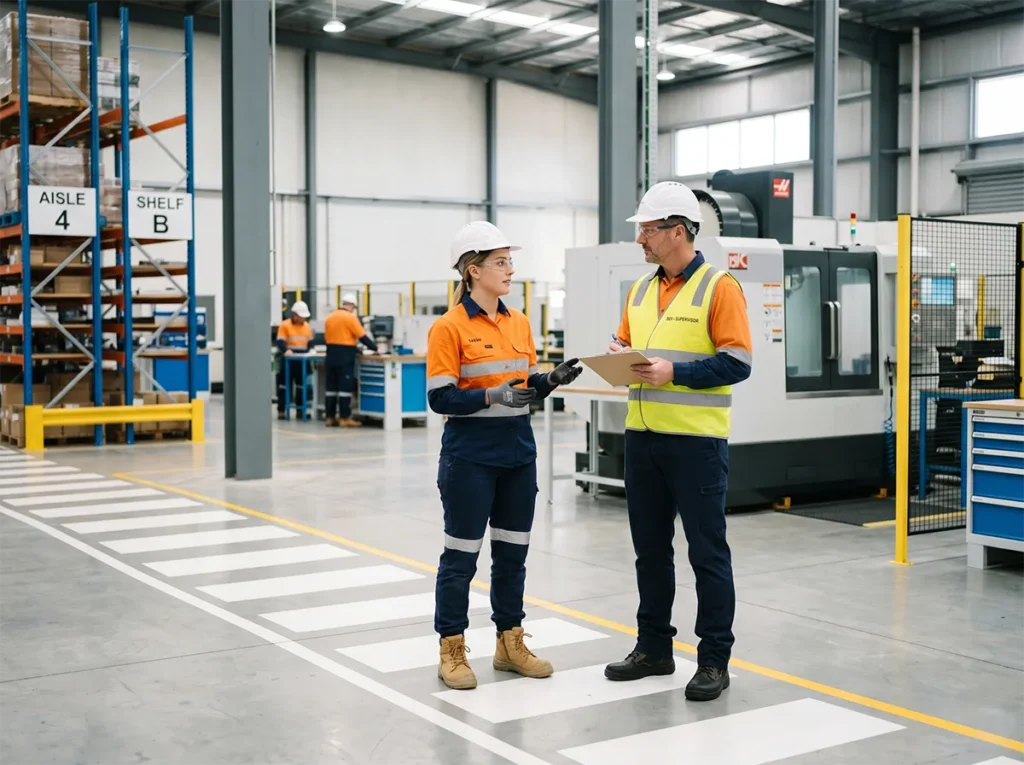
A strong near miss reporting culture usually feels:
- simple
- visible
- practical
- non-defensive
- and worth using
Workers generally know:
- what to report
- who to tell
- that they will be listened to
- and that concerns are not being raised into a vacuum
Supervisors generally:
- respond calmly
- review what happened
- take sensible action
- and look at the broader condition behind the event
It should not feel like:
- blame
- unnecessary drama
- paperwork for its own sake
- or a hassle that gets in the way of the shift
The best systems make reporting easier, not harder.
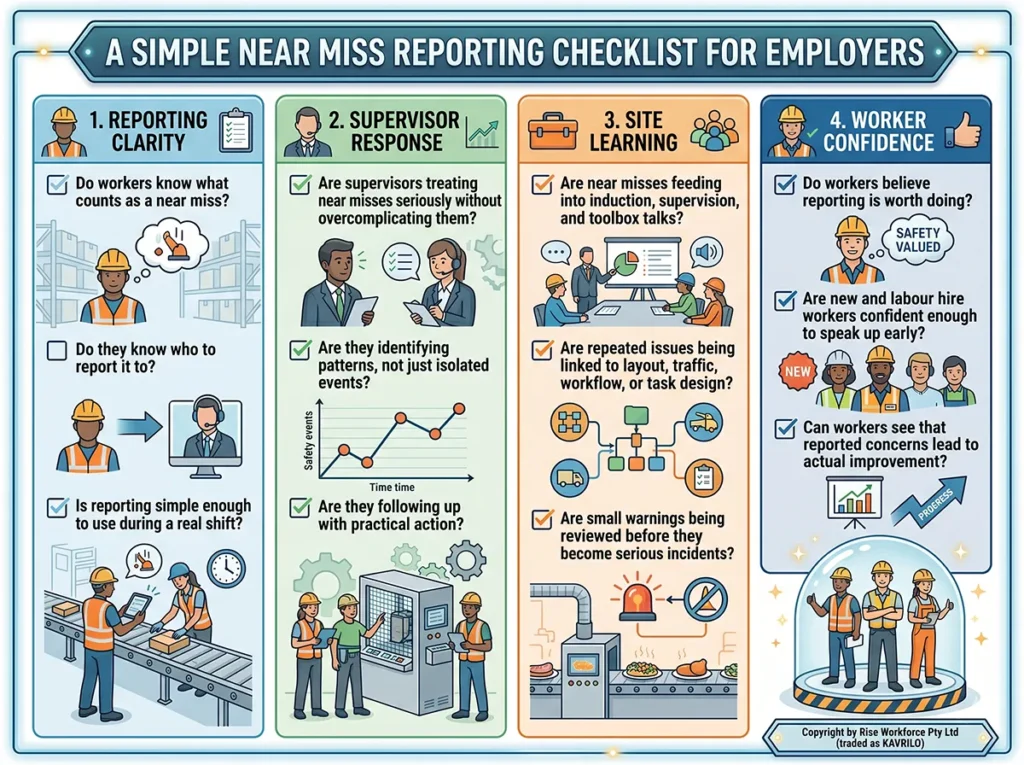
A Simple Near Miss Reporting Checklist for Employers
Here is a practical checklist employers can use to review their current approach.
Reporting Clarity
- Do workers know what counts as a near miss?
- Do they know who to report it to?
- Is reporting simple enough to use during a real shift?
Supervisor Response
- Are supervisors treating near misses seriously without overcomplicating them?
- Are they identifying patterns, not just isolated events?
- Are they following up with practical action?
Site Learning
- Are near misses feeding back into induction, supervision, and toolbox talks?
- Are repeated issues being linked to layout, traffic, workflow, or task design?
- Are small warnings being reviewed before they become serious incidents?
Worker Confidence
- Do workers believe reporting is worth doing?
- Are new and labour hire workers confident enough to speak up early?
- Can workers see that reported concerns lead to actual improvement?
This kind of checklist helps employers turn near miss reporting into a practical control rather than an administrative exercise.
Final Word
Near misses matter because they show where the site came close to harm — and where controls may already be under pressure.
For employers across Melbourne’s South-East, strong near miss reporting is one of the most practical ways to:
- improve supervision
- strengthen worker confidence
- tighten site controls
- reduce repeat exposure
- and prevent avoidable incidents before they escalate
Because the safest sites are usually not the ones with perfect-looking paperwork.
They are the ones that:
- notice early warnings
- listen to what the floor is telling them
- and act before a serious injury forces the issue
That is not just better reporting.
It is better operational control.
Need Practical Labour Hire Support for Warehousing and Manufacturing in Melbourne’s South-East?
KAVRILO is building its approach around safety-aware workforce support, clearer site coordination, and stronger operational discipline for warehouse and industrial environments.
Whether your site needs better shift support, stronger day-one worker readiness, or more dependable labour coordination in active operations, KAVRILO is focused on practical workforce support that fits controlled warehouse and factory environments.
Need warehouse and factory labour hire support with stronger day-one readiness and a practical safety-aware approach? Talk to KAVRILO about workforce support across Melbourne’s South-East.
Article Disclaimer
This article is provided for general information only and does not constitute legal, workplace relations, safety, taxation, payroll or other professional advice. Please seek advice specific to your circumstances before acting on this information.
Please read our Website Disclaimer for more information.