
A labour hire worker’s first shift starts before they do any real work.
It starts with what they are shown, what they are told, what they are expected to understand, and how clearly the site makes its rules visible from the beginning.
Across Melbourne’s South-East, many warehouse, logistics, and manufacturing businesses use labour hire to support shift coverage, demand spikes, peak periods, absences, and operational growth. That flexibility can work well — but only if new workers are brought onto the floor with clear, practical site guidance.
This is where induction matters.
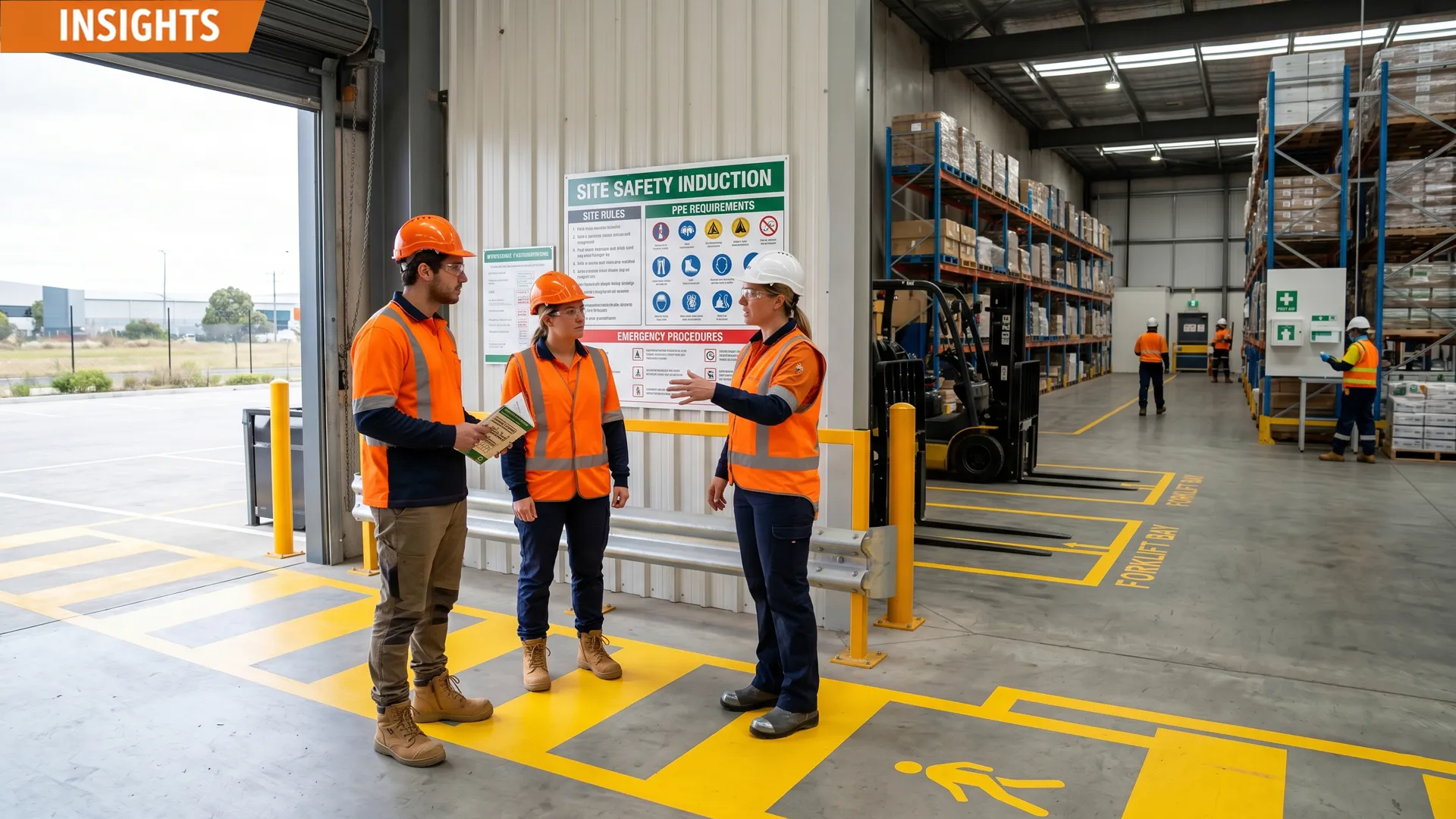
A site safety induction is not just a quick formality before someone starts picking, packing, loading, or operating around active plant. It is one of the most important controls a host employer has on day one.
A good induction helps a new worker understand:
- where the real risks are
- how movement works on site
- what must be worn
- what must never be done
- who to go to when unsure
- and how to work inside the site’s actual safety expectations, not assumed ones
That matters even more for labour hire workers, because they may have:
- warehouse or factory experience elsewhere
- no familiarity with your layout
- no understanding yet of your local traffic flow
- no knowledge of your restricted areas
- and no reason to automatically know which risks matter most on your site
If you want day one to reduce risk rather than create it, induction needs to be treated as a practical safety control — not just a box to tick before shift start.
If your site also relies on temporary workforce support, see our practical labour hire support approach for warehouse and factory environments.
Why Day-One Induction Matters So Much for Labour Hire Workers
A capable worker can still make mistakes on a new site.
That is not always because they are careless. Often, it is because they are unfamiliar with:
- the layout
- the traffic movement
- the supervisor structure
- the plant interaction
- the site rules
- and the local shortcuts that may already exist around them
Labour hire workers are especially exposed to this on day one because they are stepping into an environment where others may already know:
- where not to walk
- which forklift lane is busiest
- where blind spots are
- what machinery to stay clear of
- how to report a hazard
- and what supervisors consider a serious issue
New workers do not have that context yet.
That is why host employers should not assume:
- “they’ve worked in warehousing before”
- “they’ll just follow the others”
- “the traffic lines speak for themselves”
- or “it’s obvious how this site works”
What feels obvious to long-term site staff is often not obvious to a worker arriving for the first time.
A stronger induction closes that gap early.
For a broader employer view, our WorkSafe Victoria compliance in manufacturing and warehousing guide explains why clear site systems and stronger onboarding are part of practical day-to-day compliance.
What a Good Site Safety Induction Should Actually Do
A good induction should do more than pass on information.
It should help the worker:
- enter the site safely
- understand the layout quickly
- recognise the major hazards
- avoid preventable mistakes
- know how to ask questions
- and start the shift with less uncertainty
In practical terms, a strong induction should reduce:
- confusion
- unsafe assumptions
- wrong-way movement
- poor PPE use
- missed reporting
- and early shift friction between the worker and the site
For labour hire workers, that is especially important because a weak induction can turn a good worker into a risky placement simply through lack of site-specific clarity.
10 Things Host Employers Should Cover on Day One
1. Site Entry and Sign-In Expectations
The worker should know exactly how to enter the site properly.
That includes:
- where to report on arrival
- who to ask for
- what sign-in or visitor process applies
- what documents or checks are needed
- what PPE must be worn before entering active areas
- and whether there are restricted access points
This sounds basic, but day-one confusion often starts at the front gate, lunchroom, office entrance, or warehouse entry point.
A smooth start helps set the tone for the rest of the shift.
2. Pedestrian Routes, Forklift Zones, and Traffic Flow
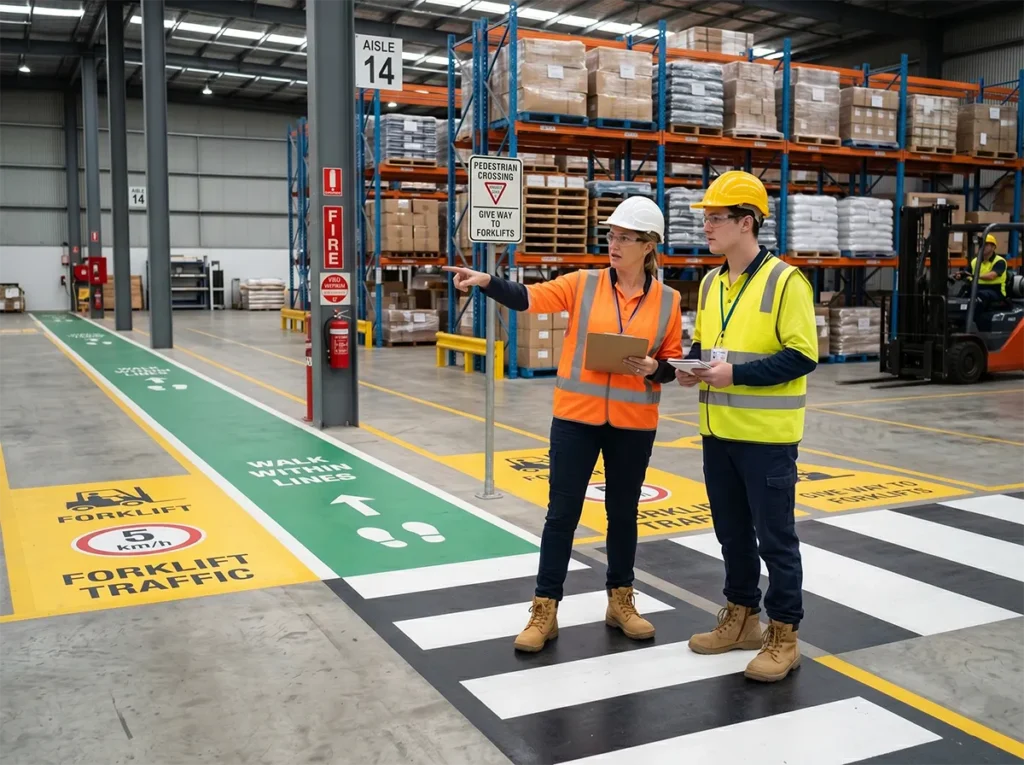
This is one of the most important induction topics for warehouses and active industrial floors.
The worker should be shown:
- where pedestrians must walk
- where forklifts operate most often
- what crossing points are provided
- which areas are forklift-only
- where blind spots exist
- and what routes must not be used as shortcuts
If the site has:
- one-way traffic flow
- exclusion zones
- loading dock restrictions
- or separate access rules for dispatch areas
those need to be explained clearly, not left to observation alone.
A labour hire worker should never be expected to “figure out traffic flow as they go”.
Our article on warehouse traffic management looks more closely at how employers can reduce forklift and pedestrian risks through stronger layout, supervision, and traffic control.
3. Key Site Hazards Relevant to the Role
The induction should focus on the hazards the worker is actually likely to face in their assignment.
For example:
- forklift and pedestrian interaction
- manual handling pressure
- wrapping machines
- conveyors
- pallet stack stability
- loading dock edges
- chemical or cleaning areas
- repetitive strain points
- racking hazards
- noisy areas requiring hearing protection
The induction does not need to become a full legal lecture.
It does need to make the practical risk areas visible enough that the worker can recognise them from the first shift.
4. PPE Requirements and Where They Apply
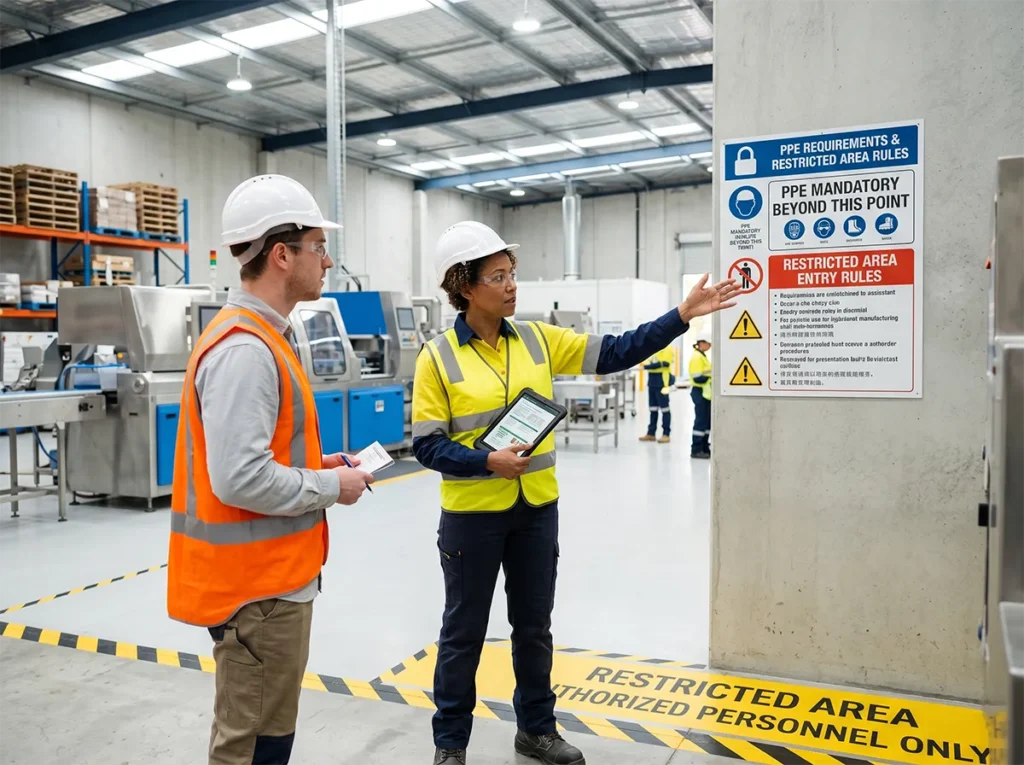
A labour hire worker should leave induction knowing:
- what PPE is mandatory
- how it should be worn
- what areas have stricter PPE rules
- when PPE must be changed or replaced
- what is not acceptable
- and who to speak to if something is missing or damaged
That may include:
- high-vis clothing
- steel-capped boots
- gloves
- hearing protection
- eye protection
- hard hats
- or any site-specific requirements
It is not enough to say “wear PPE properly”.
The site should make clear:
- what “properly” means here
- and whether PPE requirements change between areas
You can also read what workers need to wear and why it matters for a practical look at PPE expectations, worker readiness, and why poor PPE habits often create avoidable day-one risk.
5. Restricted Areas and Site Boundaries
Some areas should not be entered casually by new workers.
This should be made very clear.
That can include:
- loading docks
- battery charging areas
- machinery zones
- maintenance areas
- chemical storage
- high-care production spaces
- ingredient rooms
- or offices and dispatch zones with controlled access
A weak induction often creates problems because nobody clearly says:
- where the worker can go
- where they cannot go
- and who they need to ask before entering another area
This is especially important for labour hire workers who want to be helpful and may move around too freely if boundaries are not explained early.
6. Safe Work Procedure Basics for the Assigned Task
The worker should be told the safe way to perform the role they are there to do.
That might include:
- lifting and handling expectations
- packing line behaviour
- pallet movement rules
- cleaning expectations
- use of trolleys or pallet jacks
- how rejects or damaged goods are handled
- and what must not be touched, adjusted, or operated
This does not mean full task mastery on day one.
It means the worker should not start the role while still guessing:
- what the safe method is
- what a common mistake looks like
- or what action would trigger immediate concern from the supervisor
7. Incident, Hazard, and Near-Miss Reporting
One of the biggest failures in day-one induction is not making reporting easy enough.
The worker should know:
- what must be reported
- who to report it to
- how quickly to escalate it
- and that speaking up early is expected, not criticised
That includes:
- hazards
- near misses
- injuries
- unsafe behaviour
- equipment issues
- damaged pallets
- blocked walkways
- or anything that creates uncertainty about safety
A worker who is unsure about reporting is much more likely to stay quiet too long.
That is avoidable if the site makes the process simple on day one.
8. Emergency Procedures and Immediate Response Expectations
The worker should not start shift without basic clarity around:
- emergency exits
- evacuation points
- alarm response
- what to do if someone is injured
- where first aid support sits
- and who the emergency contacts are on site
This does not need to be overcomplicated.
It does need to be clear enough that the worker is not lost if something serious happens.
Even a short practical briefing on:
- “if something happens, go here, tell this person, use this route”
can make a major difference.
9. Who Supervises the Worker and Who They Can Ask
A labour hire worker should finish induction knowing:
- who their direct supervisor is
- who else they can go to
- who to ask if unsure
- and who not to rely on for informal instructions
This matters because a new worker can become exposed very quickly if they:
- follow the wrong person
- copy unsafe shortcuts
- or keep quiet because they are unsure who they report to
Clear supervision makes day one much safer.
It also helps the worker settle faster.
10. What a Good First Shift Looks Like
This is often overlooked, but it is very useful.
The site should help the worker understand what “good” looks like on day one.
That may mean:
- arriving on time and reporting correctly
- wearing the right PPE
- asking before entering new areas
- following traffic rules
- staying in the assigned area
- reporting concerns early
- keeping pace without rushing unsafely
- and accepting correction calmly
If the worker understands what a strong first shift looks like, they are more likely to contribute safely and with less friction.
That helps both the site and the placement succeed.
What Host Employers Should Not Assume
There are a few things host employers should be careful not to assume when inducting labour hire workers.
Do not assume:
- previous warehouse experience means site familiarity
- previous factory work means they know your hazards
- floor markings are self-explanatory
- another worker will show them correctly
- the worker will speak up immediately if confused
- short exposure means lower risk
- or a rushed induction is “good enough for now”
Day-one risk usually grows through assumption.
That is why a short but clear induction is far better than a longer induction that still leaves key expectations vague.
What Good Site Safety Induction Usually Looks Like in Practice
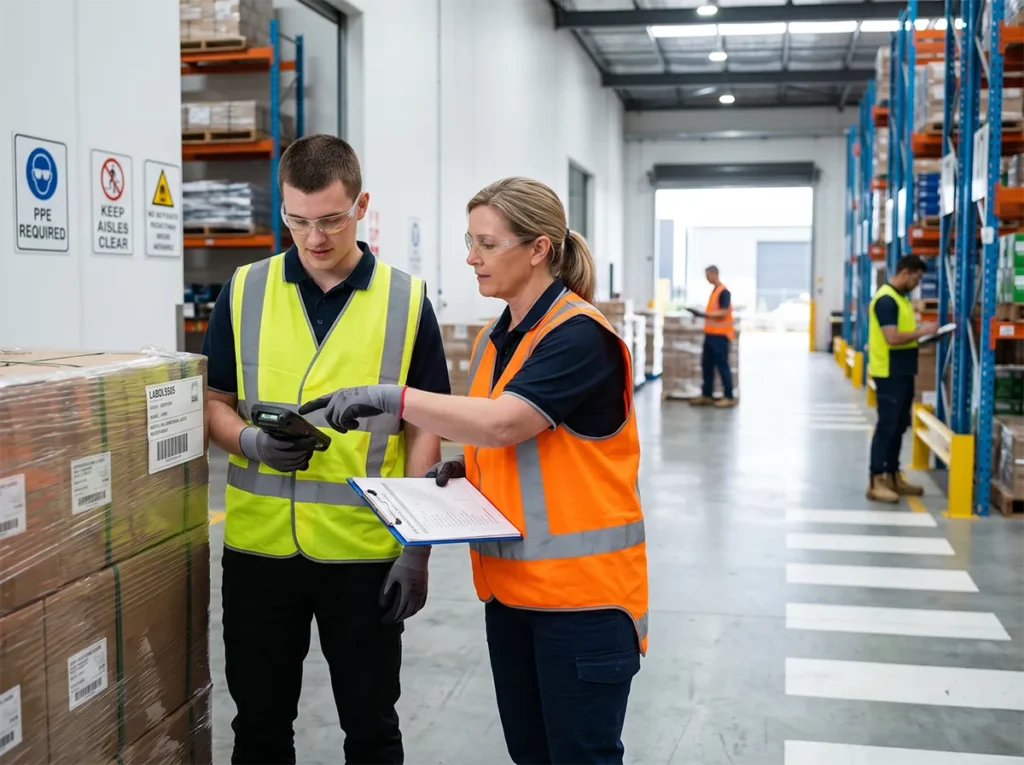
A strong day-one induction usually feels:
- clear
- calm
- practical
- visible
- and difficult to misunderstand
It usually includes:
- direct explanation
- visual walk-through
- practical site orientation
- key hazard emphasis
- a chance for questions
- and early supervision after the worker starts
It should not feel like:
- a rushed handover in the middle of other tasks
- a pile of instructions with no context
- or a worker being dropped onto the floor and expected to copy others
The best inductions are often not the most complicated.
They are the ones that make the most important site rules impossible to miss.
For a more worker-focused view, our article on site induction and day-one safety expectations explains what good workers pay attention to when entering a new food production environment.
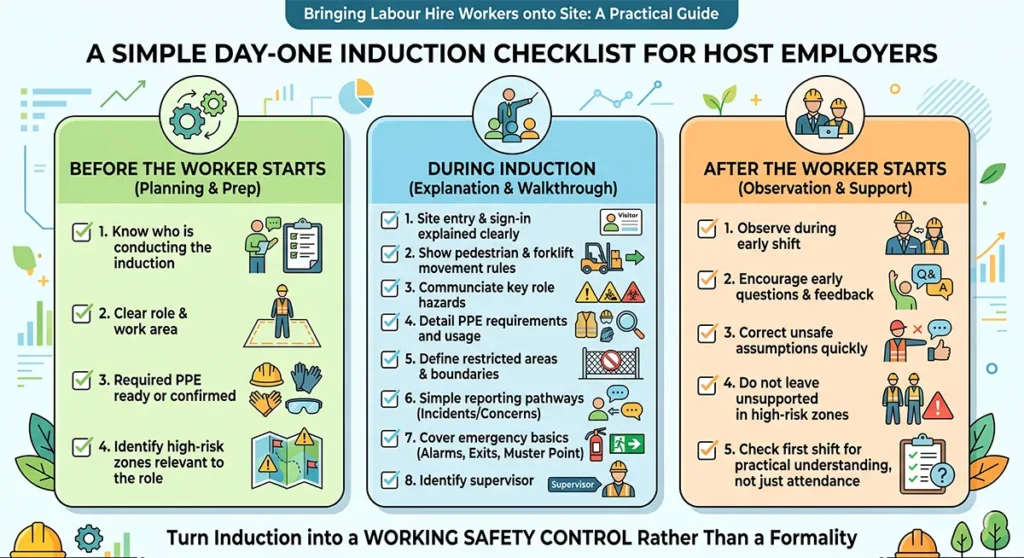
A Simple Day-One Induction Checklist for Host Employers
Here is a practical checklist host employers can use when bringing labour hire workers onto site.
Before the Worker Starts
- We know who is conducting the induction
- The worker’s role and area are clear
- Required PPE is ready or confirmed
- High-risk zones relevant to the role are known
During Induction
- Site entry and sign-in were explained clearly
- Pedestrian and forklift movement rules were shown
- The worker was told the key hazards for their role
- PPE requirements were explained properly
- Restricted areas and site boundaries were made clear
- Reporting pathways were explained simply
- Emergency basics were covered
- The worker knows who supervises them
After the Worker Starts
- The worker is observed during the first part of shift
- Early questions are encouraged
- Unsafe assumptions are corrected quickly
- The worker is not left unsupported in a high-risk area
- The first shift is being checked for practical understanding, not just attendance
This kind of checklist helps turn induction into a working safety control rather than a formality.
You can also explore our safety-focused approach to see how site assessment, worker readiness, and stronger OHS discipline support safer placements in warehouse and factory environments.
Final Word
A labour hire worker’s first shift can either strengthen site control or expose avoidable risk.
That depends heavily on what happens before they start moving through the floor.
Good site safety induction helps the worker understand:
- where they are
- what matters here
- what not to do
- who to ask
- and how to work safely inside the site’s actual conditions
For host employers across Melbourne’s South-East, this is one of the most practical safety controls available on day one.
Because when induction is clearer:
- traffic confusion drops
- PPE mistakes reduce
- reporting improves
- supervisors spend less time correcting basics
- and the site becomes easier to manage safely
That is not just better onboarding.
It is better operational control.
Need Practical Labour Hire Support for Warehousing and Manufacturing in Melbourne’s South-East?
KAVRILO is building its approach around safety-aware workforce support, clearer site coordination, and stronger operational discipline for warehouse and industrial environments.
Whether your site needs support for shift coverage, growth periods, or more dependable workforce coordination, KAVRILO is focused on labour hire support that fits controlled warehousing, logistics, and manufacturing environments.
Need warehouse and factory labour hire support with stronger day-one readiness and a practical safety-aware approach? Talk to KAVRILO about workforce support across Melbourne’s South-East.
Article Disclaimer
This article is provided for general information only and does not constitute legal, workplace relations, safety, taxation, payroll or other professional advice. Please seek advice specific to your circumstances before acting on this information.
Please read our Website Disclaimer for more information.