
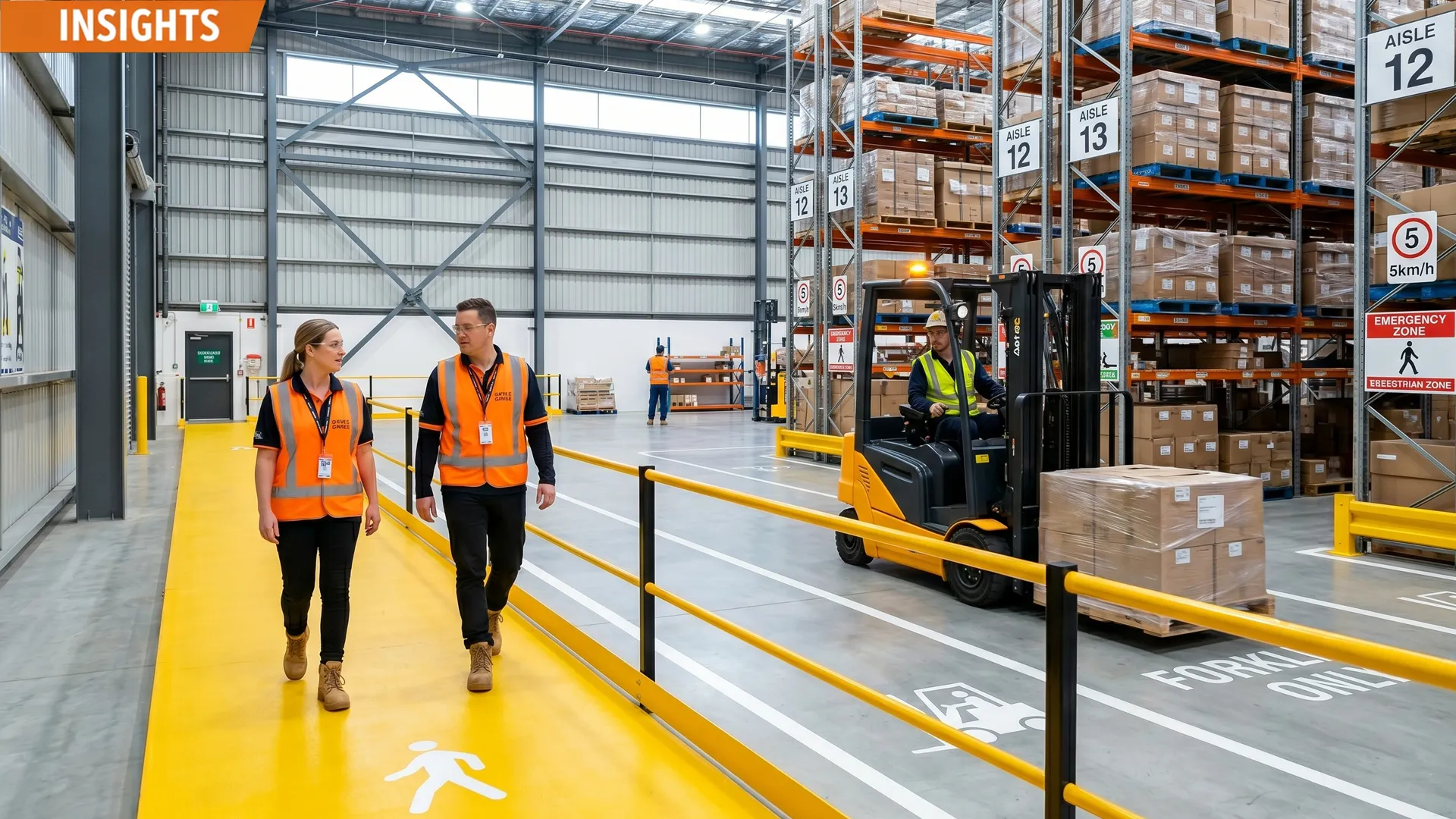
In warehousing, some of the most serious risks are also the most visible.
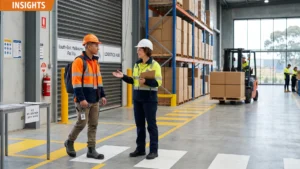
Forklifts move through aisles, loading zones, dispatch areas, and high-activity floor spaces every day. Pedestrians cross the same environment to pick stock, wrap pallets, check paperwork, load vehicles, supervise teams, or move between workstations. When those movements are not controlled properly, the risk can escalate very quickly.
Across Melbourne’s South-East, many warehouse and logistics sites in Dandenong South, Hallam, Keysborough, Braeside, and nearby industrial areas rely on active forklift movement to keep operations flowing. That makes traffic management one of the most practical and important parts of warehouse safety.
This is not just about putting a few painted lines on the floor.
Good warehouse traffic management is about:
- clearer movement rules
- stronger separation of forklifts and pedestrians
- better supervision
- safer site layout
- more consistent induction
- and fewer chances for confusion on a busy floor
That matters even more when the site includes:
- new starters
- temporary labour
- contractors
- visitors
- shift changes
- or high-pressure dispatch periods
If you want safer warehouse operations, forklift and pedestrian interaction is one of the first places to look.
If your site also uses flexible workforce support, see our practical labour hire support approach for warehouse and factory environments.
Why Forklift and Pedestrian Risk Needs Practical Control
A lot of warehouse incidents do not happen because no one cared about safety.
They happen because:
- people get used to unsafe movement
- busy periods make shortcuts feel normal
- floor markings become background noise
- pedestrians assume drivers can see them
- drivers assume pedestrians will stay clear
- and the site begins relying on habit instead of control
That is where traffic risk grows.
Forklift-related incidents can involve:
- collisions with pedestrians
- near misses in blind spots
- unsafe reversing
- congestion at loading docks
- poor line-of-sight at aisle crossings
- rushed movement near dispatch zones
- and workers entering active plant areas without enough awareness
This is why traffic management should be treated as a live operational control — not just a one-time safety document.
Where Warehouse Traffic Risks Usually Show Up
Forklift and pedestrian interaction usually becomes more dangerous in predictable areas.
These often include:
- loading docks
- dispatch and receiving zones
- aisle intersections
- roller door entries
- packing and wrapping areas
- staging zones
- battery charging areas
- lunchroom exits near active warehouse space
- and narrow walkways beside pallet movement
Risk also tends to increase during:
- shift start and finish
- high-volume dispatch windows
- stock replenishment periods
- late afternoon fatigue
- rushed pick-and-pack periods
- onboarding of new or temporary workers
That is why good traffic management starts with understanding where the real movement pressure sits on your floor, not just what the warehouse map says.
For a broader practical view, our WorkSafe Victoria compliance in manufacturing and warehousing guide explains how live hazard control on the floor supports stronger day-to-day compliance.
10 Practical Ways to Reduce Forklift and Pedestrian Risks
1. Separate People and Plant Wherever Reasonably Practicable
The strongest control is physical or structural separation.
Where possible, warehouse sites should create:
- designated pedestrian walkways
- exclusion zones around active plant
- barrier-separated travel paths
- controlled crossing points
- and clearly restricted forklift-only areas
Painted lines help, but they are often not enough on their own in higher-risk areas.
If a route is genuinely busy or visibility is poor, physical barriers, bollards, gates, or rerouted pedestrian access may be much stronger controls.
The best question to ask is not:
“Can people technically walk here?”
It is:
“Should pedestrians and forklifts be sharing this space at all?”
2. Make Traffic Routes Clear and Consistent
Good warehouses do not leave movement to interpretation.
Traffic routes should make sense visually and operationally.
That means:
- pedestrian paths are obvious
- forklift lanes are obvious
- crossings are easy to identify
- one-way systems are used where helpful
- staging areas do not block line of sight
- and temporary stock overflow does not quietly destroy the intended layout
A traffic system only works if it remains visible under real operating conditions.
If pallets, cages, bins, or wrapping keep creeping into marked walkways, the site may have a design problem, not just a worker-discipline problem.
3. Control Blind Spots and Intersections
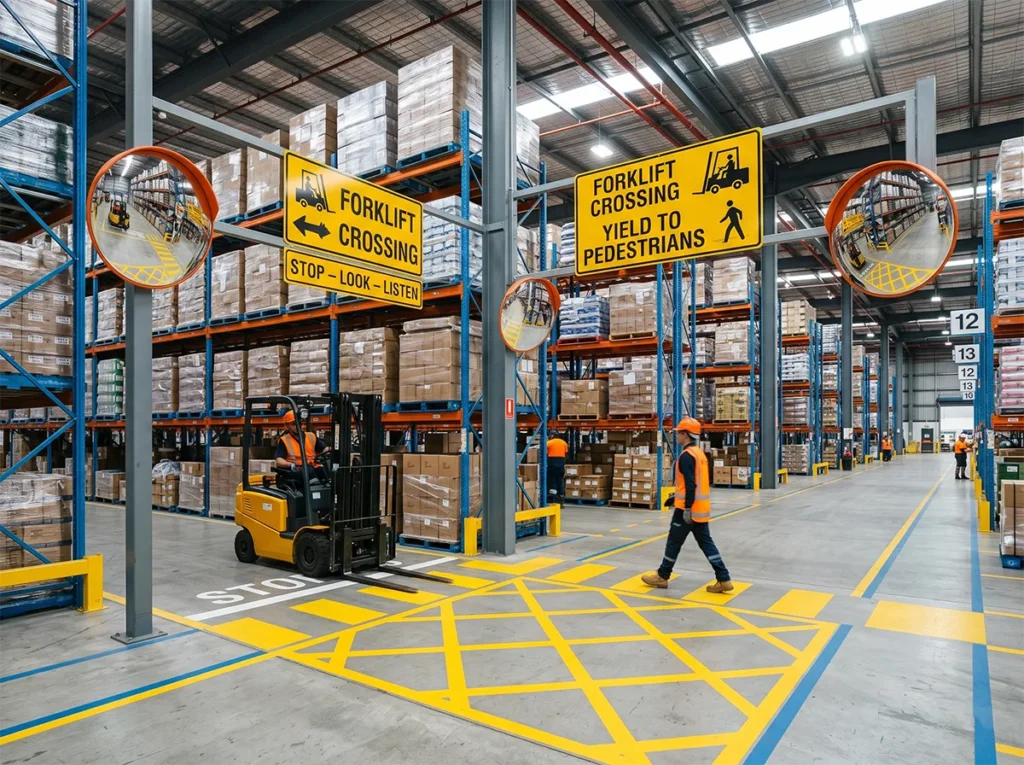
Many near misses happen where visibility breaks down.
High-risk areas often include:
- aisle ends
- pallet racking corners
- doorways
- crossing points
- roller door entries
- and shared access zones between warehouse and dispatch
Practical controls may include:
- convex mirrors
- reduced speed zones
- stop-and-check points
- horn-use rules
- exclusion markings
- and improved layout to reduce obstructed views
A forklift operator cannot respond safely to what they cannot see.
That is why site design matters just as much as operator behaviour.
4. Keep Loading and Dispatch Areas Under Stronger Control
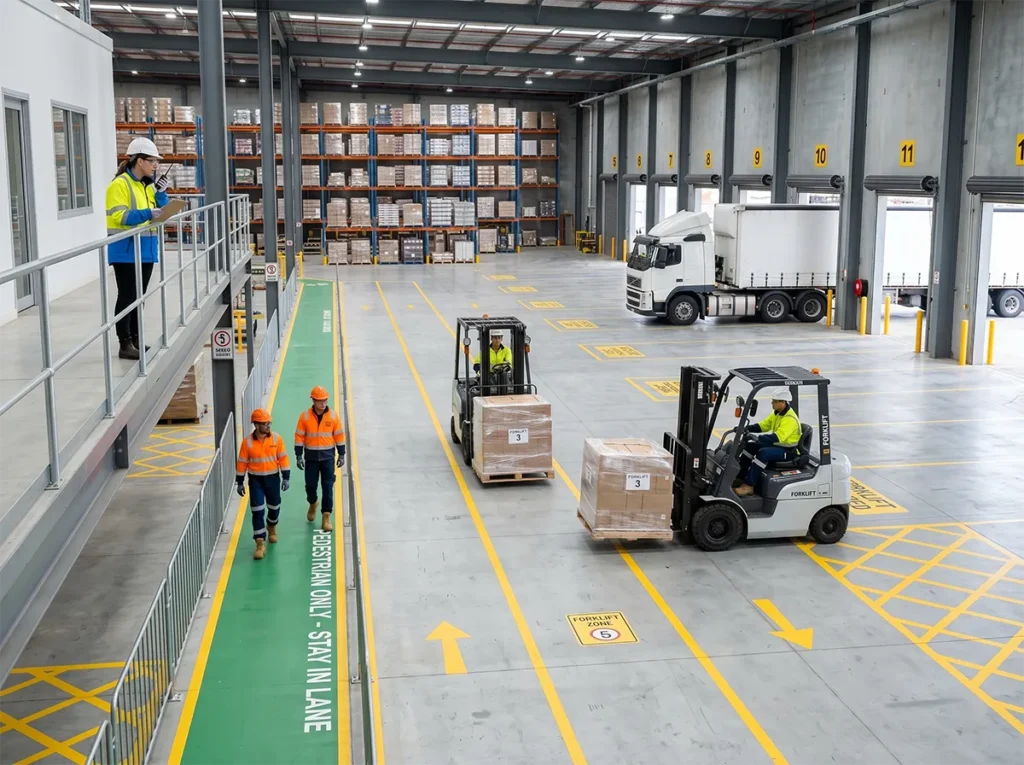
Loading zones often carry layered risk:
- moving forklifts
- truck movement
- paperwork activity
- pedestrians crossing through
- loose stock
- time pressure
- and changing vehicle positions
These spaces should not be treated like ordinary warehouse floor.
Good control often means:
- restricted pedestrian access
- designated waiting zones
- clear communication between warehouse and transport staff
- tighter supervision during vehicle movement
- and very clear rules around who can enter and when
Busy dispatch areas are one of the easiest places for “normal unsafe movement” to become accepted unless someone actively manages them.
5. Induct New and Temporary Workers Properly
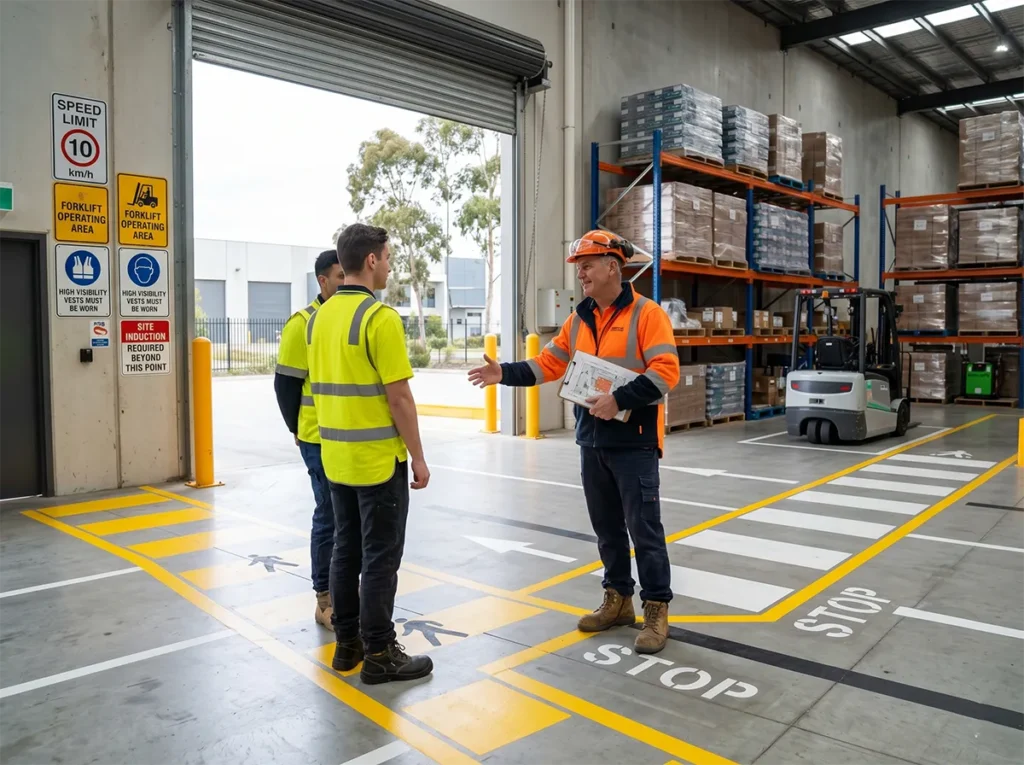
This is a major point for labour hire relevance.
A worker who is new to the site may not understand:
- traffic flow
- where forklifts travel most often
- what areas are restricted
- how crossings work
- where vision is poor
- or which shortcuts are dangerous
That is why traffic rules need to be part of site induction from day one.
Good induction should clearly explain:
- pedestrian-only areas
- forklift-only areas
- crossing points
- site-specific blind spots
- high-risk zones
- and what to do if the worker is unsure
A worker with warehouse experience elsewhere may still be unfamiliar with your site layout.
That matters.
Our article on site induction and day-one safety expectations also explains what good workers need to understand before stepping onto an active industrial floor.
6. Reinforce Rules Through Supervision, Not Just Signage
Signs matter.
Floor markings matter.
Policies matter.
But on a live warehouse floor, supervision often makes the biggest difference.
If supervisors ignore:
- pedestrians cutting through forklift zones
- pallets sitting in walkways
- drivers rushing intersections
- or people standing in unsafe staging areas
then the written traffic plan quickly loses power.
Strong supervision means:
- correcting unsafe movement early
- reinforcing rules consistently
- not allowing “quick shortcuts” to become normal
- and stepping in before repeated minor issues become accepted behaviour
Traffic management works best when site leaders treat it as operational discipline, not just a compliance document.
7. Match Forklift Movement to Site Conditions
Not every warehouse needs the same traffic approach.
Controls should reflect:
- site size
- aisle width
- product type
- racking layout
- floor condition
- vehicle type
- noise level
- worker density
- and shift pressure
For example:
- a narrow-aisle warehouse may need tighter speed and crossing controls
- a food-grade site may need more controlled pedestrian movement around packing zones
- a busy dispatch operation may need separate staging and waiting areas
- a mixed warehouse with visitors or office crossover may need stronger barriers and escorted access
A good traffic system fits the actual site.
It does not rely on generic rules that look fine on paper but do not work in practice.
8. Review Housekeeping as Part of Traffic Safety
Housekeeping and traffic safety are closely connected.
When the floor is messy, traffic risk increases.
Common issues include:
- pallets left in walkways
- wrapping and waste underfoot
- bins narrowing forklift turns
- stock staged in crossing areas
- poor visibility through clutter
- and rushed overflow storage during busy periods
Traffic safety is much easier to maintain when the warehouse layout stays clean, visible, and controlled.
This is one reason good warehouse housekeeping is not just cosmetic.
It directly affects pedestrian and plant safety.
9. Treat Near Misses as Traffic Warnings
A near miss between a forklift and a pedestrian is not a lucky escape to ignore.
It is a warning.
If a worker says:
- “the forklift came around too fast”
- “I didn’t know that was an active lane”
- “I couldn’t see past the pallets”
- “people always cut through there”
- “the crossing is always blocked”
then the site has been given useful information.
Good traffic management improves when near misses are:
- reported early
- reviewed properly
- linked back to real floor conditions
- and used to strengthen controls before a serious incident happens
A quiet warehouse can still have a weak traffic system.
Near misses often reveal that before injuries do.
For a broader employer guide, see our WorkSafe Victoria compliance in manufacturing and warehousing pillar post on hazard control, induction, and practical site discipline.
10. Review Traffic Management Whenever the Site Changes
Warehouse traffic plans should not stay fixed while the site changes around them.
Review is especially important when:
- racking layout changes
- product flow changes
- dispatch volume increases
- new forklifts or plant are introduced
- packing areas are moved
- temporary labour volume increases
- or pedestrian routes are altered for operational reasons
Even small layout changes can create:
- new blind spots
- awkward crossings
- tighter turns
- and more shared-space risk
That is why traffic management should be reviewed as a living control, especially during peak periods or operational growth.
What Good Warehouse Traffic Management Looks Like
A well-controlled site usually shows clear signs of stronger traffic management:
- pedestrians know where to walk
- forklift lanes are respected
- crossings are obvious
- dispatch zones are controlled
- new workers are not left guessing
- supervisors correct unsafe shortcuts early
- floor layout supports safe movement
- and near misses are taken seriously
It should feel:
- calm
- visible
- controlled
- and hard to misunderstand
If a new worker can walk onto the floor and clearly see how movement works, that is usually a good sign.
If traffic rules depend on “just knowing” or “watching what others do”, the system is weaker than it should be.
A Simple Warehouse Traffic Management Checklist
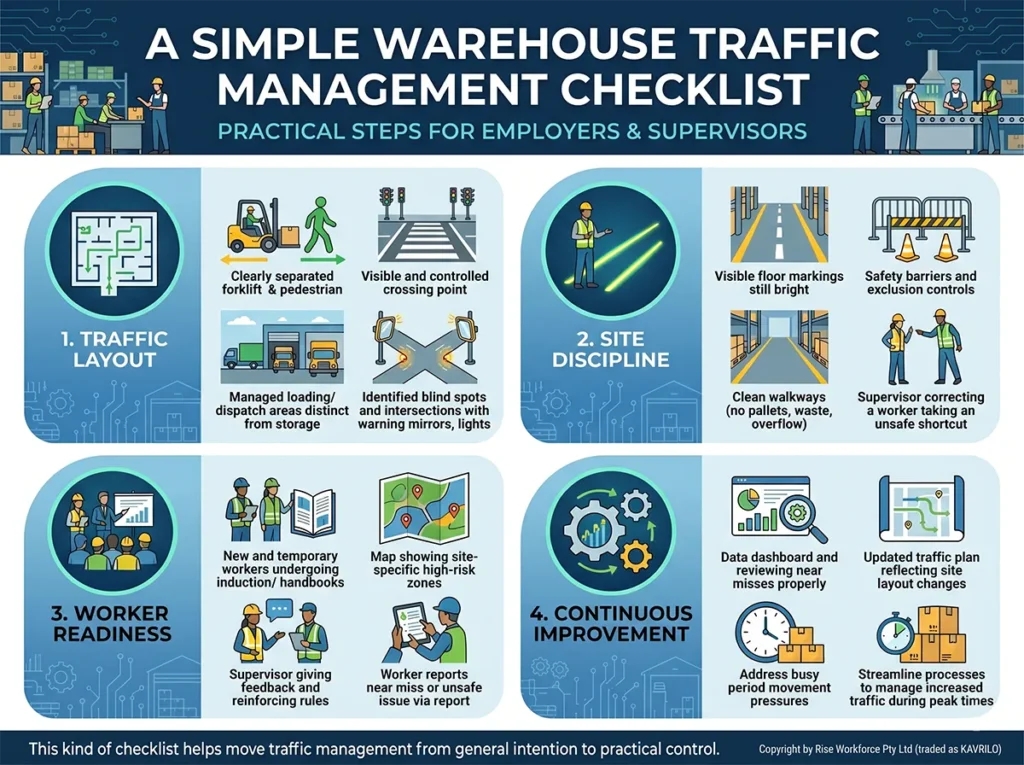
Here is a practical checklist for employers and supervisors.
Traffic Layout
- Are forklift and pedestrian routes clearly separated?
- Are crossing points visible and controlled?
- Are loading and dispatch areas managed differently from general floor space?
- Are blind spots and intersections clearly identified?
Site Discipline
- Are floor markings still visible and respected?
- Are barriers or exclusion controls used where reasonably practicable?
- Are walkways free from pallets, wrapping, waste, or overflow stock?
- Are unsafe shortcuts being corrected early?
Worker Readiness
- Are new and temporary workers inducted on traffic rules before starting?
- Do workers understand site-specific high-risk zones?
- Are supervisors reinforcing traffic expectations consistently?
- Do workers know how to report a near miss or unsafe movement issue?
Continuous Improvement
- Are near misses reviewed properly?
- Is the traffic plan updated when site layout changes?
- Are busy periods creating new movement pressure that needs to be addressed?
This kind of checklist helps move traffic management from general intention to practical control.
You can also explore our safety-focused approach to see how clearer onboarding, site assessment, and stronger OHS discipline support safer placements in warehouse and factory environments.
Final Word
Forklift and pedestrian interaction is one of the clearest and most practical risk areas in warehouse operations.
It can be reduced significantly — but not by assumption.
Safer warehouse traffic management usually comes from:
- clearer separation
- better layout
- stronger induction
- practical supervision
- cleaner floor discipline
- and a willingness to review real movement on the site, not just the traffic plan on paper
For employers across Melbourne’s South-East, this is one of the strongest areas to improve if you want to build a safer, more controlled warehouse environment.
Because when traffic flow is clearer, the site usually becomes:
- safer
- easier to supervise
- easier to induct into
- and less exposed to avoidable incidents
That is not just good compliance.
It is good operations.
Need Practical Labour Hire Support for Warehousing and Logistics in Melbourne’s South-East?
KAVRILO is building its approach around safety-aware workforce support, clearer site coordination, and stronger operational discipline for warehouse and industrial environments.
If your site needs labour hire support that understands the importance of:
- safer site onboarding
- practical warehouse discipline
- and clearer operational expectations from day one
KAVRILO is building its focus to support warehouse and logistics operations across Melbourne’s South-East.
Need warehouse and factory labour hire support with a practical safety-aware approach? Talk to KAVRILO about workforce support for warehousing, logistics, and industrial operations across Melbourne’s South-East.
Article Disclaimer
This article is provided for general information only and does not constitute legal, workplace relations, safety, taxation, payroll or other professional advice. Please seek advice specific to your circumstances before acting on this information.
Please read our Website Disclaimer for more information.