
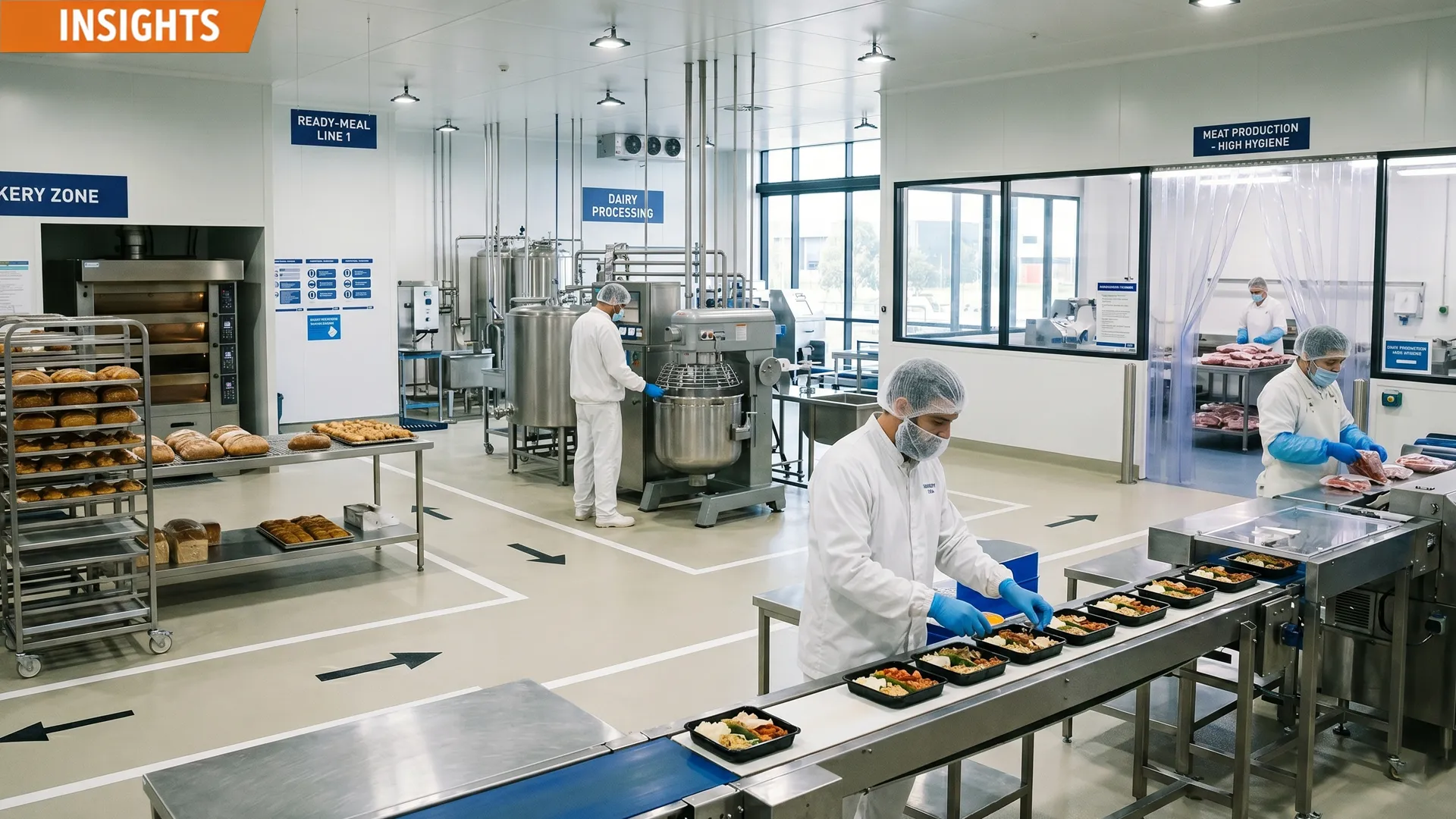
A lot of people say they have “food production experience” as though that means every food site works the same way.
It does not.
Across Melbourne’s South-East, food production environments can vary greatly depending on the product, the process, the temperature, the pace of the line, and the food safety risks the site is trying to control. A worker who settles in well at one site may still need to adapt carefully at another. The same goes for labour hire, onboarding, and site supervision.
That is especially true in meat, dairy, bakery, and ready-meals production.
All four sectors may involve hygiene rules, PPE, process discipline, and product handling. But the details can differ enough that treating them all as “basically the same” creates avoidable risk.
In food production, site-specific expectations matter.
You can learn more about our approach to food production labour hire support across Melbourne’s South-East.
That is why both workers and employers need to understand that food safety is not one-size-fits-all.
Why Food Safety Expectations Differ from Site to Site
Food safety controls are built around real risks.
Those risks change depending on things like:
- raw versus cooked product
- temperature control
- allergen profile
- moisture and spoilage risk
- packaging and labelling sensitivity
- cleaning requirements
- equipment and workflow design
- whether the environment is high-care, low-care, chilled, or mixed-use
That means different food sites may place different emphasis on:
- PPE and gowning
- hand hygiene frequency
- tool separation
- allergen discipline
- movement between zones
- temperature control
- packaging accuracy
- product handling detail
- changeover rules
The best workers and best labour hire providers understand this early.
Experience helps — but only if it is paired with adaptability.
What Meat Processing Sites Often Focus On
Meat environments often carry strong expectations around:
- raw product handling
- contamination control
- knife and tool discipline
- temperature-controlled work
- hygiene around contact surfaces
- cleaning and washdown routines
- physical stamina and manual handling
- strict separation of clean and dirty processes where relevant
On meat sites, workers may need to adapt to:
- colder environments
- wetter floors
- stronger hygiene controls
- more physically demanding work
- stricter personal cleanliness expectations
- more obvious raw-product risk
Employers in these environments often look closely at whether workers can stay disciplined in conditions that are physically uncomfortable or repetitive.
A worker who was fine in a dry bakery line may still need to adjust their habits significantly on a meat floor.
Our guide to GMP basics for workers explains the day-to-day hygiene habits that help workers adapt to controlled food environments.
What Dairy Sites Often Focus On
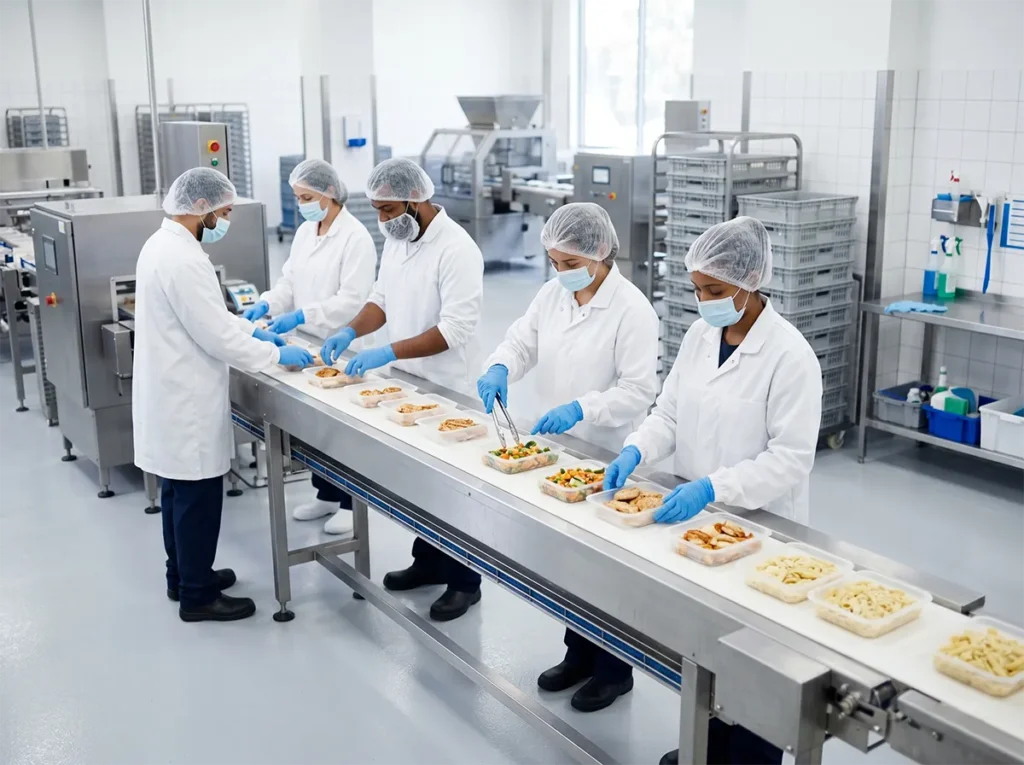
Dairy production can look cleaner and calmer from the outside, but it often carries tight expectations around:
- hygiene and sanitation
- temperature control
- cleaning validation
- packaging integrity
- contamination prevention
- allergen awareness
- product handling consistency
Depending on the site, dairy production may involve:
- chilled processing or packing
- strict cleaning routines
- careful handling of containers, seals, lids, or finished products
- strong sensitivity around spoilage and shelf-life protection
Dairy sites often value workers who are:
- clean in their habits
- steady rather than careless
- good with repetitive process
- attentive to packaging and presentation
- disciplined with PPE and hygiene entry
Even if the line pace is not extreme, the site may still expect very tight consistency.
Our guide to GMP basics for workers explains the day-to-day hygiene habits that help workers adapt to controlled food environments.
What Bakery Sites Often Focus On
Bakery work can feel familiar to many workers because it often looks faster, more open, and more flow-based than some other food sectors.
But bakery sites still carry important food safety expectations, often around:
- ingredient handling
- allergen control
- line pace
- packing accuracy
- tray, rack, or product presentation
- flour, dust, or heat-related housekeeping
- product mix-ups during changeovers
Bakery environments may involve a mix of:
- repetitive packing
- moving products at pace
- ingredient awareness
- shape, finish, or pack presentation standards
- tighter control where allergens are present across multiple product runs
One common mistake is assuming bakery is “less strict” because it looks faster or more familiar.
Good bakery sites still expect workers who can move quickly without becoming messy, casual, or careless.
What Ready-Meals Sites Often Focus On
Ready-meals production often brings several risk areas together at once.
These sites may involve:
- cooked and chilled product handling
- allergen complexity
- fast packing lines
- label accuracy
- portion control
- tray sealing or pack integrity
- raw and cooked separation in some operations
- strong changeover discipline between products
Ready-meals environments often demand workers who can handle:
- line pace
- hygiene rules
- packaging checks
- presentation standards
- cross-contamination awareness
- label and product identity control
That is one reason ready-meals sites can be difficult for new workers if induction is weak.
A worker who only thinks about speed can create problems quickly in ready-meals production, because food safety, packaging, and product identification are often closely linked.
Our guide to GMP basics for workers explains the day-to-day hygiene habits that help workers adapt to controlled food environments.
Why “Food Experience” Still Needs Site-Specific Induction
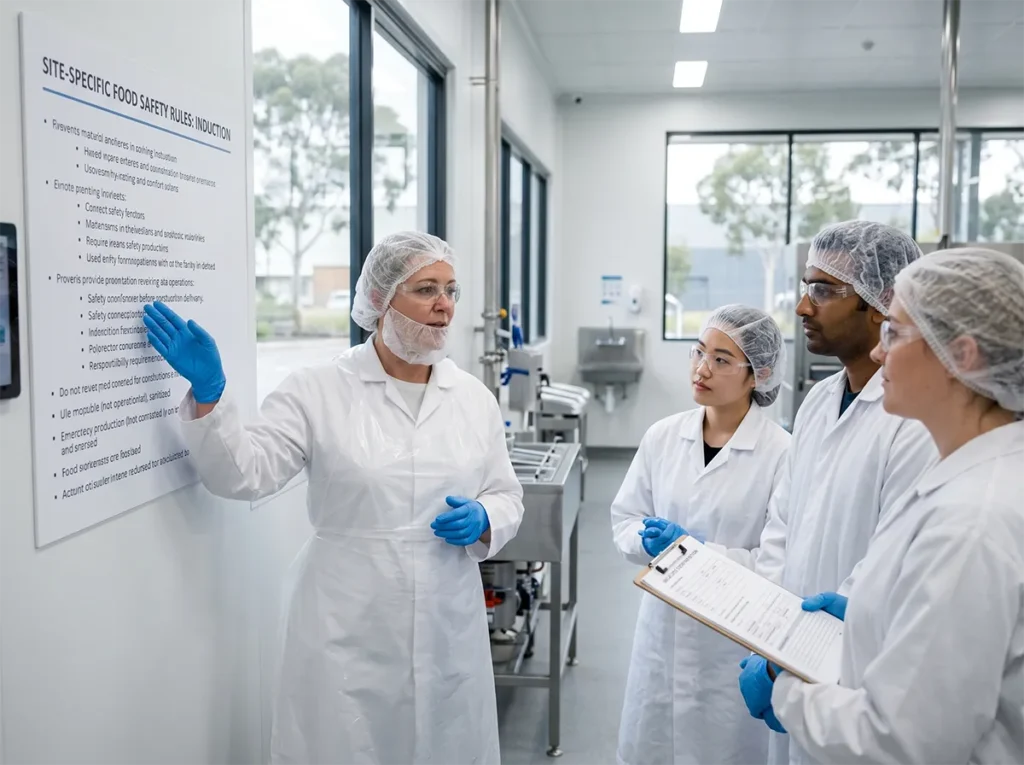
This is one of the most important points for both employers and workers.
A person may have worked in:
- meat
- dairy
- bakery
- ready meals
- general food packing
and still need proper induction at the new site.
That is because prior food experience does not automatically mean the worker understands:
- your hygiene entry process
- your allergen controls
- your PPE requirements
- your line layout
- your movement rules
- your product-specific risk points
- your reporting process
- your expectations around rejects, rework, or changeovers
Good induction is not a sign the worker lacks experience.
It is how the site makes its own standards clear.
You can also read our article on food factory inductions to see what good workers pay attention to on day one.
What This Means for Workers
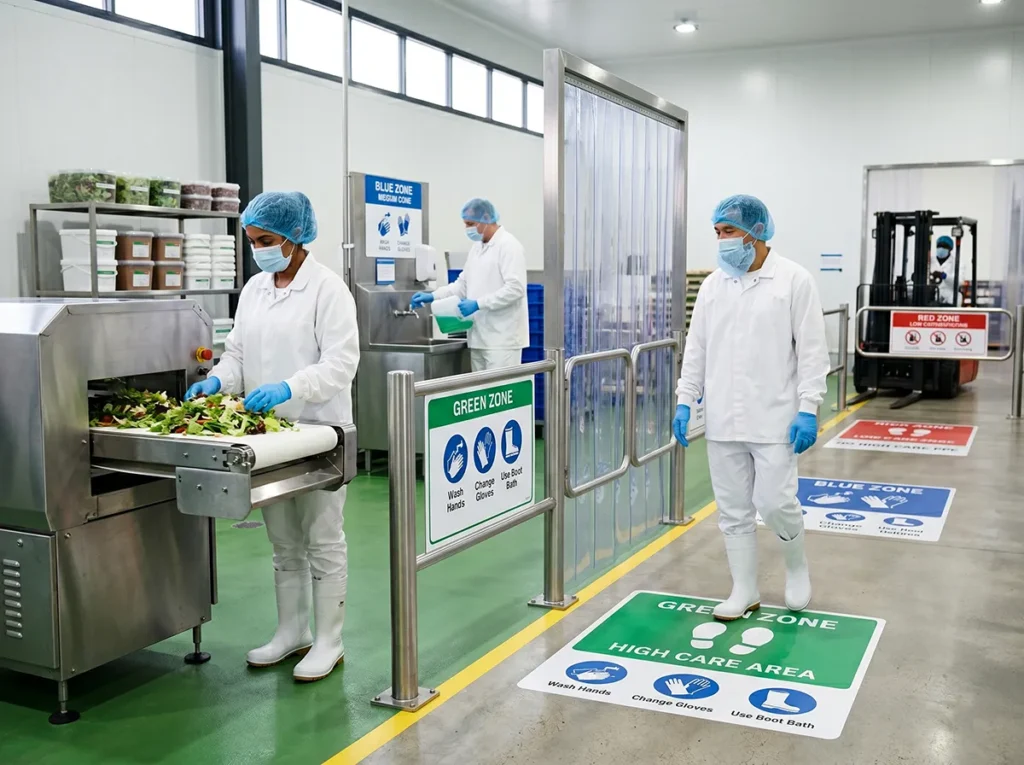
If you are a worker moving between food sites, the smartest mindset is:
do not assume — observe, listen, and adapt.
That means:
- pay close attention during induction
- watch how entry and PPE are managed
- ask when unsure about zones or product handling
- do not compare every process to your last site
- understand that different products create different risks
- respect that the pace may change, but the food safety rules still matter
Workers who adapt well across different food sectors are often the ones who keep getting booked.
That is because employers value people who can settle into site-specific expectations without turning every change into confusion.
What This Means for Employers
For employers using casual or temporary labour, the lesson is also clear:
do not assume that “food experience” alone is enough.
A worker may be very capable and still need site-specific direction to perform safely in your environment.
That means good onboarding should clearly explain:
- what type of site this is
- what risks matter most here
- what the hygiene boundaries are
- what PPE discipline is expected
- what product-handling mistakes matter most
- what changeover or allergen rules are critical
- what a good first shift looks like
This helps reduce avoidable errors and makes temporary labour more useful, not more risky.
Common Mistakes When People Treat All Food Sites the Same
Problems often begin when workers or supervisors assume all food sites are broadly interchangeable.
That can lead to mistakes such as:
- underestimating allergen risk in bakery or ready meals
- underestimating raw-product risk in meat
- underestimating packaging discipline in dairy
- bringing habits from one site into another without checking fit
- assuming speed matters more than hygiene because the line looks fast
- poor movement between zones
- weak PPE discipline
- poor changeover behaviour
- unclear reporting when something looks wrong
These mistakes are usually preventable.
They often come from assumption, not intention.
A Simple Checklist for Workers and Employers
Here is a practical checklist that applies when moving into or managing different food production environments.
For Workers
- I understand that this site may have different safety expectations from my last one
- I know what PPE is required here
- I understand the hygiene entry steps
- I know whether allergen or zone rules are important here
- I know what to report and who to report it to
- I am watching the site process before assuming I already know it
For Employers
- We have explained this site’s specific food safety priorities clearly
- New workers know the hygiene entry and PPE rules
- Zone boundaries and movement logic are clear
- Allergen expectations have been explained where relevant
- We are observing the first part of shift closely enough to catch early issues
- We are not assuming previous food experience equals site readiness
This kind of checklist helps everyone stay more site-aware.
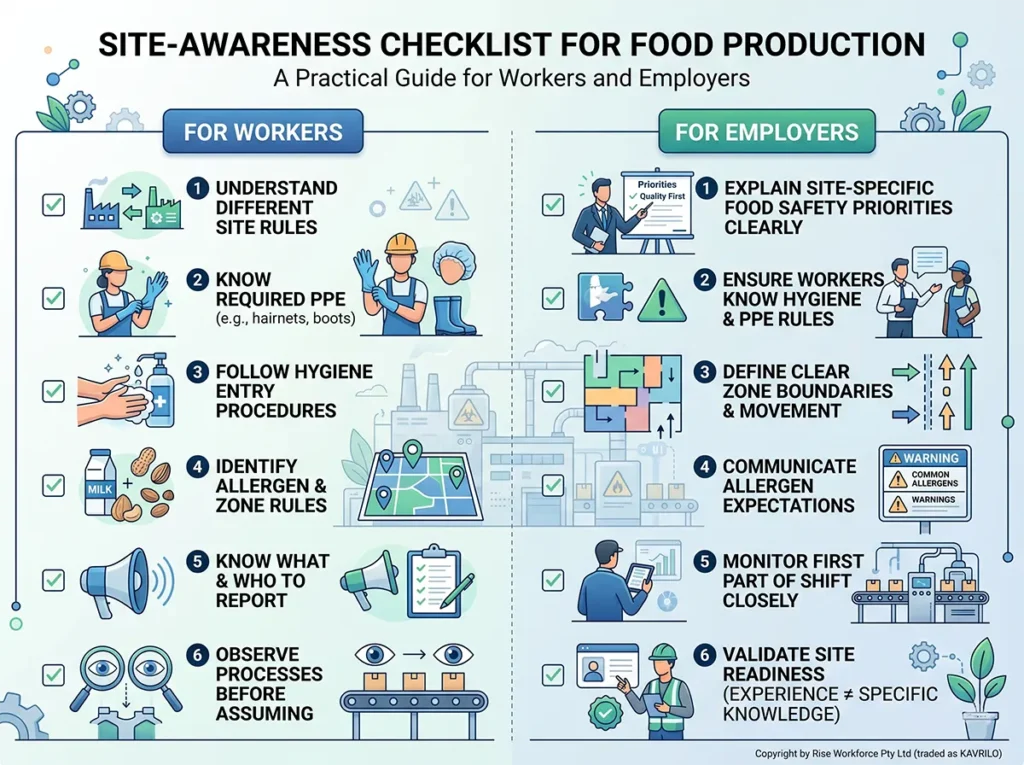
Our guide to food production PPE also explains why correct protective equipment and area-specific rules matter so much in different production environments.
What Good Food Production Support Really Looks Like
Whether you are hiring or looking for work, good food production support should feel like:
- clear expectations
- calm onboarding
- practical hygiene discipline
- workers who adapt without guesswork
- fewer repeated basic corrections
- stronger trust on the floor
- safer product handling
- better fit between worker and site type
That is especially important in South-East Melbourne, where food production businesses can operate in very different ways even within the same broader industrial corridor.
You can also read our article on allergen and cross-contamination rules to understand how small mistakes can create bigger food safety problems very quickly.
Final Word
Meat, dairy, bakery, and ready-meals sites all fall under food production — but that does not mean they all carry the same safety expectations.
Each environment has its own operational rhythm, hygiene pressure points, handling risks, and food safety priorities.
That is why the best workers stay adaptable.
That is why the best employers make site-specific expectations clear.
And that is why good labour hire support should focus on worker fit, onboarding, and controlled behaviour — not just filling shifts.
If you want food production staffing or performance to work properly, start with this mindset:
different products create different risks, and different sites need different habits.
That is where safer, more reliable food production support begins.
Looking for food production jobs or labour hire support in Melbourne’s South-East?
KAVRILO is building its focus in food production labour hire with a practical, safety-aware approach that values hygiene discipline, site fit, and dependable workforce support across different production environments.
Stay connected with KAVRILO for future opportunities in packing, processing, and hygiene-focused production environments.
Article Disclaimer
This article is provided for general information only and does not constitute legal, workplace relations, safety, taxation, payroll or other professional advice. Please seek advice specific to your circumstances before acting on this information.
Please read our Website Disclaimer for more information.