
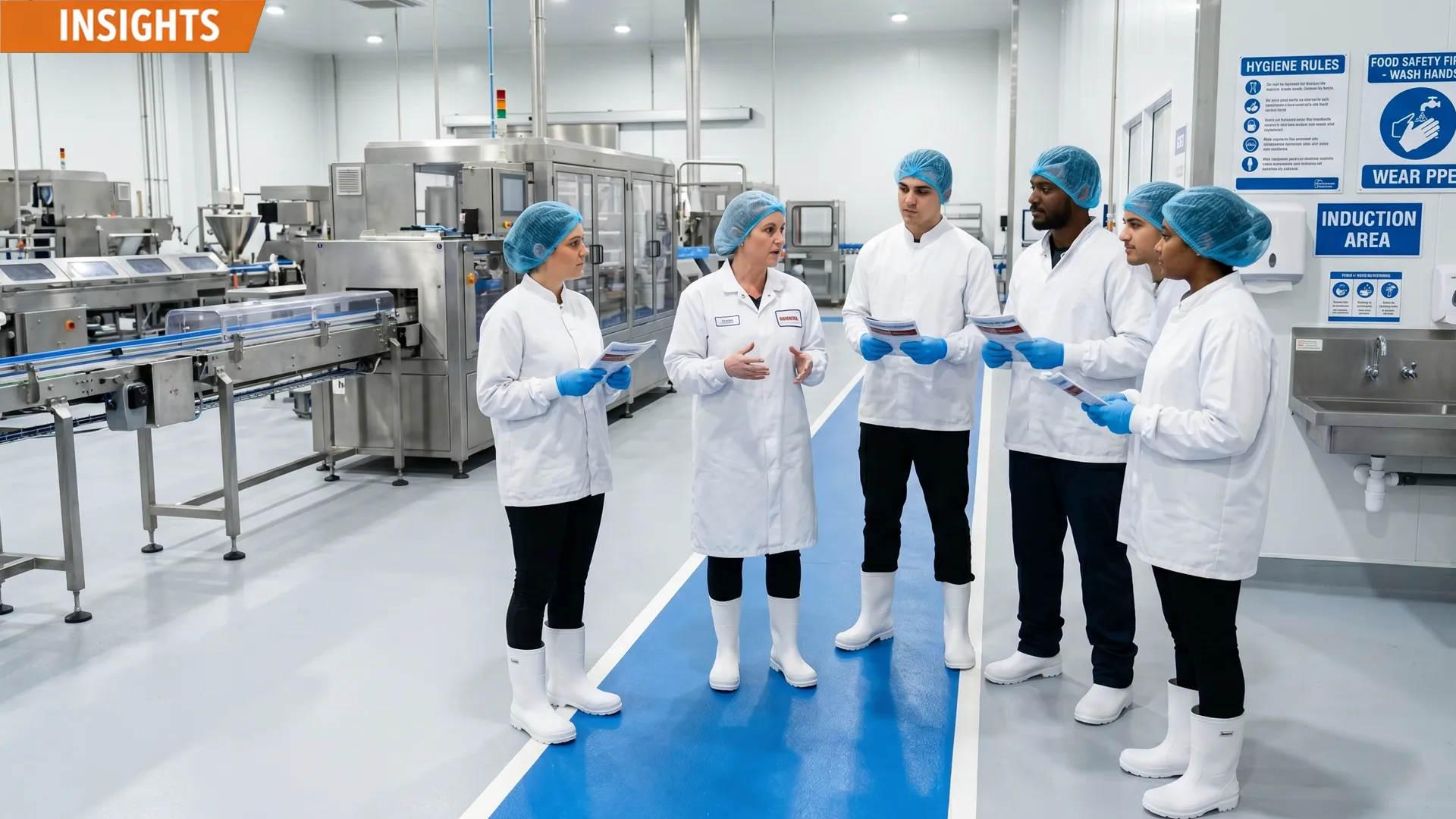
A lot of workers think induction is just the part you sit through before the real work starts.
In food production, that is the wrong mindset.
Across Melbourne’s South-East, food factories in ready meals, dairy, bakery, meat, chilled packing, and cleanroom-like environments often rely on induction to explain the exact rules that protect product safety, worker safety, and site standards. If you switch off during induction, you can miss the very things that determine whether you settle in well or create avoidable problems on shift.
Good workers do not treat induction like background noise. They treat it like the first part of the job.
If you want to be considered for future food production roles, you can join the KAVRILO roster for opportunities across Melbourne’s South-East.
That is because on food sites, day one usually tells supervisors two things very quickly:
- whether you listen properly
- whether you are likely to follow process under pressure
If you want to stay trusted and keep getting booked, what you pay attention to on day one matters.
Why Inductions Matter More in Food Production
In some workplaces, induction is mostly about general site rules.
In food production, induction often covers much more than that. It may include:
- hygiene entry procedures
- PPE rules
- handwashing and sanitising points
- food safety risks
- allergen control
- restricted areas and hygiene zones
- line-specific handling rules
- break procedures
- reporting processes
- injury, illness, and contamination rules
That means induction is not just administrative. It is often the site’s way of showing you:
how this workplace stays safe, compliant, and production-ready.
If you miss those details, you may still look physically ready for the shift — but not operationally ready.
What Good Workers Pay Attention To on Day One
Good workers are not trying to memorise every sentence word-for-word.
They focus on the details that affect how they need to behave on the floor.
Here are the key things they pay attention to.
1. Hygiene Entry Rules
One of the first things to watch closely is how the site expects workers to enter production areas.
That may include:
- handwashing steps
- sanitising points
- boot or shoe procedures
- gowning sequence
- glove rules
- hairnet or beard cover requirements
- restrictions on jewellery, phones, or personal items
Do not assume every site runs the same way.
A worker who says, “My last factory didn’t do it like this,” is already heading in the wrong direction.
Good workers pay attention to the actual process in front of them and follow it properly from the start.
2. PPE Expectations
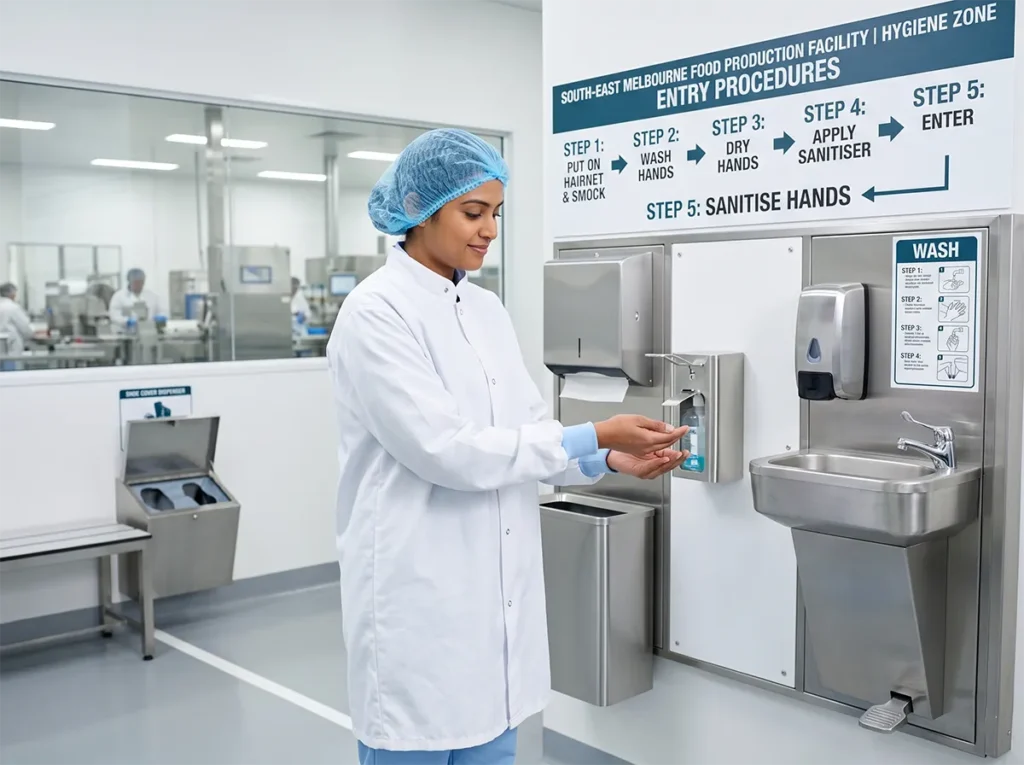
In food production, PPE is not only about personal safety. It is also about protecting the product.
During induction, workers need to pay attention to:
- what PPE is required
- how it should be worn
- where it must be changed
- what not to do with it
- when glove changes are required
- whether specific areas have different PPE rules
This matters on many food sites, but especially in:
- dairy
- meat
- ready meals
- chilled packing
- cleanroom-like environments
A worker who wears PPE casually can create risk very quickly.
3. Hygiene Zones and Restricted Areas
Food sites often separate areas for a reason.
The induction may explain:
- raw versus cooked zones
- low-care versus high-care areas
- allergen and non-allergen sections
- ingredient rooms and packing zones
- chilled and non-chilled movement rules
- where workers can and cannot go
These details matter more than many new workers realise.
A lot of avoidable mistakes happen because someone thought it was fine to “just step over there for a second”.
Good workers listen carefully to movement rules on day one, especially where hygiene, allergen control, or food contact risk is involved.
4. Product Handling Expectations
Induction is also where workers start understanding what “acceptable handling” looks like on that site.
That may include:
- how product should be touched or moved
- what to do with damaged items
- how rejects are handled
- how trays, cartons, or packs are positioned
- where product should never be placed
- what must be escalated instead of ignored
This is especially important on fast-moving lines, where poor handling can quickly lead to:
- waste
- contamination risk
- presentation issues
- label errors
- rework
Good workers listen for the small handling details, not just the big safety warnings.
5. Allergen Rules
Many food factories include allergen control in induction, but not every worker realises how important that section is.
Pay attention to:
- what allergens are on site
- whether lines or rooms are allergen-specific
- colour-coded tools or zones
- glove change rules
- packaging and label controls
- product changeover expectations
- what to do if something looks wrong
Workers who switch off during allergen instructions can create serious problems later, even if they meant no harm.
Good workers understand that allergen control is part of food safety, not just a QA issue.
You can also read our guide to allergen and cross-contamination rules to understand how small mistakes can create bigger food safety problems on site.
6. Line Pace and Workflow
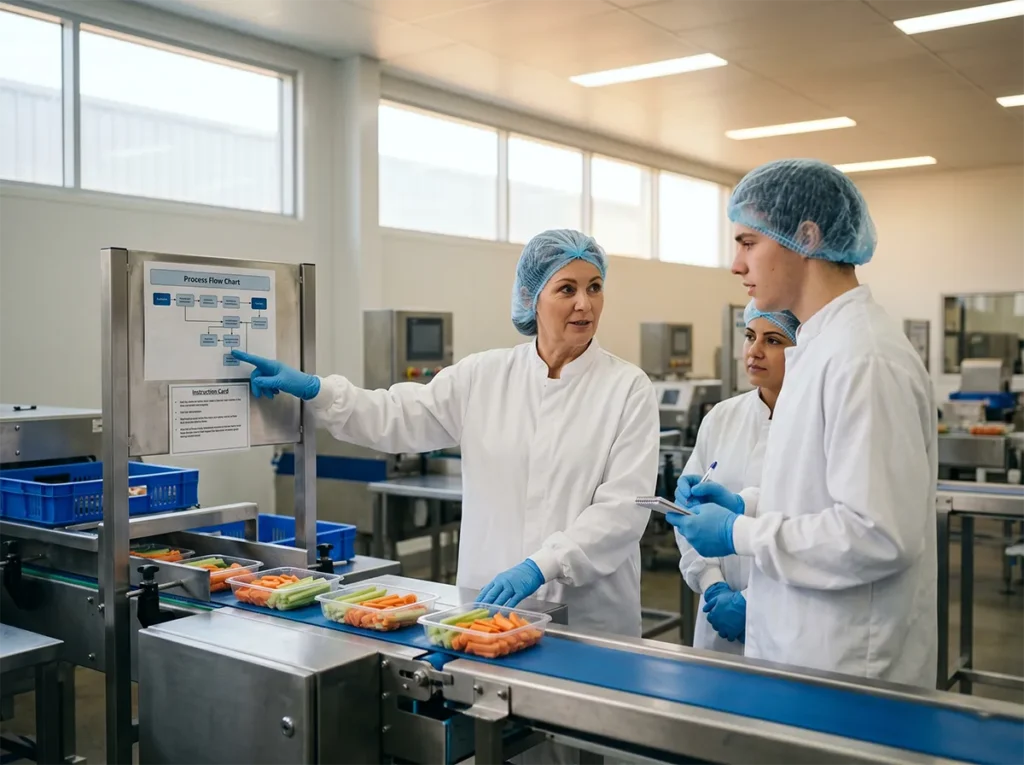
On day one, many workers are so focused on “trying not to mess up” that they miss how the line actually runs.
During induction or early explanation, pay attention to:
- line speed
- flow direction
- product sequence
- where materials come from
- where waste goes
- how the team communicates
- what happens if the line stops or backs up
You are not expected to be perfect on day one. But good workers listen for the rhythm and flow of the site early, because that helps them settle faster once the shift begins.
7. What to Report — and Who to Tell
One of the most useful parts of induction is understanding what needs to be reported.
That may include:
- damaged product
- incorrect labels
- equipment issues
- hygiene concerns
- illness symptoms
- injuries
- contamination concerns
- allergen risks
- anything unusual on the line
Equally important: who do you report it to?
Good workers pay close attention to reporting lines, because useful communication is one of the things supervisors notice early.
8. Break Rules and Site Movement
On food sites, breaks are not always as simple as walking out and coming back.
Induction may explain:
- where you can and cannot take items
- what PPE must be removed or changed
- handwashing on return
- how movement between lunchroom and production area works
- whether there are staggered breaks or site-specific timings
Workers who ignore break-return procedures often look careless, even if they are otherwise working hard.
Good workers understand that food safety rules do not stop just because break starts.
9. The Site’s Standard of Cleanliness
Different food factories have different expectations around how clean and controlled the floor needs to stay.
During induction, pay attention to:
- housekeeping expectations
- bin and waste rules
- cleaning points
- where tools belong
- how tidy stations should be kept
- what surfaces or equipment should not be touched casually
This matters because messy habits often lead to:
- slower work
- hygiene issues
- confusion during changeovers
- poor presentation
- avoidable supervisor attention
Good workers notice what “normal clean” looks like on that site.
10. The First 15 Minutes After Induction
What happens right after induction often tells you as much as the induction itself.
Good workers use the first part of the shift to watch:
- how others move
- where product builds up
- how supervisors correct problems
- which hygiene rules are taken most seriously
- how quickly the team works without rushing
- what details experienced workers never ignore
That early observation helps you settle into the site more intelligently.
Day one is not only about listening. It is also about noticing.
If you also work on fast-moving lines, our article on packing line skills covers how to keep pace without creating avoidable mistakes.
11. Why Good Workers Ask Questions Early
Some workers think asking questions makes them look weak or inexperienced.
On food sites, the opposite is often true.
If you are unsure about:
- a zone
- a product
- PPE
- handwashing
- labels
- changeover
- allergen rules
- waste handling
- where to stand
- who to report to
it is better to ask early than guess badly.
Good workers do not ask endless questions without thinking. But they do ask when something matters.
That is usually seen as a strength.
12. What Supervisors Usually Notice on Day One
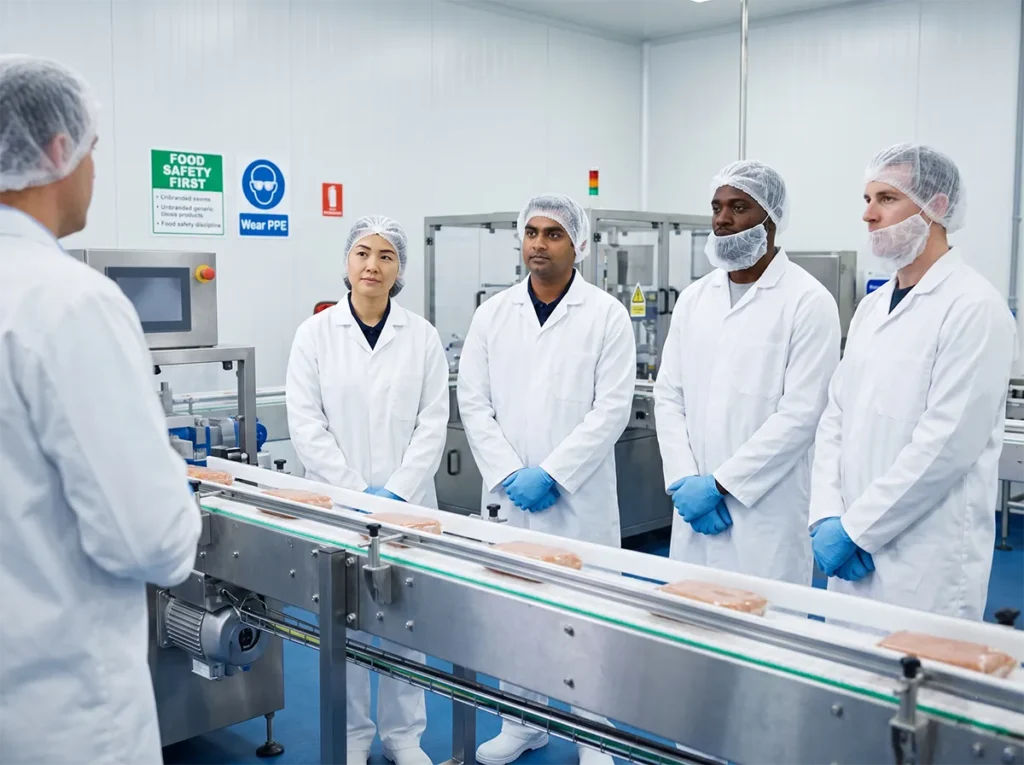
If you want to keep getting booked, it helps to understand what supervisors actually notice during induction and early shift performance.
They usually remember workers who:
- listen properly
- follow entry procedures without reminders
- wear PPE correctly
- respect site movement rules
- ask sensible questions
- stay calm
- settle in without drama
- take food safety seriously from the beginning
They also notice workers who:
- switch off during induction
- keep checking their phone
- ignore PPE or hygiene rules
- joke around when important instructions are being given
- guess instead of asking
- act like site rules are optional
In food production, day one often shapes first impressions very quickly.
A Simple Day One Induction Checklist
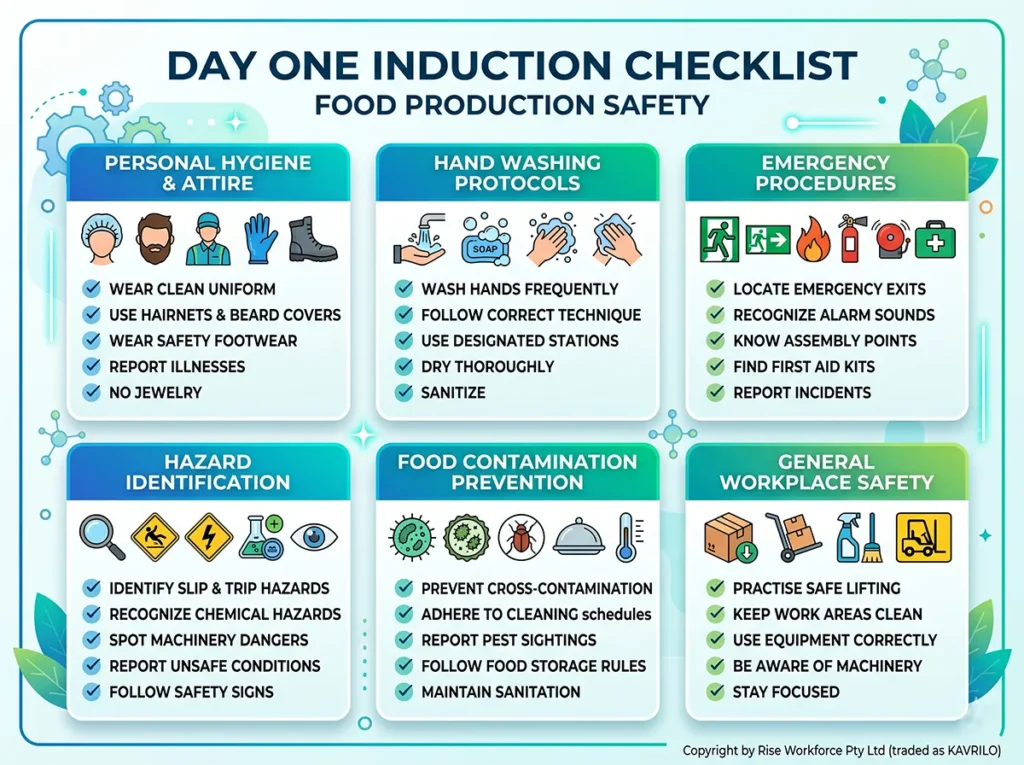
Here is a practical checklist workers can mentally use on day one.
During Induction
- I am listening for hygiene entry rules
- I understand the PPE requirements
- I know which areas are restricted or hygiene-sensitive
- I understand what needs to be reported and who to tell
Before Starting on the Floor
- I completed all entry and handwashing steps properly
- I am wearing PPE correctly
- I know where I should stand and what my role is
- I understand the product-handling basics for this site
During the First Part of the Shift
- I am watching the pace and flow of the line
- I am staying alert to hygiene, allergen, and movement rules
- I am speaking up early if I am unsure
- I am following process instead of guessing
The Right Day One Mindset
- listen properly
- move carefully
- stay clean
- ask early
- follow the site’s system
This kind of checklist helps workers settle faster and make a stronger first impression.
You can also read our guide to GMP basics for workers to strengthen your day-to-day hygiene habits on food production sites.
Final Word
Food factory inductions are not just about getting people signed on and started.
They are where sites explain how they stay safe, compliant, and consistent. Workers who take induction seriously usually settle in faster, make fewer mistakes, and build trust earlier.
If you want to do well on day one in food production, pay attention to more than just your start time or where the line is.
Focus on:
hygiene, PPE, movement rules, reporting, and site discipline.
That is what helps you look switched on.
That is what helps you stay safe.
And that is what helps you keep getting booked.
Looking for food production jobs in Melbourne’s South-East?
KAVRILO is building its focus in food production labour hire with a practical, safety-aware approach that values hygiene discipline, site fit, and dependable workforce support across different production environments.
Stay connected with KAVRILO for future opportunities in packing, processing, and hygiene-focused production environments.
Article Disclaimer
This article is provided for general information only and does not constitute legal, workplace relations, safety, taxation, payroll or other professional advice. Please seek advice specific to your circumstances before acting on this information.
Please read our Website Disclaimer for more information.