
Cold room work is not just “normal work in a colder space”.
If you have never worked in a chilled or cold food production environment before, the first shift can catch you off guard. The pace may still be fast. The line may still be strict on hygiene, output, and timing. The difference is that your body is also working against the cold.
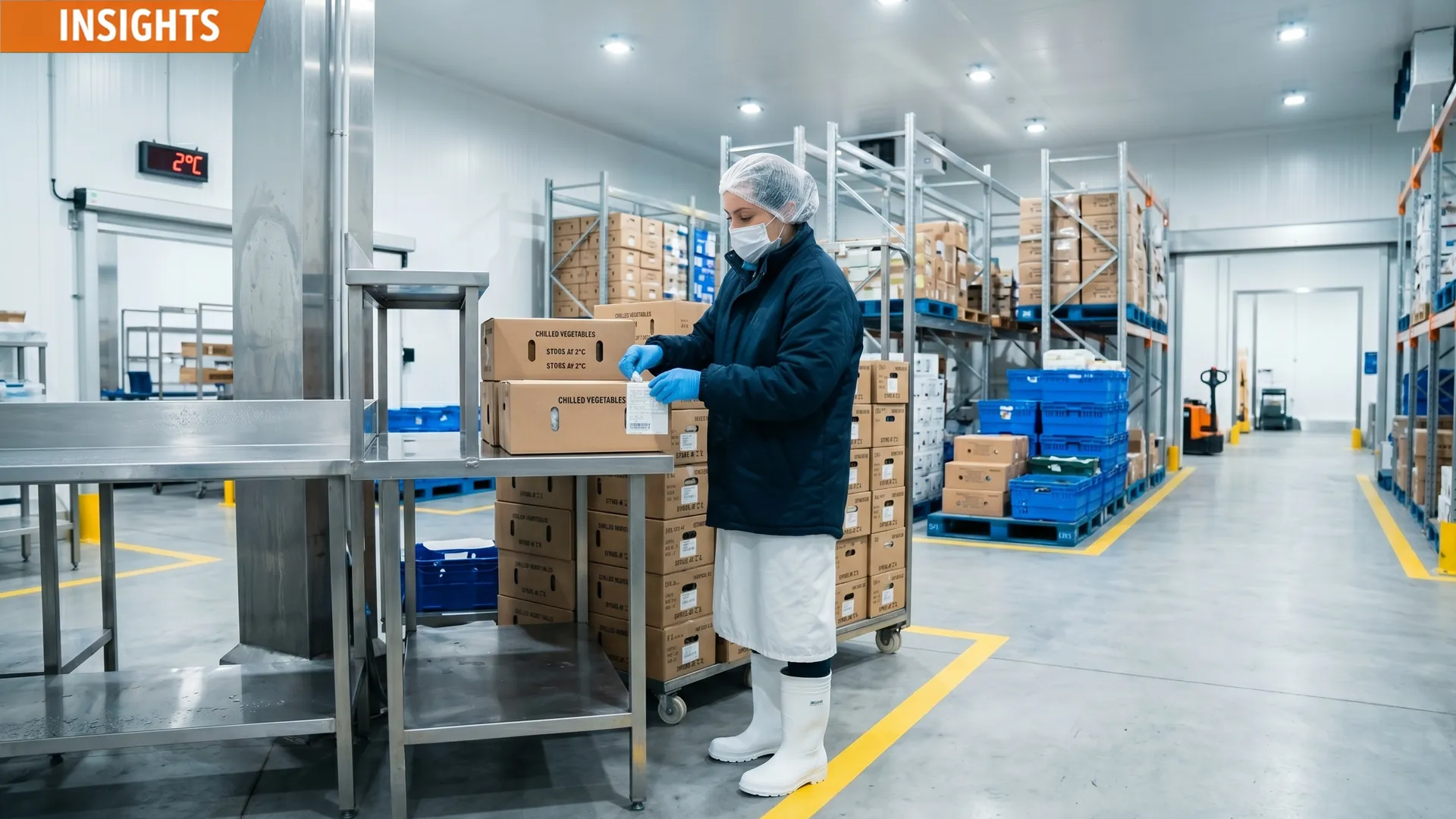
Across Melbourne’s South-East, food production sites in dairy, ready meals, meat, bakery support areas, and cold storage environments often need workers who can handle chilled conditions without becoming careless, slow, or unsafe. Some cleanroom-like lines may also combine temperature control with tighter hygiene and gowning expectations.
Cold room work can suit good workers very well. But the goal is not to “tough it out”. The goal is to work steadily, stay warm enough to function properly, follow site rules, and avoid letting cold stress affect your judgement, hygiene discipline, or safety.
If you want to be considered for future roles in chilled food production or cold storage, you can join the KAVRILO roster for opportunities across Melbourne’s South-East.
What Cold Room Work Usually Involves
Cold room work can include:
- packing food products in chilled environments
- moving stock in cold storage or dispatch areas
- handling cartons or trays in meat, dairy, or ready-meals production
- loading and unloading product in temperature-controlled spaces
- working near chilled lines, ingredient rooms, or finished-goods holding areas
Not every cold site is the same. Some are cool. Some are genuinely cold. Some involve moving between warmer and colder zones throughout the shift, which can be more tiring than staying in one temperature.
That is why workers need more than just a warm jacket. They need to understand how cold affects:
- pace
- concentration
- movement
- hand comfort
- safe manual handling
- food safety discipline over a full shift
Why Cold Room Work Feels Harder Than People Expect
A lot of workers think cold room work is mainly about feeling uncomfortable.
That is part of it, but not the full picture.
Cold conditions can affect:
- grip and hand comfort
- speed of movement
- concentration
- manual handling technique
- willingness to keep following process properly
- fatigue over the course of a shift
When workers get too cold, they often start making small mistakes:
- rushing jobs
- skipping proper movements
- adjusting PPE constantly
- losing patience
- handling products less carefully
- becoming less alert around pallets, trolleys, racks, or equipment
That is why cold room work is not only about endurance. It is also about discipline.
12 Practical Tips for Cold Room Work
1. Understand the Difference Between “Cold” and “Cold Stress”
Feeling cold is one thing. Cold stress is different.
Cold stress happens when the body starts struggling to maintain temperature properly. Even before it becomes severe, it can affect how well you move and think.
Early signs can include:
- numb fingers
- stiff hands
- distraction
- shaking
- reduced grip
- slowed reactions
- feeling unusually tired or flat
If you ignore those signs, your performance usually drops before you fully realise it.
Good workers learn to notice early changes in how they feel — not wait until they are freezing.
2. Dress for the Site, Not Just the Weather
One of the biggest mistakes in cold room work is wearing whatever feels warm instead of what works safely and hygienically on site.
Cold room PPE and clothing need to balance:
- warmth
- hygiene
- movement
- safety
- site compliance
Depending on the workplace, you may be expected to wear:
- insulated jackets or site-issued layers
- gloves suitable for the task
- hairnets or beard covers
- clean protective coats
- freezer or cold-area clothing
- steel-capped boots
- high-vis items in traffic or dispatch areas
Turning up underdressed is a problem. Turning up in bulky gear that makes you unsafe or non-compliant can also be a problem.
Follow the site’s actual PPE expectations. If you are unsure, ask before the shift.
3. Learn the Layering Mindset
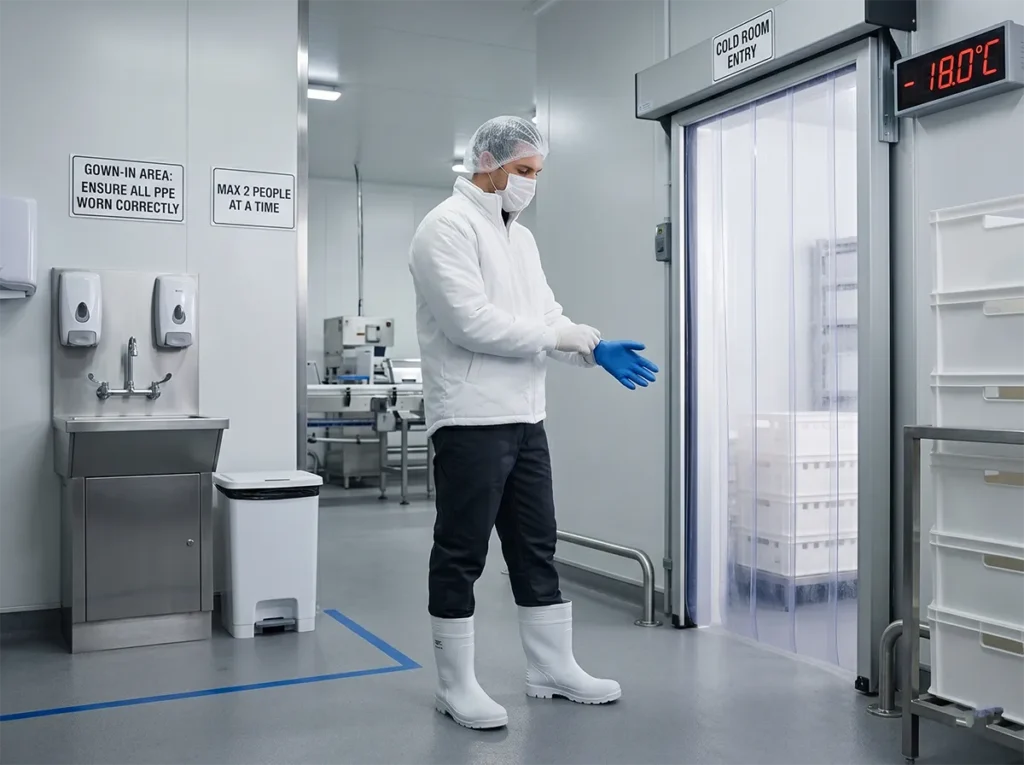
In cold environments, layering matters more than one thick item.
A good setup often means:
- a base layer that helps manage body heat
- a practical mid-layer if allowed
- the correct outer site gear
- gloves and head protection that fit properly
The exact combination depends on the site. Some food environments are tightly controlled and expect specific outerwear only. Some sites provide PPE and do not want personal items interfering with hygiene or uniform standards.
The key point is simple: do not guess. Wear what is approved and practical for the actual job.
4. Protect Your Hands Early
Hands are often the first thing workers complain about in cold environments.
Cold hands affect:
- grip
- speed
- carton handling
- scanning
- small movements
- confidence
If your fingers are stiff, your work rate and control can drop quickly.
That matters in:
- packing
- labelling
- tray handling
- picking in cold storage
- dairy or ready-meal production lines
- meat or chilled food handling areas
Use the correct gloves for the task. Not just any gloves. Some protect warmth better. Some protect dexterity better. Some are fine for storage work but poor for food handling. The right glove matters.
5. Do Not Let the Cold Ruin Your Manual Handling
Cold environments often make people move badly.
When workers are cold, they tend to:
- hunch
- rush lifts
- shorten movements
- grab awkwardly
- stop using proper body position
- lose patience with repeated tasks
That is where strains and poor handling habits start.
Cold room work still requires proper manual handling:
- stay balanced
- lift with control
- use stable footing
- keep loads close where possible
- do not rush just because you want to “get out of the cold”
Steady movement is usually safer and more sustainable than trying to beat the temperature with speed.
6. Respect the Pace — but Work Steadily
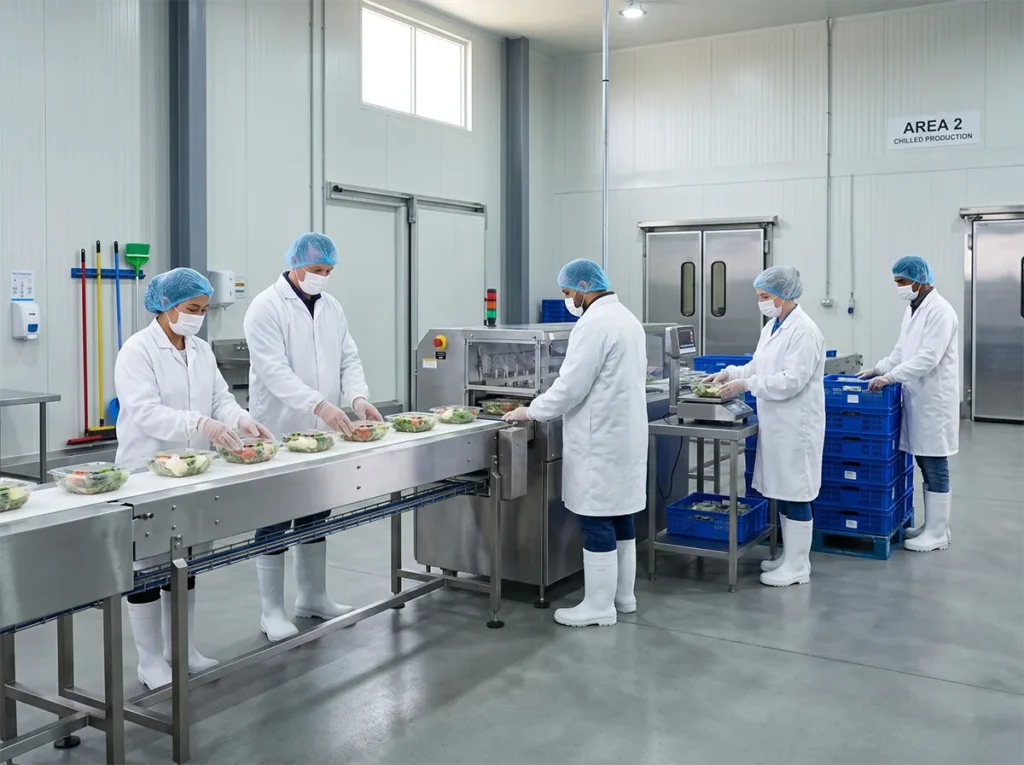
Cold room work can still be fast.
Some workers expect cold environments to be slower because the conditions are harder. That is not always true. Many food sites still expect:
- steady line flow
- output targets
- clean packing
- correct labelling
- tidy stations
- safe stock movement
The trick is not to panic when the pace stays high.
The best workers in cold environments are usually not the ones trying to look fastest. They are the ones who:
- settle into rhythm
- keep moving properly
- stay accurate
- follow process
- do not let discomfort make them careless
In cold production, controlled pace usually beats rushed pace.
If you also work on fast-moving lines, our article on packing line skills covers how to keep pace without creating avoidable mistakes.
7. Know When Temperature Changes Are Wearing You Down
Some of the hardest jobs are not always the coldest. Sometimes the challenge is moving in and out of different temperature zones.
For example:
- dispatch to cold room
- packing line to chilled storage
- warm break room back to cold floor
- cleanroom-like area to corridor and back
Those changes can wear you down faster than expected.
Pay attention if you start feeling:
- flat
- irritable
- slow to react
- clumsy
- mentally switched off
That does not mean you are weak. It means the environment is affecting you, and you need to manage yourself properly within site rules.
8. Follow Break Rules Properly
Breaks matter more in cold work than people sometimes think.
A proper break can help you:
- recover hand comfort
- reset mentally
- warm up
- eat and hydrate properly
- return to the floor more stable
Do not waste break time by staying in wet gear, skipping fluids, or acting like warming up is unnecessary.
Also, do not return late from break because you are trying to avoid the cold. That creates a different problem.
Good workers use breaks properly and return ready.
9. Hydration Still Matters in Cold Environments
People often forget to drink water when they are cold.
But hydration still matters, especially in physically demanding environments. Cold does not remove the need for hydration. In some cases, workers drink less and then wonder why they feel tired or flat later in the shift.
Stay sensible:
- drink water during approved breaks
- eat properly before long shifts
- do not rely only on coffee
- do not ignore signs of fatigue just because you are not sweating
Cold rooms still demand physical effort.
10. Food Safety and Cold Room Discipline Go Together
In food production, cold work is not only about worker comfort. It is also about product control.
That means workers still need to stay sharp on:
- hygiene
- PPE compliance
- product handling
- cross-contamination awareness
- zone discipline
- cleaning expectations
This is especially important in:
- meat processing
- dairy
- ready meals
- chilled packing rooms
- cleanroom-like food environments
If you let the cold distract you from food safety expectations, the site will notice.
Workers who keep both standards together — temperature discipline and hygiene discipline — are more valuable.
You can also read our guide to GMP basics for workers to strengthen your hygiene habits on food production sites.
11. Ask Early if Something Is Not Right
A lot of workers stay quiet too long.
If you are:
- genuinely underdressed
- struggling with the approved PPE
- unsure how cold-area movement works
- unclear about gloves or zone rules
- feeling affected by the conditions
ask early.
That is better than:
- guessing
- pushing through badly
- creating avoidable risk
- or looking careless because you were too uncomfortable to focus
Good communication is a strength, not a weakness.
12. What Supervisors Usually Notice in Cold Room Workers
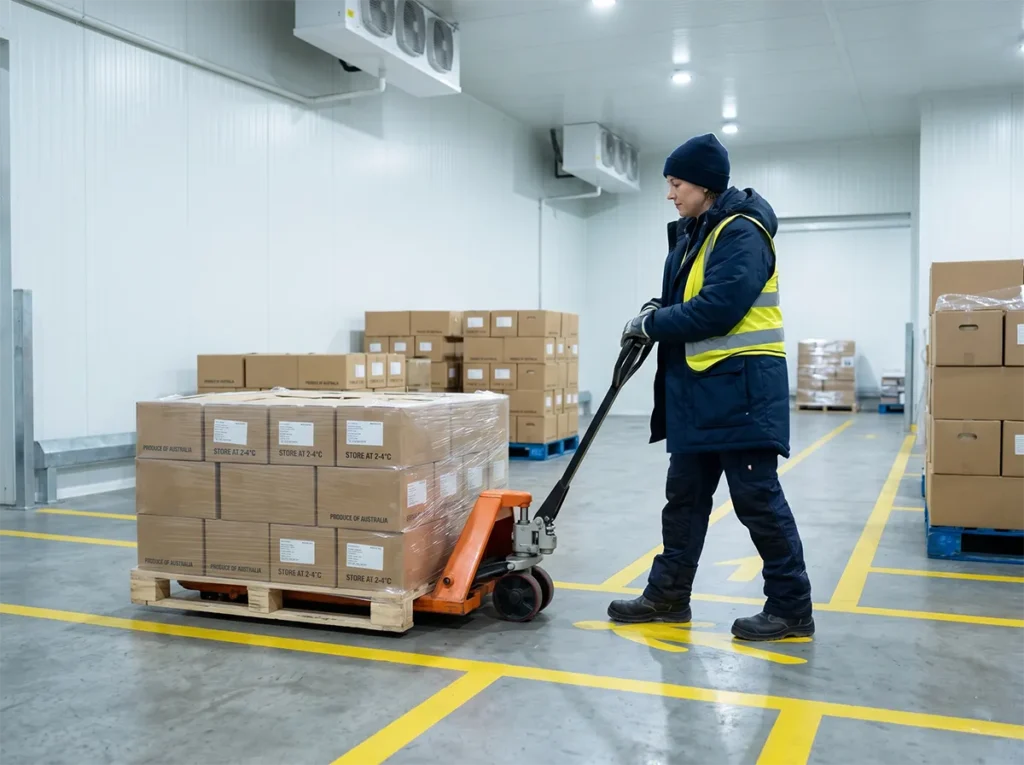
Supervisors usually remember workers who:
- arrive prepared
- wear PPE properly
- settle into the pace without drama
- do not complain constantly
- keep moving safely
- follow hygiene and cold-area rules
- stay accurate even when uncomfortable
- communicate properly if there is a real issue
They also notice workers who:
- keep touching PPE
- slow down sharply without telling anyone why
- stop following process when cold
- get sloppy with handling
- become difficult when conditions feel tough
Cold room shifts often reveal work habits very quickly.
A Simple Cold Room Shift-Readiness Checklist
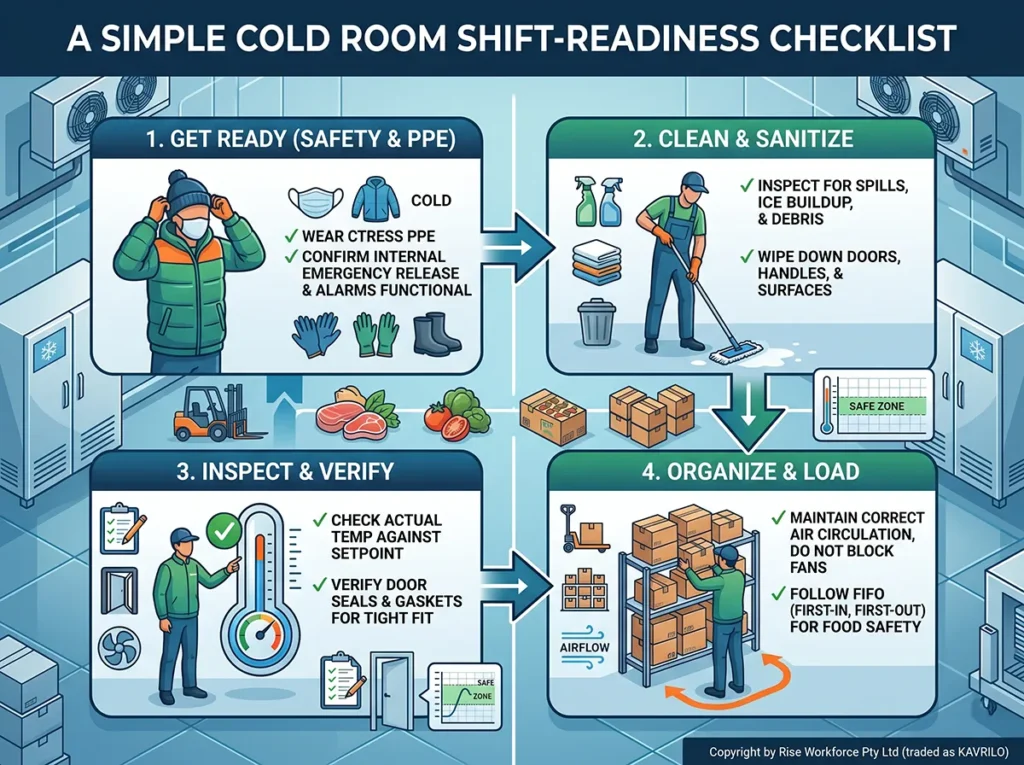
Here is a practical checklist workers can run through before and during shift.
Before the Shift
- I understand what cold-area PPE is required
- I am wearing approved clothing and footwear for the site
- I have not guessed my setup based on the weather alone
- I am fit for work and prepared for a cold environment
At Site Entry
- I completed hygiene and entry steps properly
- I put on the correct PPE correctly
- I know which areas are chilled, restricted, or hygiene-sensitive
During the Shift
- I am keeping pace without rushing
- I am monitoring how the cold is affecting my grip, movement, and focus
- I am following manual handling properly
- I am staying alert to hygiene and product-handling expectations
- I am speaking up early if something is not right
During Breaks and Zone Changes
- I am using breaks properly to warm up and reset
- I am hydrating and eating properly where appropriate
- I am not returning late or ignoring approved break routines
- I am following zone-change rules instead of moving casually
This kind of checklist helps workers stay steady, safe, and site-aware.
You can also read our article on allergen and cross-contamination rules to understand how small mistakes can create bigger food safety problems on site.
Final Word
Cold room work is not about proving how tough you are.
It is about working with control in an environment that puts more pressure on your body and attention. Workers who handle the cold well are usually the ones who prepare properly, wear the right PPE, pace themselves, and keep following process even when the environment is uncomfortable.
That is what helps you stay safe.
That is what helps product quality stay protected.
And that is what helps you keep getting booked.
If you want to do well in cold food production work, think:
steady pace, proper PPE, early communication, and disciplined habits.
That is what cold sites remember.
Looking for food production jobs in Melbourne’s South-East?
KAVRILO is building its focus in food production labour hire with a practical, safety-aware approach that values hygiene discipline, site fit, and dependable workforce support across different production environments.
Stay connected with KAVRILO for future opportunities in packing, processing, and hygiene-focused production environments.
Article Disclaimer
This article is provided for general information only and does not constitute legal, workplace relations, safety, taxation, payroll or other professional advice. Please seek advice specific to your circumstances before acting on this information.
Please read our Website Disclaimer for more information.