
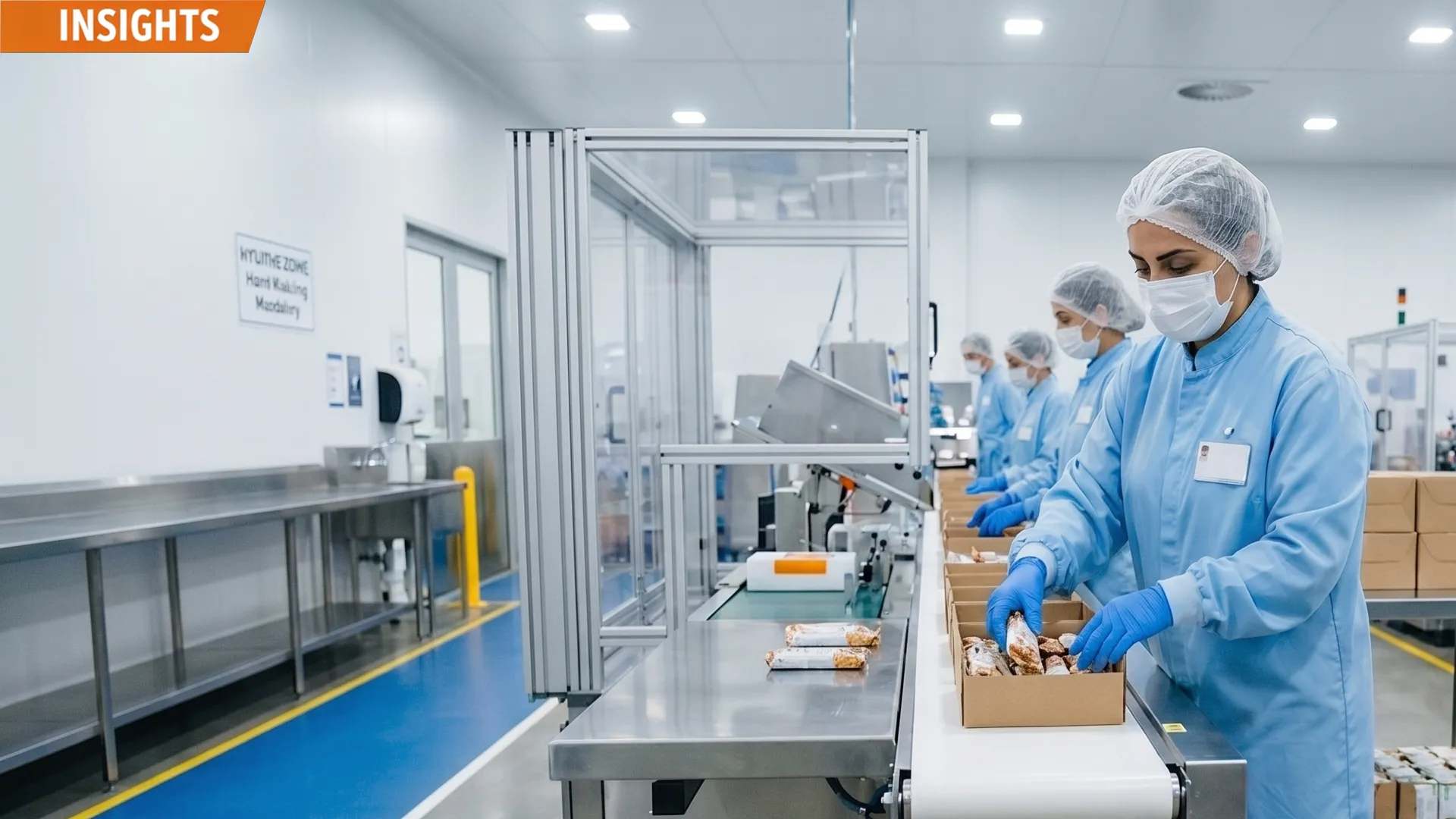
If you want regular food production shifts, hygiene is not a small detail — it is part of the job.
Across food production sites in Melbourne’s South-East, employers are not only looking for workers who can keep pace. They also want people who understand site rules, protect product quality, and avoid creating unnecessary food safety risk. That matters whether you are working in cold storage, meat processing, bakery, ready meals, dairy, or cleanroom-like packing environments.
In food production, good workers are not remembered only for speed. They are remembered for clean habits, safe behaviour, and steady discipline on shift.
That is where GMP comes in.
If you want to be considered for future roles in food packing and processing, you can join the KAVRILO roster for opportunities across Melbourne’s South-East.
What GMP Means in Simple Terms
GMP stands for Good Manufacturing Practice.
On the floor, GMP usually means:
- coming to work clean and site-ready
- following hygiene rules properly
- wearing the correct PPE correctly
- washing and sanitising hands when required
- preventing contamination
- handling product and equipment the right way
- respecting different hygiene zones and food safety rules
You do not need to speak like a QA manager to understand GMP. But you do need to take it seriously.
For food manufacturers, GMP is part of protecting product safety and meeting compliance expectations. For workers, it is part of being seen as reliable, safe, and worth booking again.
Why GMP Habits Affect Whether You Get Booked Again
A lot of workers think managers only care about output.
Output matters. But in food production, a worker who moves quickly and ignores hygiene can cause bigger problems than a slower worker who follows site rules properly.
Poor hygiene habits can lead to:
- contamination risk
- product waste
- line stoppages
- quality issues
- extra supervision
- lost confidence from the client
- fewer future shifts
That is why GMP habits matter commercially as well as operationally. Workers who follow food safety rules properly are easier to trust, easier to place, and more likely to be requested back by clients.
If you want to stay bookable, think beyond speed alone. Think:
Can I work cleanly, safely, and consistently?
10 Hygiene Habits That Help Keep You Booked
1. Arrive Clean and Ready for Site Rules
Do not turn up assuming every food site is the same.
A chilled dairy site may run very differently from a bakery. A ready-meals facility may be stricter than a general warehouse packing area. Meat processing or cleanroom-like lines may have tighter hygiene, gowning, and movement controls.
Before your shift:
- arrive in clean clothes
- bring any required items if instructed
- avoid excessive jewellery or unauthorised personal items
- be prepared to follow the site’s specific hygiene process
The first impression matters. Workers who arrive prepared look more reliable straight away.
2. Wash Hands Properly — Not Just Quickly
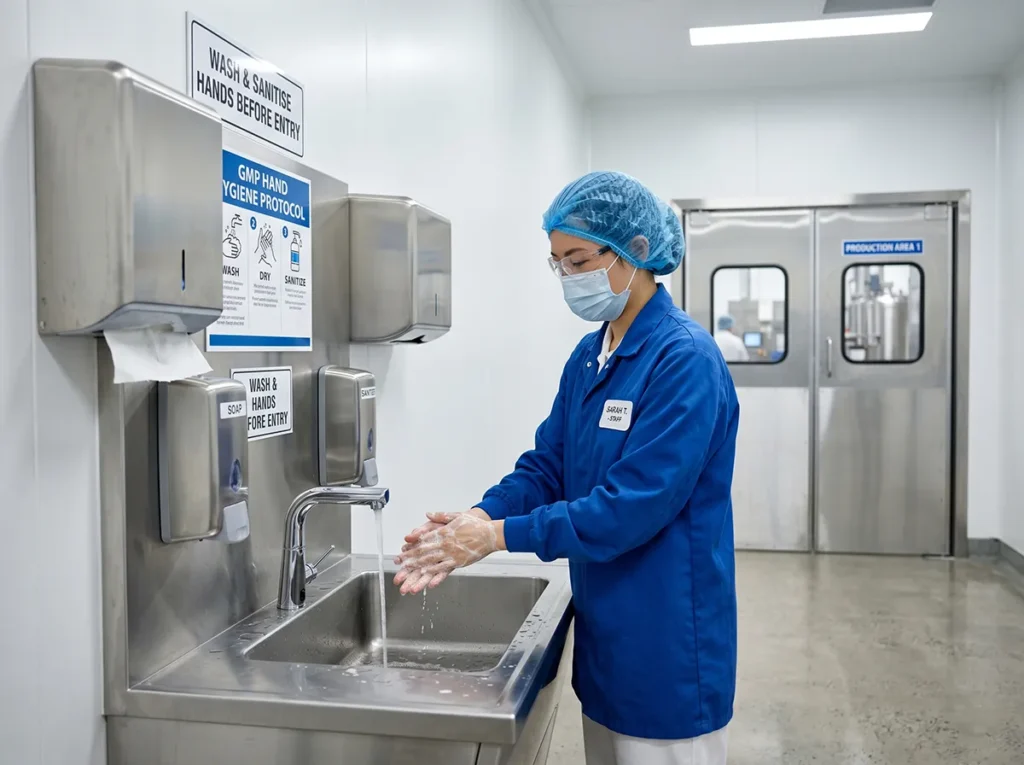
Hand hygiene is one of the most basic GMP expectations, but it is also one of the easiest ways to be noticed for the wrong reason.
A rushed rinse is not the same as proper handwashing.
If the site requires handwashing:
- before entering production
- after breaks
- after touching certain surfaces
- after changing tasks
- after waste handling
- after removing and replacing gloves
then do it properly every time.
Shortcuts in hand hygiene make workers look careless very quickly.
3. Wear PPE the Right Way
In food production, PPE is not only about personal safety. It is also about protecting the product.
Depending on the site, PPE may include:
- hairnets
- beard covers
- gloves
- masks
- coats or gowns
- sleeve covers
- aprons
- steel-capped boots
- high-vis clothing in traffic areas
Wearing PPE incorrectly can create just as many problems as not wearing it at all.
Common mistakes include:
- loose hair outside the hairnet
- gloves used for too long without changing
- repeatedly touching the face or PPE
- wearing outerwear incorrectly
- moving between areas without following PPE rules
Workers who treat PPE as part of the job — not an inconvenience — are far easier to trust.
4. Respect Hygiene Zones and Restricted Areas
Not every part of a food production site carries the same contamination risk.
Many workplaces separate:
- raw and cooked zones
- allergen and non-allergen areas
- low-care and high-care sections
- ingredient rooms and packing zones
- cold areas and general processing areas
Do not assume you can step into another area “just for a second”.
Even small movements can create risk if you are not following the correct procedure. Good workers pay attention to:
- floor markings
- signage
- entry points
- handwash stations
- gowning or glove-change points
- supervisor instructions
If you are unsure, ask first.
5. Keep Personal Habits Professional
Food production sites notice small personal habits quickly.
Things that can damage trust include:
- touching your face too often
- adjusting hairnets or beard covers repeatedly
- handling phones in the wrong area
- chewing gum
- bringing unauthorised items onto the floor
- leaning on work surfaces
- handling food-contact areas carelessly
These may seem minor, but they affect how supervisors see you.
A worker who looks controlled and switched on is more likely to be seen as safe and site-ready.
6. Report Illness or Hygiene Risks Honestly
One of the most important GMP habits is honest reporting.
If you are unwell, have vomiting or diarrhoea symptoms, an infection, an uncovered cut, or another issue that could affect food safety, do not hide it.
Food production sites take illness reporting seriously because it helps protect:
- the product
- co-workers
- customers
- the business
Trying to “push through” when you should report an issue can damage your reputation more than speaking up early.
7. Work Clean, Not Just Fast
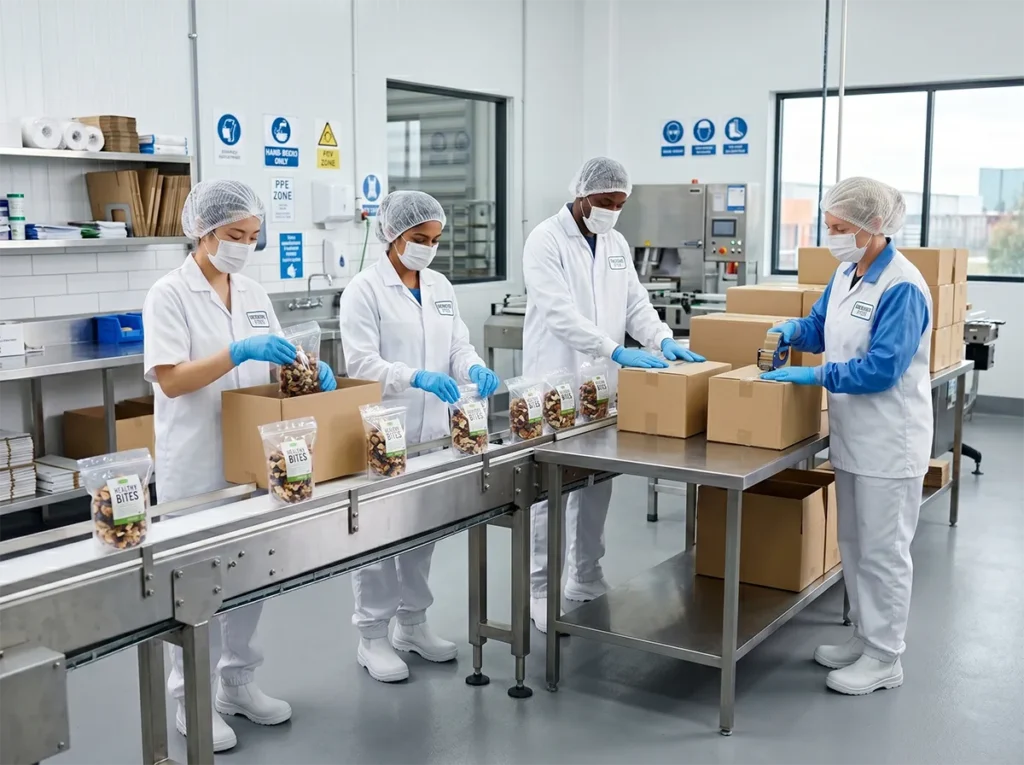
Fast hands are useful. Clean habits are essential.
On food production lines, supervisors do not only notice pace. They also notice whether you:
- keep your station tidy
- handle product properly
- follow PPE rules under pressure
- dispose of waste correctly
- avoid contamination risks
- stay organised during repetitive tasks
That is especially important in ready meals, dairy packing, bakery, meat processing, and cold food environments, where quality and hygiene need to stay controlled all shift.
Good workers learn how to keep pace without getting messy, rushed, or sloppy.
If you also work on fast-moving lines, our article on packing line skills covers how to keep pace without creating avoidable mistakes.
8. Take Inductions Seriously
Some workers treat inductions like paperwork before the “real” work starts.
That is the wrong mindset.
The induction tells you what matters on that site, including:
- hygiene rules
- handwashing points
- PPE expectations
- zone restrictions
- product-handling risks
- allergen rules
- break procedures
- cleaning routines
- reporting procedures
Workers who pay attention during induction usually settle in faster and make fewer mistakes.
9. Understand That Every Food Site Is Different
One common mistake is assuming all food factories run the same way.
They do not.
For example:
- a bakery site may focus heavily on ingredient handling and allergen control
- a dairy site may run in cold environments with strict hygiene routines
- a ready-meals facility may have fast packing lines and detailed label control
- a meat site may have stronger raw-product separation rules
- a cleanroom-like line may expect tighter gowning and movement discipline
The best workers adapt quickly instead of arguing that “the last site didn’t do it this way”.
That flexibility matters a lot in labour hire and casual food production work.
If you work in chilled environments, our guide to cold room work tips covers PPE, pace, and cold stress in food production settings.
10. Build a Reputation for Steady, Safe Habits
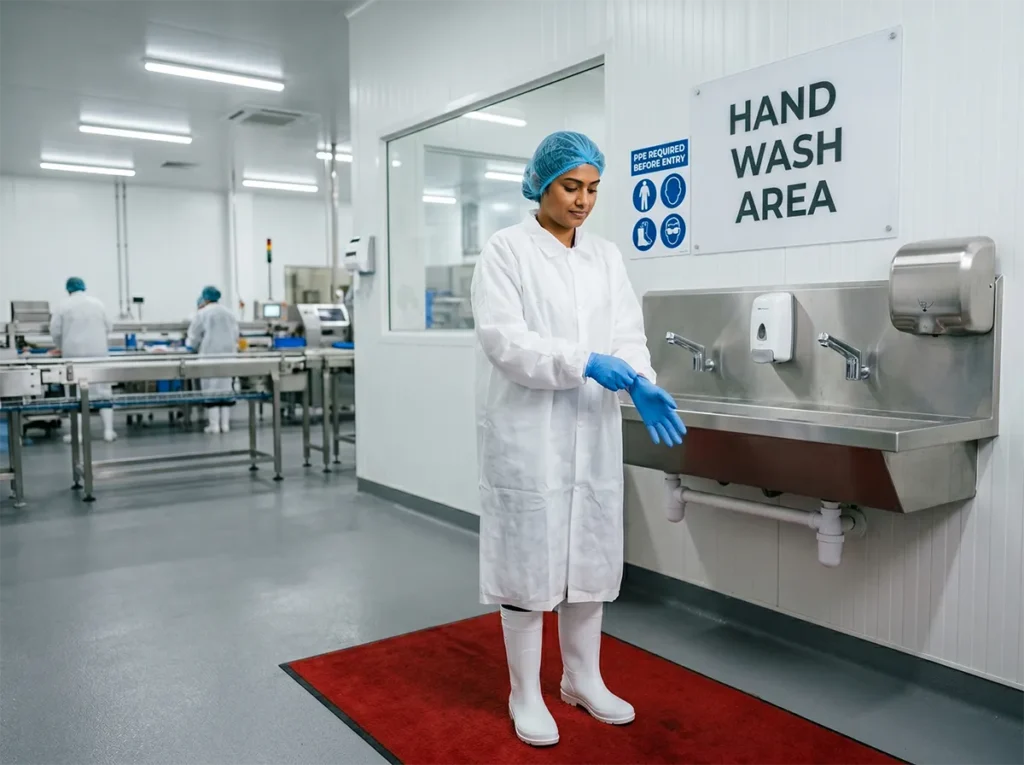
In labour hire, one shift matters — but your reputation across multiple shifts matters more.
Food production clients tend to value workers who are:
- clean
- punctual
- calm
- respectful
- easy to supervise
- hygiene-aware
- consistent under pressure
That reputation is built through small habits repeated well:
- turning up prepared
- following site rules
- wearing PPE correctly
- listening during induction
- asking questions when unsure
- keeping your work clean and controlled
You do not need to be perfect. But you do need to be dependable.
A Simple GMP Shift-Readiness Checklist
Here is a useful checklist workers can mentally run through before and during shift.
Before the Shift
- I arrived clean and ready for site rules
- I understand what PPE is required
- I have removed unauthorised jewellery or personal items
- I am fit for work and not ignoring an illness or hygiene issue
At Site Entry
- I completed handwashing and hygiene entry steps properly
- I put on PPE correctly
- I followed the site’s entry process instead of guessing
During the Shift
- I am keeping my hands, PPE, and work habits clean
- I am respecting hygiene zones and restricted areas
- I am handling product and packaging carefully
- I am keeping my station tidy
- I am asking questions if I am unsure
Before Leaving the Area or Changing Tasks
- I followed glove, handwashing, or gowning rules
- I did not move between areas casually
- I reported any hygiene or food safety concern promptly
This kind of checklist is simple, but it helps workers stay disciplined — especially on new sites.
You can also read our article on allergen and cross-contamination rules to understand how small mistakes can create bigger problems on site.
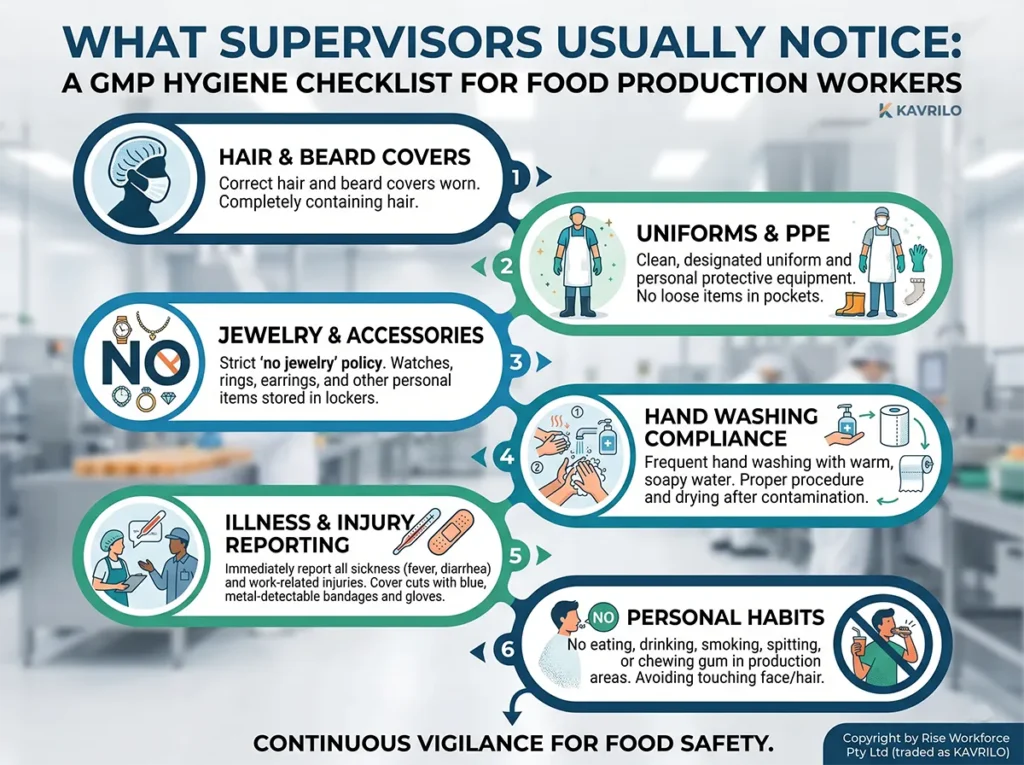
What Supervisors Usually Notice
If you want to keep getting booked, it helps to understand what supervisors usually notice first.
They remember workers who:
- arrive on time and ready
- follow hygiene rules without reminders
- wear PPE properly
- settle into the site routine quickly
- work calmly and cleanly
- listen well
- take instruction without drama
- avoid creating food safety concerns
They also notice workers who:
- cut corners
- get casual about hygiene
- ignore PPE rules
- keep touching their face or PPE
- move carelessly between zones
- look messy or disorganised
- argue with site processes
In food production, trust is built through behaviour.
Final Word
GMP is not just about “passing induction”. It is about how you behave once the shift starts.
Workers who follow hygiene rules properly help protect product quality, support food safety, and make life easier for the site. That is exactly why those workers are more likely to be requested back.
If you want more opportunities in food production across Melbourne’s South-East, focus on habits that build trust:
clean habits, safe habits, steady habits.
That is what helps you stay valuable on site.
And that is what helps keep you getting booked.
clean habits, safe habits, steady habits.
That is what helps you stay valuable on site.
And that is what helps keep you getting booked.
Looking for Food Production Work in Melbourne’s South-East?
KAVRILO is building its focus in food production labour hire and supports workplaces that value hygiene, safety, and reliable workers.
Stay connected with KAVRILO for future opportunities in food packing, food processing, and hygiene-focused production environments.
Article Disclaimer
This article is provided for general information only and does not constitute legal, workplace relations, safety, taxation, payroll or other professional advice. Please seek advice specific to your circumstances before acting on this information.
Please read our Website Disclaimer for more information.