
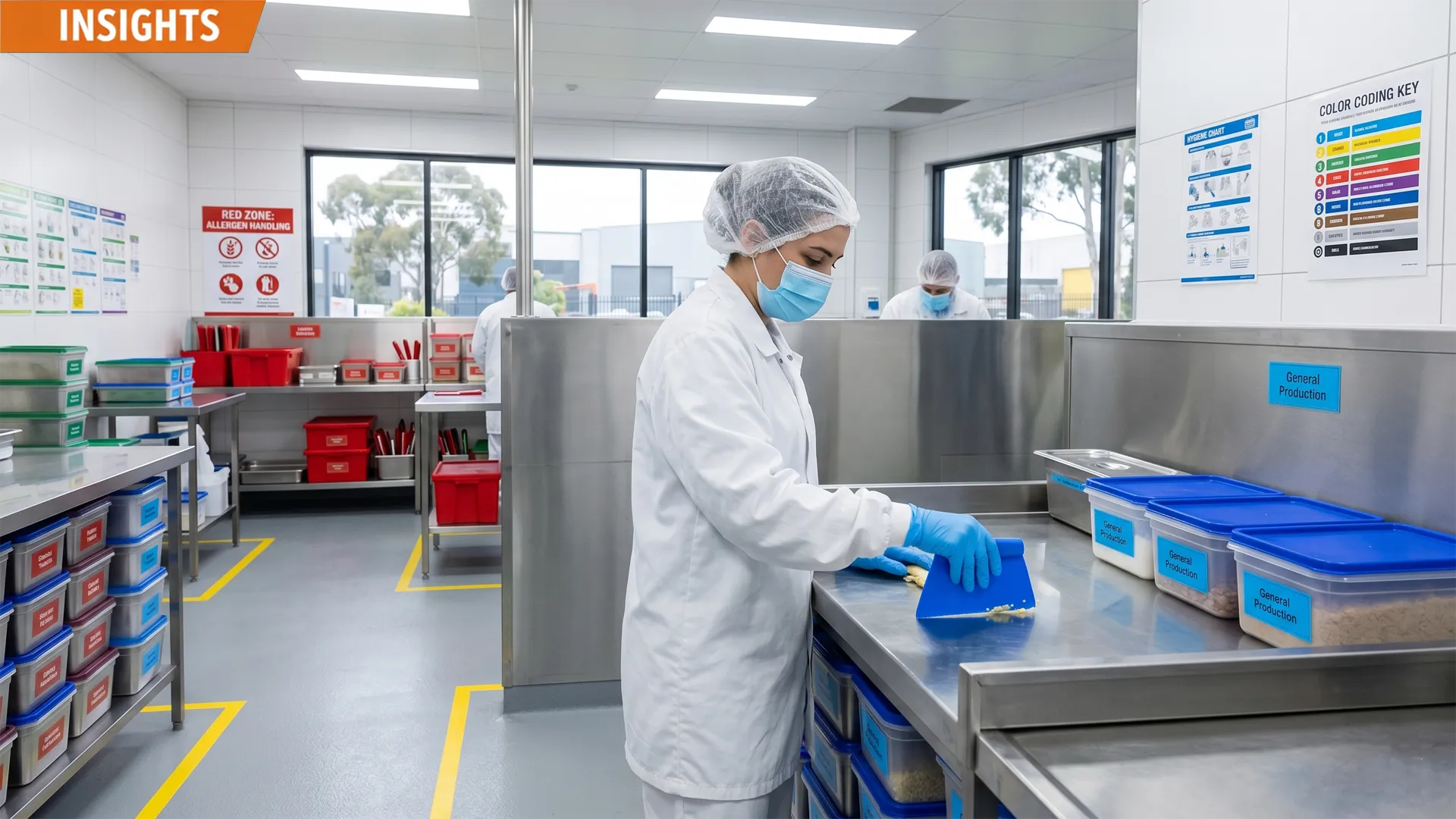
In food production, some mistakes are bigger than they look.
A worker may think they are only moving a tray, changing gloves quickly, stepping into another area for a moment, or using the nearest utensil to keep the line moving. But on sites that manage allergens and contamination risks, small shortcuts can create serious problems.
That is why some workers get pulled off the line or sent home even when they thought they were “only helping”.
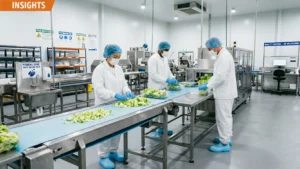
Across Melbourne’s South-East, food production sites in ready meals, bakery, dairy, meat, chilled packing, and cleanroom-like environments often run with strict rules around allergens, hygiene zones, and product handling. Those rules are not there to make life difficult. They protect product safety, customers, and the site.
If you want to stay trusted and keep getting booked, you need to understand that allergen control is part of the job.
If you are looking for local opportunities, you can register with KAVRILO for food production roles across Melbourne’s South-East.
Why Allergen Rules Matter So Much
Food allergens are not a minor issue.
If the wrong product, ingredient, tool, glove, surface, or worker movement creates contamination, the consequences can be serious. That can include:
- unsafe food reaching customers
- product rejection
- line stoppages
- cleaning and rework
- stock loss
- audit problems
- damaged trust with the client
That is why food sites take allergen control seriously, and why workers who ignore basic rules can be removed quickly.
In production, “it was only for a second” is usually not a good defence.
What Cross-Contamination Means in Simple Terms
Cross-contamination happens when something that should stay separate gets transferred where it does not belong.
That could mean:
- allergen product contacting non-allergen product
- raw product contacting cooked or ready-to-eat product
- the wrong utensil being used in the wrong area
- gloves touching the wrong surface and then touching food
- a worker moving between zones without following change procedures
- packaging or labels being mixed up
It does not always look dramatic. Sometimes it happens through small habits.
That is exactly why workers need to stay switched on.
1. Do Not Assume “A Quick Step Across” Is Fine
One of the most common mistakes is moving between areas too casually.
A worker might think:
- “I’m only grabbing something”
- “I’ll just help for a minute”
- “It’s the same product family anyway”
- “I won’t touch anything important”
But sites often separate:
- allergen and non-allergen zones
- raw and cooked zones
- high-care and low-care areas
- ingredient and packing sections
- different product runs with different contamination risks
If you cross into the wrong area without following the process, you can create a contamination risk even if you meant well.
If you are not sure whether you are allowed to move between areas, ask first.
2. Gloves Do Not Automatically Make Everything Safe
Gloves help, but they do not remove contamination risk on their own.
A lot of workers make the mistake of wearing gloves and then treating them like they are permanently “clean”.
Gloves can spread contamination just as easily if you:
- touch the wrong surface
- adjust PPE
- handle waste
- touch your face
- move between areas
- touch allergen product and then non-allergen product
Good food production workers understand that gloves are part of the system, not a shortcut around hygiene.
If glove changes are required, change them properly. Do not argue with the rule because the line is busy.
3. Respect Colour-Coded Tools, PPE, and Zones
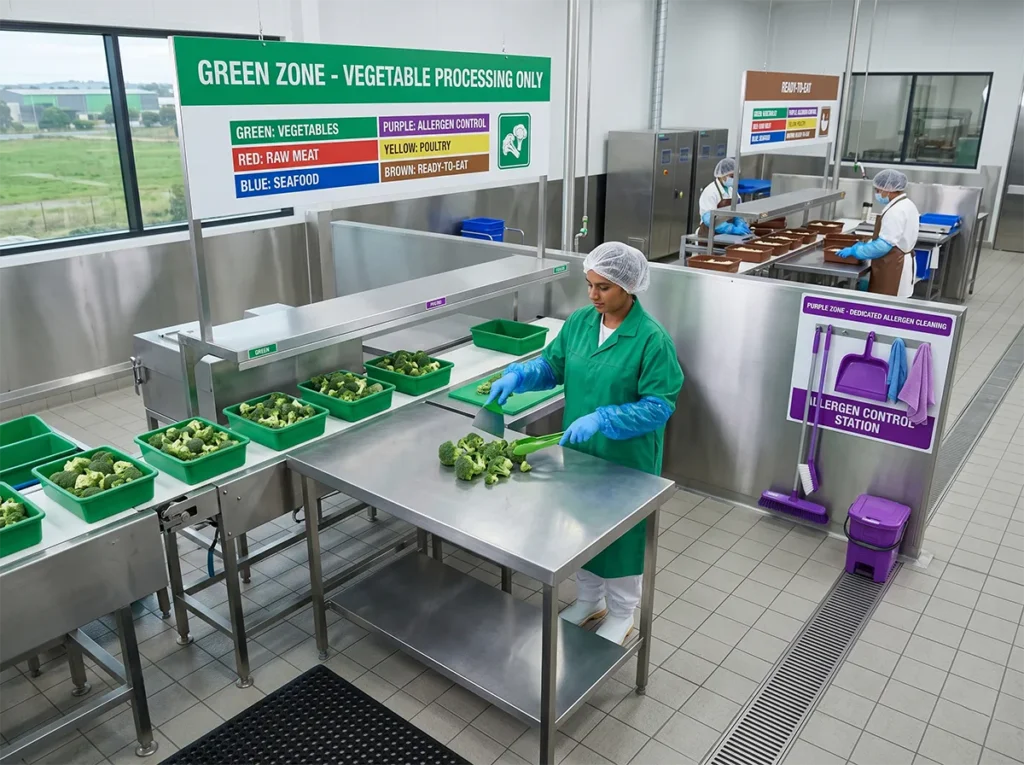
Many food production sites use colour coding for a reason.
You may see:
- colour-coded knives
- utensils
- tubs
- brushes
- aprons
- gloves
- floor areas
- bins
- labels or storage zones
This is often one of the simplest ways a site reduces cross-contamination risk.
If a site uses colour coding, treat it seriously.
Do not:
- swap tools because another one is closer
- borrow from another area
- assume colours “probably mean the same thing”
- move equipment without permission
What looks minor to a worker can be a major issue to the supervisor or QA team.
4. Never Guess on Allergen Product Runs
Some lines change over between allergen and non-allergen products. Others run allergen-specific product in designated areas. Some bakery, dairy, ready-meals, and snack sites have strict separation for ingredients like nuts, dairy, egg, soy, gluten, or sesame.
If you do not understand what is running on the line, do not guess.
Know:
- what product is running
- whether it contains allergens
- whether your area is restricted
- what changeover rules apply
- what cleaning rules apply before and after a run
The workers who cause problems are often not careless on purpose. Sometimes they are just too casual about asking questions.
5. Product Handling Rules Still Apply When the Line Is Busy
When production pressure rises, workers sometimes stop thinking in detail.
That is when mistakes happen, such as:
- placing the wrong item in the wrong carton
- using the wrong packaging
- mixing up labels
- handling rejected product incorrectly
- moving trays between lines
- not escalating a problem because “the line is moving too fast”
Fast lines do not reduce food safety rules. They make discipline more important.
If there is a packaging, labelling, or product mix-up risk, speak up early.
6. Hygiene Discipline and Allergen Discipline Go Together
Sites do not usually treat allergen control as separate from hygiene.
The same workers who get casual with:
- handwashing
- PPE
- zone changes
- surface contact
- workstation cleanliness
are often the same workers who drift into cross-contamination problems.
That is why GMP habits matter so much. If your daily work habits are clean, controlled, and consistent, it is easier to follow allergen rules properly too.
If your normal habits are sloppy, allergen mistakes become more likely.
You can also read our guide to GMP basics for workers to strengthen your daily hygiene habits on site.
7. Follow Changeover Rules Properly
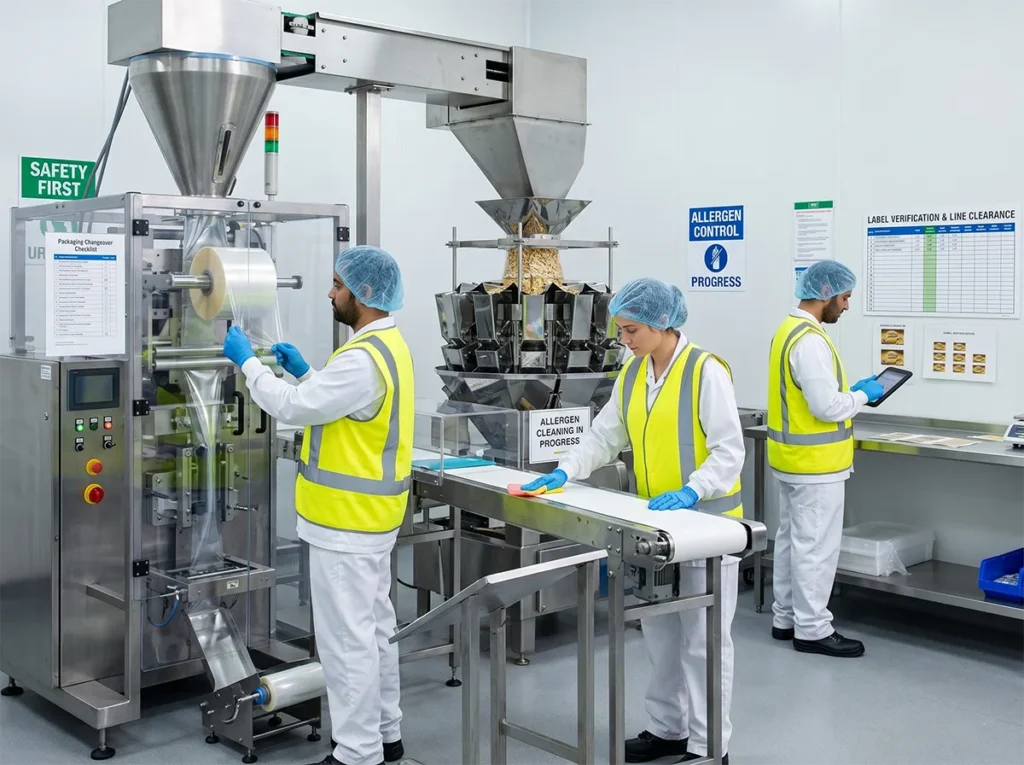
Changeovers are where many contamination risks happen.
When one product changes to another, the site may require:
- cleaning
- line clearance
- waste removal
- packaging change checks
- tool changes
- glove changes
- gowning changes
- supervisor or QA sign-off
Do not treat changeover like dead time. It is part of production control.
Workers who rush through changeover steps or assume someone else has handled it can create expensive problems.
8. Labels Matter More Than Many Workers Realise
Incorrect labels can turn a product issue into a serious food safety issue very quickly.
If the wrong allergen information ends up on the wrong pack, that is not a minor mistake.
Be careful around:
- label rolls
- carton changes
- printed dates
- product identification
- packaging swaps
- line clearance between SKUs
If something looks wrong, stop guessing and escalate it early.
Workers who stay alert to labelling risks are valuable on fast-moving food lines.
If you work on fast-moving lines, our article on packing line skills covers how to keep pace without creating avoidable mistakes.
9. Personal Habits Can Create Cross-Contamination Too
Cross-contamination is not only about ingredients and tools.
Sometimes it comes from workers through habits like:
- touching aprons or sleeves too much
- moving in and out of zones casually
- adjusting PPE with contaminated gloves
- leaning on the wrong surfaces
- carrying items between areas without permission
- not reporting contamination concerns quickly
Food production sites often notice these things faster than workers expect.
A worker who looks controlled, site-aware, and disciplined is easier to trust.
10. If You Are Unsure, Ask Before You Touch Anything
This is one of the best habits you can build.
If you are unsure about:
- a product
- a label
- a tool
- a zone
- a glove change
- a cleaning step
- an allergen rule
- a changeover instruction
ask before you act.
That is always better than trying to “help” and causing a bigger problem.
Asking early is not a weakness. On food sites, it is often a sign that you take the work seriously.
11. Why Workers Sometimes Get Sent Home
Workers usually do not get removed from site just because a supervisor wants to be harsh.
It usually happens because the site loses confidence that the worker:
- understands the rules
- can follow hygiene discipline
- can manage allergen risks properly
- can work safely in that environment
- can be trusted not to repeat the same mistake
That is why simple mistakes matter.
Examples include:
- moving into the wrong area
- ignoring glove change rules
- using the wrong tool
- mixing up product or packaging
- not following changeover procedure
- not escalating a contamination concern
One moment of poor judgement can affect more than just one shift.
12. What Supervisors Usually Notice
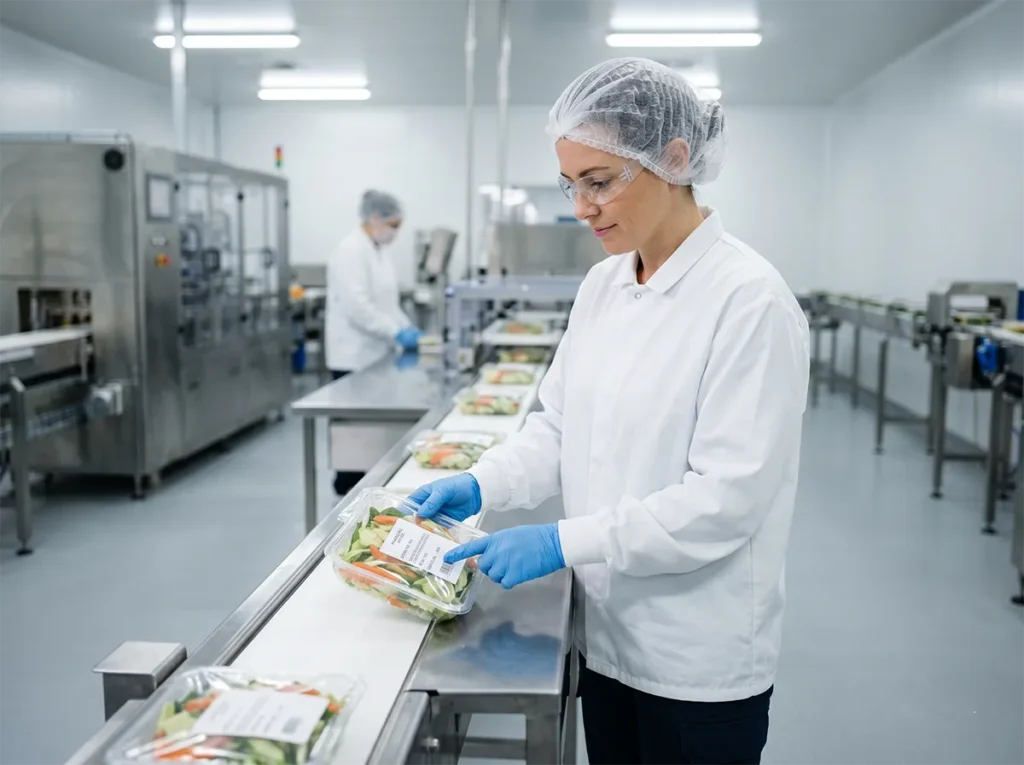
If you want to keep getting booked, it helps to understand what supervisors actually notice.
They usually remember workers who:
- stay in the correct zone
- follow PPE and glove rules properly
- respect colour coding
- ask when unsure
- stay calm during changeovers
- handle product carefully
- spot issues early
- do not take shortcuts under pressure
They also notice workers who:
- treat allergen rules casually
- keep crossing boundaries without permission
- guess instead of asking
- ignore correction
- keep creating avoidable contamination risk
Trust matters a lot on allergen-sensitive sites.
Final Word
On food production sites, allergen and cross-contamination rules are not just QA issues. They are worker issues too.
If you want to stay on shift, stay trusted, and keep getting booked, you need to understand that “small” shortcuts are often not small at all.
The workers who do well on allergen-sensitive lines are usually the ones who:
- stay in process
- stay clean
- stay alert
- ask early
- and respect that the rules are there for a reason
If you want a simple way to remember it, think:
right zone, right tools, right PPE, right habits.
That is what helps protect the product.
That is what helps protect the site.
And that is what helps protect your reputation.
Looking for food production jobs in Melbourne’s South-East?
KAVRILO is building its focus in food production labour hire with a practical, safety-aware approach that values hygiene discipline, site fit, and dependable workforce support across different production environments.
Register with KAVRILO to be considered for future opportunities in packing, processing, and hygiene-focused food production environments.
Article Disclaimer
This article is provided for general information only and does not constitute legal, workplace relations, safety, taxation, payroll or other professional advice. Please seek advice specific to your circumstances before acting on this information.
Please read our Website Disclaimer for more information.