

For many warehouse and factory employers, labour hire becomes relevant when pressure is already building.
That pressure may come from:
- same-day gaps
- rising demand
- leave coverage
- seasonal peaks
- production pressure
- or the simple fact that reliable labour is harder to secure than it first appears
When that happens, employers often want one practical thing:
a provider who can help quickly and properly.
That makes sense.
But choosing a labour hire partner is not just about speed.
Across Dandenong and the wider South-East Melbourne corridor, the stronger labour hire relationships are usually built on more than:
- availability
- broad promises
- or a provider simply saying they can send workers
Good employers often look earlier at:
- whether the provider understands local industrial conditions
- whether the communication is practical
- whether worker fit is being taken seriously
- whether the provider can respond under real warehouse or factory pressure
- and whether the support reduces friction on the floor rather than adding to it
That is why this decision matters.
Because in active industrial environments, the wrong labour hire partner can create:
- weak fit
- repeated correction
- slower settling-in
- higher supervisor strain
- and the feeling that labour support exists without actually making the operation easier to run
The right partner usually does the opposite.
For the broader local market overview, see our Staffing South-East Melbourne pillar guide for Dandenong warehouse and factory employers.
Why This Decision Matters More Than Many Employers Expect
A labour hire provider does more than fill a vacancy.
In practice, they affect:
- how quickly labour support becomes useful
- how well workers fit the site
- how much correction supervisors need to do
- how the business handles sudden demand changes
- and how much confidence the employer has in labour coverage when the floor is already under pressure
That is why the provider decision matters operationally.
A weaker provider may still send people.
But if they do not understand:
- the local corridor
- the site conditions
- the real task
- the shift structure
- or the need for practical communication
then the business may still end up carrying the same labour strain in a different form.
A stronger provider usually helps reduce:
- uncertainty
- mismatch
- repeated labour friction
- and the time the site spends solving staffing problems after the worker has already arrived
That is a big difference.
Why South-East Melbourne Employers Need to Be More Selective
South-East Melbourne is a strong industrial corridor, but it is also a competitive one.
Warehouse and factory employers across Dandenong, Hallam, Keysborough, Braeside, and nearby areas are often competing inside the same broad labour market for workers who can:
- reach site reliably
- handle industrial pace
- work shift patterns practically
- and fit into active warehouse or factory environments without creating unnecessary friction
That means employers usually need more than generic staffing support.
They need support that is:
- local enough to understand the corridor
- realistic enough to match workers practically
- responsive enough to help under pressure
- and grounded enough to understand that warehouse and factory labour needs are not all the same
This is why provider choice matters so much in the South-East.
A more selective approach usually improves:
- worker fit
- response quality
- shift reliability
- and the employer’s confidence that labour support is helping the operation rather than just servicing the request
10 Practical Things Employers Should Check Early
1. Whether the Provider Understands the Local Corridor Properly
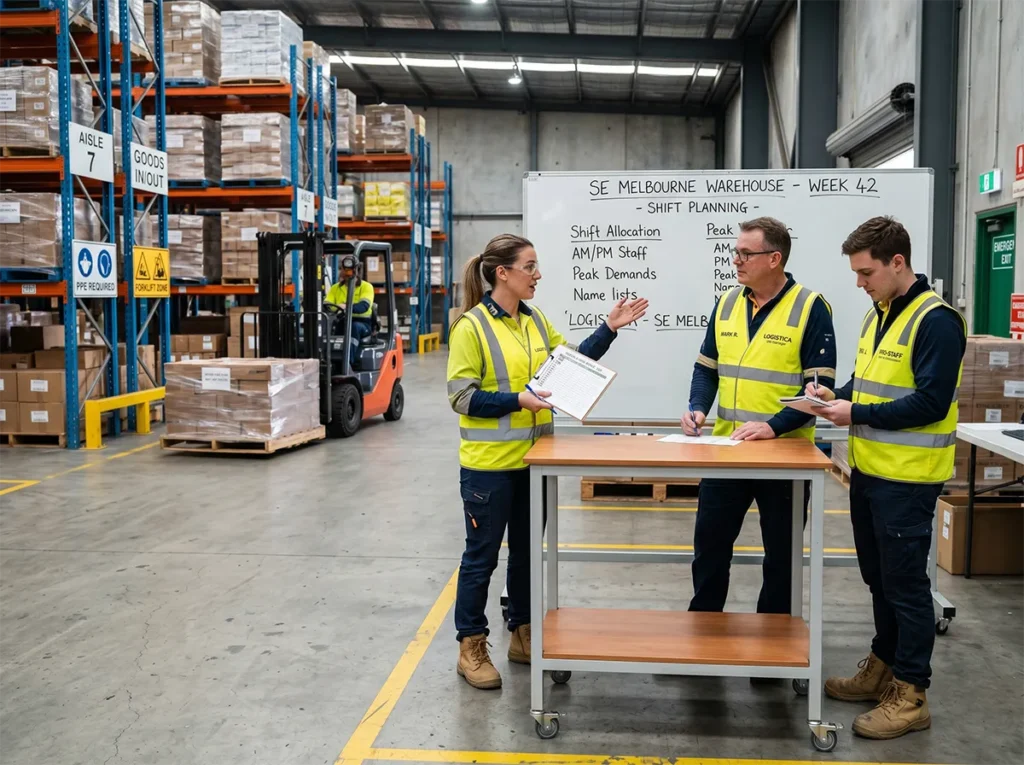
A good labour hire partner should understand more than your postcode.
They should have a practical sense of:
- South-East Melbourne industrial areas
- warehouse and factory site types
- common labour pressures in the corridor
- travel and access realities
- and why Dandenong employers often need both speed and fit
This matters because local understanding often improves:
- worker matching
- response realism
- shift practicality
- and the provider’s ability to communicate in a way that reflects what the site actually needs
A provider who treats every area the same may still sound capable, but often feels less useful once real pressure begins.
2. Whether They Ask Good Questions About the Role
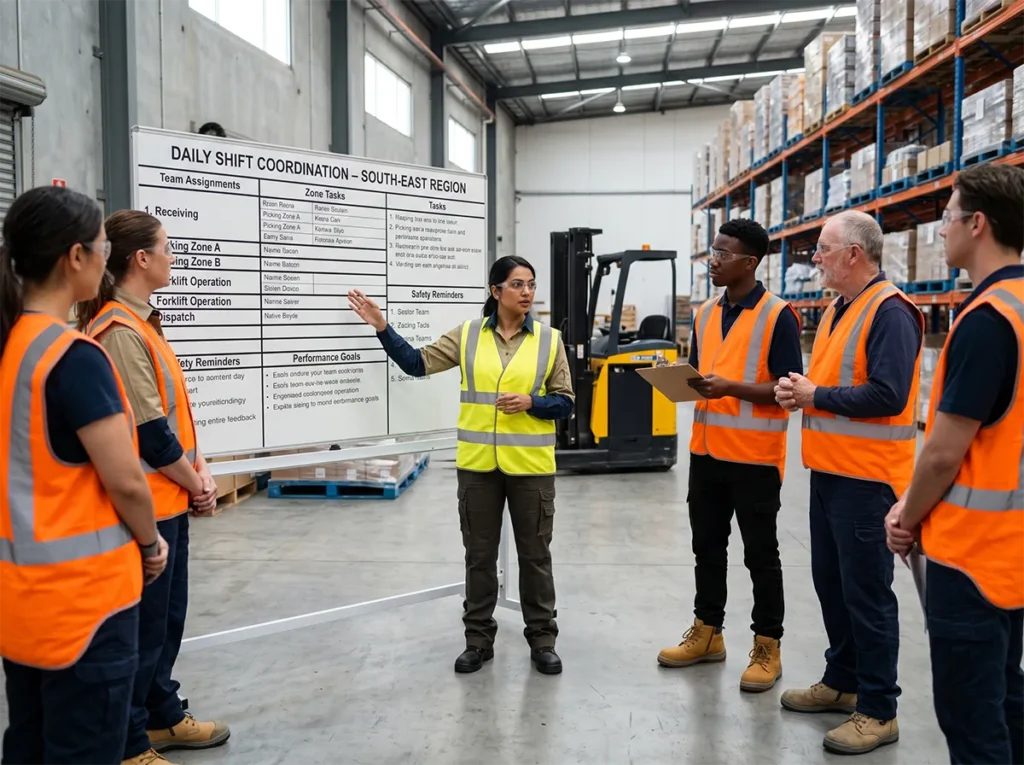
A stronger provider usually wants to understand the role properly.
That means asking more than:
- how many workers
- what shift
- and when they need to start
They should also want to understand:
- what the work actually involves
- how physical the role is
- what pace the site runs at
- whether traffic, layout, or controlled process conditions matter
- and what kind of worker is more likely to suit the site
This matters because good questions usually lead to better matching.
A provider who asks very little may be focusing more on fast fill than practical fit.
3. Whether Worker Fit Seems as Important to Them as Availability
This is one of the biggest early tests.
A good labour hire partner should care not only about:
- who is available
but also about:
- who is more likely to suit the actual role
- who can sustain the shift pattern
- who is more practical for the location
- and who is less likely to create avoidable friction once the shift begins
That is especially important in warehouse and factory environments where poor fit often shows up quickly through:
- slower settling-in
- repeated correction
- weak attendance
- and higher supervisor strain
A stronger provider usually sounds fit-aware, not just availability-driven.
Our guide to why site fit matters more than headcount in warehouse and factory staffing explains why better worker suitability often improves operations more than simply filling numbers quickly.
4. Whether Their Communication Feels Practical and Clear
Labour hire support becomes weaker very quickly when communication is vague.
Good employers should notice whether the provider communicates clearly about:
- the role
- shift expectations
- timing
- worker readiness
- and any practical limitations or risks that should be known early
This matters because vague communication often leads to:
- mismatched expectations
- weaker shift starts
- and labour support that creates as many questions as it solves
A stronger provider usually helps make the process feel:
- calmer
- clearer
- and easier to manage operationally
5. Whether They Can Respond Fast Enough to Be Useful

Speed matters, especially in industrial staffing.
A labour hire partner does not need to solve every problem instantly.
But if the response is too slow, the labour support may arrive after the biggest operational damage is already done.
This matters most when the site is dealing with:
- same-day gaps
- no-shows
- sudden volume increases
- and shift pressure that cannot wait long for action
A good provider usually has a response style that feels:
- practical
- reachable
- and useful under real operating conditions
not only under ideal planning conditions.
Our article on why South-East Melbourne employers need faster, more local staffing support explains why response speed and local responsiveness often make a real difference when labour pressure changes quickly.
6. Whether They Understand Travel and Shift Practicality
A worker may accept a role and still be a weak long-term match if:
- the commute is too hard
- the industrial-area access is awkward
- the start time is not practical
- or the shift pattern is harder to sustain than it first appears
A stronger labour hire partner should understand that reliability is often affected by:
- travel
- shift timing
- and worker access to the site
That matters because a provider who ignores commute realism may still send workers, but often at the cost of:
- weaker punctuality
- higher no-show risk
- and lower long-term consistency
Good labour support usually reflects the real travel patterns of the South-East corridor.
Our article on how transport and travel time affect shift reliability in South-East Melbourne explains why commute practicality still plays a major role in attendance, punctuality, and worker retention.
7. Whether They Reduce or Increase Supervisor Friction
A useful provider should make life easier for the site, not harder.
That means employers should think about whether the labour support tends to create:
- smoother starts
- stronger matching
- clearer expectations
- and less repeated correction
or whether it tends to create:
- more uncertainty
- more questions on shift one
- weaker site fit
- and more supervisor time spent fixing basic problems
This is one of the clearest real-world measures of provider quality.
If the site is repeatedly absorbing avoidable labour friction, that is a sign the provider relationship may not be strong enough operationally.
8. Whether They Feel Like a Partner or Just a Supplier
Not every labour hire relationship needs to be highly strategic.
But the stronger ones usually feel more practical and more aligned.
That often means the provider:
- listens properly
- understands what the site is actually trying to solve
- communicates honestly
- and supports the operation in a way that feels connected to real workforce needs rather than just transactional fill
This matters because a partner mindset often improves:
- labour continuity
- role understanding
- and confidence in future staffing decisions
A supplier can still send workers.
A partner is more likely to help the workforce support model improve over time.
9. Whether They Seem Stronger in Warehousing and Factory Environments Specifically
A provider may say they cover many sectors.
That can be fine.
But employers in warehouse and factory environments should still ask whether the provider seems practically comfortable with:
- industrial shift work
- labour reliability issues
- physical role matching
- warehouse or process pace
- and the realities of active industrial sites in the South-East
This matters because not every staffing provider understands industrial support at the same level.
A stronger specialist fit usually improves:
- role realism
- worker matching
- and site confidence in the labour support being provided
10. Whether the Relationship Is Likely to Improve Workforce Stability Over Time

This may be the most important question of all.
A good labour hire partner should not only help with the next shift.
Over time, they should help improve:
- labour reliability
- worker quality
- speed of support
- understanding of the site
- and the employer’s ability to manage workforce pressure with less repeated disruption
That is why good employers often ask:
- Is this provider likely to become more useful as they learn our operation?
- Will this relationship reduce labour friction over time?
- Are they helping us build stronger workforce support, not just survive this week?
That is a much better long-term test than simply asking who answered the phone first.
What Better Labour Hire Partnerships Usually Look Like in Practice
When the labour hire partnership is stronger, the difference is usually visible in how the site feels.
It tends to feel:
- more supported
- less reactive
- more practical
- and easier to manage under pressure
In practice, that often means:
- the provider understands the role better
- worker fit is stronger
- communication is clearer
- labour response is more useful
- and supervisors are spending less time fixing problems that should have been reduced earlier
It should not feel like:
- the employer is explaining the same site realities repeatedly
- the provider is only useful when plenty of notice exists
- or labour support creates just enough coverage to keep the roster moving without truly helping the operation run better
A stronger labour hire partner usually improves both:
- workforce support
- and management confidence
A Simple Labour Hire Partner Checklist for Employers
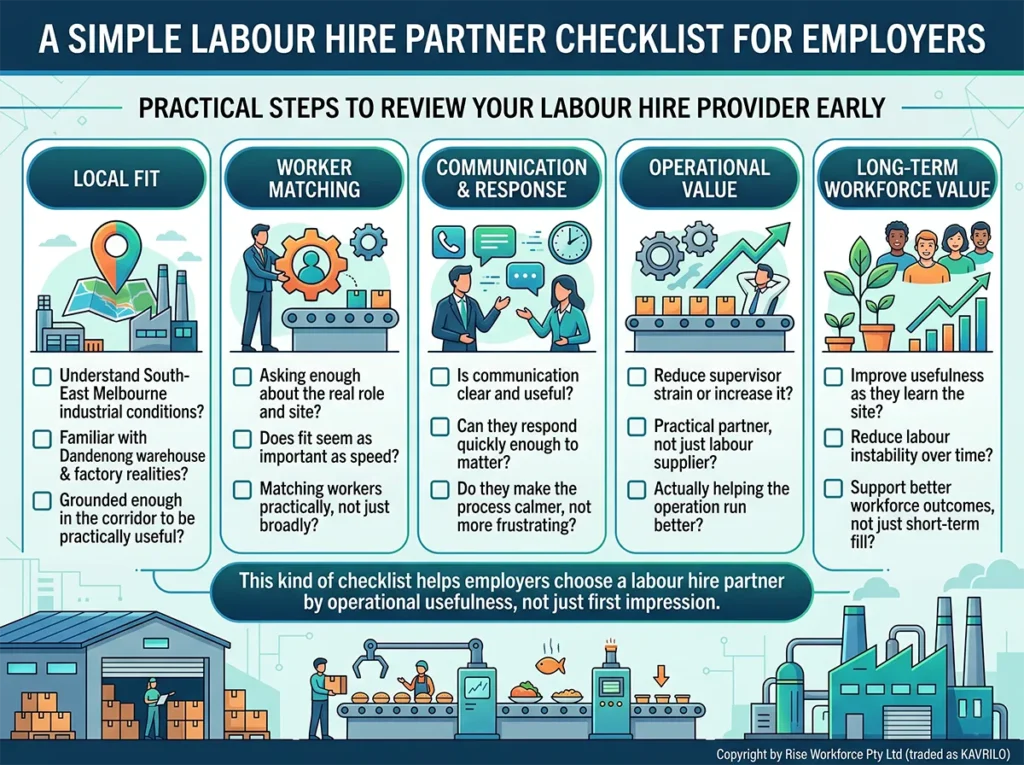
Here is a practical checklist employers can use when reviewing a labour hire provider early.
Local Fit
- Do they understand South-East Melbourne industrial conditions properly?
- Do they seem familiar with Dandenong warehouse and factory realities?
- Are they grounded enough in the corridor to be practically useful?
Worker Matching
- Are they asking enough about the real role and site?
- Does fit seem as important to them as speed?
- Are they matching workers practically or just broadly?
Communication and Response
- Is communication clear and useful?
- Can they respond quickly enough to matter?
- Do they make the process calmer or more frustrating?
Operational Value
- Does the support reduce supervisor strain or increase it?
- Do they seem like a practical partner rather than just a labour supplier?
- Are they actually helping the operation run better?
Long-Term Workforce Value
- Is this provider likely to improve in usefulness as they learn the site?
- Will the relationship help reduce labour instability over time?
- Are they supporting better workforce outcomes, not just short-term fill?
This kind of checklist helps employers choose a labour hire partner by operational usefulness, not just first impression.
Final Word
Choosing a labour hire partner in South-East Melbourne matters because the provider affects much more than labour supply.
For warehouse and factory employers across Dandenong and the broader corridor, the strongest decisions usually come from checking:
- local understanding
- role questioning
- worker fit
- response speed
- communication quality
- and whether the provider is likely to reduce workforce friction over time
That is what helps reduce:
- poor labour matching
- slow support under pressure
- repeated supervisor frustration
- attendance instability
- and the hidden cost of staffing relationships that look available but do not feel practical enough on the floor
Because a good labour hire partner should not just send people.
They should make workforce support feel more useful, more realistic, and more reliable over time.
That is not just better staffing.
It is better operational support.
Need Practical Labour Hire Support for Warehousing and Manufacturing in Melbourne’s South-East?
KAVRILO is building its approach around safety-aware workforce support, stronger local responsiveness, and clearer operational discipline for warehouse and industrial environments.
Whether your site needs support during busy periods, stronger shift reliability, or more dependable labour coordination across the South-East, KAVRILO is focused on practical workforce support that fits controlled warehouse and factory environments.
Need warehouse and factory labour hire support with stronger local responsiveness and more dependable shift coverage? Talk to KAVRILO about workforce support across Melbourne’s South-East.
Article Disclaimer
This article is provided for general information only and does not constitute legal, workplace relations, safety, taxation, payroll or other professional advice. Please seek advice specific to your circumstances before acting on this information.
Please read our Website Disclaimer for more information.