
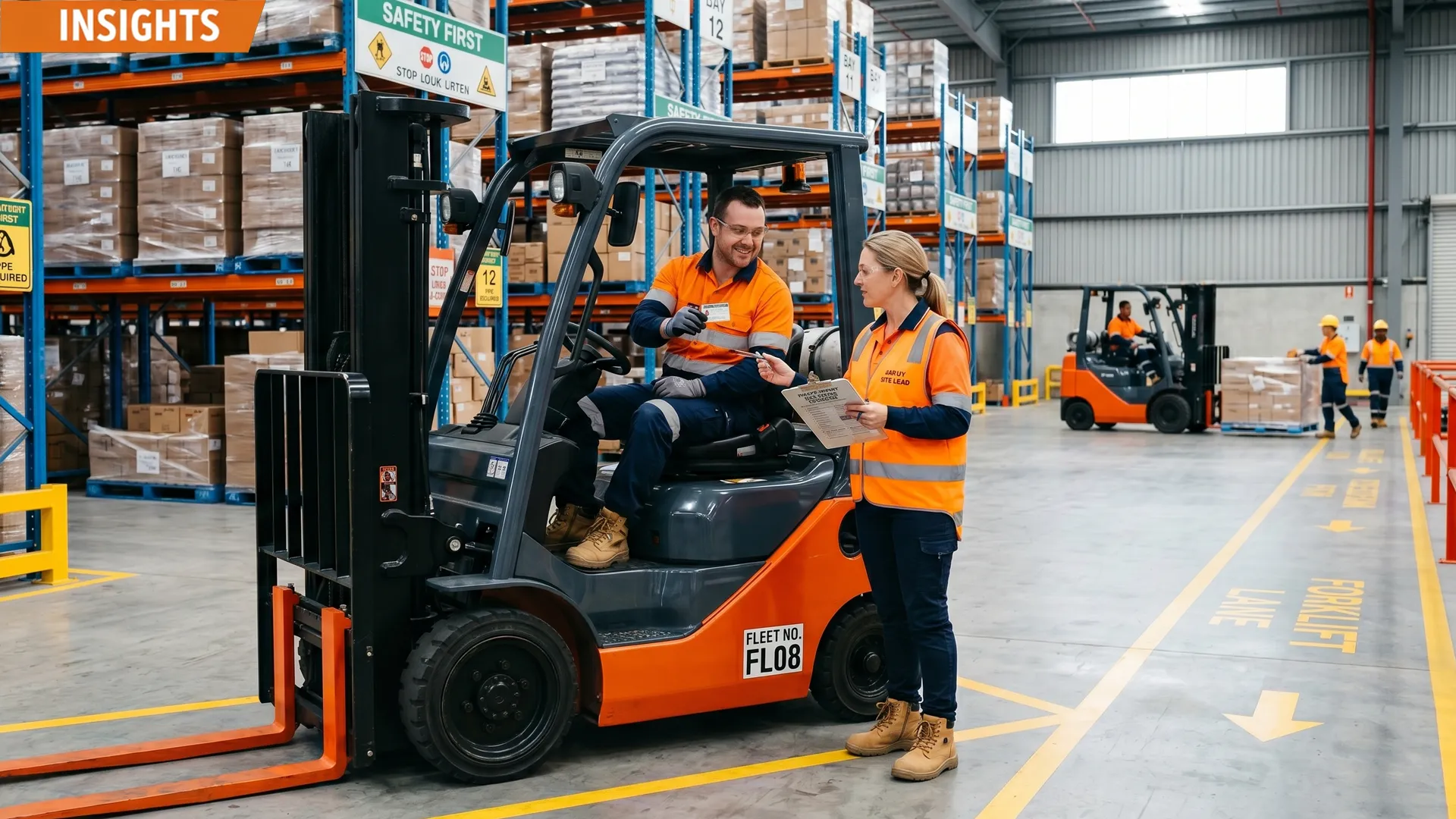
For warehouse employers, a forklift licence check can look simple.
A worker says they are licensed.
A copy is provided.
The shift is urgent.
The site wants to get moving.
But good employers know a proper licence check should do more than confirm that a card exists.
Across Melbourne’s South-East, many warehouses and logistics operations rely on forklift operators to support:
- receiving
- dispatch
- replenishment
- stock movement
- narrow-aisle work
- and high-volume floor activity
That means the consequences of a weak forklift placement can be serious.
If the operator is:
- not properly verified
- not suited to the actual work
- unfamiliar with the site
- or placed into an environment that was not thought through properly
then risk can build quickly before the shift has even settled in.
That is why good employers treat licence checking as a practical control, not just an admin step.
A stronger check helps answer:
- Is this the right licence for the work?
- Does the worker appear suitable for this specific task?
- Have we verified what needs to be verified before shift start?
- Are we mistaking licence possession for full site readiness?
Because a licence matters — but safe forklift use depends on more than that.
For the broader employer overview, see our forklift safety and licence checks in Victoria pillar guide on forklift risk, induction, supervision, and warehouse traffic control.
Why a Forklift Licence Check Should Be More Than a Paper Check
A forklift licence is a necessary control.
But it is not the final control.
A common mistake is treating the presence of a licence as the point where checking stops.
In practice, good employers know that a worker may still need review around:
- task fit
- site familiarity
- traffic exposure
- aisle conditions
- racking complexity
- dispatch pressure
- and first-shift supervision
That is because a licensed operator can still be exposed if:
- the work is different from what they usually do
- the floor is busier than expected
- the site is more controlled than their previous environment
- or the operator has not yet been shown how this particular warehouse functions
That is why stronger licence checking means asking not only:
“Do they have a valid forklift licence?”
but also:
“Does this operator look right for this actual shift, on this actual floor, under these actual conditions?”
That is a much better question.
What LF and LO Mean for Employers in Practical Terms
From an employer’s point of view, the most important thing is that the licence class matches the type of forklift work being performed on site.
That means employers should avoid treating forklift work as one single category.
Instead, they should think practically about:
- what equipment is being used
- what the operator will actually be doing
- whether the task sits in a busier or tighter environment
- and whether the licence class aligns with the real operating conditions of the role
Good employers usually want confidence that:
- the operator is licensed appropriately for the task
- the work has been described accurately
- and the placement is not being rushed through based on assumption or vague job titles alone
This matters because forklift roles can vary significantly depending on:
- site type
- aisle layout
- stock profile
- dispatch pressure
- height and access conditions
- and whether the floor carries more open movement or more constrained operating space
A strong licence check supports safer task matching.
What Employers Should Verify Before Shift Start
1. Confirm the Licence Before Work Begins
This is the most basic step, but it still matters.
A forklift operator should not begin work until the employer has checked the relevant licence details properly.
In practice, this means not relying only on:
- verbal confirmation
- assumption from a previous conversation
- or urgency on the shift
The check should happen before the forklift task starts, not after the worker is already on the floor.
Good employers keep this step consistent every time.
2. Check That the Licence Matches the Actual Forklift Task
This is where the check becomes more useful.
A stronger employer review asks:
- what kind of forklift task is being performed here
- what machine type is involved
- what access conditions exist on the site
- and whether the operator’s licence class is suited to that real work
This matters because job titles such as:
- forklift driver
- warehouse operator
- storeperson
- replenishment operator
do not automatically explain the actual forklift conditions.
The task needs to be understood clearly enough that the licence check supports the real role, not just the label.
Our broader guide to forklift safety and licence checks in Victoria explains why site conditions, traffic flow, and day-one supervision matter alongside licence verification.
3. Review the Actual Site Conditions the Operator Will Enter
A worker may hold the right licence and still be unfamiliar with:
- your aisle widths
- your racking layout
- your crossings
- your dock pressure
- your staging conditions
- your blind spots
- or the pace of your floor
That is why licence checking should not sit in isolation from site review.
Good employers think about:
- whether the worker is entering a calm or high-pressure floor
- whether traffic is heavy
- whether pedestrians and plant overlap frequently
- whether visibility is reduced in key areas
- and whether the worker is likely to need closer supervision in the first shifts
The licence confirms one thing.
The floor conditions may still change the risk significantly.
4. Do Not Confuse Previous Experience with Site Readiness
Some employers assume that if a worker has forklift experience, they can step into any warehouse environment smoothly.
That is not always true.
An operator may still need time and clearer guidance if:
- the site layout is more complex
- the traffic pressure is higher
- the stock movement is faster
- the dock area is more congested
- or the traffic rules are different from what they are used to
A stronger employer does not assume:
- experience equals immediate site readiness
- or licence equals no induction required
Both assumptions can create avoidable risk.
5. Make Sure the Role Brief Was Accurate in the First Place
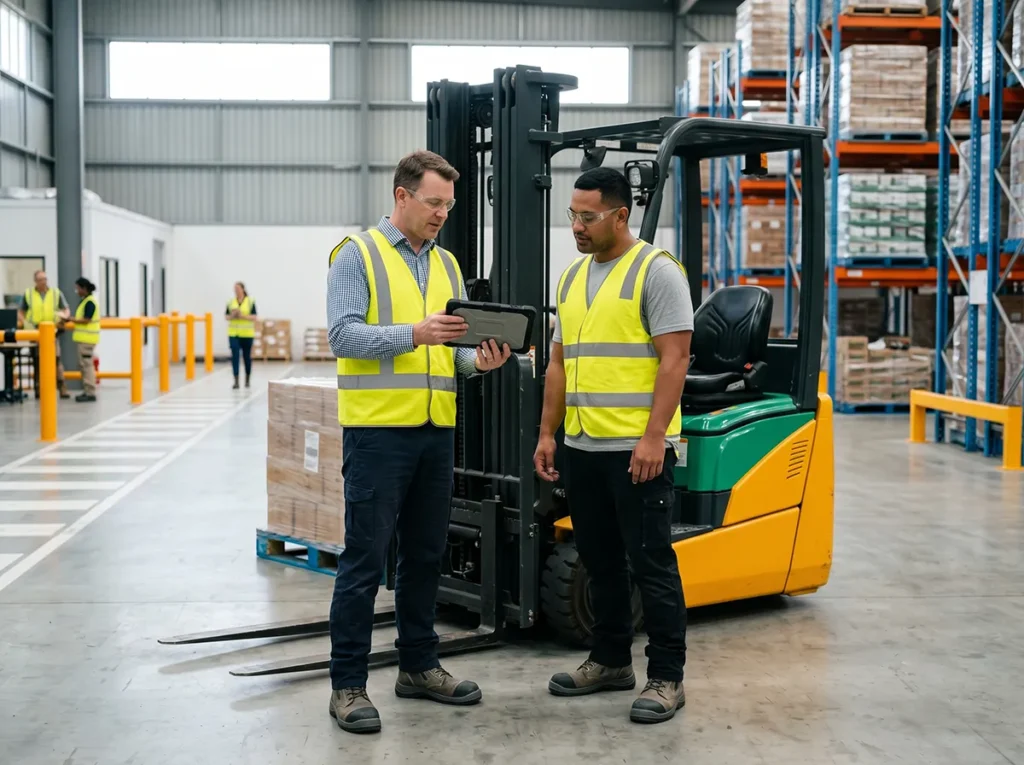
A forklift licence check becomes weaker if the role brief was vague or incomplete.
Good employers review whether the original request properly explained:
- the equipment involved
- the physical environment
- the task pressure
- the type of stock movement
- and any site-specific risk factors that matter for the operator
If the brief was too broad, the site may believe it has the right operator when the fit is actually weaker than expected.
A better brief leads to a better placement.
6. Check What Day-One Induction Still Needs to Cover
A forklift operator should not start the shift while still unclear on:
- traffic lanes
- crossings
- pedestrian routes
- blind spots
- dock rules
- PPE
- reporting
- and who supervises them
This is where employers should remember:
a licence is not a substitute for induction.
A stronger shift start happens when the operator is not just licensed, but also:
- oriented to the site
- shown the movement logic
- and given clearer expectations before active travel begins
Our article on forklift inductions for new and temporary operators explains what employers should cover on day one before a licensed operator begins work on an unfamiliar floor.
7. Identify Whether Closer Early Supervision Is Needed

Not every operator will need the same level of early support.
Good employers consider whether closer initial supervision is needed because:
- the operator is new to the site
- the floor is busy
- the task is more exposed
- the traffic conditions are more complex
- or the worker is moving into a tighter or less familiar environment
A licence may support legal task eligibility, but it does not tell you whether the first shift can safely run without stronger oversight.
That part still needs active judgement.
8. Check Whether Traffic and Pedestrian Risk Has Been Explained Clearly
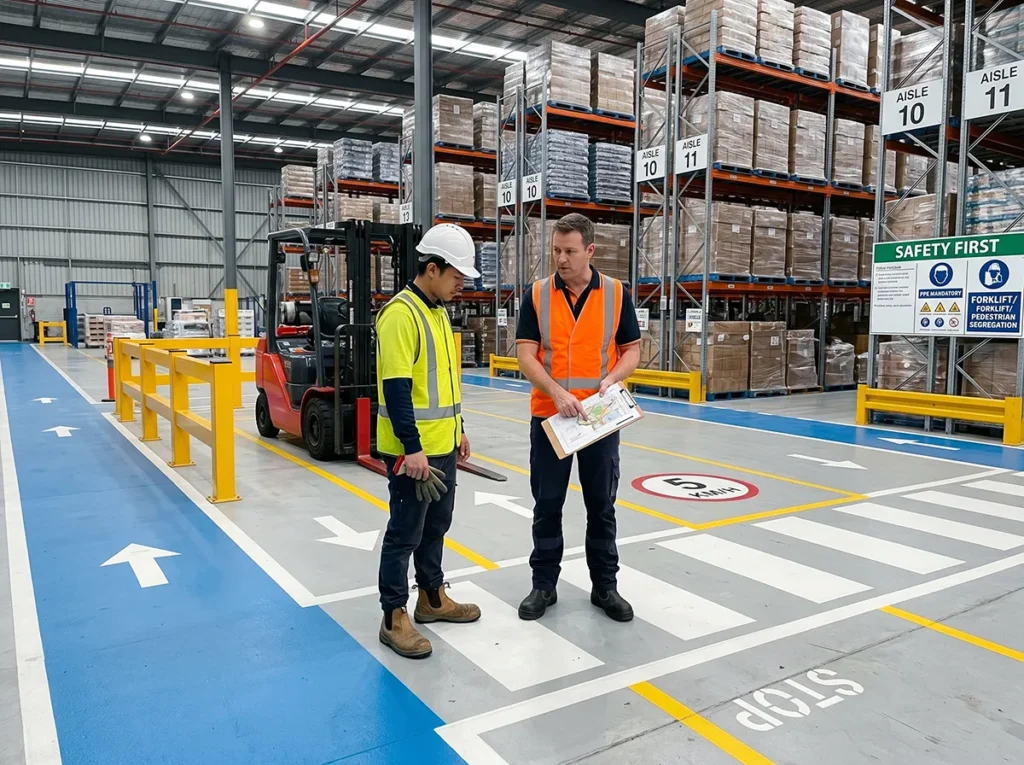
Forklift safety is heavily shaped by the interaction between:
- the driver
- the floor
- and other people on site
That means a licence check should be followed by very clear site briefing on:
- pedestrian routes
- crossings
- exclusion zones
- one-way systems
- loading areas
- and any high-risk movement patterns that are normal for that site
A worker should not be expected to discover these through observation alone.
Our guide to warehouse traffic management shows how employers can reduce forklift and pedestrian risks through better layout, clearer rules, and stronger day-one movement control.
9. Review Pre-Start Expectations Before the Shift Gets Busy
A stronger forklift check includes practical pre-start thinking.
That means confirming the operator understands:
- pre-start checks
- how to report equipment concerns
- and what to do if the forklift or floor conditions do not seem right before the shift begins
This matters because pre-start discipline is often one of the earliest visible signs of whether operator control on the site is strong or casual.
Good employers do not wait until active movement is underway before finding out that the expectations were unclear.
10. Recheck When Conditions Change
A forklift placement that was suitable last month may need review if:
- the layout changed
- the stock profile changed
- dispatch pressure increased
- overflow staging altered the traffic flow
- or the worker is now being asked to perform a different forklift task
Good employers understand that licence checking is not always one-and-done thinking.
If the role conditions change, then the task fit and site suitability may need review again.
That is part of stronger operational control.
What a Strong Forklift Licence Check Usually Looks Like in Practice
A good forklift licence check process usually feels:
- consistent
- calm
- practical
- and tied to the real work being done
In practice, that often means:
- the licence is verified before shift start
- the task fit is thought through properly
- the operator is not assumed ready just because the licence exists
- the site conditions are considered
- induction is still completed
- and supervision is matched to the worker’s familiarity with the floor
It should not feel like:
- a rushed admin step
- a tick-box exercise
- or a last-minute scramble just to get someone onto the machine quickly
The best licence checks support safer placements, not just faster starts.
A Simple LF and LO Licence Check Checklist for Employers
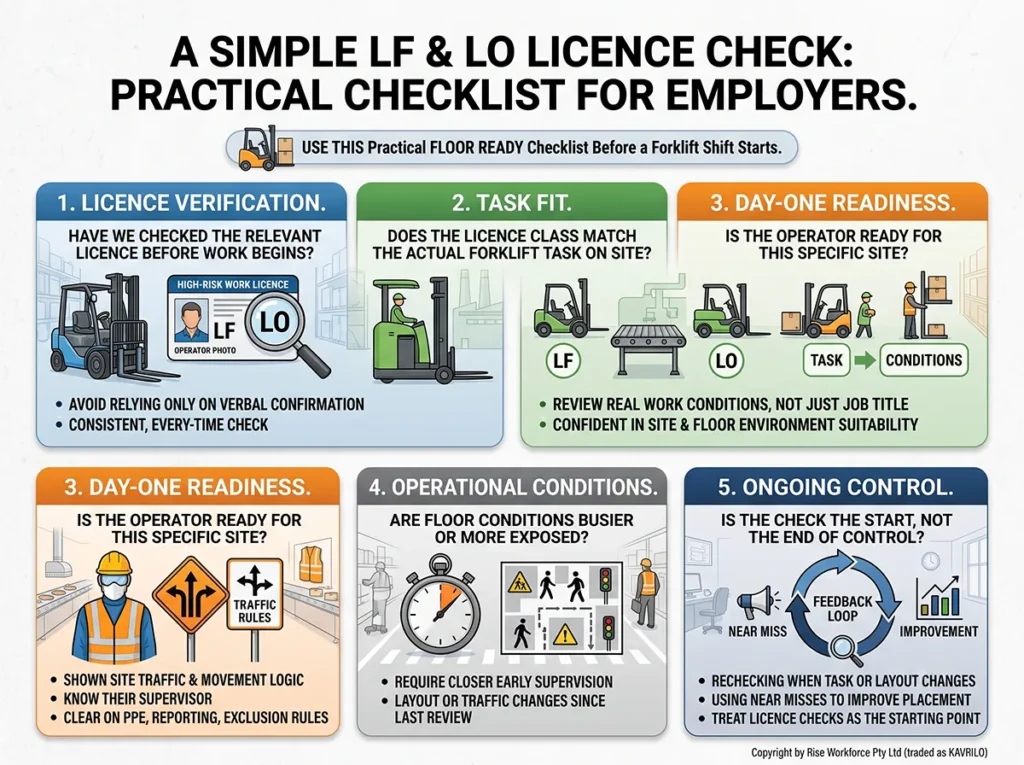
Here is a practical checklist employers can use before a forklift shift starts.
Licence Verification
- Have we checked the relevant forklift licence before work begins?
- Have we avoided relying only on verbal confirmation?
- Is the check being done consistently every time?
Task Fit
- Does the licence class match the actual forklift task on this site?
- Have we reviewed the real work conditions, not just the job title?
- Are we confident the placement suits the actual floor and operating environment?
Day-One Readiness
- Has the operator been shown the site’s traffic rules and movement logic?
- Do they know who supervises them?
- Are PPE, reporting, and exclusion rules clear before active movement starts?
Operational Conditions
- Is the floor busier, tighter, or more exposed than the worker may be used to?
- Does the role require closer early supervision?
- Have layout or traffic changes increased risk since the last review?
Ongoing Control
- Are we rechecking when the task or layout changes?
- Are near misses or early warning signs being used to improve operator placement?
- Are we treating licence checks as the starting point, not the whole control?
This kind of checklist helps employers move forklift checking from paperwork into practical floor readiness.
Final Word
LF and LO forklift licence checks in Victoria matter because forklift safety starts before the machine moves.
For warehouse employers across Melbourne’s South-East, stronger control usually comes from:
- verifying the right licence
- matching it to the actual task
- reviewing the floor conditions properly
- not confusing experience with site readiness
- completing induction
- and supervising the early shifts with enough attention
That is what helps reduce:
- weak placements
- avoidable confusion
- rushed starts
- unsafe assumptions
- and preventable exposure around active forklift work
Because a licence is essential.
But safer forklift operation depends on whether the employer checks the right things around it too.
That is not just better verification.
It is better warehouse control.
Need Practical Labour Hire Support for Warehousing and Manufacturing in Melbourne’s South-East?
KAVRILO is building its approach around safety-aware workforce support, clearer communication, and stronger operational discipline for warehouse and industrial environments.
Whether your site needs better shift coverage, stronger day-one worker readiness, or more dependable labour coordination for forklift-related work, KAVRILO is focused on practical workforce support that fits controlled warehouse and factory environments.
Need warehouse and factory labour hire support with stronger day-one readiness and a practical safety-aware approach? Talk to KAVRILO about workforce support across Melbourne’s South-East.
Article Disclaimer
This article is provided for general information only and does not constitute legal, workplace relations, safety, taxation, payroll or other professional advice. Please seek advice specific to your circumstances before acting on this information.
Please read our Website Disclaimer for more information.