
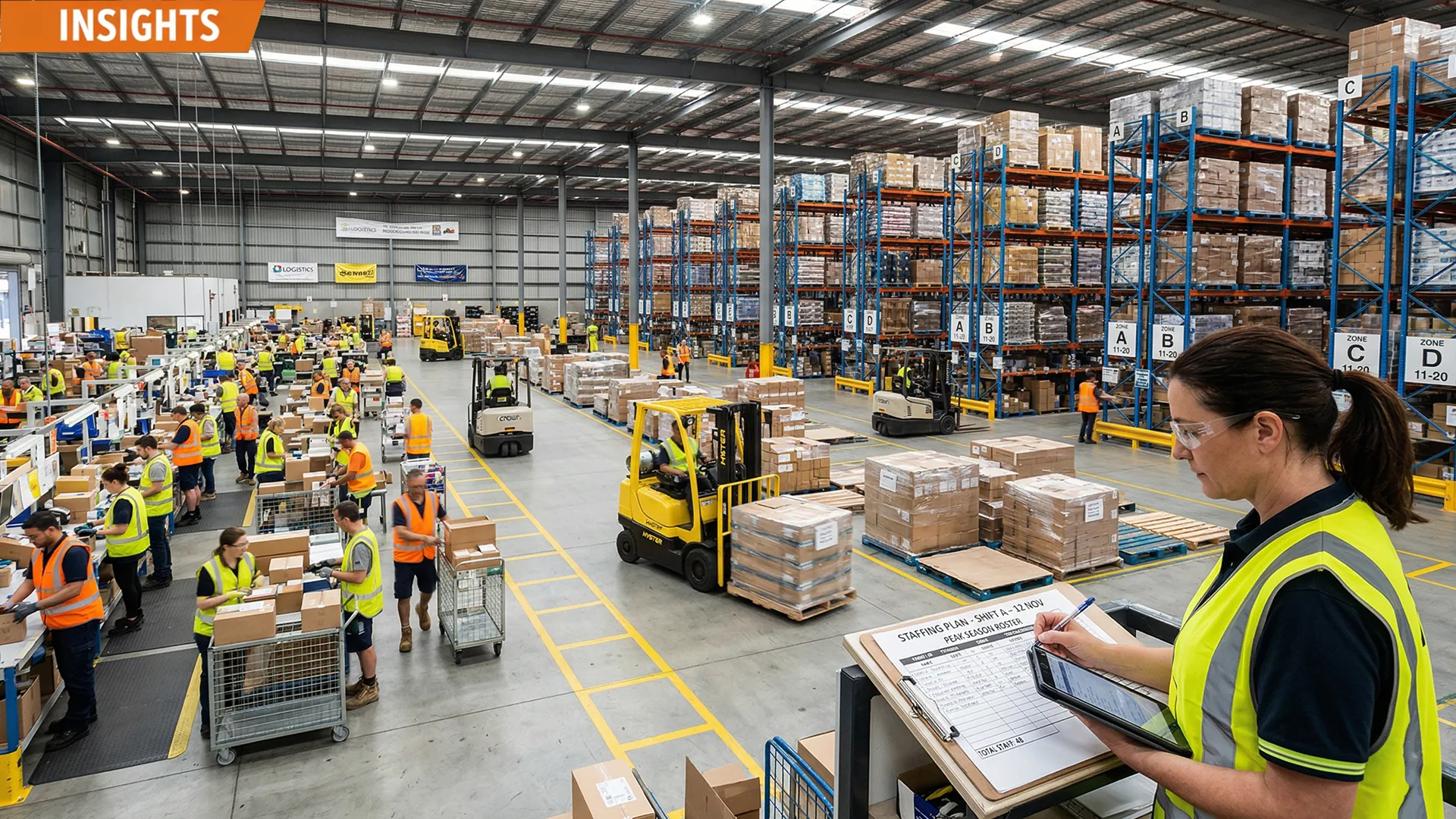
Peak season in warehousing doesn’t fail because demand increases. It fails because staffing is planned too late.
When volumes lift in South-East Melbourne (Dandenong South, Hallam, Keysborough, Braeside and nearby industrial areas), the pressure hits fast: inbound containers stack up, pick rates drop, dispatch cut-offs get missed, and your best people end up doing overtime until they burn out.
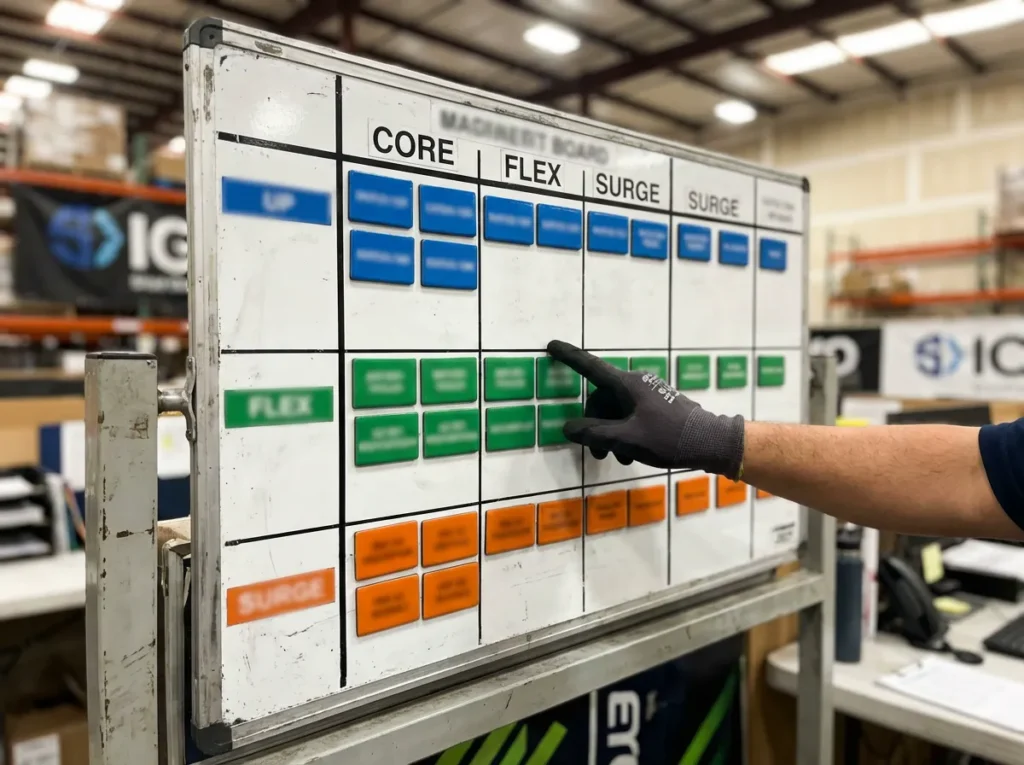
A calm peak season plan isn’t complicated. The simplest approach is a three-layer staffing model:
- Core (your stable team)
- Flex (your reliable casual bench)
- Surge (short-term spike cover)
This structure helps you scale up quickly without wrecking safety, quality, or morale.
1) Layer One: CORE (keep your engine stable)
Your core team is the group you protect at all costs. They hold the site knowledge and maintain standards.
Core typically includes:
- leading hands and supervisors
- experienced pickers/packers who know your WMS
- inwards/outwards operators who understand flow
- forklift operators who know your docks and racking rules
How to stabilise the core before peak hits
- lock in shift patterns early (don’t change rosters weekly)
- plan leave blackout periods fairly (give notice)
- reinforce safety rules (fatigue increases incidents)
- confirm critical roles: LF/LO operators, dispatch leads
Peak mistake: treating core staff like “infinite capacity.”
Overtime can help temporarily, but it’s not a staffing plan.
2) Layer Two: FLEX (your reliable bench — the real key)
This is where most warehouses win peak season.
Flex is a bench of:
- casual workers you already trust
- workers who have completed site induction
- people who live locally and show up reliably
This layer reduces chaos because these workers are not “new.” They’re already familiar with:
- your pick paths
- scanning process
- pack standards
- supervisor expectations
- safety zones and walkways
How to build a flex bench in South-East Melbourne
- start 3–6 weeks before peak
- rebook the same workers repeatedly
- keep the top performers “warm” with at least one shift every 1–2 weeks
- prioritise local placements (reduces late starts and fatigue)
Peak mistake: hiring fresh faces every day.
It increases training burden and quality errors.
3) Layer Three: SURGE (planned short-term capacity)
Surge is your spike protection:
- late inbound containers
- promotions
- customer order spikes
- unexpected absenteeism
- seasonal demand beyond forecast
Surge workers can be:
- extra pick/pack hands
- container unload teams
- dispatch support
- production line support
- forklift support (if you have enough safe, verified operators)
How to use surge without breaking the site
Surge only works if you plan:
- where these workers will be placed (zones)
- who supervises them
- what tasks are low-risk and repeatable
- how you ramp them up safely
Surge workers should not be thrown into the highest-risk tasks without proper induction.
The planning timeline (simple and realistic)
Here’s a practical timeline that fits most South-East Melbourne warehouses:
6–8 weeks before peak
- confirm volume forecast and target headcount
- identify critical roles and bottlenecks
- plan shift changes (day/afternoon/night coverage)
3–6 weeks before peak
- build the flex bench (repeat bookings)
- run induction refreshers (walkways, scanning, manual handling)
- test your timesheet/payroll process for scale
1–2 weeks before peak
- lock roster for the first peak phase
- confirm surge plan and who is on standby
- confirm equipment readiness (scanners, printers, pallet jacks)
- confirm supervisor coverage for extra labour
The 5 operational controls that prevent chaos
Even with labour hire support, you still need structure. These controls stop peak season from turning into disorder.
1) Zone your labour (don’t “float” everyone)
Define clear zones:
- pick zone A/B/C
- packing benches
- replenishment support
- dispatch staging
- container bay
Floating creates confusion and slows output.
2) Induction must stay short, site-specific, and enforced
Peak season is when safety incidents rise. Don’t skip induction because you’re busy.
Minimum:
- walkways + forklift zones
- manual handling basics
- where to stage pallets/returns
- who the supervisor is
- how to report hazards
3) Protect fatigue: breaks and rotation are performance tools
Rate falls when fatigue rises. So does safety.
Peak season controls:
- enforce break schedule
- rotate heavy tasks (container unload, bulky items)
- reduce “end of shift” rushing (where injuries happen)
4) Keep the WMS/scanning process consistent
In peak, people try shortcuts. That leads to mis-picks and rework.
Set one standard for:
- scan sequence
- cartonisation rules
- label placement
- what to do if stock is missing
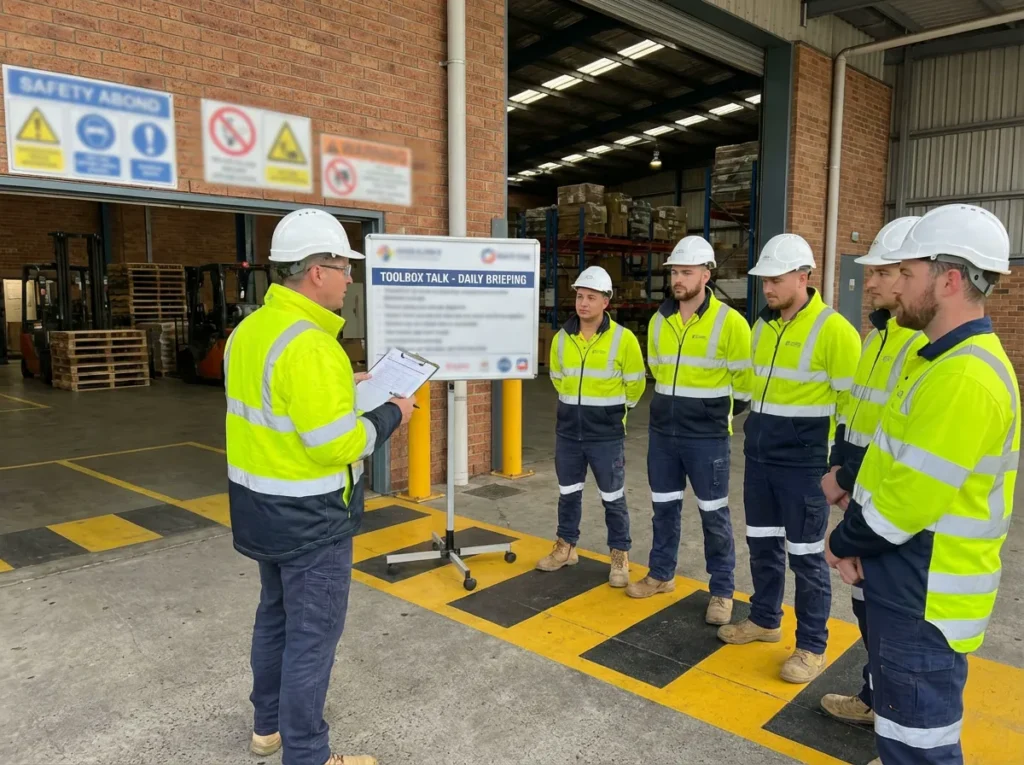
5) Daily 5-minute stand-up briefing
A short briefing gives clarity:
- today’s volume target
- priority orders
- staffing changes
- safety reminder (one point only)
- escalation contact
This is a simple habit that prevents confusion.
A South-East Melbourne note: local supply matters in peak season
When you scale up quickly, you need reliability.
South-East Melbourne sites often perform better when the staffing partner recruits from nearby suburbs, because:
- shorter commutes reduce no-shows
- workers arrive more consistent for early starts
- fatigue is lower across the week
Local labour supply is a real operational advantage.
The simple 3-layer plan
Use this structure in your peak planning doc:
- CORE: stable team in critical roles (protected roster, minimal churn)
- FLEX: repeat casual bench (site-inducted, reliable, local)
- SURGE: planned spike cover (standby workers + clear task zones)
Then add:
- induction minimum standard
- zone assignments
- fatigue controls
- daily briefing routine
Final takeaway
Peak season doesn’t need to be chaotic. A calm plan is built on:
- protecting your core
- building a reliable flex bench
- using surge support in a controlled way
If you do those three layers well, you’ll hit volume without sacrificing safety or burning out your best people.
Need peak season labour hire support in South-East Melbourne? KAVRILO can help you build a stable flex bench and surge coverage that keeps your floor moving.
Article Disclaimer
This article is provided for general information only and does not constitute legal, workplace relations, safety, taxation, payroll or other professional advice. Please seek advice specific to your circumstances before acting on this information.
Please read our Website Disclaimer for more information.