
Most warehouse safety inductions fail for one reason: they try to cover everything, and workers remember almost nothing.
In South-East Melbourne warehouses (Dandenong South, Hallam, Keysborough, Braeside and nearby), the risks are predictable — forklifts, pedestrian traffic, manual handling, racking, dock edges, and fast movement under time pressure. The goal of induction is not to “tick a box.” It’s to prevent the incidents that stop your floor.
This post outlines a practical induction approach that works in real operations: short, site-specific, repeatable, and easy for diverse teams — including workers who are not native English speakers.
1) What an induction is supposed to achieve
A good induction does three things:
- Sets safe behaviour standards (how work is done on this site)
- Reduces uncertainty (workers know where to go and what to follow)
- Creates a simple escalation path (what to do when something is unsafe)
If your induction doesn’t change behaviour on the floor, it’s paperwork.
2) Keep it short: 10 minutes beats 60 minutes
Long inductions are forgotten. Short inductions are remembered.
Best practice for busy warehouse sites:
- 8–12 minutes of the non-negotiables
- 2–3 minutes for role-specific additions
- a 60-second teach-back to confirm understanding
You can always add detail later. The first induction should focus on preventing the highest risk events.
3) Teach the “Top 6” non-negotiables (warehouse standard)
Every site is different, but most incidents in South-East warehouses come from the same categories. Make these your core:
1) Pedestrian walkways and forklift exclusion zones
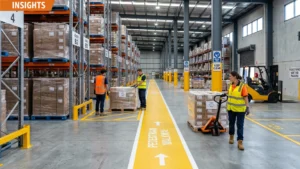
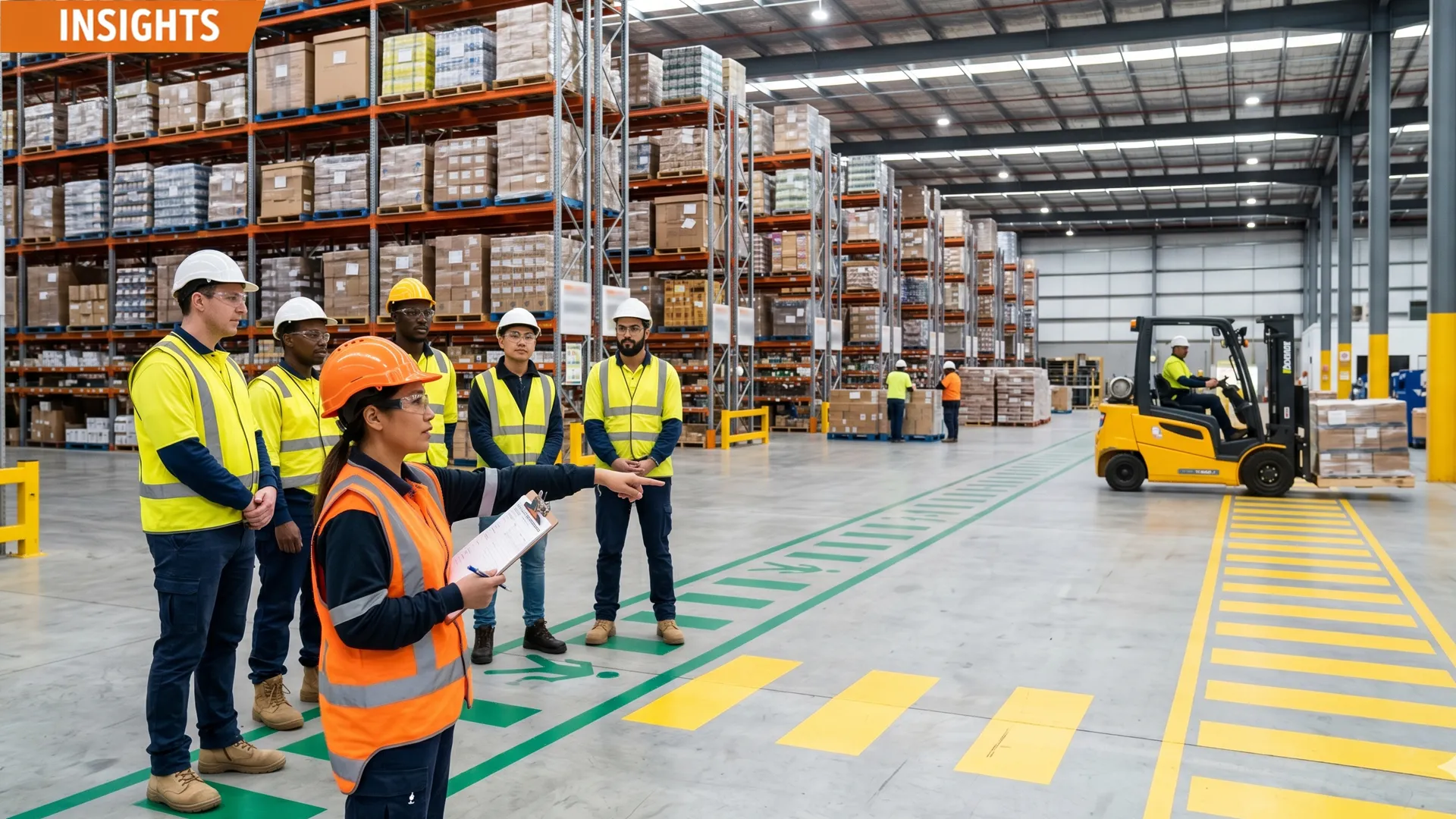
Show workers where they can walk and where they can’t. Don’t just say it — point to floor markings, corners, blind spots, and crossing points.
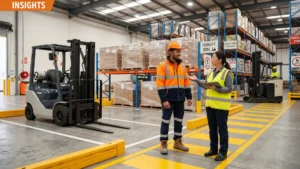
2) Forklift right-of-way rules (site-specific)
Some sites give forklifts right-of-way, some don’t. Clarify it clearly. Also cover:
- horn points
- speed limits
- no-phone rules
- visibility rules for loads and corners
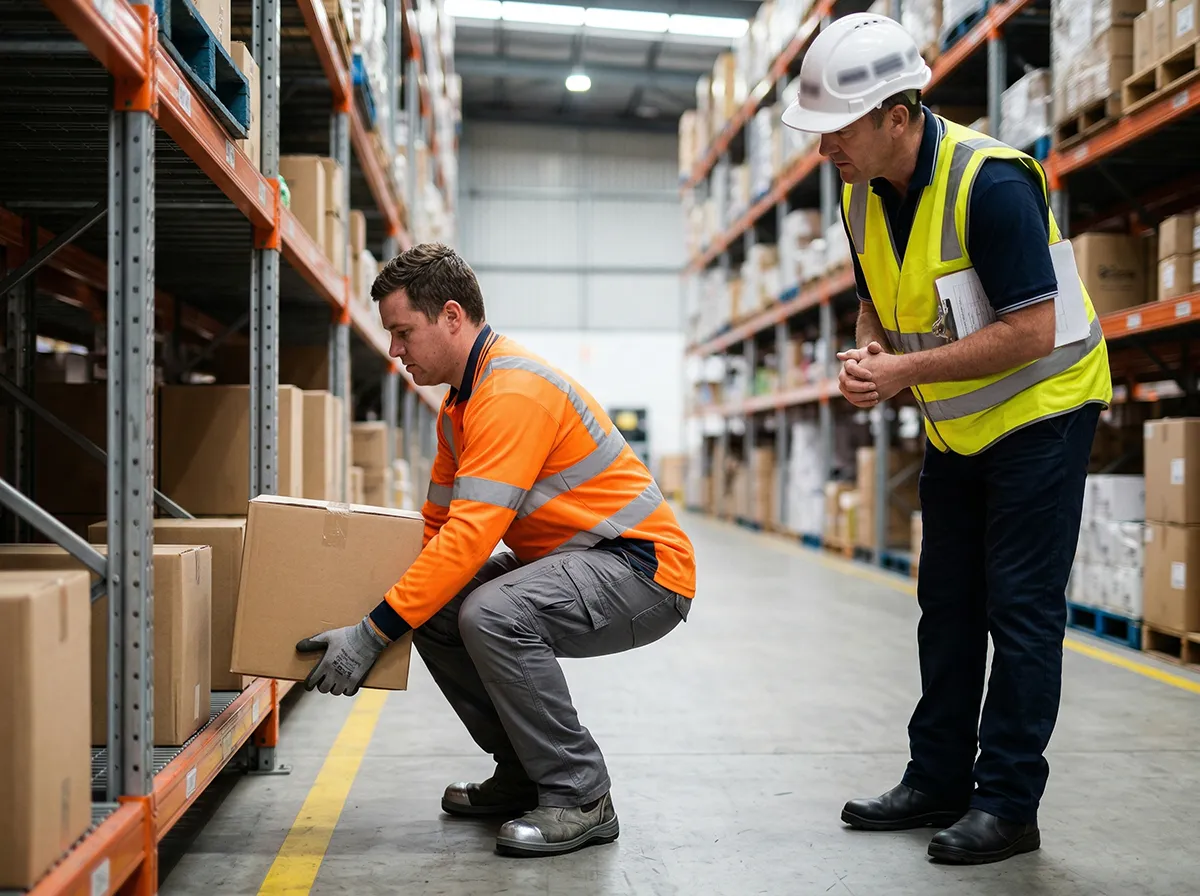
3) Manual handling basics (the minimum that prevents injury)
Focus on:
- load close to body
- bend knees
- no twisting (turn feet)
- team lifts for awkward items
- “stop and ask” when unsure
4) Dock safety (container bays, dock plates, edges)
Dock incidents happen fast. Cover:
- staying clear of moving forklifts
- no walking behind reversing equipment
- dock plate rules and trailer movement awareness
5) Racking and pallet safety
Cover:
- don’t climb racking
- damaged pallet procedure
- no “nudging” racking with forklifts
- report unstable stacks immediately
6) Incident and hazard reporting
Workers must know:
- who to tell first (supervisor/leading hand)
- how to report quickly
- what counts as a near-miss
- that reporting is expected and supported
4) Use “show, then tell” (it’s faster and sticks)
Inductions work best when they happen in the environment, not in an office chair.
A simple structure:
- 2 minutes: site map + muster points + amenities
- 3 minutes: walkways + forklift lanes + horn points
- 3 minutes: manual handling example (one lift demo)
- 2 minutes: hazard reporting + who the supervisor is
Workers remember what they see.
5) Confirm understanding: “teach-back” is the secret
A quick teach-back prevents most misunderstandings, especially with new workers or non-native English speakers.
Ask:
- “Where are pedestrians allowed to walk?”
- “What do you do if a pallet is damaged?”
- “Who do you call if something is unsafe?”
If they can answer those, your induction is working.
If they can’t, repeat the key point in plain language.
6) Make it role-specific (don’t deliver a generic induction)
A forklift driver and a picker need different risk focus.
Add a 2-minute role add-on:
- Pick/pack: scanning rhythm, packing standards, manual handling, trolley safety
- Container unloading: rotation plan, heat stress, lifting rules
- Forklift LF/LO: exclusion zones, dock rules, speed limits, pre-start checks
- Production/process: machine guarding awareness, hygiene rules (if applicable)
This is where most sites fail: they deliver one generic induction for everything.
7) Reinforce after day one (because day one is information overload)
Even good inductions fade. The solution is simple: micro reinforcement.
Practical reinforcement plan:
- Day 2: 3-minute reminder on walkways and reporting
- Week 1: 5-minute check on manual handling and high-risk points
- Monthly: quick toolbox reminder (forklift lanes, pallets, reporting)
This is how safety becomes behaviour.
8) Translate without overcomplicating (for diverse teams)
South-East Melbourne warehouses often have international workers. You don’t need a 20-page translated manual — you need clarity.
Practical approach:
- Use short sentences and simple words
- Use pictures or icons for walkways/PPE
- Show the floor markings physically
- Use teach-back to confirm understanding
- If needed, provide a bilingual support contact or buddy
Safety is communication, not paperwork.
9) Document the right things (without turning it into bureaucracy)
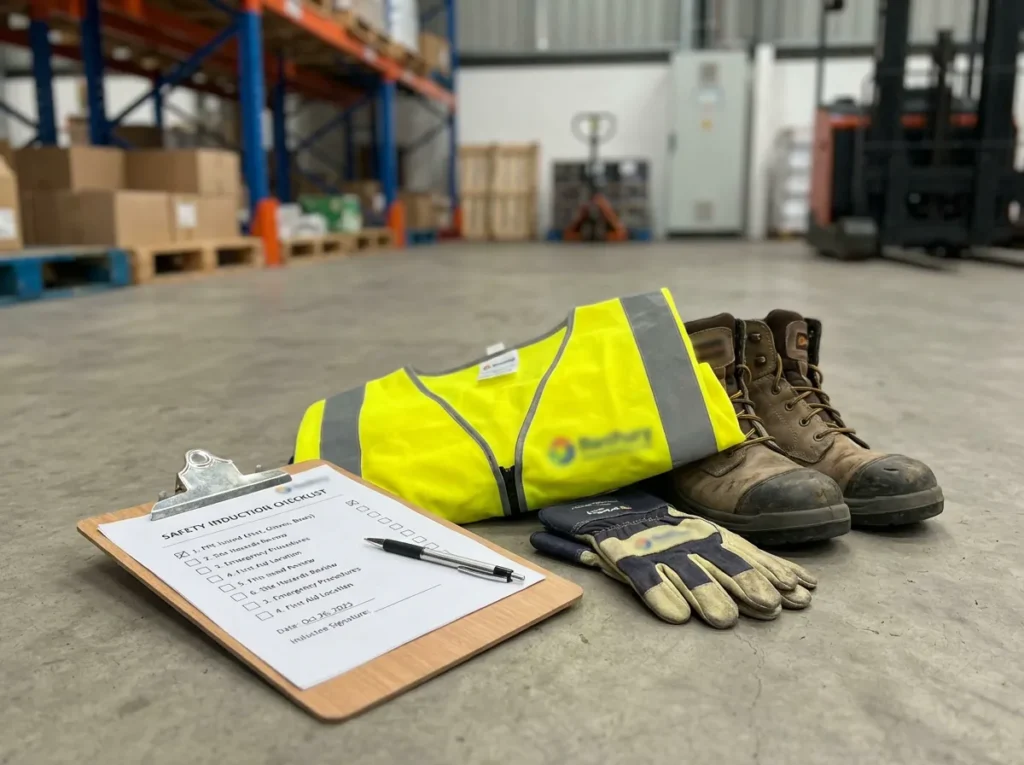
Yes, you need records. But keep them simple:
- induction date and name
- role assigned
- key safety topics covered
- supervisor/assessor sign-off
- any extra notes (e.g., additional coaching required)
Good documentation supports compliance. It shouldn’t replace induction quality.
10) A quick warehouse induction checklist
Use this as a minimum standard:
- walkways, crossings, blind spots shown on floor
- forklift rules: speed, horn points, exclusion zones explained
- manual handling demo (one correct lift)
- dock and racking/pallet safety covered
- hazard/incident reporting explained + contact person named
- role-specific risks added (2 minutes)
- teach-back completed (3 questions)
- induction recorded and signed
Final takeaway
A warehouse safety induction should be short, site-specific, and reinforced. It should change behaviour on the floor, not just sit in a folder.
If you treat induction as a performance tool — fewer incidents, fewer disruptions, steadier output — you’ll protect both safety and productivity.
Need safety-inducted labour hire support in South-East Melbourne? KAVRILO supplies job-ready workers and supports practical induction standards that keep warehouses moving safely.
Article Disclaimer
This article is provided for general information only and does not constitute legal, workplace relations, safety, taxation, payroll or other professional advice. Please seek advice specific to your circumstances before acting on this information.
Please read our Website Disclaimer for more information.