
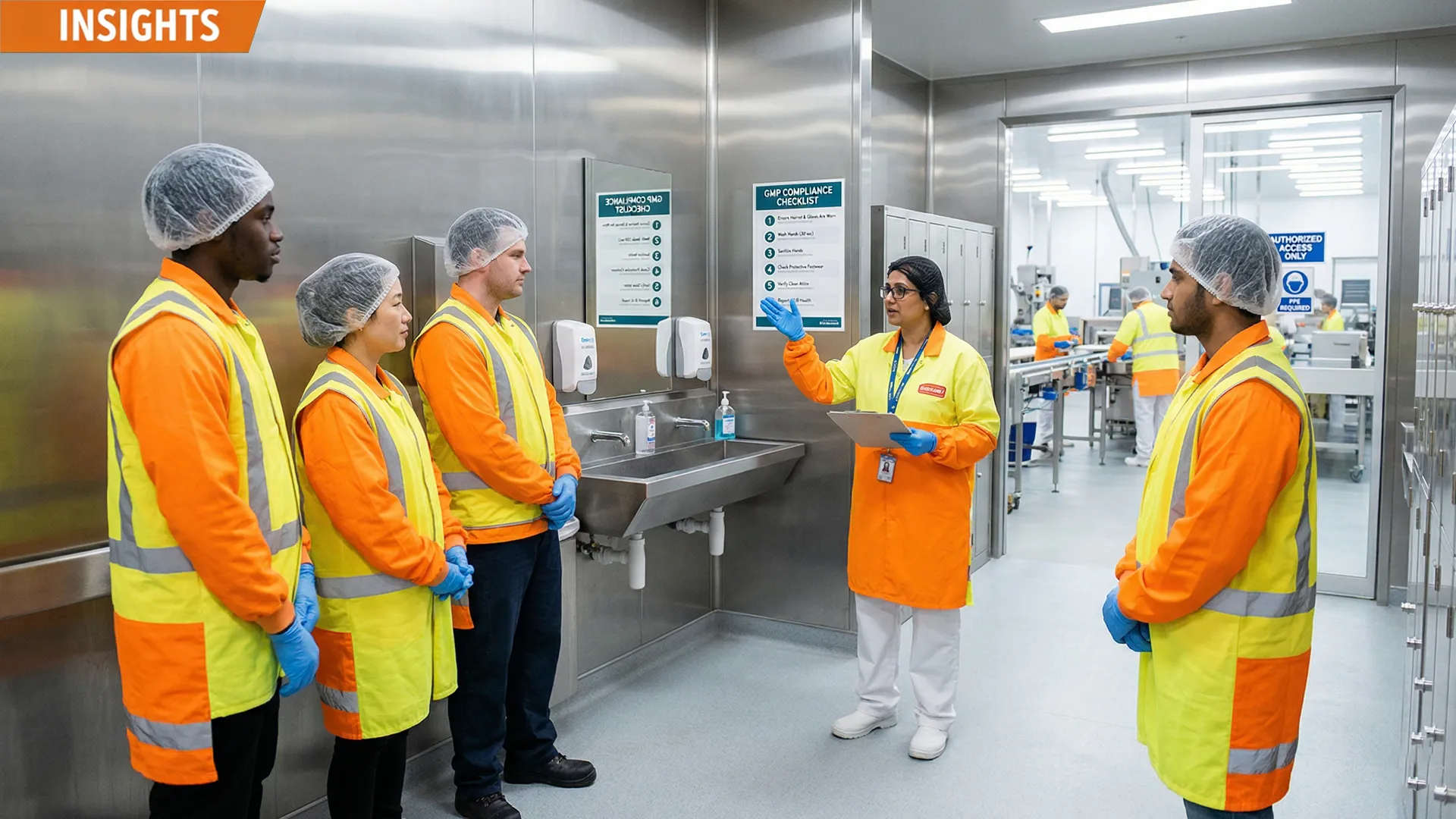
Using labour hire in food manufacturing is normal in Victoria — especially in South-East Melbourne where demand fluctuates across ready meals, bakery, dairy, meat processing, and temperature-controlled supply chains. But when something goes wrong on a food site, regulators and auditors don’t accept “they were labour hire” as an excuse.
A clean compliance approach is simple:
- the labour hire provider remains the employer (payroll, employment records, etc.)
- the host controls the site, the process, and day-to-day supervision
- food manufacturing adds extra obligations: hygiene discipline, allergen controls, zone management, and documented checks
This guide is a practical, plain-English overview of what hosts must control on-site in Victoria when using labour hire — including high-care environments that feel pharma/cleanroom-like and cold chain contexts like dairy and cold storage/freezers. It’s written with real South-East Melbourne operations in mind, where multinational workforces are common and clarity matters.
Note: This is general information, not legal advice.
1) Start with the basics: who is responsible for what?
A useful way to think about it:
Labour hire provider typically controls
- employment relationship (engagement type)
- payroll and payslips
- superannuation and statutory payments
- general HR policies and worker support
- (often) pre-screening checks and basic induction preparation
Host typically controls (on-site)
- the workplace, equipment, and systems of work
- site induction and task instruction
- supervision and direction of daily work
- site safety controls and reporting pathways
- hygiene/GMP behaviours, zones, allergen controls
- quality procedures and line standards
- incident response and site coordination
In food manufacturing, most practical compliance risk sits in the host-controlled category: what happens on the floor.
2) Site induction is not optional (and “generic” isn’t enough)
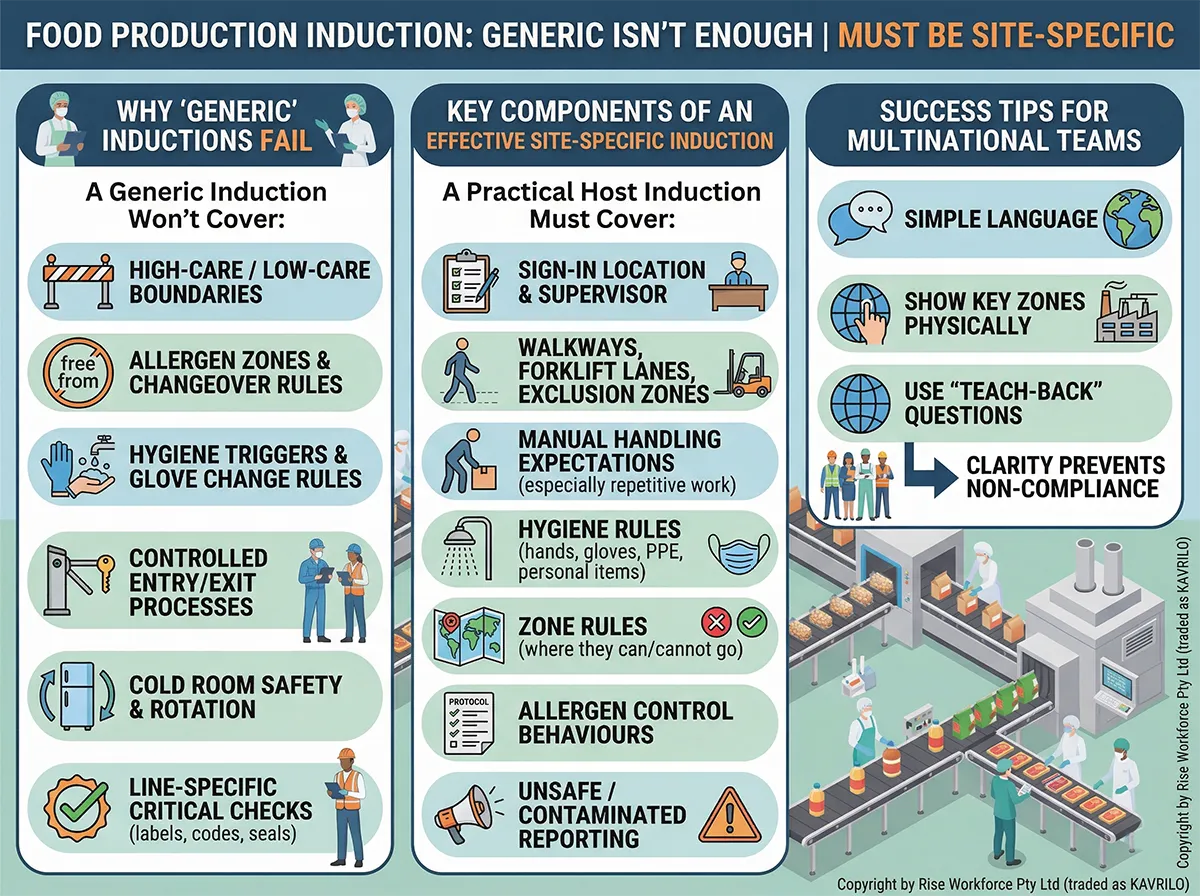
In food production, induction must be site-specific. A generic induction won’t cover:
- high-care / low-care boundaries
- allergen zones and changeover rules
- hygiene triggers and glove change rules
- controlled entry/exit processes
- cold room safety and rotation
- line-specific critical checks (labels, codes, seals)
A practical host induction should cover:
- where to sign in and who supervises the shift
- walkways, forklift lanes, and exclusion zones
- manual handling expectations (especially repetitive work)
- hygiene rules (hands, gloves, PPE, personal items)
- zone rules (where they can and cannot go)
- allergen control behaviours
- what to do if something is unsafe or contaminated
Tip for multinational teams: use simple language, show key zones physically, and use “teach-back” questions. Clarity prevents non-compliance.
3) Hygiene and GMP behaviours must be enforced on-site
Food manufacturing is different from general warehousing because behaviours are part of compliance.
Hosts should control and enforce:
- no jewellery / no false nails (as per site rules)
- hairnets/beard snoods and correct PPE
- handwashing timing (not just “wash hands”)
- glove change rules (and when gloves are not allowed)
- phone restrictions in production areas
- illness reporting procedures
This is especially critical for ready meals, dairy, and high-care operations where contamination risk is higher and audits are tighter.
4) Allergen control is an operational control (not “training only”)
Allergen incidents often happen when people are trying to be helpful:
- moving tubs between lines
- using the wrong tools
- crossing zones without permission
- not changing gloves during changeovers
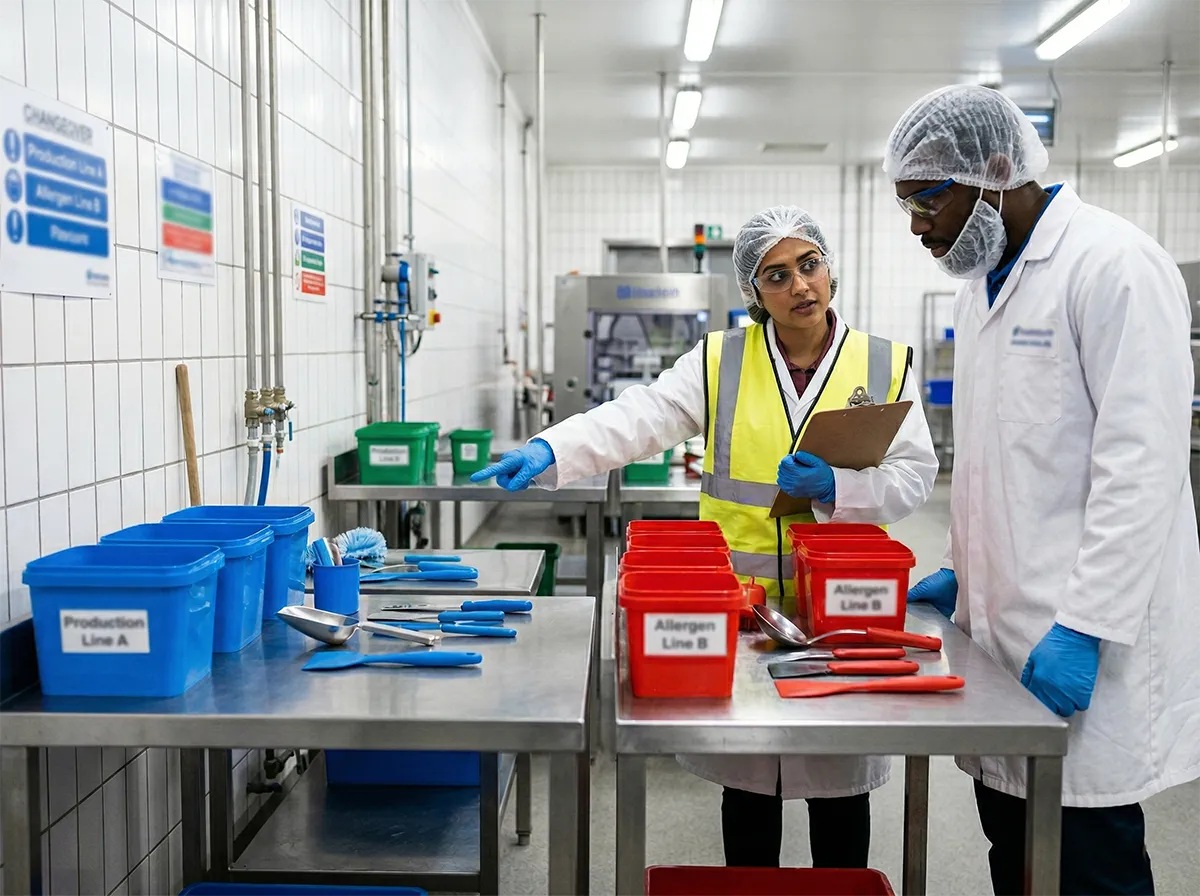
Hosts should control:
- how allergen tools/bins are separated
- changeover process and verification
- what workers can touch and move
- who authorises movement between lines/zones
- escalation pathway when cross-contact is suspected
Simple control that works: physical separation (distinct tools/bins per allergen) plus a named supervisor responsible for changeovers.
5) Controlled zones: high-care / low-care (and “cleanroom-like” discipline)
Many South-East Melbourne food sites have controlled areas that feel pharma-like:
- entry barriers
- gowning steps
- restricted movement
- strict touch controls
- documentation checks
Hosts must control:
- entry/exit processes (including hygiene stations)
- what PPE changes are required and when
- movement restrictions (“no crossing zones casually”)
- what happens if someone breaches a zone
Zone control is not something you can outsource. It is site management.
6) Cold chain and cold storage: safety and quality controls
Cold storage/freezer roles are common in dairy, chilled ready meals, and meat cold chain.
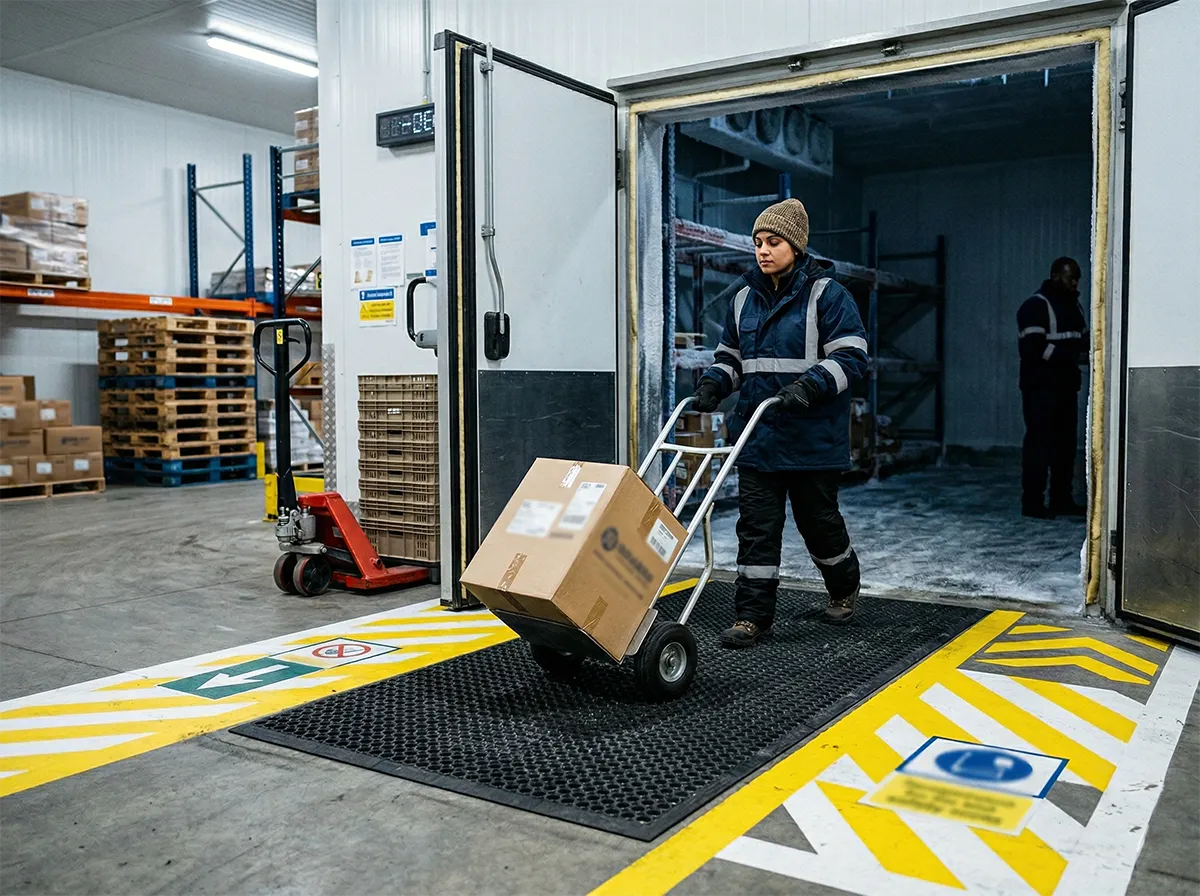
Hosts should control:
- PPE requirements and what the site provides
- cold exposure limits, rotation, and warm-up breaks
- slip hazards at transitions and in staging zones
- safe manual handling in reduced grip conditions
- traffic management around cold room doors (forklift/pedestrian flow)
Cold rooms increase slip and strain risks. A clear system prevents incidents and keeps output stable.
7) Safe systems of work: forklifts, walkways, manual handling
Regardless of employment arrangement, hosts control the workplace.
Hosts should ensure:
- walkways and forklift lanes are clear and enforced
- exclusion zones and crossing points are visible
- task instruction is clear (don’t assume labour hire “already knows”)
- manual handling risk is managed through layout, aids, and rotation
- near-misses are reported and actioned
In high-volume operations, safety controls protect productivity as much as compliance.
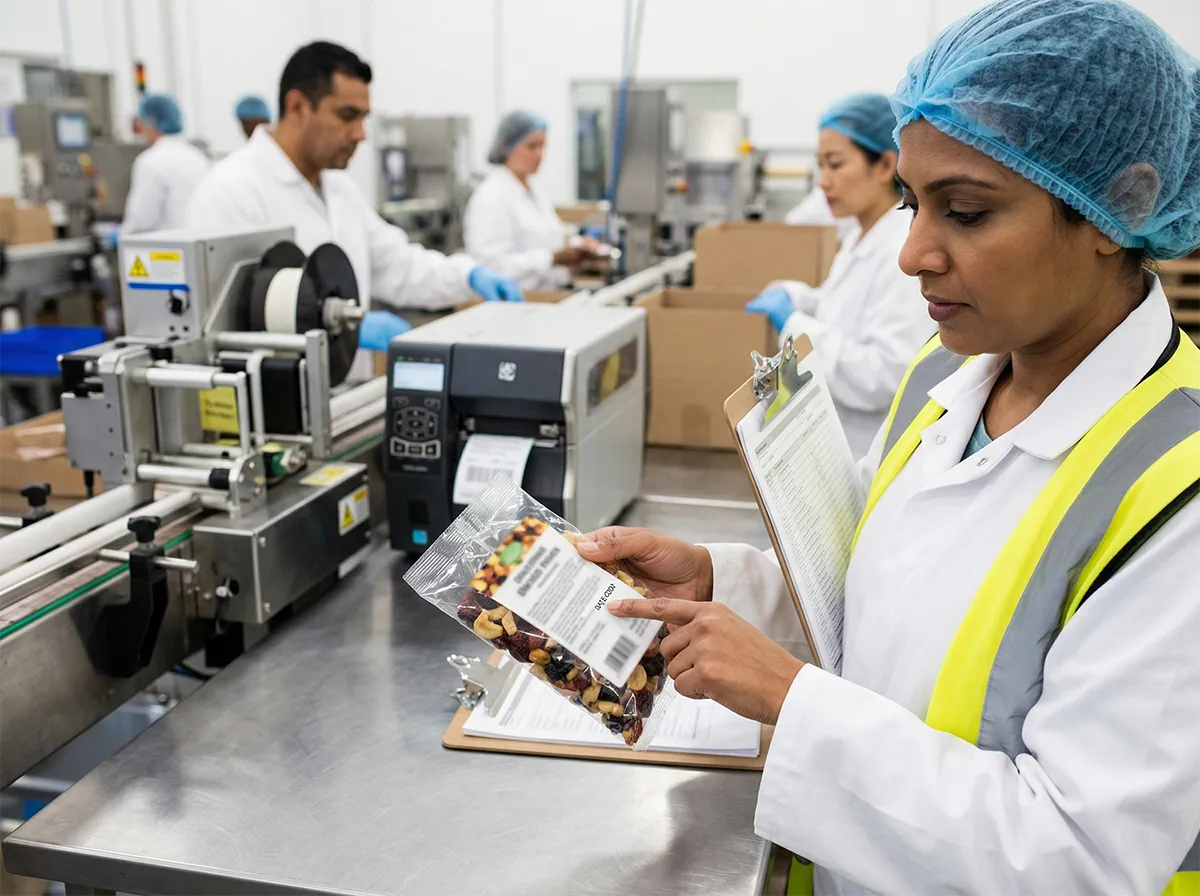
8) Critical-to-quality (CTQ) checks: labels, codes, weights, seals
Packing line failures create the biggest operational pain during peak demand.
Hosts should control:
- who owns CTQ checks (named role)
- checking rhythm (start-up, hourly, changeover)
- how rejects and quarantines are handled
- documentation where required (without overloading)
Labour hire workers can follow the process — but the host must design and enforce the process.
9) Fair treatment and communication for multinational workers
Many food sites rely on multinational teams. That’s normal in Victoria. The compliance risk is not nationality — it’s misunderstanding and unclear instruction.
Host controls that reduce risk:
- plain-English instructions and demonstrations
- pictorial signage for zones and hygiene triggers
- buddy system for first shift
- teach-back questions to confirm understanding
- clear pathway to report concerns without fear
This improves safety, quality, and retention.
10) Records and reporting: keep it simple and audit-ready
Hosts should maintain clear records for:
- site induction completion (date, role, supervisor sign-off)
- any role-specific training (e.g., high-care entry)
- incidents/near-misses and corrective actions
- CTQ check records where required
- visitor/contractor sign-in procedures (site-specific)
You don’t need excessive paperwork — you need evidence of control.
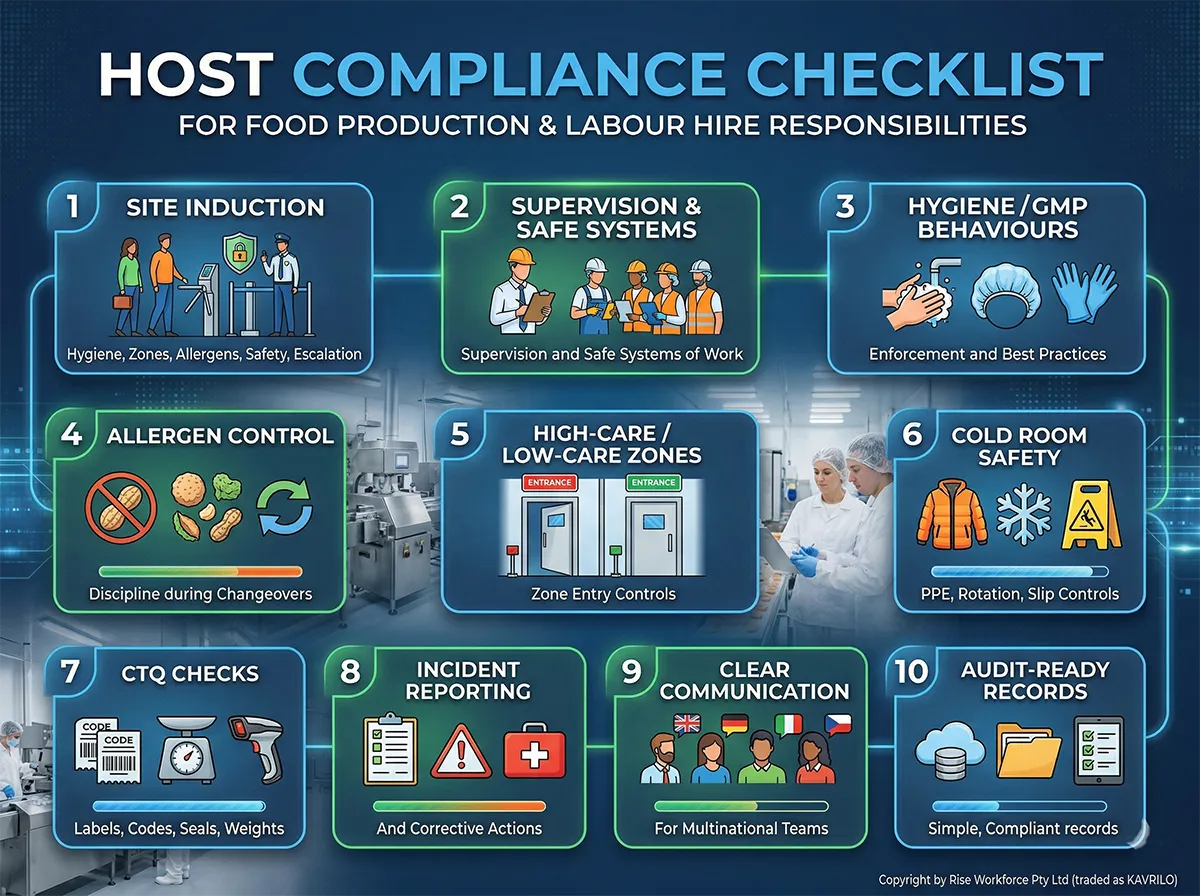
Host Compliance Checklist
If you use labour hire in food manufacturing, hosts should control:
- site induction (hygiene, zones, allergens, safety, escalation)
- supervision and safe systems of work
- hygiene/GMP behaviours and enforcement
- allergen control and changeover discipline
- high-care / low-care zone entry controls
- cold room safety (PPE, rotation, slip controls)
- CTQ checks (labels, codes, seals, weights)
- incident reporting and corrective actions
- clear communication for multinational teams
- simple, audit-ready records
Final takeaway
Labour hire can support flexibility in food manufacturing — but compliance depends on what happens on the floor. The host must control:
- induction,
- hygiene behaviours,
- zones and allergens,
- cold room safety,
- supervision, and
- quality checks.
When those controls are clear, labour hire becomes a stable, compliant part of your production system.
Article Disclaimer
This article is provided for general information only and does not constitute legal, workplace relations, safety, taxation, payroll or other professional advice. Please seek advice specific to your circumstances before acting on this information.
Please read our Website Disclaimer for more information.