
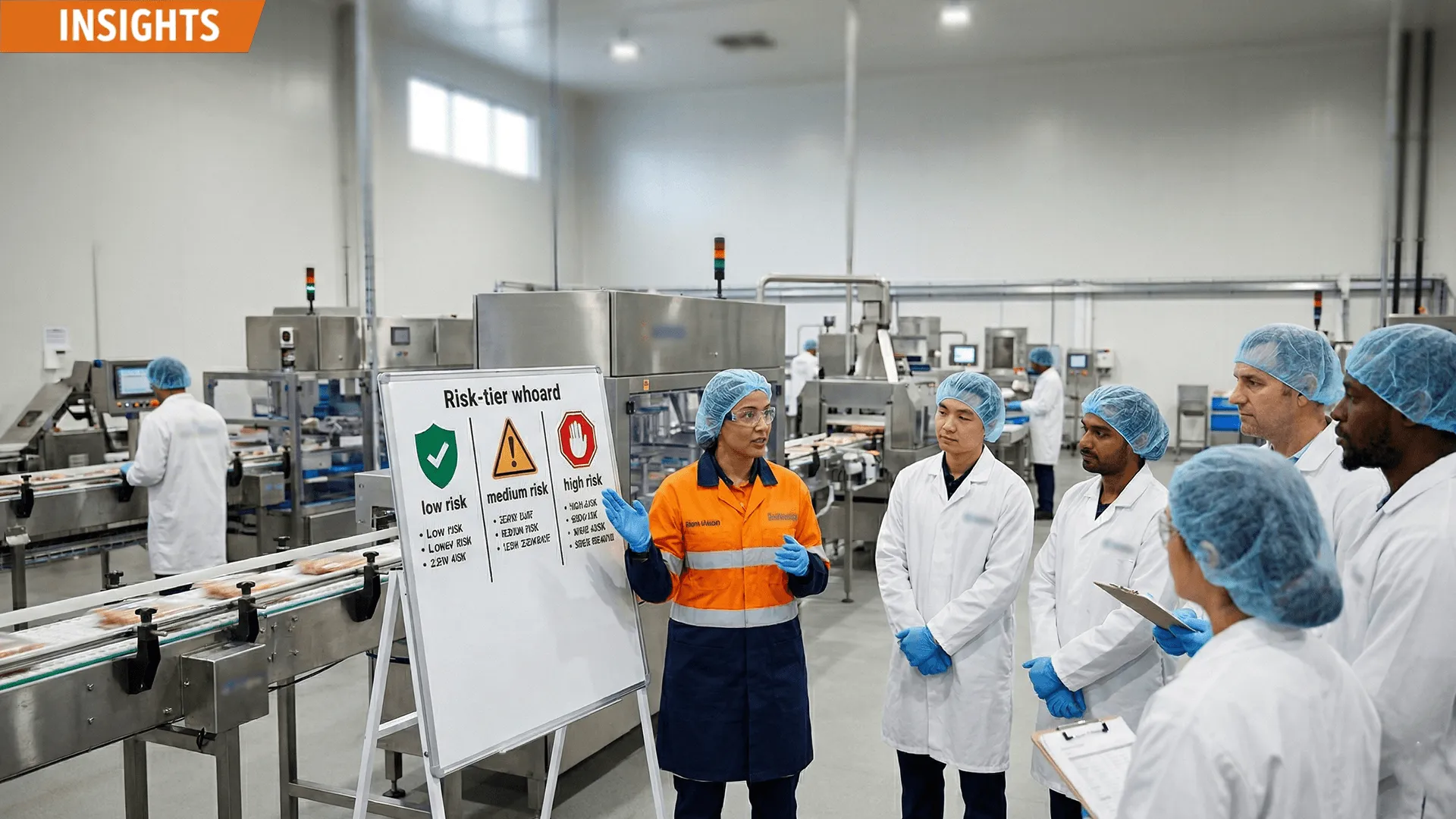
Food production staffing isn’t one-size-fits-all.
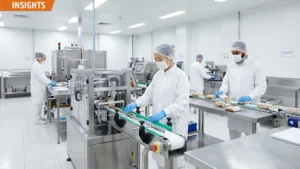
Two sites can both be “food factories” in South-East Melbourne, but the risk profile can be completely different. A bakery packing line has different hazards and quality risks compared to meat processing. Ready meals often have high-care zones and allergen changeovers. Dairy frequently blends cold chain handling with strict hygiene controls. Some operations run in controlled environments that feel pharma/cleanroom-like — with disciplined gowning, zone restrictions, and documentation checks.
When you use labour hire, the goal isn’t just filling a headcount. It’s placing the right type of worker into the right risk environment with the right controls, so production stays safe, compliant, and consistent.
This guide helps South-East Melbourne employers match labour hire to risk level across meat, dairy, bakery, and ready meals—including cold storage/freezer contexts—and shows how to set up labour hire successfully in multinational workforces where English levels can vary.
1) Why “risk matching” matters more than “experience”
Most quality failures and incidents come from mismatch, not laziness.
Mismatch looks like:
- a good warehouse worker placed into high-care without zone discipline
- a fast packer placed into allergen changeovers without training
- a cold room role filled by someone without cold exposure readiness
- a worker unfamiliar with hygiene rules trying to “help” and crossing zones
When the environment is higher risk, you need tighter controls—not just “better workers.”
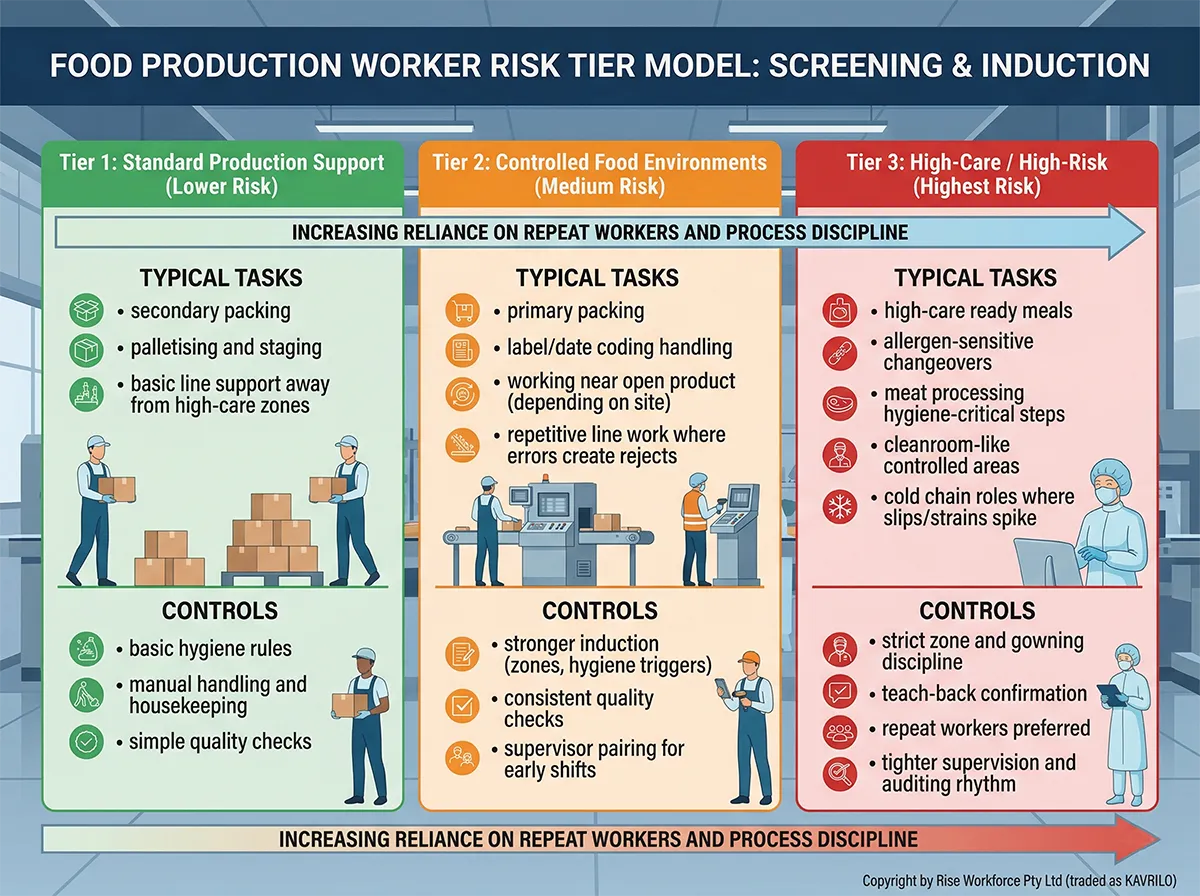
2) Think in 3 risk tiers (simple model)
Use a simple model to decide what level of screening, induction, and supervision is required.
Tier 1: Standard production support (lower risk)
Typical tasks:
- secondary packing
- palletising and staging
- basic line support away from high-care zones
Controls:
- basic hygiene rules
- manual handling and housekeeping
- simple quality checks
Tier 2: Controlled food environments (medium risk)
Typical tasks:
- primary packing
- label/date coding handling
- working near open product (depending on site)
- repetitive line work where errors create rejects
Controls:
- stronger induction (zones, hygiene triggers)
- consistent quality checks
- supervisor pairing for early shifts
Tier 3: High-care / high-risk (highest risk)
Typical tasks:
- high-care ready meals
- allergen-sensitive changeovers
- meat processing hygiene-critical steps
- cleanroom-like controlled areas
- cold chain roles where slips/strains spike
Controls:
- strict zone and gowning discipline
- teach-back confirmation
- repeat workers preferred
- tighter supervision and auditing rhythm
The higher the tier, the more you should rely on repeat workers and process discipline.
3) Meat processing: high hygiene + heavier manual handling risk
Common risks
- strict hygiene requirements, clean/dirty separation
- heavier or awkward loads in some tasks
- sharper tools/machinery risk depending on process
- cross-contamination and sanitation risk
Labour hire matching
- prioritise workers with food handling discipline (not just warehouse speed)
- confirm comfort with PPE and hygiene rules
- assess manual handling technique early
Controls that prevent problems
- strict PPE compliance (hair/beard control, gloves, aprons)
- clear rules around tools, waste, and “clean/dirty” movement
- calm supervision—no rushing near higher-risk processes
4) Dairy: cold chain + consistency + hygiene
Dairy environments often blend cold rooms, moisture, and strict hygiene.
Common risks
- slips due to condensation/wet floors
- reduced dexterity and grip in cold rooms
- repetitive tasks that create fatigue injuries
- quality issues if handling standards drift
Labour hire matching
- workers comfortable in cold chain settings
- workers who follow process consistently (steady rhythm)
- reliable attendance (early starts are common)
Controls
- anti-slip housekeeping
- cold room rotation/warm-up breaks
- clear packing standards and checks
5) Bakery: fast flow + dust/heat + packing accuracy
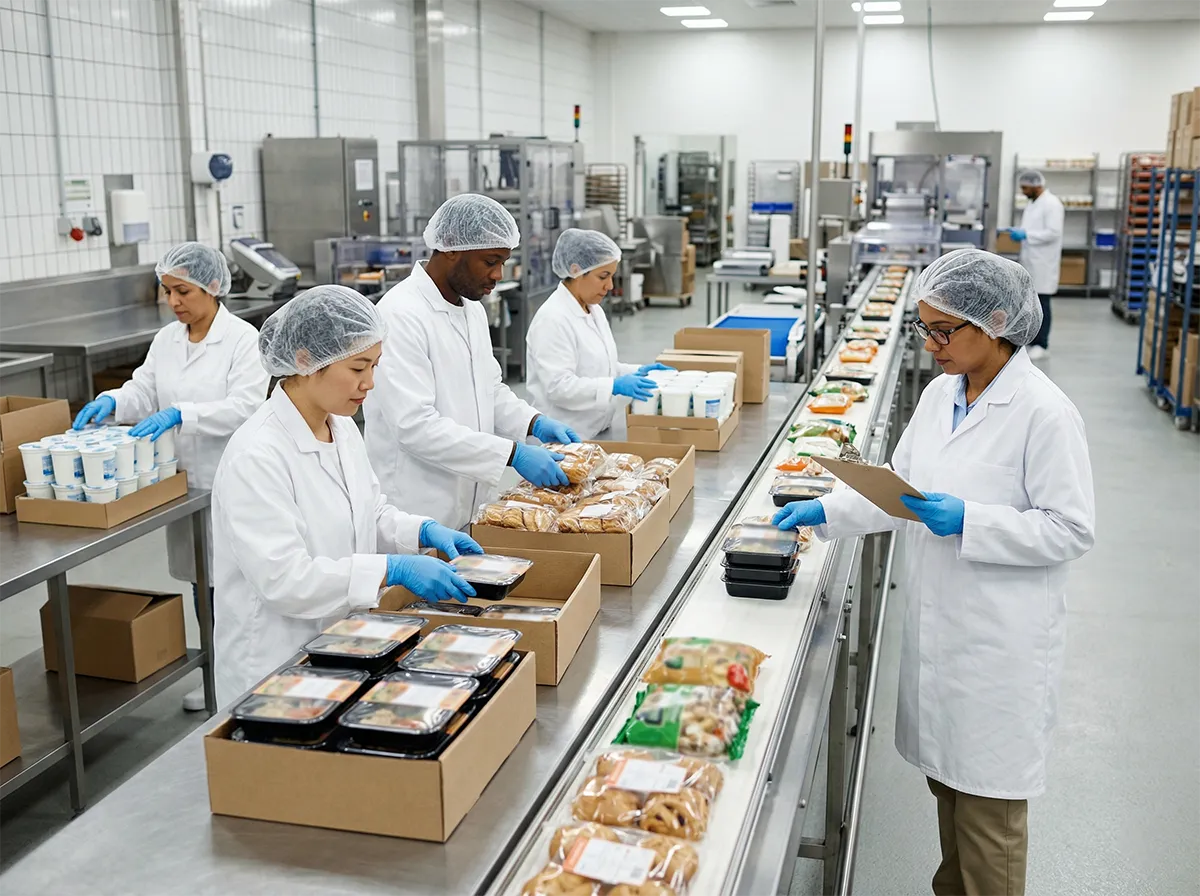
Bakery can be deceptively high pressure, especially in peak runs.
Common risks
- heat exposure in some areas
- fast packing flow and repetitive motion
- dust considerations (depending on process)
- label/weight/count errors under pressure
Labour hire matching
- workers who can hold rhythm and accuracy
- workers who follow hygiene and presentation standards
- workers who respond calmly to pace changes
Controls
- short role briefing (packing standard + reject process)
- rotation plan to reduce repetitive strain
- simple “quality rhythm” checks (hourly label/pack checks)
6) Ready meals: high-care zones + allergen changeovers
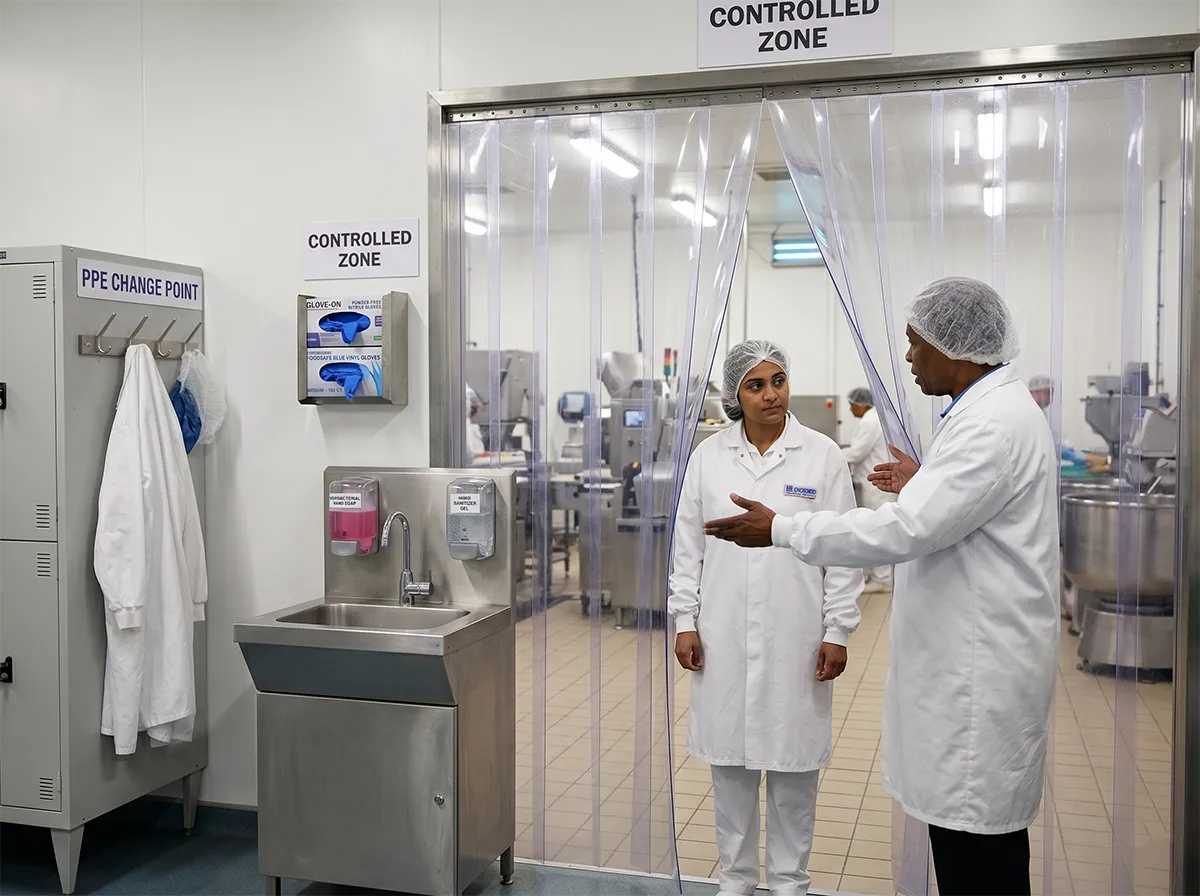
Ready meals often carry the strictest behaviour requirements due to:
- high-care zones
- allergen changeovers
- packaging integrity and labelling compliance
- time-critical dispatch windows
Common risks
- zone breaches (crossing high-care/low-care)
- allergen cross-contact through gloves/tools/tubs
- label/date coding errors that trigger rework
- seal failures and leaks
Labour hire matching
- workers with strong discipline (follow SOPs, no shortcuts)
- workers who are coachable and calm
- repeat workers preferred for high-care areas
Controls
- zone entry process + “no crossing” rule
- teach-back questions (zones, glove changes, escalation)
- clear changeover process with separation of tools and tubs
- assigned line lead for CTQ checks (label/code/seal)
7) Cold storage/freezer roles: safety + output depend on rotation
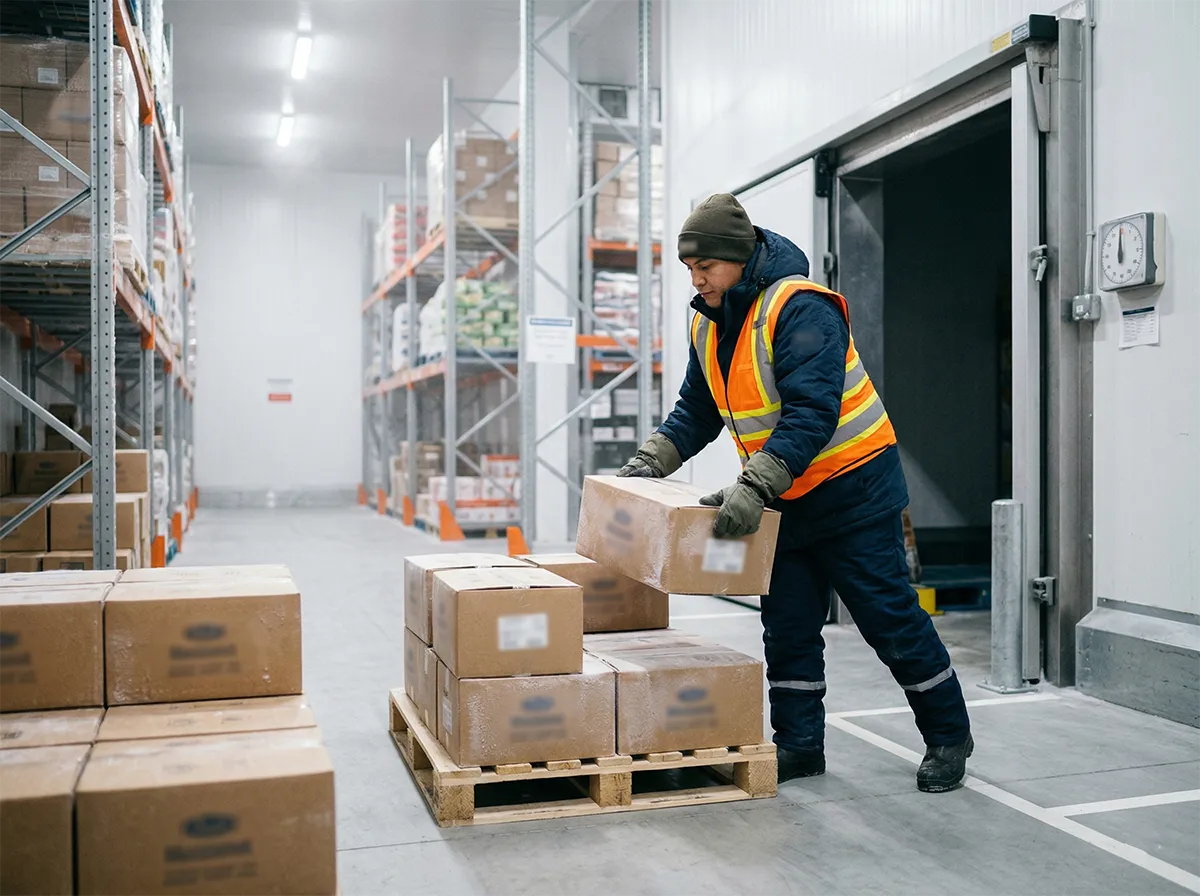
Cold storage is common across dairy, ready meals, and meat cold chain.
Common risks
- slips at entry/exit transitions
- reduced grip leading to drops and strains
- fatigue and pace collapse over time
Labour hire matching
- workers with cold room exposure (recent)
- PPE readiness (gloves/thermal layers)
- safe manual handling habits
Controls
- role rotation and warm-up breaks
- tidy walkways, anti-slip mats at transitions
- clear staging flow to reduce congestion
8) “Pharma/cleanroom-like” high-care lines: behaviour is the job
Some operations require controlled movement and gowning steps that resemble cleanroom discipline:
- restricted movement
- strict gowning
- minimal touch points
- documentation checks
In these areas, the risk isn’t only physical. It’s quality and compliance.
Labour hire matching
- workers who follow rules without shortcuts
- workers comfortable with repetitive, controlled tasks
- workers who can communicate safety concerns clearly
Controls
- strict entry/exit process
- no phone policies enforced
- short, repeated refreshers (micro toolboxes)
- clear escalation path
9) Multinational workforces: keep communication simple and effective
South-East Melbourne food sites often have multinational teams. This can be a strength, but only if induction and supervision are clear.
Practical ways to reduce misunderstandings:
- use short sentences and plain English
- show, don’t just tell (walk to the zone barriers, show the handwash station)
- use pictorial signage and colour cues (where possible)
- use “teach-back” (workers repeat key rules in their own words)
- pair new workers with a buddy for first shift
This approach improves safety without needing heavy documentation.
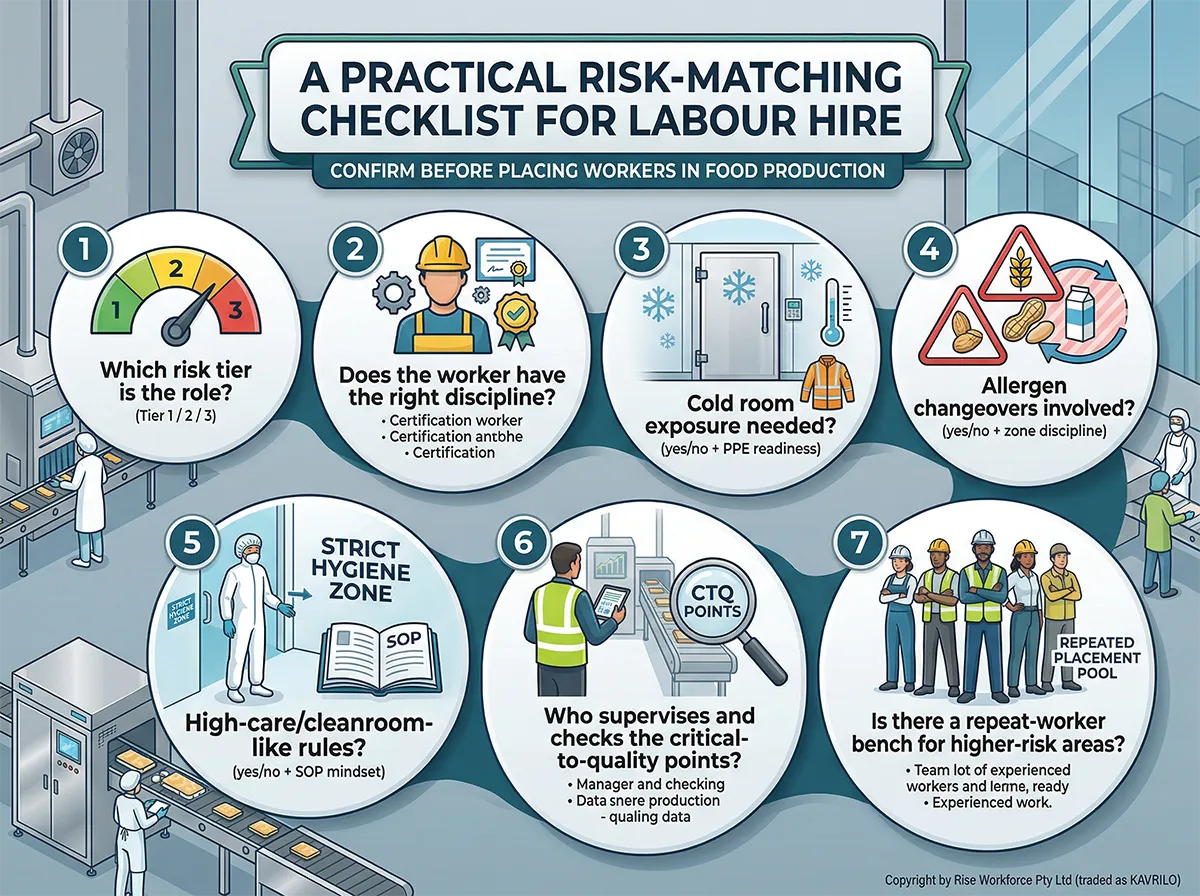
10) A practical risk-matching checklist for labour hire
Before placing labour hire into food production, confirm:
- Which risk tier is the role? (Tier 1 / 2 / 3)
- Does the worker have the right discipline for that tier?
- Cold room exposure needed? (yes/no + PPE readiness)
- Allergen changeovers involved? (yes/no + zone discipline)
- High-care/cleanroom-like rules? (yes/no + SOP mindset)
- Who supervises and checks the critical-to-quality points?
- Is there a repeat-worker bench for higher-risk areas?
Final takeaway
Food production labour hire works best when you match:
- the environment risk level
- the worker’s readiness
- the right controls (induction, supervision, checks, rotation)
Meat, dairy, bakery, and ready meals all demand different behaviours. When you align labour hire to risk tier, you reduce incidents and rejects — and you build a stable, rebookable workforce.
Article Disclaimer
This article is provided for general information only and does not constitute legal, workplace relations, safety, taxation, payroll or other professional advice. Please seek advice specific to your circumstances before acting on this information.
Please read our Website Disclaimer for more information.