
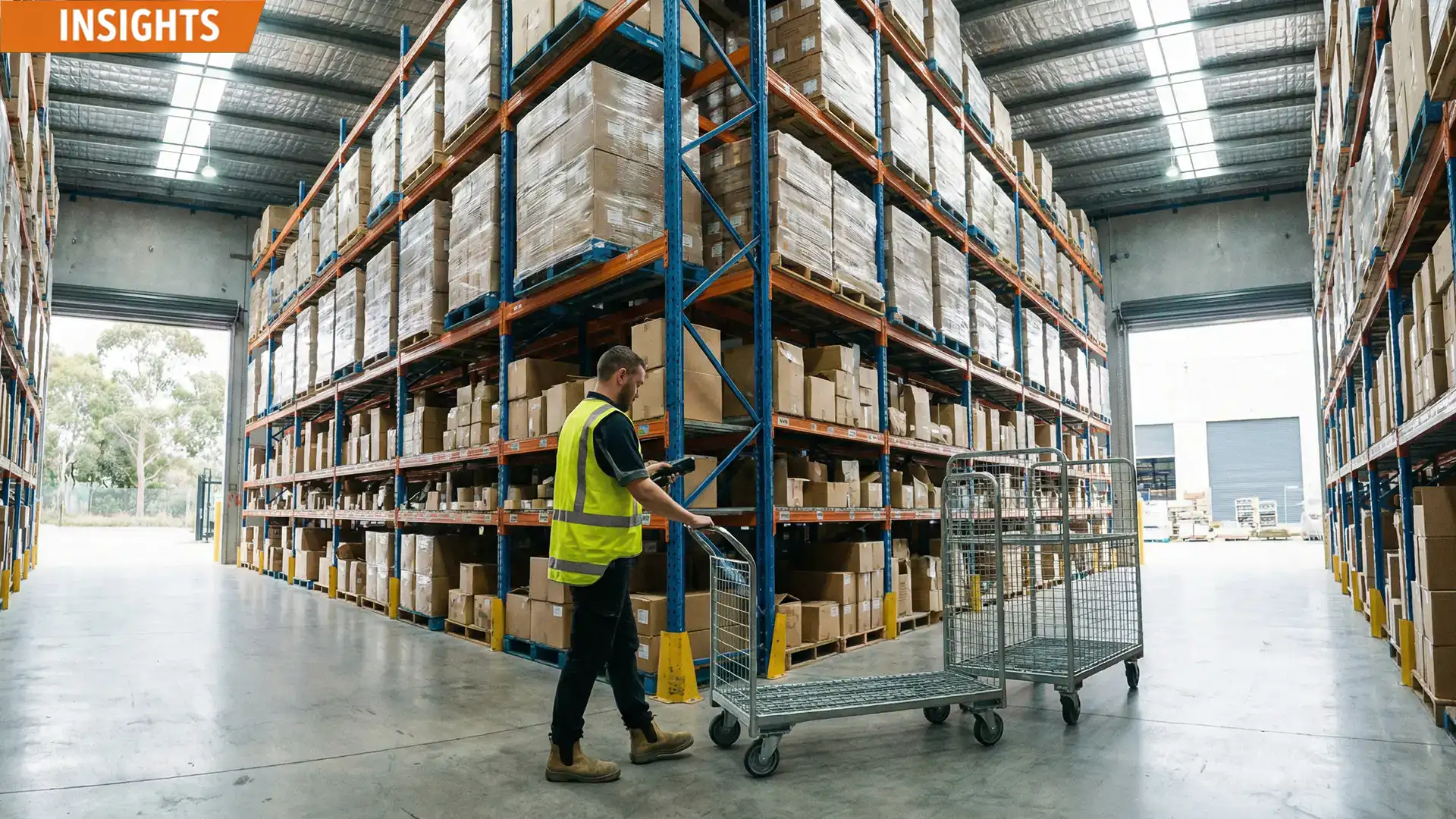
Pick & pack is where warehouse performance is won or lost. If your pick rate drops, everything backs up: replenishment, dispatch, cut-offs, and customer SLA.
But there’s a trap many sites fall into: pushing speed so hard that you burn out good workers, increase manual handling injuries, and end up with even more turnover. The result is a constant “train-and-replace” cycle that kills productivity long-term.
If you’re running pick/pack operations in South-East Melbourne (Dandenong South, Hallam, Keysborough, Braeside and nearby industrial zones), here’s a practical way to lift output while keeping your team safe and sustainable.
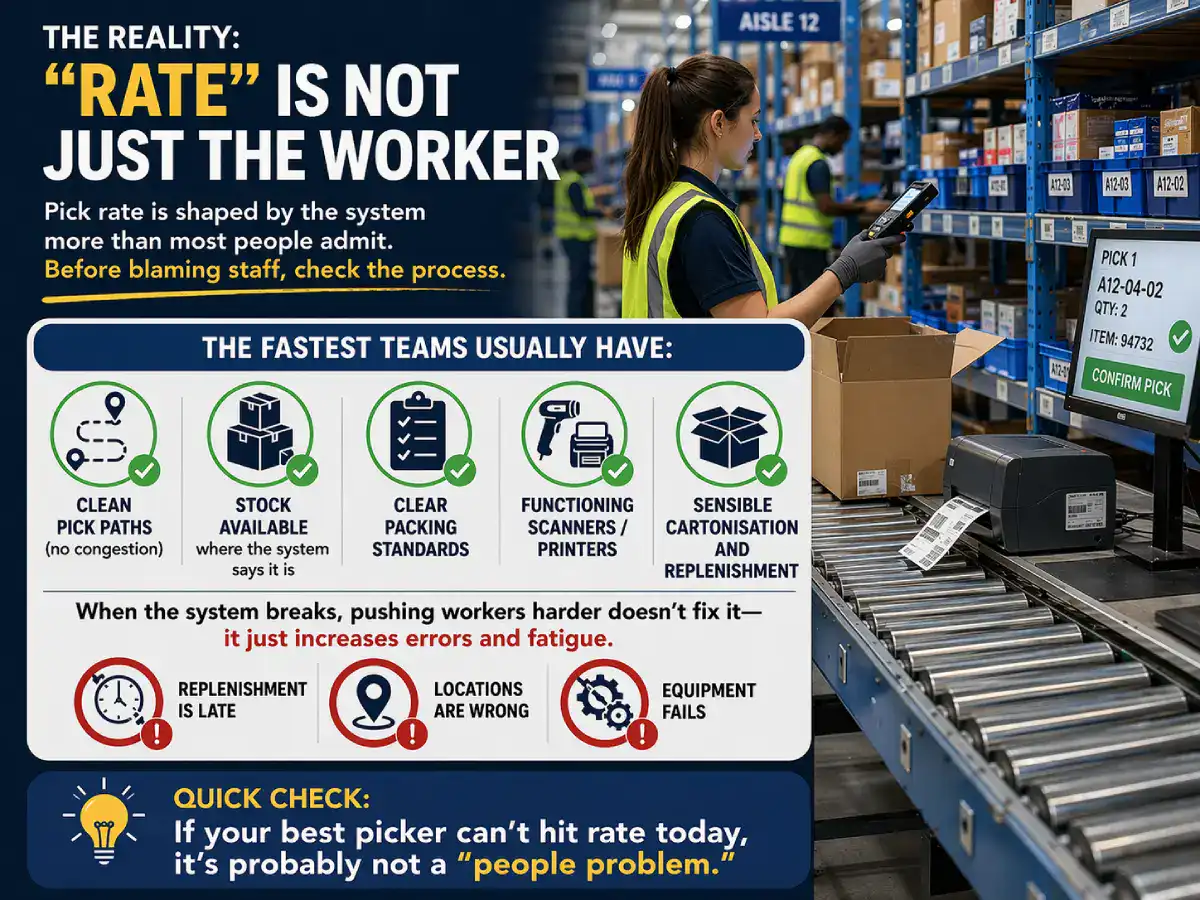
1) Start with the reality: “rate” is not just the worker
Pick rate is shaped by the system more than most people admit. Before blaming staff, check the process.
The fastest teams usually have:
- clean pick paths (no congestion)
- stock available where the system says it is
- clear packing standards
- functioning scanners/printers
- sensible cartonisation and replenishment
If replenishment is late, locations are wrong, or equipment fails, pushing workers harder doesn’t fix it — it just increases errors and fatigue.
Quick check: If your best picker can’t hit rate today, it’s probably not a “people problem.”
2) The first hour decides the whole shift (ramp-up matters)
Most injuries and errors happen early. Workers start cold, the floor is busy, and people rush to “prove” speed.
A smarter approach is a ramp-up plan:
- first 15 minutes: site brief + zone orientation
- first 30–60 minutes: build rhythm and accuracy
- after 60 minutes: increase pace
If you expect full rate immediately, you’ll get:
- mis-picks
- damaged product
- unsafe lifts
- early fatigue
A controlled ramp-up is how you get high rate over the full shift, not just for 20 minutes.
3) Accuracy is part of productivity (rework kills rate)
High pick rate with poor accuracy is expensive. Rework is invisible cost:
- returns processing
- supervisor time
- customer complaints
- re-picking and re-packing
Build rate around “clean work”:
- confirm scan behaviour (don’t bypass)
- set packing rules clearly (void fill, labels, fragile handling)
- define what to do when stock is missing (don’t improvise)
- confirm QC checks (spot-check frequency)
One solid worker with consistent accuracy beats a “fast” worker who creates rework.
4) Fix the biggest silent productivity killer: poor pick path layout
Pickers lose huge time walking. If your top pickers are doing marathon distances, you’re wasting output.
Operational improvements:
- group fast movers closer to packing
- reduce backtracking by zoning logically
- keep aisles clear of pallets/returns
- align replenishment timing so pick faces stay stocked
Even small layout changes can add more to rate than pushing a tired worker harder.
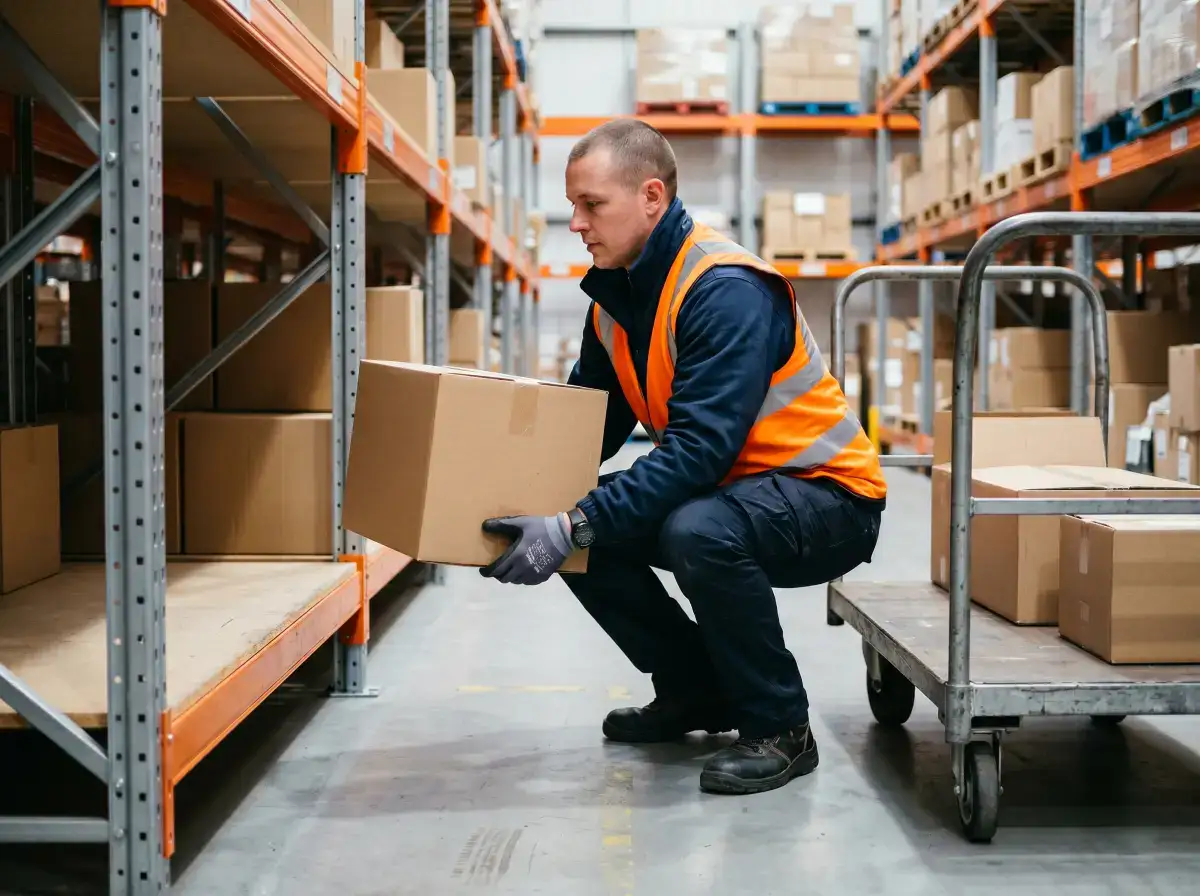
5) Manual handling: hit rate by making lifts safer (not by “toughening up”)
Pick/pack is repetitive lifting, bending, twisting, and reaching — especially in e-commerce and 3PL environments.
To lift productivity safely:
- teach “nose over toes” turning (no twisting)
- keep loads close to the body
- use step stools or safe platforms for low/high picks (site controlled)
- encourage micro-pauses to reset posture (5–10 seconds)
- rotate tasks when possible (pick, pack, replenish support)
Injuries don’t just hurt workers — they remove your best people from the floor. A safe process is a productivity strategy.
6) Reduce fatigue to lift rate (fatigue is measurable)
Fatigue creates:
- slower movement
- more mistakes
- short tempers and drop-offs
- higher injury risk late in shift
Practical fatigue controls:
- set a consistent break schedule and enforce it
- keep water accessible (especially in hot warehouses)
- avoid “rate pressure” during the final hour (where injuries spike)
- plan rotations for heavy sections (bulky items)
The goal is a stable pace for 8 hours, not a sprint for 2 hours.
7) Scan discipline: speed comes from rhythm, not shortcuts
RF scanning sites often see two problems:
- new workers scan too slowly because they don’t know the rhythm
- experienced workers bypass steps to go faster (creating errors)
Fix it by setting one standard:
- where the scanner is held (position)
- scan order (location → item → quantity)
- what to do when error occurs (stop, reset, call supervisor)
- packing label sequence
When scan discipline is consistent, speed increases naturally.
8) Training that works: “teach-back” and 5-minute refreshers
Warehouse training fails when it’s one big induction and then nothing.
Better approach:
- first shift: short induction + role briefing
- second shift: 5-minute refresher
- weekly: quick toolbox reminders (manual handling, scanning, walkways)
Use “teach-back”: ask workers to explain the key points in their own words. It confirms understanding without being confrontational.
This matters in diverse teams where some workers are non-native English speakers.
9) Supervisors drive rate more than posters and KPIs
The best supervisors:
- set expectations clearly at the start of shift
- watch early performance and correct small issues
- keep the floor calm (less chaos = higher output)
- remove blockers (printer labels, missing stock, congestion)
The worst supervisors:
- apply pressure without fixing blockers
- change the plan mid-shift constantly
- tolerate unsafe rushing
Rate is a leadership system as much as it is worker effort.
10) The “core + flex” staffing approach improves rate
South-East Melbourne sites often use a mix of permanent and labour hire workers. The best-performing sites:
- keep a stable core of experienced pickers/packers
- use labour hire to scale up during peaks
- rebook reliable casuals so they become “site-trained”
- avoid random new faces every day
Repeat booking is the fastest way to lift productivity without injuries — because site familiarity reduces mistakes and stress.
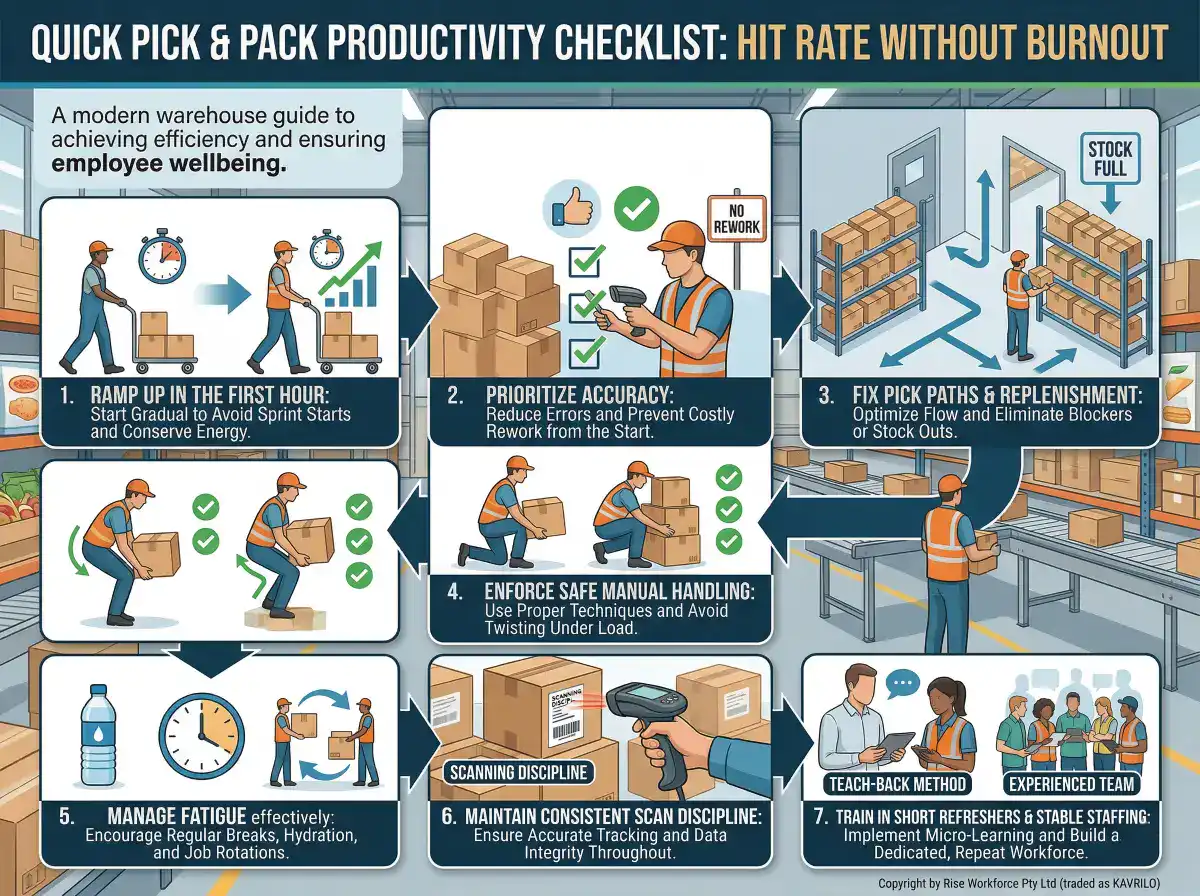
Quick Pick & Pack Productivity Checklist
To hit rate without burnout:
- ramp up in the first hour (avoid sprint starts)
- protect accuracy (reduce rework)
- fix pick path and replenishment blockers
- enforce safe manual handling (no twisting, load close)
- manage fatigue (breaks, water, rotations)
- keep scan discipline consistent
- train in short refreshers (teach-back method)
- build a stable bench of repeat workers
Final takeaway
Pick rate improves when the system supports the worker. If you want sustainable productivity, focus on:
- process flow
- safe movement
- stable staffing
- calm supervision
You’ll get better output — and you’ll keep your good people.
Need reliable pick/pack support in South-East Melbourne? KAVRILO supplies safety-inducted warehouse staff to support your shifts and help stabilise your floor.
Article Disclaimer
This article is provided for general information only and does not constitute legal, workplace relations, safety, taxation, payroll or other professional advice. Please seek advice specific to your circumstances before acting on this information.
Please read our Website Disclaimer for more information.